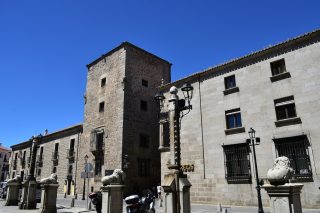
Casa Carnicerías, Ávila
Historic Building and Tourist Office in Ávila

Casa de las Carnicerías is one of those places in Ávila that looks modest at first glance, but turns out to be quietly important once you understand what it is. Set right against the exterior face of the city walls on Calle San Segundo, it's a historic civic building with a very practical modern role: it's where many visitors naturally pause to orient themselves, pick up maps, and plan the next steps in the old town.
It's also one of the things to see in Ávila if you like sites that feel “woven into” daily city life rather than staged as a standalone monument. Because it sits on a classic old-town route and links directly to wall access logistics, it slots perfectly into a walking tour of Ávila, especially if you're timing your day around rampart views, gates, and the cathedral quarter.
Table of Contents
- History and Significance of the Casa de las Carnicerías
- Things to See and Do in the Casa de las Carnicerías
- How to Get to the Casa de las Carnicerías
- Practical Tips on Visiting the Casa de las Carnicerías
- Where to Stay Close to the Casa de las Carnicerías
- Is the Casa de las Carnicerías Worth Visiting?
- For Different Travelers
- FAQs for Visiting Casa de las Carnicerías
- Nearby Attractions to the Casa de las Carnicerías
History and Significance of the Casa de las Carnicerías
The building is generally attributed to the late 16th century, created as part of Ávila’s effort to manage commerce moving through the gates. It was built against the walls and first used as a storehouse for wine entering the city, while also housing major butcher operations, which quickly made it a flashpoint for how urban space was being reorganized.
When the main butcher shops were moved, the public reaction was strong enough that the butchers returned to their earlier market locations, and the building's function shifted toward regulation rather than retail. In its place came the “peso de la harina,” the flour scales and controls that monitored grain and flour coming into Ávila-exactly the kind of practical infrastructure medieval and early-modern cities relied on to keep prices fair and supplies stable.
Its position also created friction with everyday movement through the nearby postigo (small gate) associated with the cathedral chapter, and those complaints shaped the building’s story in an unusually literal way. Royal orders led to changes in how passage worked at this stretch of wall, and the building ended up divided in use-part civic exchange and control space, part accommodation for officials-leaving behind a “city management” biography that’s much richer than the name suggests.
Things to See and Do in the Casa de las Carnicerías
The best way to experience Casa de las Carnicerías is to treat it as a short, meaningful stop rather than a long interior visit. Look closely at how it sits flush to the wall line and how the street funnels you toward it-this is architecture doing a job, shaping movement at one of the most strategic edges of the old town.
Use the visit for practical momentum: pick up local orientation material, confirm any rampart access details for the day, and then step straight into the surrounding old-town lanes that lead you toward gates, viewpoints, and the cathedral area. It’s a simple move that can make the rest of your day feel smoother and better paced.
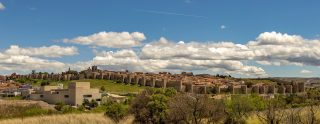
If you’re planning to walk the walls, this is an excellent “start line” because it keeps you in the historic core without needing to backtrack. Even if you don’t climb up, the building’s position makes it a natural point to pivot between the interior streets of the Ciudad Vieja and the outer viewpoints where you can photograph the walls as a full silhouette.
How to Get to the Casa de las Carnicerías
Most international visitors route via Madrid-Barajas (MAD) and continue to Ávila by rail or road, which is typically the most straightforward way to build the city into a wider Castilla y León itinerary. For the best deals and a seamless booking experience, check out these flights to Ávila on Booking.com. If you're already traveling regionally, you may also see options via nearby airports depending on your route, but Madrid remains the most reliable hub for connections. For the best deals and a seamless booking experience, check out these flights to Ávila on Booking.com.
Ávila is well connected by train from Madrid, and the simplest plan is to arrive at Ávila station and then continue into the walled old town on foot or by a short taxi ride. Train schedules and bookings can be found on Omio. Once you’re inside the historic centre, aim for Calle San Segundo, a classic old-town corridor that naturally leads you toward the walls and this building.
Local buses can also work well if timings suit your day, and they’re often a practical budget choice for a quick visit. If you’re driving, plan to park outside the tightest medieval streets and walk in, since the old town is far more enjoyable without the stress of restricted access and narrow lanes. If you are looking to rent a car in Spain I recommend having a look at Discover Cars, first, as they compare prices and review multiple car rental agencies for you.
Practical Tips on Visiting the Casa de las Carnicerías
- Entrance fee: Free to enter (tourist information point); wall-walk tickets are sold here if you’re climbing the ramparts.
- Opening hours: (Summer) 1 July – 15 September: Monday – Friday: 09:15–14:00 & 17:00–19:30. Saturday: 09:30–14:00 & 17:00–19:30. Sunday: 09:30–14:30. (Winter) 16 September – 30 June: Monday – Friday: 09:15–14:00 & 16:00–18:30. Saturday: 09:30–14:00 & 16:00–18:30. Sunday: 09:30–14:30. Closed on Sunday afternoons; 25 December; 1 January; afternoons of 24 & 31 December.
- Official website: https://www.avilaturismo.com/que-ver/casa-de-las-carnicerias
- Best time to visit: Go early to set up your day with maps and a clear route, or stop mid-morning when you’re ready to decide between a wall walk and deeper old-town wandering.
- How long to spend: 10-20 minutes is usually enough unless you’re using it as a planning stop before a longer rampart walk.
- Accessibility: Expect an active old-town streetscape with occasional uneven paving; if you’re sensitive to steps, focus on the easiest street-level route and use this as an orientation point.
- Facilities: You’ll find the most useful amenities nearby rather than “inside” the experience-cafés, rest stops, and services are best handled in the surrounding old-town streets.
Where to Stay Close to the Casa de las Carnicerías
For a culture-heavy itinerary, base yourself inside Ávila’s walls near the cathedral quarter so you can do everything on foot; if your trip is built around fast connections, consider staying closer to the train station and commuting into the old town for your main sightseeing blocks.
For a classic, ultra-central stay right by the cathedral and within easy strolling distance of Calle San Segundo, book Hotel Palacio de los Velada. If you want a more boutique, design-forward option still firmly in the historic core, Sofraga Palacio is a strong base for an old-town-first itinerary.For a quieter heritage feel with a traditional Spanish Parador atmosphere, Parador de Ávila keeps you close to the walls while giving you a calmer retreat at the end of the day.
Is the Casa de las Carnicerías Worth Visiting?
Yes, but think of it as a smart, story-rich waypoint rather than a “big-ticket” monument. It’s most rewarding if you like the behind-the-scenes mechanics of historic cities-how trade, control, and movement through gates shaped daily life-and it adds context that makes the walls and old town feel more intelligible.
It's also worth it simply for logistics: as a visitor hub connected to wall access, it can streamline your day and help you avoid the common mistake of wandering first and planning later. If you're trying to see Ávila efficiently, this small stop can make the whole itinerary run better.
What Other Travellers Say...

Casa de las Carnicerías, on Plaza San Martín in León's old town, is a beautifully restored palace-like building used for exhibitions and events; visitors note its recent renovation, attractive lower-floor interiors and central old well, and that it served as the city's Gastronomic Capital venue in 2018.


For Different Travelers
Families with Kids
For families, this works best as a quick “mission stop” before something more dramatic, like the wall walk or a gate-to-gate route. Kids tend to engage when you frame it as the place where the city once managed essentials-food, grain, and entry control-before heading off to the more visually exciting ramparts.
Keep it short and purposeful: get oriented, pick a simple loop, then move on. The real family win is using this as a stress-reducer so you spend less time debating directions and more time actually exploring.
Couples & Romantic Getaways
As a couple, Casa de las Carnicerías is a great way to give your day a more local rhythm: a calm start, a clear plan, and then an unhurried wander through the old town. It's not a “romantic monument” in itself, but it sets you up perfectly for the romantic parts-golden-hour stone, quiet lanes, and big wall views.
If you time it right, use this as your launch point for a rampart section and then drift toward the cathedral quarter for a slower, atmospheric loop. It’s a simple structure that makes the day feel curated without needing a rigid schedule.
Budget Travelers
Budget travelers will appreciate that this is a low-cost, high-utility stop: you can gather information, map out a free walking route, and decide where to spend money only after you understand the options. Even if you skip ticketed activities, this building still helps you unlock the best self-guided experience.
Use it to plan a route that mixes free exterior viewpoints with one paid highlight if you choose. Ávila rewards smart pacing, and this is the kind of place that helps you avoid expensive, inefficient detours.
FAQs for Visiting Casa de las Carnicerías
Getting There
Tickets & Entry
Visiting Experience
Tours, Context & Itineraries
Photography
Accessibility & Facilities
Food & Breaks Nearby
Safety & Timing
Nearby Attractions to the Casa de las Carnicerías
- Walls of Ávila: Walk or view the famous ramparts for the city's most iconic skyline and a true sense of medieval scale.
- Ávila Cathedral: A fortress-like Gothic cathedral that feels inseparable from the defensive story of the old town.
- Plaza del Mercado Chico: The main square is ideal for a break, people-watching, and a classic slice of Ávila's daily life.
- Basilica of San Vicente: A standout Romanesque church with rich stone detail and a dramatic presence near the old town edge.
- Mirador de los Cuatro Postes: The classic viewpoint outside the walls for the best full-silhouette photos of Ávila.
The Casa Carnicerías appears in our Complete Guide to Visiting Ávila!

Moira & Andy
Hey! We're Moira & Andy. From hiking the Camino to trips around Europe in Bert our campervan — we've been traveling together since retirement in 2020!
This website uses affiliate links which may earn a commission at no additional cost to you!
Planning Your Visit
(Summer) 1 July - 15 September: Monday - Friday: 09:15-14:00 & 17:00-19:30. Saturday: 09:30-14:00 & 17:00-19:30. Sunday: 09:30-14:30.
(Winter) 16 September - 30 June: Monday - Friday: 09:15-14:00 & 16:00-18:30. Saturday: 09:30-14:00 & 16:00-18:30. Sunday: 09:30-14:30.
Closed on Sunday afternoons; 25 December; 1 January; afternoons of 24 & 31 December.
Free to enter (tourist information point); wall-walk tickets are sold here if you’re climbing the ramparts.
Nearby Attractions
- Walls of Ávila (0.0) km
City Walls - Casa de la Misericordia (0.0) km
Historic Building - Palacio del Rey Niño (0.1) km
Palace - Palacio de los Serranos (0.1) km
Museum and Palace - Ávila Cathedral (0.1) km
Cathedral - Museo de Ávila (0.1) km
Museum and Palace - San Vicente Garden (0.1) km
City Walls, Gardens and Park - Palacio de Valderrábanos (0.1) km
Palace - Los Velada Palace (0.1) km
Hotel and Palace - Puerta de San Vicente (0.2) km
City Gate