Beinhaus, Alsfeld
Historic Building in Alsfeld
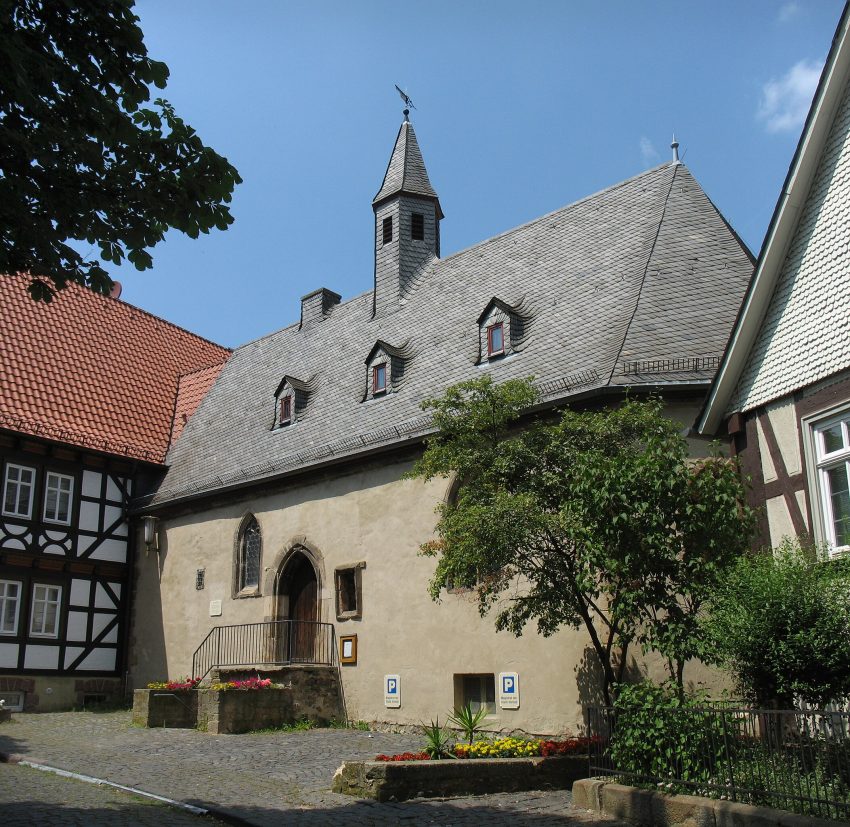
Tucked beside Alsfeld's historic churchyard, the Beinhaus is a small yet evocative building that offers a window into the town's medieval history. Originally constructed in 1368 as a late Gothic chapel and rebuilt in 1510, it later served a more somber purpose - as an ossuary preserving the bones of those who perished during the Thirty Years' War and repeated waves of plague. This atmospheric site, with its aged stone walls and steep roofline, tells stories of faith, mortality, and resilience. It's one of the must-see places in Alsfeld for travelers intrigued by the layers of history woven into this beautifully preserved old town.
Today, the Beinhaus has found new life as the home of Alsfeld's city archives, but its tranquil presence continues to evoke the centuries of lives once tied to the churchyard around it. As part of the ensemble of Alsfeld's medieval buildings, the Beinhaus is a great place to visit on a walking tour of Alsfeld, where every corner reveals another chapter of the town's long and fascinating story.
History and Significance of Beinhaus
The Beinhaus, or Bone House, was built in 1368 on the north side of the churchyard adjoining Alsfeld's main parish church. Its original purpose was as a chapel, serving local clergy and the faithful. Following the devastating losses of the Thirty Years' War and recurring plagues, the surrounding cemetery could no longer accommodate new burials. As a result, the chapel was converted into an ossuary - a place to store skeletal remains that had been exhumed to make room for the newly deceased.
Reconstructed in 1510, the Beinhaus reflects the late Gothic style typical of the period, with pointed arches and sturdy stonework. In later centuries, it fell into neglect and was even used for non-religious purposes. Early in the 20th century, structural changes were made to the attic roof, but it wasn't until its full restoration in 1982 that the building regained its dignity. Today, the Beinhaus houses the city archives, preserving written history rather than human remains - a symbolic continuation of its role as a keeper of Alsfeld's collective memory. It remains one of the top attractions in Alsfeld for those fascinated by medieval architecture and urban archaeology.
Things to See and Do in Beinhaus
While the Beinhaus itself is modest in scale, its story and setting make it worth a stop. Visitors can admire the late Gothic architecture, particularly the stone buttresses and small arched openings typical of ecclesiastical buildings of the period. Its location beside the old churchyard adds to the atmosphere, creating a quiet space amid the bustle of Alsfeld's old town.
Although the interior now serves administrative purposes and isn't open for regular public tours, the Beinhaus offers a fascinating glimpse into the way medieval towns adapted sacred spaces over time. Walk around the building to appreciate the texture of its weathered masonry and to imagine how it once formed part of the spiritual and civic life of the community. This spot is one of the best places to see in Alsfeld for history enthusiasts exploring the town's religious and cultural heritage.
How to Get There
The Beinhaus is located near the Walpurgiskirche in Alsfeld's old town, just a short walk from the market square. Alsfeld is about 100 km northeast of Frankfurt and can be reached by train from Frankfurt via Gießen to Alsfeld station. Train schedules and bookings can be found on Omio. From the station, it’s around a 10-minute walk through the cobblestone streets of the Altstadt. Visitors arriving by car can find public parking lots nearby, within easy walking distance. If you are looking to rent a car in Germany I recommend having a look at Discover Cars, first, as they compare prices and review multiple car rental agencies for you.
Practical Tips on Visiting Beinhaus
- Best time to visit Beinhaus: Spring to autumn, when Alsfeld's old town is most active and pleasant to explore on foot.
- Entrance fee in Euros: Free exterior viewing; interior not generally open to the public.
- Opening hours: Accessible from outside year-round.
- Official website: www.alsfeld.de/tourismus
- How long to spend: 10-20 minutes to view the site and surroundings.
- Accessibility: Located in a pedestrian area with cobbled streets; level access around the site.
- Facilities: Cafés, restrooms, and tourist information nearby.
- Photography tip: Capture the Beinhaus with the churchyard trees and the Walpurgiskirche in the background.
- Guided tours: Occasionally included in Alsfeld’s themed walking tours.
- Nearby food options: Cafés and restaurants on the nearby market square.
Where to Stay close to Alsfeld
For a stay near Alsfeld’s historic core, Hotel Klingelhöffer offers traditional charm just a short walk from the Beinhaus. Hotel Zum Schäferhof provides a cozy and family-run atmosphere with regional cuisine. For a more modern experience, VillaAdel Designroom combines stylish comfort with proximity to all major sights.
Is Beinhaus Worth Visiting?
Yes. The Beinhaus may appear humble, but its history speaks volumes about the lives and losses that shaped Alsfeld through the centuries. From its origins as a late Gothic chapel to its role as an ossuary and later as the city archives, it embodies the continuity of memory that defines this medieval town. For travelers who enjoy quiet, historically rich spots, it's one of the things to do in Alsfeld that provides a deeper appreciation of the town's layered past.
What Other Travellers Say...

Beinhaus on Kaplaneigasse in Alsfeld is a late‑Gothic chapel that visitors find picturesque from the outside and worth seeing as part of the charming old town; historically it once held remains from nearby cemeteries and after a 1983 restoration served as the city archives, though it may be locked when you visit.


FAQs for Visiting
Nearby Attractions to Beinhaus
- Walpurgiskirche - Alsfeld's main parish church with Gothic and Baroque features.
- Alsfeld Town Hall - A 16th-century masterpiece of timber-framed architecture on the market square.
- Alsfeld Fairy Tale House - A museum celebrating the Brothers Grimm and local folklore.
- Weinhaus - A Gothic-Renaissance wine house and former municipal cellar from the 16th century.
- Schwälmer Brunnen - The Little Red Riding Hood fountain symbolizing Alsfeld's folk heritage.
The Beinhaus appears in our Complete Guide to Visiting Alsfeld!

Moira & Andy
Hey! We're Moira & Andy. From hiking the Camino to trips around Europe in Bert our campervan — we've been traveling together since retirement in 2020!
This website uses affiliate links which may earn a commission at no additional cost to you!
Nearby Attractions
- Walpurgiskirche (0.1) km
Church - Schwälmer Brunnen (0.1) km
Statue - Alsfeld Town Hall (0.1) km
Historic Building - Weinhaus (0.1) km
Historic Building - Regional Museum Alsfeld (0.1) km
Museum - Neurathhaus (0.1) km
Historic Building and Museum - Grabbrunnen (0.2) km
Fountain - Alsfeld Fairy Tale House (0.2) km
Historic Building and Museum - Dreifaltigkeitskirche (0.3) km
Historic Building - Leonhardsturm (0.3) km
Tower