Banteay Chhmar, Siem Reap
Buddhist Temple near Siem Reap

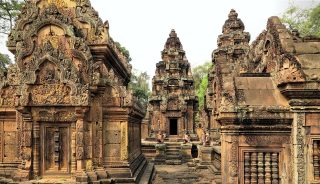
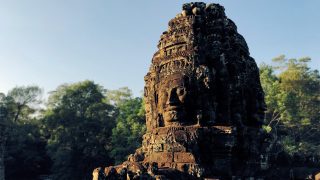
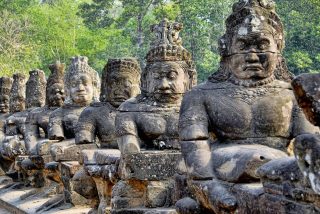
Banteay Chhmar is a vast Angkor-period temple complex in Cambodia, often approached from the Siem Reap area by travelers looking beyond the busiest routes. The site is known for its Buddhist imagery and long stretches of carved bas-reliefs that depict scenes of Angkorian life, set among towers, corridors, and partially reclaimed stonework.
What stays with me here is the sense of time: parts of the complex feel quietly suspended, with nature pressing in and restoration still in progress. It's also a place shaped by modern realities-serious looting damaged the site in recent decades-so today's visit connects directly to ongoing protection and conservation work. If you enjoy large archaeological sites, stone carving details, and a more low-impact style of travel, Banteay Chhmar fits well, especially when paired with community-based experiences that support nearby villages.
History and Significance of the Banteay Chhmar
Angkor-period origins
Banteay Chhmar was built during Cambodia's Angkor period and stands as an important example of Khmer temple architecture and religious art. The complex contains extensive Buddhist imagery and is especially noted for bas-reliefs that show aspects of Angkorian life, giving it value beyond its main shrines and towers.
Centuries of change and neglect
For more than 800 years, much of the site remained largely untouched, with structures gradually affected by weathering and encroaching vegetation. That long period of relative isolation helped preserve an atmospheric mix of ruin, carving, and overgrowth, even as parts of the complex deteriorated.
Looting, protection, and conservation today
In recent decades, Banteay Chhmar suffered severe looting that threatened its historical integrity. Conservation efforts are now underway through collaboration between the Cambodian government, local communities, and organizations including the Global Heritage Fund (GHF) and Heritage Watch, with a goal of safeguarding the temple while supporting local livelihoods. The site's placement on Cambodia's tentative list for UNESCO World Heritage designation reflects its cultural and historical importance.
Things to See and Do in the Banteay Chhmar
I focus first on the core temple areas and take time with the bas-reliefs-this is where the complex feels most vivid, with carved scenes that reward slow looking. I also like stepping back to notice how the scale of the enclosure and the scattered structures create a sense of a “city of stone,” rather than a single monument.
After that, I look for the quieter corners where nature has wrapped itself around the masonry and where conservation work is easier to spot. If you have the chance, I’d also consider community-based tourism options such as local guiding or a homestay, since these initiatives are designed to keep tourism low-impact while bringing income to nearby villages.
How to Get to the Banteay Chhmar
The nearest major airport for most travelers is Siem Reap-Angkor International Airport, with Phnom Penh International Airport as another option depending on your route. For the best deals and a seamless booking experience, check out these flights to Siem Reap on Booking.com.
Train travel is not a typical way to reach this area from Siem Reap, so most visitors plan their journey without relying on rail connections. Train schedules and bookings can be found on Omio.
Going by car is the most practical approach for reaching the temple complex, and driving also makes it easier to manage time in a remote area where services can be limited.
Is the Banteay Chhmar Worth Visiting?
Yes-Banteay Chhmar is worth visiting if you're motivated by Angkor-period art and large, atmospheric temple complexes, and if you're comfortable with a more remote, less polished experience. It's best for travelers who want to slow down with carvings and structure, and who appreciate that conservation is still ongoing. It's less essential if your time in the Siem Reap region is very tight and you're prioritizing the most convenient, fully serviced sites; in that case, treat it as optional rather than a priority.
What Other Travellers Say...
Banteay Samre Temple, on Sok San Road in Siem Reap, is an extensive, well-preserved Hindu temple complex in the Angkor Wat style offering detailed stone carvings, good bas-reliefs on lintels and an inner temple with much original work still intact; visitors note its large, intimate layout, quiet, atmospheric setting away from busy routes, easy photo opportunities along the walkways and courtyards, occasional restricted halls, and plenty of direct sunlight while exploring.


Practical Tips on Visiting the Banteay Chhmar
- Best time to visit: Go earlier in the day for softer light on stonework and a calmer feel before the heat builds.
- How long to spend: Plan at least a couple of hours to walk slowly and actually look at the bas-reliefs; longer works well if you add community-based activities.
- Accessibility: Expect uneven ground, rubble, and areas affected by overgrowth and restoration, which can make movement difficult for anyone with limited mobility.
- Facilities: As a remote site, amenities can be limited and variable; it’s smart to arrive prepared with water and basic essentials.
Where to Stay Close to the Banteay Chhmar
Base yourself in central Siem Reap (Old Market/Pub Street or Wat Bo area) for the widest choice of transport and easy day-trip logistics to Banteay Chhmar.
These Siem Reap hotels are practical bases for arranging a driver and starting early for the long day trip to Banteay Chhmar. Viroth's Hotel works well for a central Old Town location that’s easy for walking to dining and for quick tuk-tuk pickups, while still being convenient for early-morning departures with a private car. Borei Angkor Resort & Spa works well for well-placed for travellers prioritizing straightforward vehicle access and parking, making it simpler to meet a driver and get on the road without navigating the busiest lanes. Anantara Angkor Resort works well for a good fit if you want to be near the main road for smoother airport transfers and efficient pick-ups for longer excursions outside Siem Reap.
FAQs for Visiting the Banteay Chhmar
Getting There
Tickets & Entry
Visiting Experience
Tours, Context & Itineraries
Photography
Accessibility & Facilities
Food & Breaks Nearby
Safety & Timing
The Banteay Chhmar appears in our Complete Guide to Visiting Siem Reap!

Moira & Andy
Hey! We're Moira & Andy. From hiking the Camino to trips around Europe in Bert our campervan — we've been traveling together since retirement in 2020!
This website uses affiliate links which may earn a commission at no additional cost to you!
Nearby Attractions
- Banteay Thom (104.4) km
Buddhist Temple - Prasat Prei (105.1) km
Buddhist Temple - Angkor Thom North Gate (106.9) km
City Gate - Preah Palilay (107) km
Buddhist Temple - Banteay Srei (107.1) km
Buddhist Temple - Phimeanakas (107.3) km
Buddhist Temple - Banteay Prey Temple (107.4) km
Buddhist Temple - Terrace of the Leper King (107.4) km
Historic Site - Preah Khan (107.5) km
Buddhist Temple - Baphuon (107.5) km
Buddhist Temple