Prasat Prei, Siem Reap
Buddhist Temple near Siem Reap
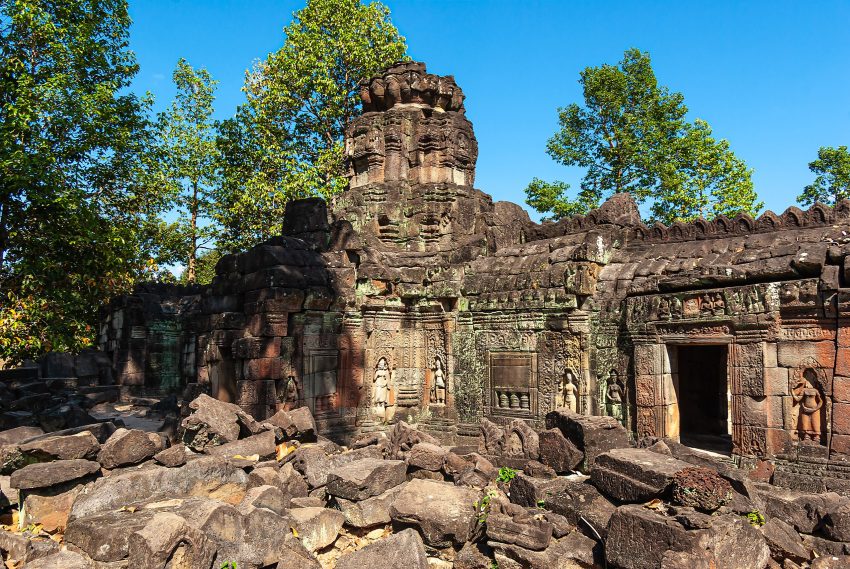
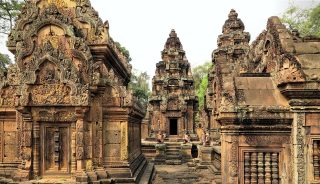
Prasat Prei is a compact temple ruin in the Siem Reap area of Cambodia, set on a small rise that once held a walled compound. Although the site is modest in scale, enough remains to understand its original layout: an entrance gopura (gate), traces of the surrounding wall, and two key structures that are still standing-the main sanctuary and a separate “library” building.
What makes Prasat Prei memorable is the detail that survives on the main temple. I come here to look closely at the stonework: apsara bas-reliefs, decorative roundels, and remnants of a lintel and pediment that hint at how ornate the sanctuary once was. It's best suited to travelers who enjoy quieter ruins and slow looking rather than big, fully restored monuments.
History and Significance of the Prasat Prei
When the compound was intact
Prasat Prei originally sat within a small, enclosed compound, with a wall defining the sacred space and a gopura marking the entrance. Inside, the plan appears to have been simple and focused: a single main sanctuary accompanied by a separate structure commonly described as a “library.”
Even though the site is small, the surviving ornamentation suggests the main temple was designed to impress up close. Carved apsaras and other decorative elements indicate careful workmanship intended for visitors moving through a compact, controlled space.
What survives today
Time has reduced the compound to its essentials, but the layout is still readable on the ground. Visitors can see remnants of the entrance gate and the surrounding wall, along with the standing library building and the main temple.
The remaining lintel and pediment fragments, along with bas-reliefs and roundels, are the clearest evidence of the sanctuary’s former richness. These details are the site’s main significance today: they reward close observation more than grand, panoramic views.
Things to See and Do in the Prasat Prei
I start with the main sanctuary and take time to circle it slowly, because the best experience here is noticing what’s still visible in the carvings. Look for the apsara bas-reliefs, decorative roundels, and any surviving elements of the lintel and pediment-small features that can be easy to miss if you rush.
After that, I walk over to the “library” building and then backtrack to spot the remains of the gopura and the line of the former enclosure wall. Pay special attention to the apsaras: one figure is often noted for having a surprisingly sinister expression compared with the more innocent-looking faces nearby.
How to Get to the Prasat Prei
The nearest major airport is Siem Reap-Angkor International Airport, from which you can continue by road into the Siem Reap area. For the best deals and a seamless booking experience, check out these flights to Siem Reap on Booking.com.
Siem Reap does not have a central passenger train service that works like a typical arrival point for most travelers, so coming by train is generally not the practical option for reaching the city. Train schedules and bookings can be found on Omio.
By car, this can be a stop that requires some navigation and may involve leaving the main road and approaching on foot, so plan for a bit of extra time compared with more signposted sights.
Is the Prasat Prei Worth Visiting?
Prasat Prei is worth a short stop if you enjoy smaller temple ruins and the satisfaction of spotting fine details-especially apsara carvings-in a quiet setting. It's best for travelers who are already exploring around Siem Reap and want something more low-key than the headline sites. Treat it as optional if you're short on time, prefer fully maintained attractions, or want easy access and clear signage; in that case, it's not a priority for a first-time, one-day visit.
What Other Travellers Say...
Chan Ta Uon Temple sits in Siem Reap and is noted simply by its name and location; visitors can find it at the Chan Ta Uon Temple address in Krong Siem Reap, Cambodia.


Practical Tips on Visiting the Prasat Prei
- Best time to visit: Go when the light is soft so the carvings read clearly, and aim for a time of day when you can linger without feeling rushed.
- How long to spend: 20-45 minutes is usually enough to walk the small compound and spend time with the carvings.
- Accessibility: Expect uneven ground and ruin surfaces; the site is on a small rise and may be difficult for wheelchairs or anyone who needs smooth paths.
- Facilities: Don’t count on on-site services; plan as if there are no restrooms, food, or staffed information at the ruins.
Where to Stay Close to the Prasat Prei
For most travelers, the best area to base yourself is central Siem Reap near the historic core, since it keeps you close to the city's main sights and makes day trips to outlying ruins easier to organize.
If you want a well-known full-service option with a classic resort feel, consider Raffles Grand Hotel d'Angkor. For a reliable upscale stay with strong facilities and easy access to the main roads around town, Borei Angkor Resort & Spa can suit travelers who like having more on-site amenities. If you prefer a central, modern base that’s convenient for getting around the city between outings, Park Hyatt Siem Reap is a practical choice.
FAQs for Visiting the Prasat Prei
Getting There
Tickets & Entry
Visiting Experience
Tours, Context & Itineraries
Photography
Accessibility & Facilities
Food & Breaks Nearby
Safety & Timing
The Prasat Prei appears in our Complete Guide to Visiting Siem Reap!

Moira & Andy
Hey! We're Moira & Andy. From hiking the Camino to trips around Europe in Bert our campervan — we've been traveling together since retirement in 2020!
This website uses affiliate links which may earn a commission at no additional cost to you!
Nearby Attractions
- Banteay Thom (1.5) km
Buddhist Temple - Preah Palilay (1.9) km
Buddhist Temple - Angkor Thom North Gate (2) km
City Gate - Phimeanakas (2.2) km
Buddhist Temple - Terrace of the Leper King (2.3) km
Historic Site - Baphuon (2.4) km
Buddhist Temple - Terrace of the Elephants (2.4) km
Historic Site - Prasat Suor Prat (2.7) km
Tower - Prasat Bayon (2.8) km
Buddhist Temple - Bayon Temple (2.8) km
Buddhist Temple