Angkor Thom North Gate, Siem Reap
City Gate in Siem Reap
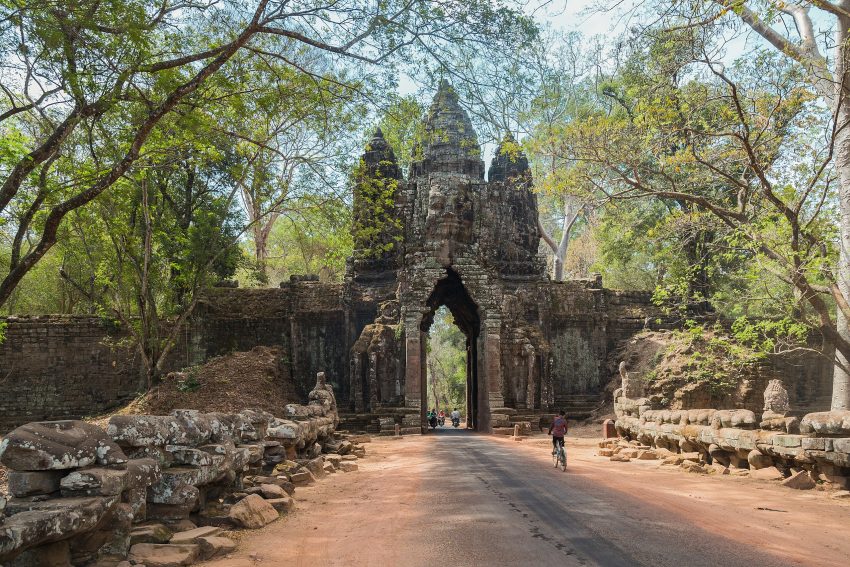
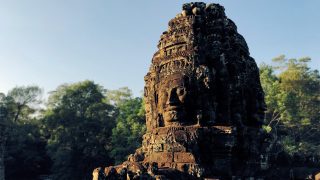
Angkor Thom North Gate (Dei Chhnang Gate) is one of the five grand gopura entrances into Angkor Thom, within the Angkor Archaeological Park near Siem Reap, Cambodia. Like the other city gates, it is built as a towering stone portal crowned with serene, smiling faces looking out to the cardinal directions, and reached by a broad causeway that crosses the moat.
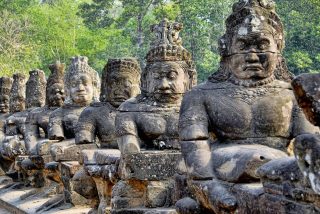
What stands out here is the approach: a naga balustrade where 54 devas on one side and 54 asuras on the other appear to pull a giant serpent toward the gate. Up close, I look for the tri-headed elephants (Airavata) by the doorway, the figures above them (often identified with Indra holding a vajra), and the smaller devata details tucked between the large faces. It’s best for travelers who enjoy slow-looking-carvings, weathered stonework, and short, scenic walks along the wall.
Table of Contents
- History and Significance of the Angkor Thom North Gate
- Things to See and Do in the Angkor Thom North Gate
- How to Get to the Angkor Thom North Gate
- Is the Angkor Thom North Gate Worth Visiting?
- Practical Tips on Visiting the Angkor Thom North Gate
- Where to Stay Close to the Angkor Thom North Gate
- FAQs for Visiting the Angkor Thom North Gate
History and Significance of the Angkor Thom North Gate
Angkor Thom’s ceremonial entrances
The North Gate is one of Angkor Thom’s principal entrances, designed as a monumental threshold into the walled city. Its plan follows the same grand concept as the South, West, East (often called the Gate of the Dead), and Victory gates: a causeway over the moat leading to a tall gopura that signals arrival and authority.
The gate's sculptural program is also consistent with the other entrances, using repeated motifs to create a unified “city edge” experience. The multi-faced tower, the naga balustrade, and the flanking guardian imagery work together to frame passage into Angkor Thom as a formal, symbolic act rather than a simple crossing.
Later additions and changing water flow
As with the other gates, laterite chambers sit to either side of the entry. At the North Gate, the chamber on the right (north side) is notably well-preserved and is still something of a puzzle in terms of original use.
A more recent change affects the approach: the causeway has been modified with culverts to allow water to pass, effectively making it function more like a bridge. This practical alteration is a reminder that the gate is part of a living landscape of water management as well as a historic monument.
Things to See and Do in the Angkor Thom North Gate
I start by walking the causeway slowly, because the naga balustrade is the main event: devas on one side and asuras on the other, all aligned as if hauling the serpent toward the gate. At the gopura itself, I spend time on the doorway zone-tri-headed elephants lifting lotus flowers, the figures above them, and the row of praying devata below the four large faces. Looking up, the three prasats on top (with the central tower rising highest) give the whole structure a layered silhouette.
For a more detailed stop, I seek out the distinctive carving on the northwest side of the entrance: a double-cobra among lotus with a hamsa, and a higher figure in prayer emerging from a lotus bud. If conditions allow, I also climb up to the wall for a close view of the faces framed by encroaching trees, then follow the wall walk (about 20-30 minutes) toward a corner Prasat Chrung for a compact, atmospheric circuit.
How to Get to the Angkor Thom North Gate
The nearest airport is Siem Reap-Angkor International Airport (SAI), with onward road transfer to Siem Reap and the Angkor Archaeological Park. For the best deals and a seamless booking experience, check out these flights to Siem Reap on Booking.com.
Siem Reap has rail service via the new station outside town; from there, continue by road transport into the city and onward to Angkor. Train schedules and bookings can be found on Omio.
By car, you can approach via the Angkor road network and stop near the gate area, but it's often simplest to include it as part of a broader Angkor Thom loop rather than a standalone drive.
Is the Angkor Thom North Gate Worth Visiting?
Yes-Angkor Thom North Gate is worth a short stop if you want a calmer alternative to the busier entrances and you enjoy close-up stone details, especially the naga causeway and the carved figures around the doorway. The exterior and approach are the highlights; the “inside” is mainly about the wall walk and views rather than interior rooms. It's less essential if you're tightly time-limited and already plan to see another Angkor Thom gate (the overall design language is shared), and you can treat it as optional if you're not interested in carvings or short walks.
What Other Travellers Say...
Gate of the Dead, an eastern entrance to Angkor Thom located east of the Bayon Temple, is a multi-faced tower gate flanked by rows of demon and god statues along a causeway; tucked into the jungle, it offers a quiet, atmospheric and largely untouched vibe best reached on foot, by bike, or remoulk, with a nearby path that climbs for views of the surrounding nature, though its sculptures are reported to be less well preserved than those at the more visited South Gate.


Practical Tips on Visiting the Angkor Thom North Gate
- Best time to visit: Go early or later in the day for softer light on the faces and a quieter approach along the causeway.
- How long to spend: Allow 15-30 minutes for the gate and carvings, or 45-60 minutes if you add the wall walk toward a corner Prasat Chrung.
- Accessibility: The approach is on uneven historic surfaces, and climbing the wall involves steps and narrow areas; it may not suit limited mobility.
- Facilities: Facilities are limited at the gate itself, so plan restrooms and water stops as part of your wider Angkor Archaeological Park visit.
Where to Stay Close to the Angkor Thom North Gate
For most travelers, the best base is central Siem Reap near the Old Market/Pub Street area if your priority is easy dining, tour pickups, and a culture-heavy itinerary with early starts into Angkor. From there, you can reach Angkor Thom efficiently while still having plenty of evening options back in town.
If you want a well-known, comfortable base with a central location, consider Park Hyatt Siem Reap. For a resort-style stay with more space and a calmer feel while still being convenient for Angkor day trips, Raffles Grand Hotel d'Angkor is a classic choice. If you prefer a large, full-service property close to the main road toward Angkor, Sofitel Angkor Phokeethra Golf & Spa Resort can suit travelers who value on-site amenities and a quieter setting.
FAQs for Visiting the Angkor Thom North Gate
Getting There
Tickets & Entry
Visiting Experience
Tours, Context & Itineraries
Photography
Accessibility & Facilities
Food & Breaks Nearby
Safety & Timing
The Angkor Thom North Gate appears in our Complete Guide to Visiting Siem Reap!

Moira & Andy
Hey! We're Moira & Andy. From hiking the Camino to trips around Europe in Bert our campervan — we've been traveling together since retirement in 2020!
This website uses affiliate links which may earn a commission at no additional cost to you!
Planning Your Visit
Nearby Attractions
- Preah Palilay (0.8) km
Buddhist Temple - Terrace of the Leper King (0.9) km
Historic Site - Terrace of the Elephants (1.1) km
Historic Site - Phimeanakas (1.1) km
Buddhist Temple - Prasat Suor Prat (1.2) km
Tower - Baphuon (1.3) km
Buddhist Temple - Preah Khan (1.5) km
Buddhist Temple - Prasat Bayon (1.6) km
Buddhist Temple - Bayon Temple (1.6) km
Buddhist Temple - Victory Gate of Angkor Thom (1.8) km
City Gate