Banteay Prey Temple, Siem Reap
Buddhist Temple near Siem Reap
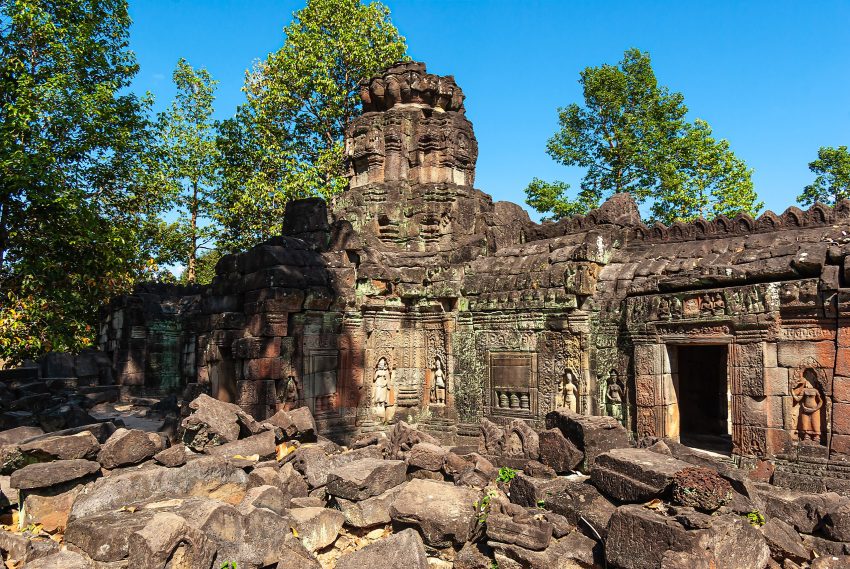
Banteay Prey Temple (also called Prasat Banteay Prei) is a late 12th-early 13th century Angkor-period temple complex in the Angkor Archaeological Park near Siem Reap, Cambodia. It sits just north of Preah Khan and just off the Grand Circuit road; if you approach from the road you'll typically pass Prasat Prei first, with the larger Banteay Prey about 100 metres further on.
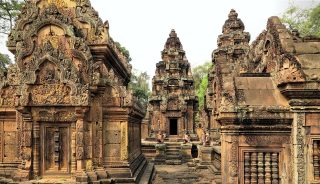
What makes this stop appealing is its low-key, rarely visited feel and the chance to look closely at details without crowds. I come here for the gopuras, the galleried enclosure, and the well-preserved apsara bas-reliefs and richly carved door jambs that are characteristic of the period. In the wet season, the usually dry moat can fill and the greenery makes the ruins feel especially atmospheric, while recent work on the north gopura shows ongoing efforts to stabilize the site.
Table of Contents
- History and Significance of the Banteay Prey Temple
- Things to See and Do in the Banteay Prey Temple
- How to Get to the Banteay Prey Temple
- Is the Banteay Prey Temple Worth Visiting?
- Practical Tips on Visiting the Banteay Prey Temple
- Where to Stay Close to the Banteay Prey Temple
- FAQs for Visiting the Banteay Prey Temple
History and Significance of the Banteay Prey Temple
Jayavarman VII era (late 12th to early 13th century)
Banteay Prey was built during the reign of Jayavarman VII, placing it in the late 12th to early 13th century. Its layout suggests a complex that once had real standing: an outer wall, an inner moat, and an inner galleried enclosure organized around a single central sanctuary.
The plan includes causeways crossing the moat to the east and west, with four gopuras (gate towers) and pavilions at each corner of the inner enclosure. Carved door jambs and surviving decorative elements-such as apsara bas-reliefs-reflect the artistic language associated with this period.
Inscriptions and later activity
Inscriptions on door jambs and other parts of the temple were recorded in the early 1900s by Cœdès and later translated by Soutif. These texts preserve practical historical information, including names connected with the construction and the deity worshiped at the site.
On the east side, between the moat and the outer wall (south of the causeway), there are linear laterite remains of another structure. It has been proposed that this may be a post-Angkor Buddhist terrace, though the identification remains uncertain.
Conservation today
Parts of the complex have seen restoration work in recent years, including the north gopura. The result is a site that still reads as a ruin, but with key elements being preserved for future visitors.
Things to See and Do in the Banteay Prey Temple
I start by walking the approach and looking for the overall footprint: the outer boundary, the moat line, and the causeway alignment that frames the eastern entrance. From there, I head into the inner enclosure to explore the gopuras and the surviving carvings-especially the apsara bas-reliefs and the richly decorated door jambs.
For smaller details, I look at the eastern gopura for the vertical medallions and any remaining lintel fragments. At the eastern entrance where the moat is crossed, I also check out the remnants of the short naga balustrade and the large garuda ornament that now lies on the ground, then wander to the east-side laterite lines to see the possible later terrace remains.
How to Get to the Banteay Prey Temple
The nearest major airport is Siem Reap-Angkor International Airport (SAI), from which you can continue to Siem Reap and onward into the Angkor Archaeological Park. For the best deals and a seamless booking experience, check out these flights to Siem Reap on Booking.com.
Siem Reap’s rail options are limited compared with road travel, so most visitors rely on buses, private transfers, or taxis rather than train connections. Train schedules and bookings can be found on Omio.
By car or tuk-tuk, Banteay Prey is typically reached as a short detour off the Grand Circuit near Preah Khan, and you can stop near the access point before walking in.
Is the Banteay Prey Temple Worth Visiting?
Yes-Banteay Prey Temple is worth a short stop if you're already on the Grand Circuit or visiting nearby Preah Khan and want a quieter, more contemplative ruin with strong carving details. It's best for travelers who enjoy exploring less-visited corners of Angkor and noticing architectural layout (moat, causeways, gopuras) and close-up relief work. It's less essential if you're prioritizing only the headline temples, short on time, or prefer fully restored, easy-to-navigate sites; in that case, treat it as optional and focus on the bigger complexes.
What Other Travellers Say...
Banteay Prei Temple is a small, tucked-away Angkor site just off the usual routes and often quiet enough to feel like a private visit; it's relatively unrestored and easy to walk around, with interesting features such as termite mounds and surrounding large trees, and makes a convenient short detour from Preah Khan if your driver can stop for a few minutes.


Practical Tips on Visiting the Banteay Prey Temple
- Best time to visit: Visit in the wet season if you want the moat and greener scenery; otherwise go when temperatures are cooler for a more comfortable walk around the ruins.
- How long to spend: Plan for a brief visit as part of a larger Angkor loop; it pairs naturally with nearby stops on the Grand Circuit.
- Accessibility: Expect uneven ground and ruin surfaces around gopuras and enclosure areas, which can be challenging for limited mobility.
- Facilities: This is a quiet, lightly visited site; don’t rely on on-site services and plan essentials before you leave the main Angkor routes.
Where to Stay Close to the Banteay Prey Temple
Base yourself in central Siem Reap near the river/Old Market area for the easiest tuk-tuk access to Angkor's Grand Circuit while still being close to restaurants and practical services.
These hotels are reliable, central bases with straightforward transport to the Angkor Archaeological Park. FCC Angkor by Avani works well for good choice if you want a central, easy pickup point for tuk-tuks and quick access to both Angkor day trips and town amenities. Jaya House River Park works well for best for a quieter stay by the river while still being a short ride from the park road and Siem Reap’s dining areas. Raffles Grand Hotel d'Angkor works well for convenient if you prefer a calm, leafy setting near major roads for smooth departures to Angkor and easy returns to town.
FAQs for Visiting the Banteay Prey Temple
Getting There
Tickets & Entry
Visiting Experience
Tours, Context & Itineraries
Photography
Accessibility & Facilities
Food & Breaks Nearby
Safety & Timing
The Banteay Prey Temple appears in our Complete Guide to Visiting Siem Reap!

Moira & Andy
Hey! We're Moira & Andy. From hiking the Camino to trips around Europe in Bert our campervan — we've been traveling together since retirement in 2020!
This website uses affiliate links which may earn a commission at no additional cost to you!
Nearby Attractions
- Preah Khan (1) km
Buddhist Temple - Krol Ko Temple (2) km
Buddhist Temple - Neak Pean (2.1) km
Buddhist Temple - Neak Poan – The Mystical Island Temple (2.1) km
Buddhist Temple - Ta Nei Temple (2.1) km
Buddhist Temple - Angkor Thom North Gate (2.4) km
City Gate - Thommanon Temple (2.5) km
Buddhist Temple - Victory Gate of Angkor Thom (2.6) km
City Gate - Prasat Leak Neang (2.7) km
Buddhist Temple - Ta Keo (2.8) km
Buddhist Temple