Terrace of the Leper King, Siem Reap
Historic Site in Siem Reap
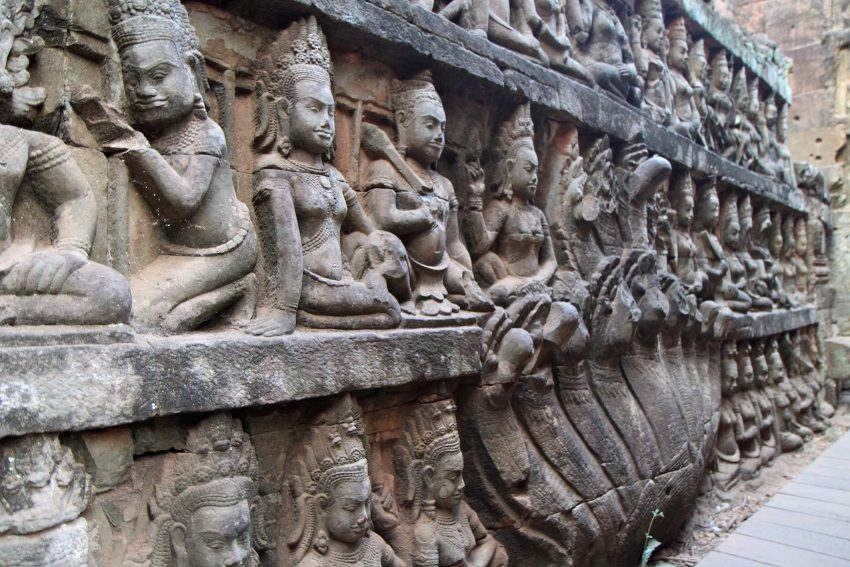
Terrace of the Leper King is a carved stone terrace in the northwest corner of Angkor Thom's Royal Square, within the Angkor Archaeological Park near Siem Reap, Cambodia. Built in the Bayon style during the reign of King Jayavarman VII, it sits close to the Terrace of the Elephants and is easy to add to a circuit through Angkor Thom.
What makes this stop memorable is the dense, high-relief sculpture work along the terrace walls and the story behind its modern name. A statue found here was linked to “Dharmaraja,” a title associated with Yama, the Hindu judge of the dead; discoloration and moss on the figure helped spark the “Leper King” label, which also echoes a local legend about a leprosy-afflicted Angkorian king. It’s best for travelers who like close-up stone carving, mythology, and short, detail-focused visits between larger temples.
Table of Contents
- History and Significance of the Terrace of the Leper King
- Things to See and Do in the Terrace of the Leper King
- How to Get to the Terrace of the Leper King
- Is the Terrace of the Leper King Worth Visiting?
- Practical Tips on Visiting the Terrace of the Leper King
- Where to Stay Close to the Terrace of the Leper King
- FAQs for Visiting the Terrace of the Leper King
History and Significance of the Terrace of the Leper King
Angkor Thom and the Bayon-era terrace
The Terrace of the Leper King was constructed in the Bayon architectural style during the reign of Jayavarman VII, a period closely associated with major building projects at Angkor. Its placement on the Royal Square in Angkor Thom suggests it played a formal role within the city's ceremonial core. The structure is often described as a U-shaped terrace, and some interpretations connect it with royal rites.
The “Leper King” name and the Dharmaraja inscription
The terrace’s modern name comes from a sculpture discovered at the site and later associated with the “Leper King.” The nickname likely grew from the statue’s surface discoloration and moss, which resembled symptoms of leprosy, and from a Cambodian legend about an Angkorian king said to have suffered from the disease. An inscription on the statue identifies it as “Dharmaraja,” a title linked to Yama, the Hindu god of death and divine judge who weighs deeds after death.
Mythology carved into stone
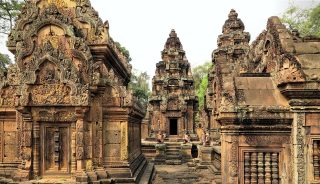
Beyond the naming story, the terrace is valued for its intricate carving program, which reflects Hindu mythology and religious ideas present during the Khmer Empire. The decorative walls reward slow looking, with layered figures and motifs that feel more like a sculpted tapestry than a simple retaining wall. As part of Angkor Thom, it adds context to how belief, kingship, and public space were expressed through architecture.
Things to See and Do in the Terrace of the Leper King
I focus first on the terrace walls themselves: walk the length of the platform and spend time scanning the reliefs at different distances, because the carvings read differently up close than they do from a few steps back. The density of figures and ornament is the main attraction here, and it’s easy to miss details if you treat it as a quick photo stop.
After that, I look for the statue associated with the site's name and use it as a prompt to compare what you're seeing with the Dharmaraja/Yama interpretation. If you're visiting with the Terrace of the Elephants nearby, I like to pause between the two and notice how the mood shifts from broad ceremonial space to a more intimate, detail-driven wall of imagery.
How to Get to the Terrace of the Leper King
The nearest airport is Siem Reap-Angkor International Airport (SAI), from which you can continue to Siem Reap and then onward to Angkor Archaeological Park. For the best deals and a seamless booking experience, check out these flights to Siem Reap on Booking.com.
Siem Reap does not have a widely used passenger rail service for arrivals, so train travel is generally not the practical way to reach the city for this visit. Train schedules and bookings can be found on Omio.
By car or tuk-tuk from Siem Reap, you can reach Angkor Thom and stop near the Royal Square area, with roadside access close to the terrace.
Is the Terrace of the Leper King Worth Visiting?
Yes-this is worth a short stop if you're already exploring Angkor Thom, especially if you enjoy close-up carving and the blend of mythology and local legend behind the “Leper King” name. It's a relatively small monument compared with the major temples, so it's less essential if your time is tight and you prefer big architectural interiors over exterior relief work. Skip it if you're rushing through Angkor and only want the headline sites; otherwise, treat it as an efficient add-on next to the Terrace of the Elephants.
What Other Travellers Say...
Preah Ponlea Sdach Komlong (Terrace of the Leper King) in Angkor Thom is a multi-tiered late 12th-century terrace noted for its intricate Hindu-mythology carvings and richly decorated retaining walls; it stands north of the Terrace of the Elephants and is relatively compact and easy to reach from the road, with visitors praising its finely executed bas‑reliefs, hidden carvings (including a five‑headed horse), a maze-like western wall and a small internal corridor filled with detailed sculpture, making it a rewarding short stop for history and photography enthusiasts.





Practical Tips on Visiting the Terrace of the Leper King
- Best time to visit: Go earlier in the day to look closely at the carvings with fewer people around and more comfortable temperatures.
- How long to spend: Plan about 10-25 minutes, depending on how much time you want to spend reading the relief details.
- Accessibility: Expect uneven stone surfaces and steps typical of Angkor monuments; take it slowly if you have mobility limitations.
- Facilities: This is a monument stop within the Angkor park area; don’t assume facilities are immediately beside the terrace.
Where to Stay Close to the Terrace of the Leper King
For an Angkor-focused, culture-heavy itinerary, the most practical base is central Siem Reap, where you can arrange early starts and quick returns between temple sessions.
Staying around the city center keeps logistics simple for Angkor Thom day trips and evening downtime. Options that are commonly chosen for this style of trip include Park Hyatt Siem Reap for travelers who want a polished, central base, Raffles Grand Hotel d'Angkor for a quieter feel closer to the Angkor road, and Golden Temple Boutique if you prefer a smaller property while still being convenient for getting to the park.
FAQs for Visiting the Terrace of the Leper King
Getting There
Tickets & Entry
Visiting Experience
Tours, Context & Itineraries
Photography
Accessibility & Facilities
Food & Breaks Nearby
Safety & Timing
The Terrace of the Leper King appears in our Complete Guide to Visiting Siem Reap!

Moira & Andy
Hey! We're Moira & Andy. From hiking the Camino to trips around Europe in Bert our campervan — we've been traveling together since retirement in 2020!
This website uses affiliate links which may earn a commission at no additional cost to you!
Nearby Attractions
- Terrace of the Elephants (0.2) km
Historic Site - Phimeanakas (0.4) km
Buddhist Temple - Prasat Suor Prat (0.4) km
Tower - Preah Palilay (0.4) km
Buddhist Temple - Baphuon (0.5) km
Buddhist Temple - Prasat Bayon (0.7) km
Buddhist Temple - Bayon Temple (0.7) km
Buddhist Temple - Angkor Thom North Gate (0.9) km
City Gate - Angkor Thom (1.2) km
Buddhist Temple - Victory Gate of Angkor Thom (1.5) km
City Gate