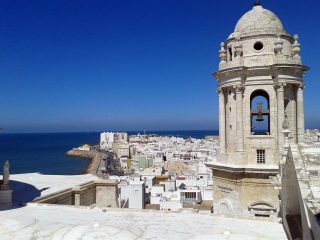
Arco de los Blancos, Cádiz
Area and Historic Building in Cádiz
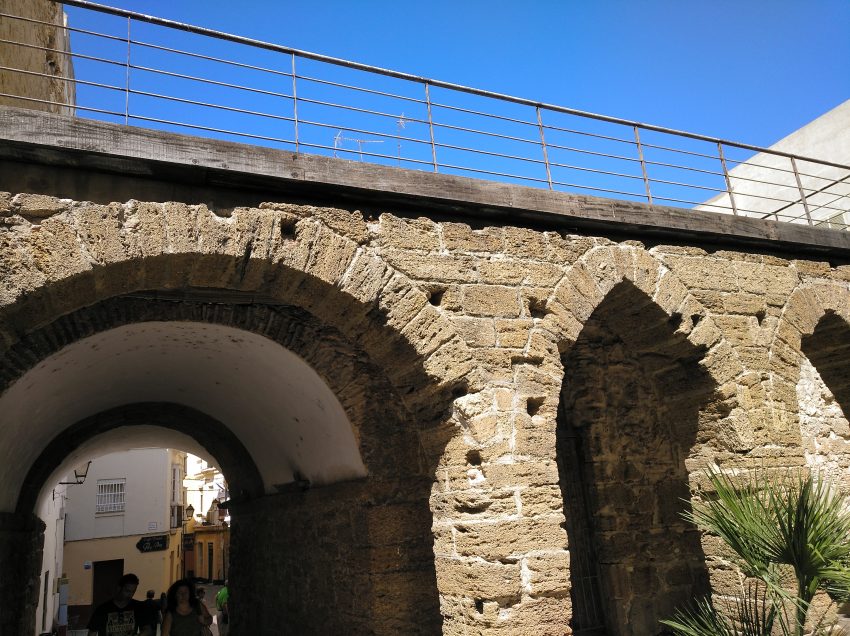
The Arco de los Blanco is one of the most atmospheric remnants of Cádiz's medieval past, an eastern gateway that once formed part of the city's fortified Roman and later medieval walls. Originally known as the Puerta de Tierra in the 13th century, it was constructed during the reign of Alfonso X el Sabio as the main eastern entrance into the city. Built of masonry and lime and crowned with crenellations and towers, it marked a fortified threshold into a Cádiz that was still compact, walled, and strategically defended. Today, it remains one of the things to do in Cádiz for visitors fascinated by ancient gateways and the layered transitions between Roman, medieval, and early modern architecture.
The arch once adjoined the Castle of the Villa, a medieval fortress that has since disappeared, but the gateway endured thanks to centuries of continued use and modification. In the 16th century, a religious sculpture of the Virgin of the Remedies hung above the arch, transforming it from mere fortification into a place of devotion. After 1621, when a wealthy merchant named Felipe Blanco built a private chapel on the same spot, the gateway acquired its present name. Today, it is a great place to visit on a walking tour of Cádiz, offering a quiet but meaningful look into the city's early urban fabric.
Table of Contents
- History and Significance of Arco de los Blanco
- Things to See and Do in Arco de los Blanco
- How to Get to Arco de los Blanco
- Practical Tips on Visiting Arco de los Blanco
- Where to Stay close to Arco de los Blanco
- Is Arco de los Blanco Worth Visiting?
- FAQs for Visiting Arco de los Blanco
- Nearby Attractions to Arco de los Blanco
History and Significance of Arco de los Blanco
The origins of the arch stretch back to Cádiz's Roman and medieval foundations. As the eastern entryway to the city, the Puerta de Tierra was built in the 13th century under Alfonso X as part of a defensive wall designed to protect Cádiz from land-based attacks. Its construction in masonry and lime, coupled with towers and crenellations, reflected the military priorities of a city exposed to both naval and terrestrial threats.
Over time, the gateway became more than a defensive structure. The addition of the Virgin of the Remedies sculpture in the 16th century signified a shift toward religious symbolism, blending sacred imagery with civic architecture. This layering deepened in 1621, when Felipe Blanco-an influential merchant-built a small private chapel over the arch. The chapel's presence transformed the Puerta de Tierra into the Arco de los Blanco, marking the gateway as both a family legacy and a devotional landmark.
Today, the arch stands as a quietly compelling reminder of Cádiz’s medieval identity and early urban boundaries. Its survival offers insight into the city’s evolution from fortified medieval enclave to thriving Atlantic port.
Things to See and Do in Arco de los Blanco
Walk beneath the arch to appreciate its modest yet noble architecture. The remaining stonework hints at its former defensive importance, while the chapel structure above suggests its later devotional role. Although the original sculpture of the Virgin of the Remedies is no longer present, the space still carries a sense of historical layering.
Explore the surrounding streets, which retain traces of medieval urban design. The arch is close to key attractions such as the Arco del Pópulo and the Roman Theater, making it easy to include as part of a broader exploration of Cádiz's oldest quarter.
Photography lovers will enjoy capturing the arch from both sides, especially in the soft morning or late-afternoon light that highlights the textures of its stone.
How to Get to Arco de los Blanco
Arco de los Blanco lies on the eastern edge of Cádiz’s old town, within easy walking distance of major landmarks.
Travelling by air, visitors usually fly into Jerez Airport or Seville Airport before continuing to Cádiz by train or bus. For the best deals and a seamless booking experience, check out these flights to Cádiz on Booking.com.
If arriving by train, Cádiz station is roughly a 10-12 minute walk from the arch. Follow signs into the old town and toward Barrio del Pópulo. Train schedules and bookings can be found on Omio.
If travelling by car, it’s best to park in one of the nearby public car parks on the edge of the old town and walk in, as the medieval streets are not suitable for driving. If you are looking to rent a car in Spain I recommend having a look at Discover Cars, first, as they compare prices and review multiple car rental agencies for you.
Practical Tips on Visiting Arco de los Blanco
- Best time to visit Arco de los Blanco: Early morning or evening for atmospheric light and fewer people.
- Entrance fee in Euros: Free access.
- Opening hours: Open at all times as a public passageway.
- Official website: Check Cádiz tourism sources for nearby attractions.
- How long to spend: 10-20 minutes, or longer when exploring the surrounding district.
- Accessibility: Fully accessible; some cobbled surfaces nearby.
- Facilities: Shops and cafés within a short walk.
- Photography tip: Capture the arch from an angle that shows the chapel structure above.
- Guided tours: Often included on historical walking tours of the old city.
- Nearby food options: Plenty of tapas bars in the nearby Pópulo and cathedral districts.
Where to Stay close to Arco de los Blanco
Staying in Cádiz’s old town allows you to explore the Arco de los Blanco and surrounding heritage sites with ease. Consider Hotel La Catedral for a classic old-town stay near major landmarks. For comfort and modern style, Senator Cádiz Spa Hotel is a reliable choice. Travellers seeking sea views and contemporary design may enjoy Parador de Cádiz.
Is Arco de los Blanco Worth Visiting?
Yes. Though modest in size, Arco de los Blanco is rich in historical meaning. As a medieval gateway transformed by later religious devotion, it represents the layered identity of Cádiz and provides a memorable stop for history lovers exploring the city's earliest streets.
What Other Travellers Say...

Arco de los Blanco on C. Mesón in Cádiz is a small surviving section of the old city wall and an ancient arch in the El Pópulo district; visitors say it's a simple but historic spot worth a quick look while wandering the narrow streets nearby, especially if you're exploring the Roman theatre and surrounding neighborhood.


FAQs for Visiting Arco de los Blanco
Nearby Attractions to Arco de los Blanco
- Arco del Pópulo - A historic gateway blending Islamic and early modern influences.
- Roman Theater of Cádiz - An ancient amphitheatre hidden beneath the medieval quarter.
- Cádiz Cathedral - A golden-domed landmark with panoramic tower views.
- Plaza de San Juan de Dios - A lively square near the port.
- Mercado Central de Abastos - A vibrant market full of seafood and Andalusian flavours.
The Arco de los Blancos appears in our Complete Guide to Visiting Cádiz!

Moira & Andy
Hey! We're Moira & Andy. From hiking the Camino to trips around Europe in Bert our campervan — we've been traveling together since retirement in 2020!
This website uses affiliate links which may earn a commission at no additional cost to you!
Planning Your Visit
24 Hours
Free
Nearby Attractions
- Cádiz Roman Theatre (0.1) km
Ruins - Casa Palacio del Almirante (0.1) km
Historic Building, Historic Site and Palace - Arco del Pópulo (0.1) km
Historic Building - Church Santa Cruz (Old Cadiz Cathedral) (0.1) km
Cathedral, Church and Religious Building - City Hall of Cádiz (0.1) km
Attraction, Historic Building and Town Hall - Cádiz Cathedral (0.2) km
Cathedral and Historic Building - Freiduria Las Flores 1 (0.5) km
Attraction and Café - Puerta de Tierra (0.5) km
Historic Building - Mercado Central (0.5) km
Market - Gadir Archaeological Site (0.6) km
Historic Site