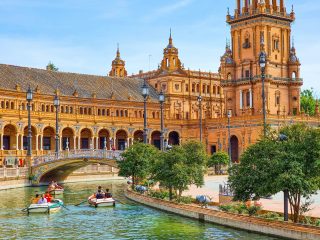
Archeological Museum, Seville
Historic Building and Museum in Seville

The Museo Arqueológico de Sevilla is Seville's main archaeological museum, housed in the Pabellón del Renacimiento, a handsome 1929 exposition building set in the greenery beside Plaza de España. When it's open, it's the place to connect the city you're walking through today with the civilisations that shaped the region long before Seville became an imperial port.
Its collections span prehistory and the Bronze Age through Phoenician and Tartessian cultures, then into a substantial Roman core drawn largely from Italica, plus later Visigothic, Islamic, and medieval material. It's one of the things to see in Seville if you want more than postcard monuments, and it pairs naturally with a walking tour of Seville that includes the park and the 1929 pavilions.
Table of Contents
- History and Significance of the Museo Arqueológico de Sevilla
- Things to See and Do in the Museo Arqueológico de Sevilla
- How to Get to the Museo Arqueológico de Sevilla
- Practical Tips on Visiting the Museo Arqueológico de Sevilla
- Where to Stay Close to the Museo Arqueológico de Sevilla
- Is the Museo Arqueológico de Sevilla Worth Visiting?
- For Different Travelers
- FAQs for Visiting Museo Arqueológico de Sevilla
- Nearby Attractions to the Museo Arqueológico de Sevilla
History and Significance of the Museo Arqueológico de Sevilla
The museum's roots go back to the late 19th century, when Seville began building a public collection of antiquities, many of them tied to nearby Roman sites. Over time, as archaeology professionalised and excavations expanded, the collection grew into a regional story rather than a single-site display.
Its current home links the museum to a different chapter of Seville’s identity: the Ibero-American Exposition of 1929, which left the city a legacy of grand pavilions, civic spaces, and ambitious architecture. The museum building itself is part of that legacy, and its setting in the park encourages you to experience history as both objects and place.
In practical terms, the museum helps explain why Andalusia's history is never one straight line. You see layers of trade, conquest, and cultural exchange in the objects themselves, and you understand how Seville sits in a landscape where Roman cities, Phoenician routes, and medieval kingdoms all left their mark.
Things to See and Do in the Museo Arqueológico de Sevilla
At the top of most wish-lists is the museum’s connection to Italica, with Roman-era sculpture and material that makes the region's imperial story feel immediate. When you're standing in front of statuary associated with the Hadrianic period, the “Seville as Roman hinterland” idea becomes a lot more concrete.
Another headline piece is the El Carambolo treasure, discovered near Seville in 1958, which pulls you into Tartessian and Phoenician debates and the wider Mediterranean networks that reached into this corner of Iberia. Even if you don't follow every scholarly argument, the craftsmanship and symbolism are striking.
Because the museum is currently closed for renovation, the best “right now” experience is to treat it as a context stop: admire the pavilion setting in the park, then build your archaeology day around Italica and the 1929 landscape nearby. If temporary exhibitions or off-site displays are operating, check the official website before you plan your route.
How to Get to the Museo Arqueológico de Sevilla
Seville Airport (SVQ) is the closest airport, and the simplest approach is to reach the city centre first, then continue to the park area by taxi, bus, or a walk if you enjoy stretching your legs. For the best deals and a seamless booking experience, check out these flights to Seville on Booking.com.
Seville-Santa Justa is the main train station, and from there you can reach the Plaza de España area by taxi or local bus routes that serve the park and Prado/San Bernardo connections. Train schedules and bookings can be found on Omio.
From the historic centre, the walk to the museum area is pleasant and scenic, especially if you cross toward Plaza de España and continue into Parque de María Luisa.
Driving is doable, but it’s generally easier to avoid the old-town traffic patterns and instead park once on the edge of the centre or near the park, then walk the last stretch. If you are looking to rent a car in Spain I recommend having a look at Discover Cars, first, as they compare prices and review multiple car rental agencies for you.
Practical Tips on Visiting the Museo Arqueológico de Sevilla
- Entrance fee: Free for EU visitors with valid ID; €1.50 for other visitors (when open).
- Opening hours: Daily: Closed (temporarily closed for renovation).
- Official website: http://www.museosdeandalucia.es/web/museoarqueologicodesevilla
- Best time to visit: When it reopens, weekday mornings are ideal for a quiet, museum-first visit before heading outdoors to the park and nearby sites. In the meantime, plan this area early or late in the day for softer light around the pavilions.
- How long to spend: When open, a focused visit takes 90 minutes; archaeology fans can spend two hours or more. If it remains closed during your trip, budget 20-30 minutes for the pavilion area and then shift your time to Italica.
- Accessibility: The park setting is generally easy for a slow pace, but museum access details can change during renovation phases, so check current notes before you go.
- Facilities: Expect facilities to depend on the museum’s operational status; plan for water and sun protection if you’re combining it with long park walks.
Where to Stay Close to the Museo Arqueológico de Sevilla
For a culture-heavy itinerary, base yourself centrally so you can walk to Seville’s main monuments; if your focus is the 1929 pavilions, park museums, and easy transport connections, the Prado-El Porvenir area is the most convenient base.
For a polished, historic stay with excellent access to the core sights, Hotel Alfonso XIII, a Luxury Collection Hotel, Seville keeps you close to both the old town and the park edge. If you want to be right by Plaza de España and the museum zone, Meliá Sevilla is hard to beat for location and day-to-day convenience. For a modern option that’s still walkable to the park and well placed for moving around the city, Hotel Giralda Center is a strong choice.
Is the Museo Arqueológico de Sevilla Worth Visiting?
Yes, especially once it's fully open again, because it provides the clearest object-based story of Seville's ancient past. If it remains closed during your visit, the area is still worth your time for the 1929 setting and as a jumping-off point for Italica and the park.
What Other Travellers Say...

Archaeological Museum of Seville at Pl. América, s/n showcases the locally found Treasure of El Carambolo alongside Roman relics and mosaics; visitors have noted an interesting underground floor with prehistoric finds, a peaceful, well-designed layout and many artifacts though some displays lack detailed explanations in English. Reviews disagree on current accessibility—several mention free or reduced entry for EU citizens and a small fee for others, while others report the building appearing closed or under construction—so allow for possible closure or restricted access when planning your visit.


For Different Travelers
Families with Kids
If the museum is open, focus on the most visually immediate sections: large Roman pieces, striking jewellery, and anything with clear “story” hooks like treasure finds. Short, high-impact loops work better than a full chronological march.
If it's closed, families can still enjoy this as a park-and-history morning: Plaza de España first, then a shaded stroll through the pavilions, and a simple plan for snacks and breaks. The area is forgiving if you need to change pace quickly.
Couples & Romantic Getaways
For couples, this museum area is as much about atmosphere as artefacts, especially with the park and 1929 architecture around it. It’s a calm contrast to the intensity of Seville’s busiest monument streets.
Build it into a slower day: a scenic walk, one major cultural stop, then a relaxed meal nearby. Even if the museum is closed, the setting still delivers a memorable Seville mood.
Budget Travelers
When open, the museum is typically excellent value, and it pairs well with low-cost sightseeing in the park and free exterior architecture around Plaza de España. You can make a full day here without stacking expensive tickets.
If it's closed, keep it as a free architecture-and-park stop, then spend your paid “history ticket” on Italica, where the scale and setting deliver big impact for the cost.
History Buffs
This is the place that turns Seville's history from “medieval and later” into a much deeper timeline. The Roman material tied to Italica is especially valuable for understanding the region's imperial importance.
If closure limits access, history buffs should still treat this area as essential context, then go straight to Italica for the site experience. Combining the park pavilions with Roman ruins makes Seville's layers feel unusually clear.
FAQs for Visiting Museo Arqueológico de Sevilla
Getting There
Tickets & Entry
Visiting Experience
Photography
Accessibility & Facilities
Nearby Attractions to the Museo Arqueológico de Sevilla
- Plaza de España: Seville's grand 1929 showpiece, perfect for a slow walk and wide-angle photos.
- Parque de María Luisa: A shaded, landscaped park that feels like the city's outdoor living room on warm days.
- Museo de Artes y Costumbres Populares: A nearby museum that adds local culture and everyday history to your park-area route.
- Real Alcázar of Seville: The city's essential palace complex, best visited with an early start.
- Italica: A major Roman site just outside Seville, ideal if you want ruins, scale, and historical immersion.
The Archeological Museum appears in our Complete Guide to Visiting Seville!

Moira & Andy
Hey! We're Moira & Andy. From hiking the Camino to trips around Europe in Bert our campervan — we've been traveling together since retirement in 2020!
This website uses affiliate links which may earn a commission at no additional cost to you!
Planning Your Visit
Daily: Closed (temporarily closed for renovation).
Free for EU visitors with valid ID; €1.50 for other visitors (when open).
Nearby Attractions
- Plaza de America (0.1) km
Historic Site and Park - Museo de Artes y Costumbres Populares (0.1) km
Historic Building and Museum - Parque de María Luisa (0.4) km
National Park and Park - Plaza de España (0.7) km
Historic Site and Square - La Casa de la Ciencia (0.8) km
Historic Building and Museum - Museo Histórico Militar (0.8) km
Museum - Palacio de San Telmo (1.2) km
Historic Building and Palace - Real Fabrica de Tabacos (1.2) km
Historic Building - Royal Alcázars of Seville (1.4) km
Historic Building and Palace - Barrio Santa Cruz (1.5) km
Area