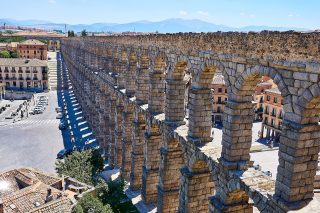
Aqueduct of Segovia
Aqueduct in Segovia
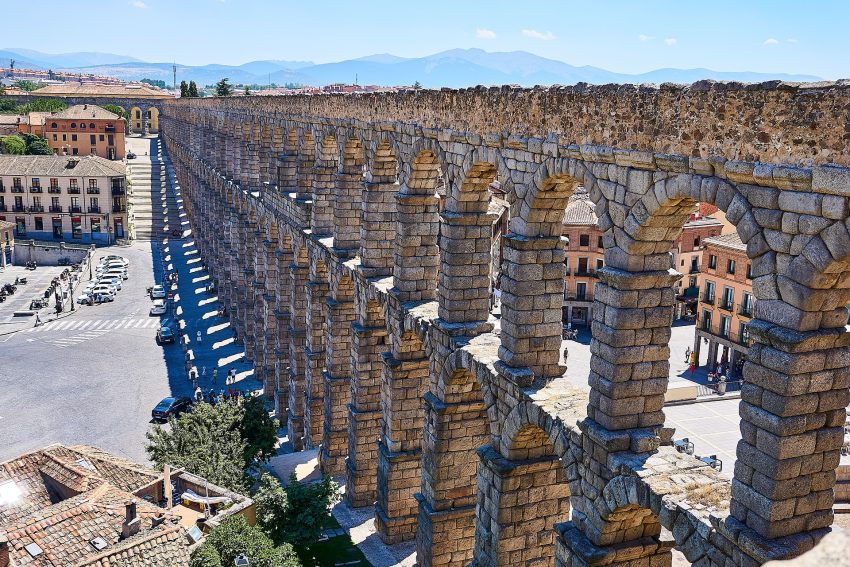
The Aqueduct of Segovia is the city's great showstopper: a monumental Roman structure that strides straight into modern life, rising above Plaza del Azoguejo with an arcade of granite arches that feels almost impossible for its age. It's not tucked away behind ticket gates or museum walls-this is living heritage in the open air, and it's the first place most travellers stop to understand why Segovia's skyline looks the way it does.
Even if you arrive with a full itinerary, you'll quickly see why it's one of the top sights in Segovia. The best way to experience it is to approach on foot, let it “reveal” itself as streets open onto the plaza, and then keep walking through the Old Town-if you're doing a walking tour of Segovia, the aqueduct is the perfect starting point because it sets the tone for the city's mix of engineering, history, and everyday Spanish street life.
Table of Contents
- History and Significance of the Aqueduct of Segovia
- Things to See and Do in the Aqueduct of Segovia
- How to Get to the Aqueduct of Segovia
- Practical Tips on Visiting the Aqueduct of Segovia
- Where to Stay Close to the Aqueduct of Segovia
- Is the Aqueduct of Segovia Worth Visiting?
- For Different Travelers
- FAQs for Visiting the Aqueduct of Segovia
- Nearby Attractions to the Aqueduct of Segovia
History and Significance of the Aqueduct of Segovia
Built in the Roman era to bring water from the Sierra de Guadarrama area into Segovia, the aqueduct is a masterclass in practical engineering turned enduring symbol. For centuries it supplied the city's fountains, baths, and homes, which is part of why it feels so grounded: it wasn't made to impress tourists, it was made to keep a city functioning.
One of the most striking details is the construction itself. The arches are formed from precisely cut granite blocks set without mortar, relying on balance, weight, and careful geometry-an approach that feels audacious until you realise it has held up for nearly two millennia.
The aqueduct’s modern significance is just as clear as its ancient one. Along with Segovia’s Old Town, it’s part of a UNESCO World Heritage inscription, and it remains the emblem of the city-so central to local identity that it appears on Segovia’s coat of arms and anchors the city’s main avenues and meeting points.
Things to See and Do in the Aqueduct of Segovia
Begin at Plaza del Azoguejo, where the aqueduct reaches its most dramatic height and the double-tiered arches are easiest to appreciate. Stand back far enough to see the full sweep, then move in close to notice how the stone blocks fit together and how the structure subtly narrows as it rises-small design choices that reveal a lot about Roman problem-solving.
Next, follow the line of the aqueduct through town. As you walk, the monument changes character: from grand civic stage at the plaza to an architectural companion along streets that funnel you deeper into the historic centre. It's worth taking the route toward Plaza de Díaz Sanz as well, where the alignment shifts and the perspective becomes more cinematic.
For viewpoints, look for elevated angles around Postigo del Consuelo, where you can frame arches against rooftops and city walls. If you want extra context, pair your visit with the Aqueduct Interpretation Centre in the Royal Segovia Mint, which explains the water's journey and the broader system behind what you see in the plaza.
How to Get to the Aqueduct of Segovia
Most international visitors arrive via Adolfo Suárez Madrid-Barajas Airport (MAD), then continue to Segovia by rail or coach. For the best deals and a seamless booking experience, check out these flights to Segovia on Booking.com. From Madrid, the fastest option is the high-speed rail service to Segovia-Guiomar station, followed by a local bus or short taxi ride into the historic centre. Train schedules and bookings can be found on Omio.
If you're already in Segovia, the aqueduct is easy to reach on foot from the Old Town and is about a 10-15 minute walk from the cathedral area, depending on your route. The bus station is also walkable, and taxis are plentiful if you prefer to save your steps for the hilly lanes around the city walls and viewpoints.
By car, Segovia is a straightforward drive from Madrid via major motorways, but it's best to park in a designated car park and explore the centre on foot once you arrive. If you are looking to rent a car in Spain I recommend having a look at Discover Cars, first, as they compare prices and review multiple car rental agencies for you.
Practical Tips on Visiting the Aqueduct of Segovia
- Entrance fee: Free
- Opening hours: 24 Hours
- Official website: https://www.turismodesegovia.com/en/aqueduct
- Best time to visit: Early morning for calm photos and space, or late afternoon into evening when the stone glows and the city feels livelier.
- How long to spend: 30-60 minutes for the aqueduct itself, or 1.5-2 hours if you add viewpoints and an easy Old Town wander.
- Accessibility: The main plaza viewpoints are straightforward, but Segovia’s historic streets involve cobbles, gradients, and occasional steps.
- Facilities: Plenty of cafés and restaurants sit around Plaza del Azoguejo, making it easy to build in a break without leaving the area.
Where to Stay Close to the Aqueduct of Segovia
For a culture-heavy itinerary, stay in Segovia's Old Town so you can walk between the aqueduct, cathedral, and Alcázar with minimal planning; if you prioritise transport convenience, base yourself near Plaza del Azoguejo and the main approach roads.
If you want to step out of your hotel and be at the arches in minutes, Eurostars Plaza Acueducto is a practical choice right by the monument and ideal for early starts. For a classic Old Town stay with atmosphere and an unbeatable central feel, Hotel Infanta Isabel places you close to evening strolls, restaurants, and the cathedral route. If you prefer a central base on one of the Old Town's main streets, Hotel Real Segovia works well for walking everywhere while still keeping the aqueduct within easy reach.
Is the Aqueduct of Segovia Worth Visiting?
Yes-this is not a “quick look and move on” landmark unless you choose to make it one. The aqueduct is visually overwhelming in the best way, and it gives you a sense of Segovia's scale and character before you even start exploring the rest of the city.
It’s also a rare kind of monument that rewards repeat viewing. See it in bright daylight for the full engineering impact, then pass by again at dusk or after dinner when the city lights change the mood and the arches feel almost theatrical.
What Other Travellers Say...

Segovia Aqueduct in Plaza Azoguejo is a towering Roman landmark of two tiers and 167 arches built from precisely cut granite without mortar; visitors say its scale and symmetry are breathtaking in person, the stonework astonishingly well preserved, and walking beneath the arches or viewing it from nearby vantage points offers fantastic perspectives. Cafés, shops and public spaces sit around the aqueduct so it feels integrated into city life, the area is easy to walk, and while it can be crowded at peak times it remains an unforgettable highlight of Segovia.


For Different Travelers
Families with Kids
For families, the aqueduct is an easy win because it's immediate, outdoors, and visually huge-no patience required before the “wow” moment. A simple game like counting arches or spotting the highest point from different angles keeps kids engaged while you enjoy the history.
Plan a snack break nearby, because Plaza del Azoguejo is built for quick stops. If you're visiting with a stroller, stick to the smoother approaches and be prepared for cobbles as you move deeper into the Old Town.
Couples & Romantic Getaways
For couples, the aqueduct is at its best as part of a slow wander rather than a single photo stop. Start here, drift through the Old Town streets, and let the monument reappear from different angles as you climb toward viewpoints.
In the evening, the atmosphere shifts and the arches feel more dramatic against the city lights. Pair a twilight pass-by with a relaxed dinner nearby, and it becomes one of those effortless travel moments that feels distinctly “Segovia”.
Budget Travelers
Budget travellers will appreciate that this is a flagship sight you can enjoy without paying for entry, and it anchors a full day of walking-based sightseeing. Build your route from the aqueduct to the cathedral, then on to viewpoints and the river valley edges, and you'll get a high-value Segovia day with minimal transport costs.
If you want added context without spending much, consider focusing on free viewpoints and street-level details instead of paid add-ons. A good self-guided loop does the job here, especially if you pace it with café stops rather than tours.
History Buffs
History lovers should treat the aqueduct as more than a backdrop and look for the decisions embedded in the structure: the changing pillar widths, the careful rhythm of arches, and the way the monument plugs into the city's layout. It's one of the clearest places in Spain to see Roman infrastructure still shaping modern urban life.
To deepen the visit, connect it to the broader water story and the later medieval city that grew around it. Seeing Roman engineering alongside Segovia’s Gothic and fortified layers makes the city’s timeline feel continuous rather than segmented into “eras”.
FAQs for Visiting the Aqueduct of Segovia
Getting There
Tickets & Entry
Visiting Experience
Tours, Context & Itineraries
Photography
Accessibility & Facilities
Safety & Timing
Nearby Attractions to the Aqueduct of Segovia
- Segovia Cathedral: A soaring Gothic landmark with an interior that feels grand and surprisingly serene compared with the busy streets outside.
- Alcázar of Segovia: A dramatic fortress-palace perched above the river valleys, with classic viewpoints and storybook silhouettes.
- Casa de los Picos: A distinctive building famous for its “spiked” façade, perfect for a quick architectural stop while wandering the centre.
- Plaza Mayor: Segovia's social heart, lined with cafés and framed by historic buildings that make it ideal for a slow break.
- Mirador de la Pradera de San Marcos: A postcard viewpoint across the valley that captures the Alcázar and city skyline in one sweeping scene.
The Aqueduct of Segovia appears in our Complete Guide to Visiting Segovia!

Moira & Andy
Hey! We're Moira & Andy. From hiking the Camino to trips around Europe in Bert our campervan — we've been traveling together since retirement in 2020!
This website uses affiliate links which may earn a commission at no additional cost to you!
Planning Your Visit
24 Hours
Free
Nearby Attractions
- Plaza del Azoguejo (0.0) km
Square - Casa de los Picos (0.2) km
Historic Building - Torreón de Lozoya (0.3) km
Tower - Museo Zuloaga (0.3) km
Museum - Plaza de Medina del Campo (0.3) km
Square - Convento de Clarisas del Corpus Christi (0.5) km
Convent - Plaza Mayor (0.6) km
Square - Jewish Quarter (0.6) km
Area - Cathedral (0.7) km
Cathedral - Museo de Segovia (1.0) km
Museum