Alcazaba, Málaga
Castle in Málaga
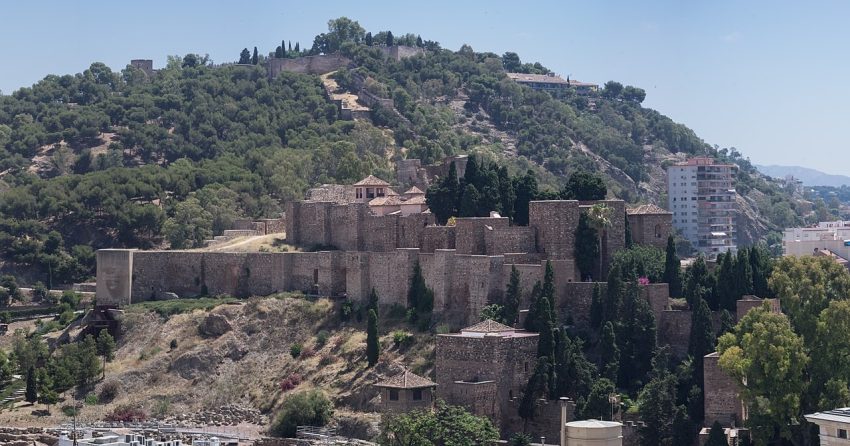
Rising above the historic centre on a rocky hill, the Alcazaba is one of the top sights in Málaga and the city's most evocative Moorish monument. Part fortress, part palace, it was built in the 11th century over earlier Phoenician and Roman structures, directly above the Roman Theatre. Its position gives it commanding views over the port, the old town, and, on clear days, all the way across the glittering bay. Inside its stout walls, you'll find a maze of courtyards, fountains, and gardens that feel a world away from the busy streets below.
Walking through its fortified gateways and climbing gently up through its patios, you can feel how beauty and defence were deliberately intertwined here. The inner palaces, with their Nasrid details, cool arcades, and reflective pools, make the Alcazaba feel like a smaller, more intimate cousin of the Alhambra. It's very much a highlight of any walking tour of Málaga, and the way it links visually and historically to the Castillo de Gibralfaro above gives you an unforgettable sense of how the medieval city once functioned.
History and Significance of the Alcazaba
The Alcazaba was built between 1057 and 1063 on the orders of Badis, king of the Berber Taifa of Granada, as a military fortress designed to guard the harbour and coastline from pirates and enemy fleets. The site had been used long before: Phoenician and Roman remains lie beneath the current walls, and the fortress rises directly above the Roman Theatre that still hugs the slope below. Its Arabic name means “citadel,” and that's exactly what it was - a self-contained defensive and residential complex with thick walls, towers, and layered gates.
Over the following centuries, power shifted between ruling dynasties. The Almoravids occupied Málaga in 1092, followed by the Almohads in 1146. In 1279, Muhammad II Ben al-Ahmar brought the city into the Nasrid Kingdom of Granada, and the Alcazaba entered a new phase. Under the Nasrid ruler Yusuf I in the 14th century, the inner palaces were refurbished and given their distinctive Nasrid style, while a fortified double wall - the Coracha - was built to connect the Alcazaba to the Castillo de Gibralfaro above. This created a continuous defensive spine running down the ridge, allowing troops and supplies to move between castle and palace without exposure.
In 1487, after one of the longest sieges of the Reconquista, Ferdinand and Isabella finally captured Málaga from the Moors. The Alcazaba, heavily bombarded and fiercely defended, eventually fell, marking a key step in the Catholic Monarchs' campaign. Over time, the fortress declined and some of its stonework and decorative elements were reused elsewhere, including columns and capitals taken from the Roman Theatre. In the 20th century, careful restoration work began to recover its original form. Architect-restorer Leopoldo Torres Balbás described the Alcazaba as the prototype of Taifa-period military architecture, noting that its double walls and formidable entrance system had few parallels outside mighty fortresses like Krak des Chevaliers in Syria.
Things to See and Do in the Alcazaba
Entry is through a series of zig-zagging gates and ramps that immediately showcase the fortress's defensive genius. As you climb, you'll pass thick walls, towers, and narrow passages that force invaders to slow down and expose themselves, while offering defenders multiple vantage points. From early on in the ascent, you're rewarded with superb views over the Roman Theatre, the port, and the bullring - ideal spots to pause for photos and catch your breath.
Inside the complex, the mood shifts from military to almost dreamlike. The Alcazaba contains three palace areas and what was once a residential quarter, arranged around rectangular patios, gardens, and pools. Here you'll find Nasrid arches, carved stone doorways, and shady corners where water trickles into basins and tiled channels. It's easy to imagine governors and their families moving through these spaces when Málaga was a key port for the Emirate of Granada. In spring and early summer, the gardens are particularly beautiful, with flowers in bloom and the scent of jasmine and orange blossom carrying on the breeze.
As you explore further, look out for the remains of dungeons and the small archaeological museum, which displays Phoenician and Arab artifacts found on site. Excavations have also revealed sections of Roman walls lined with red stucco and small rock-cut cisterns used for making garum, the pungent fish paste that Málaga once exported across the Roman Empire. Taken together, these layers of stone, water systems, and reused Roman pieces show how each civilisation adapted the hill to its own needs. This spot is one of the best places to see in Málaga if you enjoy wandering through history in a setting that still feels alive with atmosphere.
How to Get to the Alcazaba
The Alcazaba sits on the hillside right above Málaga's historic centre, across from the port and the leafy Paseo del Parque, so once you're in the city it's very easy to reach on foot. The nearest major gateway is Málaga-Costa del Sol Airport, which offers frequent links to the city by train, bus, taxi, and hire car. For the best deals and a seamless booking experience, check out these flights to Málaga on Booking.com.
From Málaga María Zambrano train station, you can either walk into the centre (about 20 minutes) or take a short bus or taxi ride to the area around Paseo del Parque and the Ayuntamiento; from there, the entrance to the Alcazaba and Roman Theatre is just a few minutes' stroll away. Train schedules and bookings can be found on Omio.
If you’re travelling by car, follow signs for the city centre and park in one of the underground car parks near the port or old town, then walk up to the Alcazaba’s base; driving directly to the entrance is not recommended due to narrow streets and limited space. If you are looking to rent a car in Spain I recommend having a look at Discover Cars, first, as they compare prices and review multiple car rental agencies for you.
Practical Tips on Visiting the Alcazaba
- Suggested tips: Wear comfortable shoes - there are slopes, cobbles, and steps - and bring water and sun protection, especially in the warmer months.
- Best time to visit: Early morning or late afternoon offer cooler temperatures and softer light; evenings in summer can be particularly atmospheric.
- Entrance fee: Overall: 3,50 € Visit Alcazaba-Gibralfaro: 5,50 € Free tour every Sunday at 2 pm.
- Opening hours: Summer: 9am to 8pm. Winter: 9am to 6pm.
- Official website: http://alcazabaygibralfaro.malaga.eu/
- How long to spend: Allow 1.5 to 2 hours to wander through the gates, palaces, gardens, archaeological areas, and viewpoints at a relaxed pace.
- Accessibility: The hillside location and historic layout mean there are steep paths, uneven surfaces, and steps; some sections may be challenging for visitors with limited mobility.
- Facilities: Expect a ticket office and basic facilities near the entrance; cafés, restrooms, and shops are available just outside in the city centre.
- Photography tip: For wide shots of the port, bullring, and skyline, head to the higher terraces; for more intimate images, focus on arches, courtyards, and reflections in the pools.
- Guided tours: Consider a guided visit or combined Alcazaba-and-Gibralfaro tour to get a fuller sense of the city's Moorish defences and layered history.
- Nearby food options: After your visit, drop into the nearby streets or the area around Plaza de la Merced for tapas, ice cream, or a relaxed drink.
Where to Stay close to the Alcazaba
Staying near the Alcazaba means you're right in Málaga's historic heart, within easy walking distance of the cathedral, Roman Theatre, Picasso museums, and the port. For a polished boutique stay in a restored palace, Palacio Solecio offers elegant rooms just a short stroll away. If you like the idea of rooftop views and a pool with the Alcazaba and Gibralfaro as your backdrop, AC Hotel Málaga Palacio sits between the old town and the waterfront. For a smaller, character-rich base almost at the foot of the fortress, Hotel Boutique Teatro Romano places you right beside the Roman Theatre with the Alcazaba rising dramatically above.
Is the Alcazaba Worth Visiting?
Without a doubt, the Alcazaba is one of the must-see places in Málaga and deserves a prime spot on any itinerary. Few other sites in the city combine such rich history, beautiful architecture, and sweeping views into a single visit. The contrast between its rugged defensive walls and the delicate Nasrid courtyards and gardens makes it especially memorable, and the way it sits directly above the Roman Theatre adds a powerful sense of continuity between ancient and medieval Málaga.
Whether you're a history enthusiast, a photographer, or simply someone who loves wandering through atmospheric old places, the Alcazaba delivers. It's also compact enough to explore without feeling rushed, yet complex enough to reward slow exploration and repeat visits. Paired with the Castillo de Gibralfaro above and the Roman Theatre below, it forms the historical heart of the city - a place where you can see and feel the layers of Málaga's past in a single sweeping panorama.
What Other Travellers Say...

Alcazaba, at C/ Alcazabilla 2 in Málaga, is a hilltop Moorish-style medieval fortress with fountain-filled gardens and sea-facing terraces; visitors praise its atmospheric walls, arches and stone mosaics, rewarding views over the port and city, and a calmer, more compact alternative to larger sites. Museum displays are relatively small with limited onsite labels, so many recommend using the free audio guide; the site can be busy—free entry periods draw lines and the lift may be out of service—yet paths are fairly walkable and suitable for visitors with mild mobility limits, making a 60–90 minute wander well worth the visit.


FAQs for Visiting Alcazaba
Nearby Attractions to the Alcazaba
- Roman Theatre of Málaga - Ancient theatre directly beneath the Alcazaba, showcasing the city's Roman past in a dramatic hillside setting.
- Castillo de Gibralfaro - Hilltop fortress linked historically to the Alcazaba, offering superb panoramic views over Málaga, the port, and coastline.
- Málaga Cathedral (La Manquita) - Impressive Renaissance and Baroque cathedral with a distinctive unfinished tower, a short walk from the fortress.
- Museo Picasso Málaga - Major museum devoted to Pablo Picasso's work, housed in the historic Palacio de Buenavista in the old town.
- Muelle Uno and Port Promenade - Modern waterfront area with shops, restaurants, and sea views, ideal for relaxing after exploring the hilltop citadel.
The Alcazaba appears in our Complete Guide to Visiting Málaga!

Moira & Andy
Hey! We're Moira & Andy. From hiking the Camino to trips around Europe in Bert our campervan — we've been traveling together since retirement in 2020!
This website uses affiliate links which may earn a commission at no additional cost to you!
Planning Your Visit
Summer: 9am to 8pm.
Winter: 9am to 6pm.
Overall: 3,50 € Visit Alcazaba-Gibralfaro: 5,50 € Free tour every Sunday at 2 pm.
Nearby Attractions
- Roman Theatre (0.1) km
Historic Site and Theatre - Museo de Málaga (0.2) km
Museum - Iglesia de Santiago (0.2) km
Church - Church of San Agustin (0.2) km
Church - Picasso Museum (0.2) km
Museum - Plaza de la Merced (0.3) km
Monument, Square and Statue - Museo del Patrimonio Municipal (0.3) km
Museum - Málaga Cathedral (0.3) km
Cathedral - Museo Casa Natal (0.4) km
Historic Building and Museum - Port of Málaga (0.4) km
Port