San Fruttuoso
Abbey in Portofino
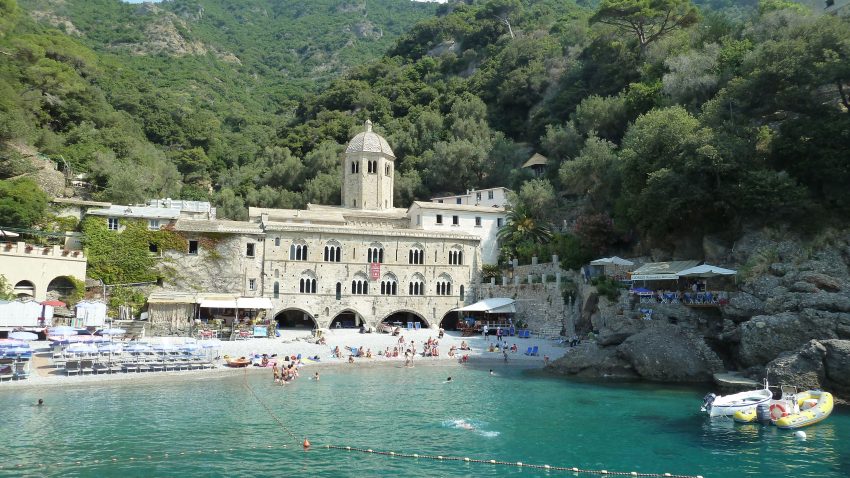
San Fruttuoso feels like the Ligurian coast pressed into its purest form: a tiny fishing borgo wrapped around an ancient abbey, backed by dense woodland, and fronted by a sheltered bay that turns luminous on calm days. It's not a place you “pop into” by accident-you make the effort to reach it, and that's exactly why it still feels special, particularly if you arrive outside the busiest boat windows.
The abbey and hamlet together are one of the top attractions in Camogli for travellers who want something more atmospheric than a straightforward beach stop, and the approach on foot makes it often visited on walking tours of Camogli when hikers trace the Portofino headland routes down to the sea.
Table of Contents
- History and Significance of the San Fruttuoso Abbey
- Things to See and Do in the San Fruttuoso Abbey
- How to Get to the San Fruttuoso Abbey
- Practical Tips on Visiting the San Fruttuoso Abbey
- Where to Stay close to the San Fruttuoso Abbey
- Is the San Fruttuoso Abbey Worth Visiting?
- FAQs for Visiting San Fruttuoso Abbey
- For Differnt Travelers
- Nearby Attractions to the San Fruttuoso Abbey
History and Significance of the San Fruttuoso Abbey
San Fruttuoso Abbey sits right at the boundary between culture and nature: a monastic complex built almost impossibly close to the waterline, protected by steep terrain and thick Mediterranean vegetation. Its enduring appeal is tied to that difficult access-because reaching it has never been effortless, it retained a sense of remoteness long after more convenient coastal landmarks became heavily developed.
The abbey’s origins are linked to Greek monks in the 10th century, with major changes in the early 11th century associated with Adelaide of Burgundy. It later came under Benedictine stewardship, and over time the complex expanded in phases, reflecting the region’s changing needs: spiritual life, coastal watchfulness, and the practical realities of defending and managing a strategically placed bay.
A defining chapter is the influence of Genoa’s Doria family, who supported additions such as a sea-facing loggia and later structural works including a watchtower. In the modern era, stewardship shifted toward preservation, with the site ultimately safeguarded and opened to the public under a conservation-focused organisation-helping protect the abbey’s character while still allowing visitors to experience it.
Things to See and Do in the San Fruttuoso Abbey
Start with the abbey itself. The most striking impression is how the building hugs the rock and the shoreline, creating a compact, layered feel rather than a grand, open monument. Inside, look for the contrasts between older medieval elements and later modifications, which tell the story of a working religious complex adapting over centuries.
Make time for the cloister and the Doria connection. The lower cloister’s atmosphere is quieter and more contemplative than the beach area, and the Doria tombs are a reminder that this secluded bay has long been tied to powerful families who shaped Liguria’s coastal history.
Then step into the bay experience. The “Borgo” is small-just a handful of houses and a few simple places to eat-but that simplicity is the point. If you can time your visit to avoid the largest day-trip waves, the village feels less like an attraction and more like a real, resilient coastal outpost.
Finally, if conditions allow, consider the bay's most unusual sight: Cristo degli Abissi, the bronze statue resting underwater. Divers can visit it directly, while confident swimmers and snorkellers may sometimes spot it from above in very clear, calm seas-an unforgettable detail that makes San Fruttuoso feel unlike anywhere else on the Riviera.
How to Get to the San Fruttuoso Abbey
The nearest major airport is Genoa Cristoforo Colombo Airport, which is the most direct choice for reaching this part of the Ligurian coast. For the best deals and a seamless booking experience, check out these flights to Portofino on Booking.com.
By train, the most practical bases are Camogli-San Fruttuoso station (for Camogli) or Santa Margherita Ligure-Portofino station (for connections toward the Portofino side), then you continue by local transport to the harbour for boats. Use Omnio to easily compare schedules, book train tickets, and find the best prices all in one place for a hassle-free journey across Italy.
If you're travelling by car, plan to park in a larger town such as Camogli, Santa Margherita Ligure, or Rapallo and continue by boat, because road access to San Fruttuoso itself is not available. If you are looking to rent a car in Italy I recommend having a look at Discover Cars, first, as they compare prices and review multiple car rental agencies for you.
Reaching the abbey is then either by sea or on foot. Boats run daily from Camogli year-round, while seasonal services also connect from places like Portofino, Santa Margherita Ligure, Rapallo, Recco, and even Genoa depending on the time of year. The hiking option is a roughly two-hour trek through the Portofino headland trails, which is scenic but should be treated like a proper walk with suitable footwear, water, and daylight planning.
Practical Tips on Visiting the San Fruttuoso Abbey
- Suggested tips: Aim to arrive early or later in the afternoon to avoid peak boat crowds, and plan a little buffer time for return sailings if sea conditions change.
- Best time to visit: Late spring and early autumn for comfortable hiking weather and clearer water; in summer, go early to enjoy the bay before it fills.
- Entrance fee: Adults: €8.50
- Opening hours: January, February, November and December: 10 AM - 3.45PM every day except non-holiday Mondays March and October: 10 AM - 3.45PM every day April, May and second half of September: 10 AM - 4.45PM From June to mid September: 10 AM - 5.45PM Last admission: 45 minutes before closing time.
- Official website: https://fondoambiente.it/luoghi/abbazia-di-san-fruttuoso
- How long to spend: 2-4 hours is ideal, longer if you add a swim/snorkel session or arrive by hike and want a proper rest in the bay.
- Accessibility: Not step-free; paths, uneven surfaces, and the remote location make it challenging for limited mobility, especially if arriving on foot.
- Facilities: Limited by design-expect only a few small eateries and basic services, so bring water and essentials.
- Photography tip: For the classic abbey-and-bay shot, step back toward the waterline and shoot slightly off-centre to capture the abbey against the rock.
- Guided tours: If you want deeper context, choose a guided hike through the Portofino trails that finishes at San Fruttuoso, then return by boat.
- Nearby food options: Keep it simple-fresh Ligurian staples are the theme here; if you want broader choice, eat before you depart from Camogli or Santa Margherita Ligure.
Where to Stay close to the San Fruttuoso Abbey
Because San Fruttuoso has no true “next door” accommodation, the best strategy is to stay in a nearby coastal base with strong boat links and easy evening atmosphere. Camogli is a natural choice if you want the simplest year-round sea access, and Hotel Cenobio Dei Dogi is a well-located option close to the waterfront and harbour area.
For another Camogli-based stay with a comfortable, practical setup for early departures, consider Carrick Hotel Camogli Portofino Coast.
If you prefer a larger town with more transport flexibility and dining variety, Santa Margherita Ligure works well, and Hotel Laurin puts you near the promenade and the boat departure points.
Is the San Fruttuoso Abbey Worth Visiting?
Yes-because it offers something increasingly rare on the Italian Riviera: a place where the landscape still dictates the experience. The effort of arriving by boat or trail filters the visit in a way that keeps the bay feeling wilder and more intimate than most iconic Ligurian stops.
It's also a “two-in-one” destination. You get a genuinely historic abbey, a tiny fishing borgo ambience, and a marine setting that invites swimming or snorkelling when conditions are right. If you value places that feel earned rather than merely visited, San Fruttuoso is exactly that.
What Other Travellers Say...

Abbazia di San Fruttuoso sits in a sheltered cove at Via S. Fruttuoso 13 in Camogli and offers visitors an intimate mix of ancient architecture, a Roman cloister and a small history museum; it's reached by boat or a challenging coastal hike from Camogli, with viewpoints to wander, a pebbly/rocky beach strewn with sea glass and clear swimming water, plus a tower to explore and a peaceful abbey interior—bring swimwear, linger to find the best views, and plan your return boat timing.


FAQs for Visiting San Fruttuoso Abbey
For Differnt Travelers
Families with Kids
San Fruttuoso works best for families as a “boat adventure plus beach break” day. The bay is compact, so it's easy to keep the plan simple: arrive, explore the abbey briefly, then let kids decompress with a swim or a snack by the water.
If you’re considering the hike, treat it as the main activity rather than an add-on. For most families, arriving by boat is the smoother option, and you can still get a sense of the wilderness and remoteness without committing to a long walk.
Couples & Romantic Getaways
For couples, the magic of San Fruttuoso is its mood: quiet stone, green slopes, and the gentle rhythm of the bay. If you can time your visit between the main boat arrivals, it feels far more private than you'd expect on the Riviera.
A strong couples’ plan is to hike in (or take an early boat), enjoy the abbey and cloister at a slower pace, then return by boat as the light softens. It turns the logistics into part of the romance rather than something to manage.
Budget Travelers
San Fruttuoso can be a budget-friendly highlight if you plan deliberately. The biggest cost is usually transport, so consider hiking one way and returning by boat, or choosing the most convenient departure port to avoid stacking multiple tickets.
Keep spending controlled by bringing water and snacks, then treating any meal in the borgo as a small splurge rather than a necessity. The real value here is the setting-an unforgettable bay and abbey experience that doesn’t require constant paid activities.
Nearby Attractions to the San Fruttuoso Abbey
- Camogli: A colourful seaside town with a broad waterfront, good dining, and convenient boat access toward San Fruttuoso.
- Portofino: The famous harbour village nearby, ideal for combining a polished marina scene with a wilder coastal hike day.
- Parco Naturale Regionale di Portofino: A network of headland trails linking viewpoints and coves, including routes down to San Fruttuoso.
- Santa Margherita Ligure: A larger base with strong transport links, promenades, and a wider choice of restaurants and hotels.
- Christ of the Abyss (Cristo degli Abissi): The underwater statue in San Fruttuoso Bay, a unique draw for divers and adventurous swimmers.
The San Fruttuoso appears in our Complete Guide to Visiting Portofino!

Moira & Andy
Hey! We're Moira & Andy. From hiking the Camino to trips around Europe in Bert our campervan — we've been traveling together since retirement in 2020!
This website uses affiliate links which may earn a commission at no additional cost to you!
Planning Your Visit
January, February, November and December: 10 AM – 3.45PM every day except non-holiday Mondays
March and October: 10 AM – 3.45PM every day
April, May and second half of September: 10 AM – 4.45PM
From June to mid September: 10 AM – 5.45PM
Last admission: 45 minutes before closing time.
Adults: €8.50
Nearby Attractions
- Marina di Portofino (3.2) km
Harbour - Villa Durazzo (3.4) km
Historic Building and Museum - Castello Brown (3.5) km
Castle - Santa Margherita Ligure Castle (3.6) km
Castle - Basilica di Santa Margherita d’Antiochia (3.6) km
Church - Civic Maritime Museum Gio Bono Ferrari (3.8) km
Museum - Portofino Lighthouse (4.0) km
Lighthouse - Castello della Dragonara (4.2) km
Castle - Christopher Columbus House (21.5) km
Historic Building - Porta Soprana (21.5) km
City Gate and City Walls