Mirabell Palace and Gardens, Salzburg
Gardens, Historic Building and Palace in Salzburg
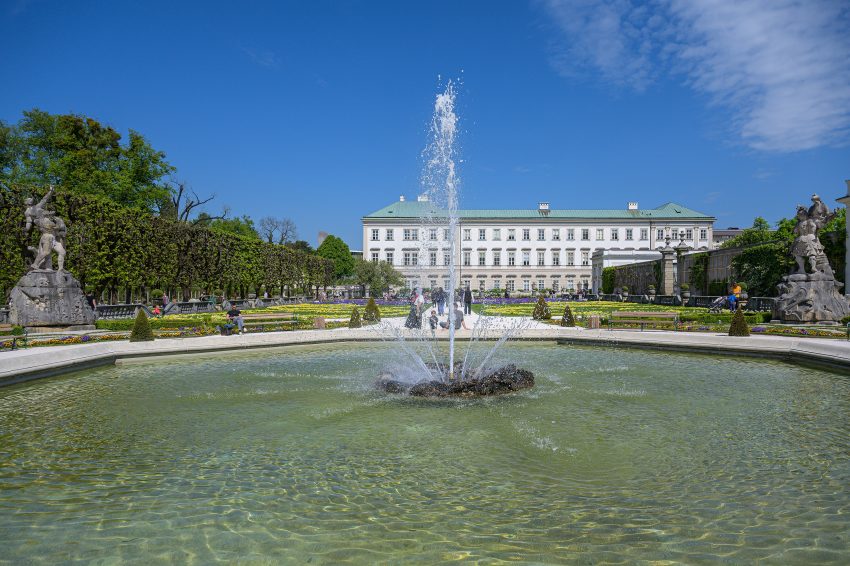
Mirabell Palace and Gardens is in Salzburg's Neustadt, just across the river from the Old Town, and it combines a working palace with one of the city's most formal garden spaces. The palace itself now has a civic role, but the grounds remain the main reason most visitors come: symmetrical flowerbeds, fountains, statues, and clear views along the central garden axis. It is easy to reach on foot and simple to fold into a short stay in the city.
The gardens matter because they show Salzburg at its most orderly and theatrical, with Baroque landscaping arranged for long views and tidy geometry rather than wild planting. Visitors usually notice the Pegasus Fountain first, then the steps, sculpted corners, and the backdrop of the fortress above the city. It suits travelers who want a low-effort stop with good photo angles, a quiet walk, and a place that still feels worth the time even if they are not planning a full palace visit.
Table of Contents
- History and Significance of the Mirabell Palace and Gardens
- Things to See and Do in the Mirabell Palace and Gardens
- How to Get to the Mirabell Palace and Gardens
- Practical Tips on Visiting the Mirabell Palace and Gardens
- Where to Stay Close to the Mirabell Palace and Gardens
- Is the Mirabell Palace and Gardens Worth Visiting?
- For Different Travelers
- FAQs for Visiting Mirabell Palace and Gardens
History and Significance of the Mirabell Palace and Gardens
Mirabell Palace began life in the early 1600s as a princely residence, and over the centuries it evolved into one of Salzburg's most recognizable landmarks. While the palace interiors are limited because the building is used for city administration, the complex still carries the atmosphere of courtly Salzburg, where architecture and garden design were meant to impress.
The gardens were later shaped into the formal Baroque style that visitors see today: geometric layouts, carefully framed perspectives, and decorative sculpture that turns a simple walk into a sequence of “scenes.” That theatrical quality is part of why the gardens feel so cinematic.
Mirabell’s modern fame is also tied to popular culture. The gardens are strongly associated with The Sound of Music, and many travelers come specifically to match the film’s memorable locations with real-life viewpoints.
Things to See and Do in the Mirabell Palace and Gardens
Start with the grand garden axis: it's the classic Mirabell view, with tidy parterres and Salzburg's dramatic skyline beyond. The Pegasus Fountain is a must-see, both for its beauty and for the film connection, and it's one of the best spots for photos that instantly say “Salzburg.”
If you enjoy details, slow down for the statues and the smaller garden rooms that branch off the main paths. These pockets can feel surprisingly calm, especially early in the day, and they’re great for a quieter, less “checklist” experience.
If you’re hoping to step inside, look for access to the palace’s public areas when open, and consider timing your visit around a concert or a quick peek at the Marble Hall when it’s available. Even if you only do the gardens, it’s still one of the most rewarding free stops in the city.
How to Get to the Mirabell Palace and Gardens
The nearest major airports are Salzburg Airport (SZG) for the quickest arrival, with Munich Airport (MUC) as a common alternative for more flight options. For the best deals and a seamless booking experience, check out these flights to Salzburg on Booking.com.
Salzburg is well connected by rail, and arriving at Salzburg Hauptbahnhof makes it easy to continue on foot, by bus, or by taxi to Mirabellplatz and the gardens. You can easily check timetables and book train tickets through the ÖBB (Austrian Federal Railways) website. However, for a smoother experience, we recommend using Omio, which simplifies the booking process and lets you compare routes, prices, and departure times all in one place.
If you’re traveling by car, aim for a central garage near Mirabell/Neustadt and continue on foot to avoid the stress of Old Town traffic and limited street parking. If you are looking to rent a car in Austria I recommend having a look at Discover Cars, first, as they compare prices and review multiple car rental agencies for you.
Practical Tips on Visiting the Mirabell Palace and Gardens
- Official website: https://www.stadt-salzburg.at
- Entrance fee: Free.
- Opening hours: Monday – Saturday: 08:00–18:00. Sunday: Closed. Monday: 08:00–16:00. Tuesday: 13:00–16:00. Wednesday: 08:00–16:00. Thursday: 08:00–16:00. Friday: 13:00–16:00. Saturday: Closed. Sunday: Closed. Daily: 06:00–Dusk. Daily: 09:00–16:00.
- Best time to visit: Go early morning for the calmest paths and the cleanest photos; late afternoon can also be lovely for softer light. Spring and summer bring the most color, while winter can feel quieter but less lush.
- How long to spend: Plan 30-60 minutes for a relaxed garden loop, or 60-90 minutes if you want to take photos, find film locations, and explore the side areas.
- Accessibility: The main paths are generally easy and flat for strollers and wheelchairs, with plenty of wide walkways. Some smaller corners may have tighter turns or seasonal closures.
- Facilities: You’ll find benches for breaks and plenty of nearby cafés around Mirabellplatz; restrooms and indoor access depend on what areas of the palace complex are open.
Where to Stay Close to the Mirabell Palace and Gardens
Stay in central Salzburg (Neustadt or the edge of the Old Town) so you can walk to Mirabell early, cross the river easily, and return at night without relying on transport.
Hotel Sacher Salzburg A classic splurge pick on the river with polished service and an unbeatable location for walking between Mirabell and the Old Town.
IMLAUER Hotel Pitter Salzburg A comfortable, well-located option near the station and Mirabell, with a reputation for a strong breakfast and an easy base for day trips.
NH Collection Salzburg City A reliable mid-range choice in Neustadt that keeps you close to Mirabell while still being walkable to the Old Town.
Motel One Salzburg-Mirabell A smart-value stay with a modern feel, great for travelers who prioritize location and simplicity over extra amenities.
Hotel Markus Sittikus Salzburg A smaller, characterful boutique option that feels quieter than the busiest streets, while still keeping you within an easy walk of Mirabell.
Is the Mirabell Palace and Gardens Worth Visiting?
Yes, it's absolutely worth visiting: it's central, beautiful, and easy to fit into almost any Salzburg itinerary, even if you only have a few hours. The gardens deliver classic Salzburg scenery with minimal effort, and the photo opportunities are among the best in the city.
Honest Pivot: If you dislike crowded, highly photographed spots or you’re visiting in deep winter expecting peak blooms, you might prefer to spend your limited time at a museum, a longer riverside walk, or a viewpoint hike instead. Also, if your main goal is touring lavish palace interiors, Mirabell can feel limited because much of the building isn’t open like a traditional museum-palace.
What Other Travellers Say...
Reviews are overwhelmingly positive, with visitors calling Mirabell a must-see in Salzburg and praising the beautifully maintained Baroque layout, flowers, sculptures, and the memorable fortress views. Many travelers also enjoy the Sound of Music connection and find it a relaxing, scenic place for a stroll and photos. Common drawbacks include a less impressive experience in winter (fewer blooms and occasional closures) and some confusion about how to access the palace building versus simply entering the gardens.


For Different Travelers
Mirabell works for almost everyone because it’s flexible: you can do a quick loop, a slow photo walk, or use it as a scenic connector between neighborhoods. The key is matching your timing and expectations to the season and your travel style.
Families with Kids
Families will appreciate the open space for a low-stress break between more structured sightseeing stops. The wide paths make it stroller-friendly, and the statues and fountains give kids plenty to point at even if they’re not “into” history.
If you’re traveling with very young kids, treat Mirabell as a reset stop: snack, stretch legs, then continue into the Old Town. In colder months, plan a shorter visit and pair it with a nearby indoor activity.
Couples & Romantic Getaways
For couples, Mirabell is a simple, romantic win: elegant landscaping, fortress views, and plenty of corners that feel surprisingly intimate if you step away from the central path. It’s especially nice in the morning when the gardens feel calm and unhurried.
Consider pairing it with a riverside walk at golden hour and a dinner reservation nearby. Even a short visit can feel special if you time it for soft light and fewer tour groups.
Budget Travelers
Budget travelers will love that the gardens are a top-tier Salzburg experience without an entry fee. It's also a great place to slow down and enjoy the city atmosphere without spending money.
Use Mirabell as a hub: start here, cross the river into the Old Town, then continue on foot to major sights. You’ll save on transport while still getting some of the best views in town.
History Buffs
History buffs will enjoy Mirabell most as part of Salzburg’s broader story: prince-archbishops, Baroque city planning, and the way gardens were designed to project power and taste. Look closely at the formal geometry and the sculptural program rather than expecting a fully open palace museum.
To deepen the visit, combine Mirabell with Old Town churches, squares, and viewpoints that show how Salzburg’s civic and religious power shaped the city. Mirabell’s significance becomes clearer when you see how it fits into the UNESCO-listed historic center.
FAQs for Visiting Mirabell Palace and Gardens
Getting There
Tickets & Entry
Visiting Experience
Tours, Context & Itineraries
Photography
Accessibility & Facilities
Food & Breaks Nearby
Safety & Timing
The Mirabell Palace and Gardens appears in our Complete Guide to Visiting Salzburg!

Moira & Andy
Hey! We're Moira & Andy. From hiking the Camino to trips around Europe in Bert our campervan — we've been traveling together since retirement in 2020!
This website uses affiliate links which may earn a commission at no additional cost to you!
Planning Your Visit
Monday - Saturday: 08:00-18:00.
Sunday: Closed.
Monday: 08:00-16:00.
Tuesday: 13:00-16:00.
Wednesday: 08:00-16:00.
Thursday: 08:00-16:00.
Friday: 13:00-16:00.
Saturday: Closed.
Sunday: Closed.
Daily: 06:00-Dusk.
Daily: 09:00-16:00.
Free.
Nearby Attractions
- Makartplatz (0.1) km
Area, Attraction and Square - Mozart Residence (0.1) km
Attraction, Historic Building and Museum - Kapuzinerberg (0.2) km
Mountain, Viewing Point and Walk - Mozarts Geburtshaus (0.4) km
Historic Building, Historic Site and Museum - Winkler Terrace (0.4) km
Promenade, Viewing Point and Walk - Getreidegasse (0.4) km
Attraction, Historic Site and Street - Old University (0.4) km
Attraction, Historic Building and Historic Site - Alter Markt (0.4) km
Area, Market and Square - Buchhandlung Höllrigl (0.5) km
Attraction and Shop - Horse Bath (0.5) km
Attraction, Fountain and Historic Site