Naples, Italy: The Ultimate Travel Guide 2026

Visitng Naples
Visitng Naples

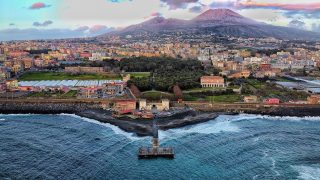
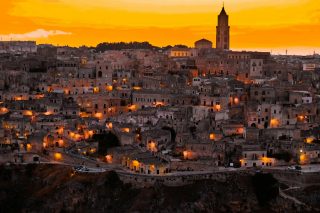
Naples, renowned for its vibrant blend of chaos and charm, stands as a testament to Italy's rich history, architectural marvels, and cultural depth, not to mention its stunning natural scenery. It ranks as Italy's third largest city, trailing only Rome and Milan, and is nestled in the southern part of the country, within the Campania region.

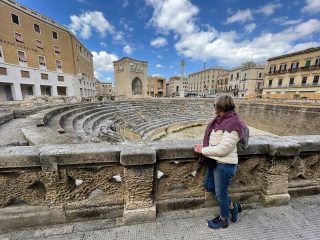
The city is a treasure trove of historical landmarks, where every turn reveals majestic castles, churches, and palaces, each with their own captivating tales. Even without stepping inside landmarks like Castel dell’Ovo, the Duomo, San Francesco di Paola Basilica, or the Royal Palace, simply meandering through Naples’ picturesque streets can captivate any visitor.

The allure extends beyond Naples itself, with the surrounding region offering a plethora of intriguing sites, making the city an ideal hub for excursions to Pompeii, Capri, Amalfi, Sorrento, Positano, and Mount Vesuvius.

After a day of discovery, there’s no better way to satisfy your appetite than by savoring the local Neapolitan cuisine at a traditional eatery. After all, this city is the proud birthplace of pizza!

History of Naples

Naples, one of the world’s oldest continuously inhabited cities, boasts a rich and complex history that spans nearly three millennia. The city’s strategic location in the Bay of Naples along the Mediterranean Sea has made it a cultural and economic hub throughout history.

Foundation and Greek Period

Naples was founded in the late 7th century BCE by Greek settlers from nearby Cumae and was originally named Neapolis (New City). It was a part of the larger Greek cultural sphere in southern Italy, often referred to as Magna Graecia.

Roman Era

In the 4th century BCE, Naples came under Roman control. During the Roman period, Naples maintained a degree of autonomy, allowed to keep much of its Hellenistic culture and language. The city became a favored vacation spot for wealthy Romans and emperors, drawn by its beauty and its cultural offerings, including theatres and baths.

Middle Ages

After the fall of the Roman Empire, Naples was successively conquered by the Goths, Byzantines, and Lombards. In the 8th century, it became an independent duchy, though it was often caught in the power struggles between the Pope and the Holy Roman Empire. In 1139, Naples became part of the Kingdom of Sicily under the Normans, and later, the Angevin rulers made it the capital of their kingdom, which covered most of present-day Southern Italy.

Spanish and Austrian Rule

The 16th century brought Spanish rule under the Habsburgs, marking a period of economic and social decline but also enriching its cultural and architectural heritage. The Spanish introduced their administrative system and left a substantial architectural imprint on the city with new castles, palaces, and churches. In the early 18th century, Naples fell under Austrian control briefly before passing back to the Spanish (and later Bourbon) dynasty.

Italian Unification

In 1860, following a plebiscite and the expedition of the Thousand led by Giuseppe Garibaldi, Naples became part of the newly unified Kingdom of Italy. The unification marked the end of feudalism and the beginning of a modern administrative state, although the transition was fraught with economic and social challenges.

Modern Era

Through the 19th and 20th centuries, Naples faced significant challenges, including poverty, crime, and political corruption, but it also saw periods of cultural renaissance and economic activity. The city was heavily bombed during World War II, which caused extensive damage and hardship. Post-war reconstruction was slow, and many historical buildings were replaced with less distinguished architecture.

Contemporary Naples

Today, Naples is renowned for its rich history, art, culture, architecture, music, and gastronomy. It retains a unique character within Italy, embodying a blend of historical influences and a vibrant street life. Despite ongoing challenges, it continues to be a major economic and cultural center in southern Italy.

Naples’ extensive history is visible in its wide array of archaeological sites, ancient and medieval architecture, and the urban fabric, making it a deeply fascinating city to explore.

Moira & Andy
Moira & Andy

Hey! We're Moira & Andy. From hiking the Camino to trips around Europe in Bert our campervan — we've been traveling together since retirement in 2020!

Read our full story here

Visiting Naples for the first time and wondering what are the top places to see in the city? In this complete guide, I share the best things to do in Naples on the first visit. To help you plan your trip, I have also included an interactive map and practical tips for visiting!

This website uses affiliate links which earn a small commission at no additional cost to you.

Powered by GetYourGuide

21 Best places to See in Naples

This complete guide to Naples not only tells you about the very best sights and tourist attractions for first-time visitors to the city but also provide insights into a few of our personal favorite things to do.

This is a practical guide to visiting the best places to see in Naples and is filled with tips and info that should answer all your questions!

1. Naples Cathedral

Main Facade of Naples Cathedral
CC BY-SA 4.0 / Yair Haklai
Naples Cathedral (Duomo di Santa Maria Assunta), also known as the Cathedral of Saint Januarius, is a layered Gothic church begun under the Angevins in the 13th–14th centuries and built over earlier Christian—and even Roman—remains. The interior is memorable for its mix of soaring nave, intricate chapels, and artworks, but the emotional center is the Royal Chapel of the Treasure of San Gennaro, dense with Baroque frescoes and reliquaries. Beneath the church, archaeological areas and a paleo-Christian baptistery preserve glittering 4th-century mosaics that hint at the city’s deeper strata. If you visit near one of the three annual ceremonies, you may see crowds gather for the blood-liquefaction rite tied to local hopes and anxieties.
Location: Cathedral of Santa Maria Assunta, Via Duomo, Naples, Metropolitan City of Naples, Italy | Hours: Daily from 8 am to 12:30 pm, and from 4:30 pm to 7 pm. | Price: Free entry. Baptistery: € 2 (£ 1.70) | Website | Distance: 0.7km


We recommend to rent a car in Italy through Discover Cars, they compare prices and review multiple car rental agencies. Book your rental car here.

2. San Lorenzo Maggiore

Macellum of Naples
Macellum of Naples
CC BY-SA 3.0 / everyfoto
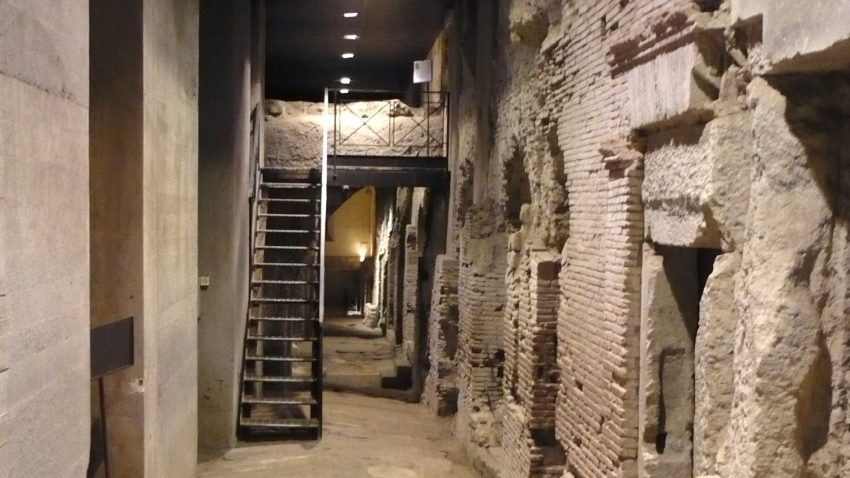
San Lorenzo Maggiore is a Franciscan complex planted at the heart of the ancient street grid, where via San Gregorio Armeno meets via dei Tribunali. Above ground, the Gothic church’s spare lines are interrupted by later Baroque chapels, including Cosimo Fanzago’s Cacace Chapel with its sculpted figures and a damaged yet still atmospheric frescoed cupola. A quiet cloister leads into a multi-level museum that moves from Greek and Roman finds to medieval civic life and maritime routes. The most memorable shift comes downstairs: you descend into the excavated Roman macellum, where shop fronts, pavements, and fragments of streets sit directly beneath today’s city.
Location: San Lorenzo Maggiore, Piazza San Gaetano, Naples, NA, Italy | Hours: Daily from 9:30 am to 5:30 pm | Price: Archaeological site and museum: Adults: €9 | Distance: 0.9km

Here is a complete selection of hotel options in Naples. Feel free to review each one and choose the stay that best suits your needs.

Powered by GetYourGuide

3. Chiesa delle Cape di Morte

Chiesa delle Cape di Morte
CC BY-SA 3.0 / Sailko
Chiesa delle Cape di Morte, consecrated in 1638, is a modest-looking church with a startling two-level interior: a Baroque upper sanctuary and a subterranean hypogeum shaped by centuries of burial and devotion. Upstairs, canvases by Luca Giordano (The Death of St. Alessio) and Massimo Stanzione (Virgin with the Souls of Purgatory) frame the church’s preoccupation with suffering and intercession. Below, skull-lined wall niches and anonymous graves recall the cult of the anime pezzentelle, when worshippers “adopted” a skull, cleaned it, and left notes or small offerings in exchange for hoped-for favors. Look for “Lucia,” a young bride’s skull crowned with a tiara and surrounded by bridal tokens.
Location: Complesso Museale Santa Maria delle Anime del Purgatorio ad Arco, Via dei Tribunali, 39, 80138 Napoli, Metropolitan City of Naples, Italy | Hours: Monday – Saturday: 10.00 – 17.00 Sunday: 10.00 – 14.00 | Price: Upper Church free entry, Guided tours €7 | Website | Distance: 1km

Traveling to a country with a different currency? Avoid ATM transaction fees and pay in local currency with a Wise Card. Having used it for over 5 years, we've saved loads on fees!

4. Cappella Sansevero

The Veiled Christ anagoria
CC BY-SA 3.0 / Anagoria
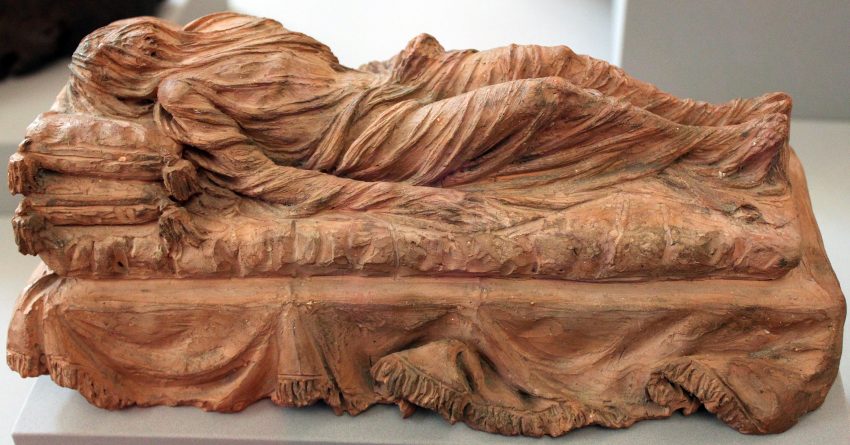
Cappella Sansevero is a small Baroque family chapel turned museum, created as a private mausoleum and later transformed into a dense, idea-filled interior under Raimondo di Sangro, the 18th-century Prince of Sansevero. Inside, glowing marble and a ceiling fresco of paradise frame sculptures that feel like technical riddles. Giuseppe Sanmartino’s Veiled Christ (1753) looks as if a transparent shroud clings to the body, down to veins and the soft pull of fabric. Nearby, Corradini’s Pudicizia wraps a figure in a stone veil, while Queirolo’s Disinganno frees a man from a net carved as individual strands. The no-photos rule makes the experience linger in memory rather than on a screen.
Location: Cappella Sansevero, Via Francesco de Sanctis, Naples, Metropolitan City of Naples, Italy | Hours: Wednesday to Monday: 9:00 to 19:00. Closed Tuesdays. | Price: Adults: €12.00 | Website | Distance: 1.1km

Where to Stay in Naples: An Area by Area Guide!

5. Santa Chiara

Naples   Santa Chiara   Cloitre
Naples Santa Chiara Cloitre
CC BY-SA 4.0 / Jean-Christophe BENOIST
Santa Chiara is a vast Clarissan complex—church, monastery, tombs, cloister, and small museum—set on Via Benedetto Croce along Spaccanapoli, facing Gesù Nuovo. Founded in 1313–1340 by Queen Sancha of Majorca and King Robert of Anjou, the church’s long, rectangular nave and austere, apse-less plan feel almost fortress-like. After an 18th-century Baroque refit, wartime bombing in 1943 burned much of the decoration; the postwar restoration returned the interior to a stripped Gothic look, leaving a layered, slightly debated result. Most visitors linger in the garden cloister, where octagonal columns and benches are wrapped in bright majolica tiles painted with vines and pastoral scenes among citrus trees.
Location: Santa Chiara, Via Santa Chiara, Naples, Metropolitan City of Naples, Italy | Hours: Monastery (Cloisters): Monday to Saturday 9:30 am - 5:00 pm. Sunday 10:00 am - 2:00 pm. Church: Monday to Sunday 7:45 – 12:45/16:40 – 20:00 | Price: Adults: €7.00 | Website | Distance: 1.4km

Explore Naples at your own pace with our self-guided walking tour! Follow our curated route to discover must-see sights and local secrets that makes Naples one of the best places to visit in Italy.

6. National Archeological Museum

National Archeological Museum, Naples
Public Domain / Shonagon
Housed in a monumental former Bourbon palace with grand staircases and thick walls, the National Archaeological Museum (MANN) is a deep, gallery-by-gallery immersion into the ancient Mediterranean. The Farnese Collection anchors the visit with colossal marble gods, heroes, and athletes once made to dominate Roman baths and palaces. Rooms devoted to Pompeii and Herculaneum place frescoes and intricate mosaics at eye level, alongside intimate everyday finds—jewellery, kitchen tools, and household shrines—that make the lost cities feel startlingly close. The Secret Cabinet’s erotic objects add an unvarnished, often witty glimpse of Roman humour and sexuality. An Egyptian section of sarcophagi, papyri, and statues broadens the story beyond Italy.
Location: National Archaeological Museum of Naples, Piazza Museo, Naples, Metropolitan City of Naples, Italy | Hours: Wednesday to Monday: 9 am to 7:30 pm. Tuesdays: closed. | Price: Adults: €20.00 | Website | Distance: 1.5km
Powered by GetYourGuide

7. Piazza Dante

Monument of Dante Alighieri in Piazza Dante Napoli
CC BY-SA 3.0 / Mstyslav Chernov
Piazza Dante is a broad, lived-in square where the old city’s tight lanes open toward Via Toledo, and evenings feel like a shared outdoor living room. The long 18th-century façade of the Convitto Nazionale—part of Luigi Vanvitelli’s Bourbon-era plan—forms a grand backdrop, while a marble Dante Alighieri watches the flow of people from his pedestal. What many visitors remember most is the shift from street life to contemporary art: the metro entrance drops into an “art station” with Joseph Kosuth’s glowing text, Jannis Kounellis’ tracks and scattered shoes, and Michelangelo Pistoletto’s mirrored Mediterranean map. It’s lively rather than quiet, with benches, card games, and constant people-watching under streetlights.
Location: Piazza Dante, Naples, Metropolitan City of Naples, Italy | Hours: 24 Hours | Price: There is no fee to enjoy the square itself | Distance: 1.6km

8. Castel Nuovo

Castel Nuovo Naples
Castel Nuovo Naples
CC BY-SA 3.0 / Ra Boe / Wikipedia
Castel Nuovo (Maschio Angioino) is a hulking 13th-century fortress-palace beside Piazza Municipio and the port, built in 1279 for Charles I of Anjou as the seat of a newly shifted royal capital. Its five round towers and thick walls read as pure military power, but the entrance marble triumphal arch—carved to celebrate Alfonso of Aragon’s 15th-century takeover—adds a theatrical note of dynastic propaganda. Inside, the Palatine Chapel preserves the atmosphere of court ceremony, even if Giotto’s frescoes survive only in traces. The upper rooms now hold a civic museum and historical institutes, and viewpoints look straight down onto ferries and harbour traffic, echoing the castle’s seaward role.
Location: Castel Nuovo, Via Vittorio Emanuele III, Naples, Metropolitan City of Naples, Italy | Hours: Monday to Saturday: 9:00 to 18:00. Sunday: 10:00 to 1300. | Price: Adults: €10.00 | Website | Distance: 2km

9. Galleria Umberto I
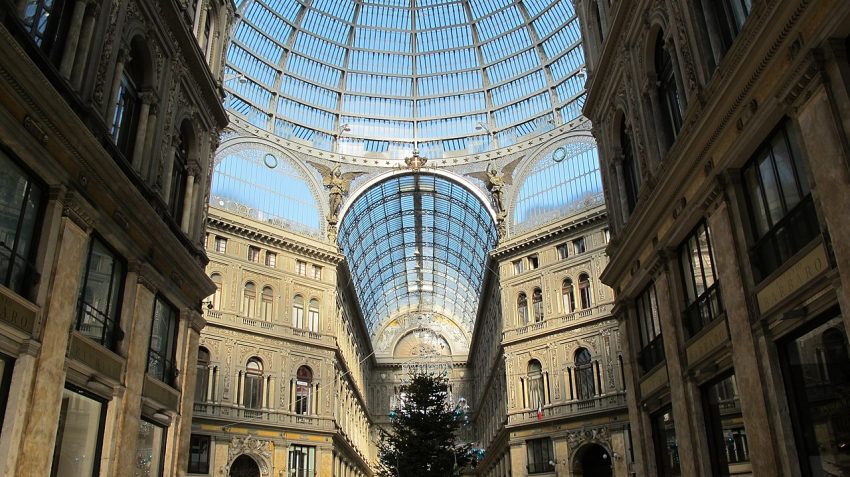
Interno cupola Galleria Umberto I
CC BY-SA 3.0 / pietro scerrato
Galleria Umberto I is a late-19th-century, cross-shaped arcade built between 1887 and 1890 during the risanamento, designed by Emanuele Rocco in Stile Umbertino. Step beneath the central octagonal glass dome and you’ll see iron ribs fanning overhead, daylight pooling onto patterned mosaic floors—look for the zodiac motifs underfoot. Four covered corridors meet here like an indoor piazza, lined with arcaded façades, cafés, and shopfronts, with apartments stacked above. One passage points toward via Toledo while another leads to the Teatro di San Carlo, so the space stays busy with everyday foot traffic. Recent reviews note scaffolding and signs of wear, which only heighten the sense of a grand structure still lived-in and imperfect.
Location: Galleria Umberto I, Via Santa Brigida, Naples, Metropolitan City of Naples, Italy | Hours: As a public passage, the Galleria is generally open from early morning until late evening, with individual shops and cafés keeping their own hours. | Price: There is no entrance fee. | Distance: 2.1km

10. Museo di Capodimonte

Reggia di Capodimonte
CC BY-SA 4.0 / Mentnafunangann
Set inside a stately Bourbon palace on a hill, the Museo di Capodimonte pairs grand, royal-scale galleries with long views toward the bay and a hush that feels far from the streets below. Commissioned in 1738 by King Charles VII to house the inherited Farnese Collection, it remains a core repository of dynastic collecting turned national museum. The first and second floors read like a sweep of Italian painting, with standout works by Caravaggio, Raphael, and Titian alongside an especially strong Neapolitan School. Downstairs, Roman sculptures from the Farnese holdings share space with historic arms and decorative arts, while outside the Bosco di Capodimonte’s leafy avenues and lawns invite a slow reset between rooms.
Location: Museo e Real Bosco di Capodimonte, Via Miano, Naples, Metropolitan City of Naples, Italy | Hours: Thursday to Tuesday; Ground floor: 8:30 am to 7:30 pm. First and second floors: 9:30 am to 5:30 pm. Closed Wednesdays. | Price: Adults: €14.00 | Website | Distance: 2.2km

11. Teatro di San Carlo
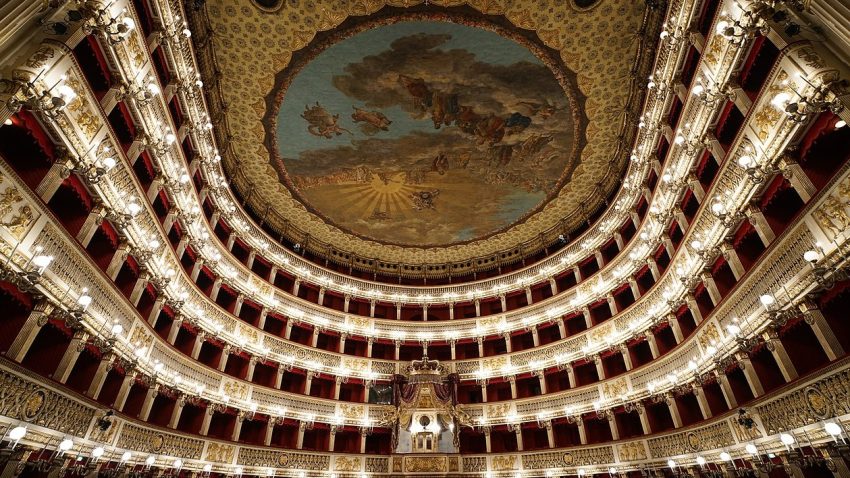
Teatro San Carlo naples
Public Domain / Sony photographer
Teatro di San Carlo is a working 18th-century opera house, opened in 1737 under King Charles VII of Bourbon, and still central to the city’s musical life. The discreet exterior gives way to a lavish horseshoe auditorium: six tiers of red-and-gold boxes, ornate gilding, and a commanding royal box facing the stage beneath a chandeliered ceiling. It was designed by Giovanni Antonio Medrano with advanced stage machinery for its day, then rapidly rebuilt after a devastating 1816 fire by Antonio Niccolini. Even outside a full performance, visitors remember the acoustics-focused curve of the hall and the sense of stepping into a Bourbon court setting.
Location: Teatro di San Carlo, Via San Carlo, Naples, Metropolitan City of Naples, Italy | Hours: Guided tours: Monday to Saturday (excluding holidays): 10:30 am, 11:30 am, 12:30 pm, 2:30 pm, 3:30 pm and 4:30 pm. | Price: Adults: € 9 (£ 7.70). Young people under 30/seniors over 60: € 7 (£ 6). Children under 10 years old: € 4 (£ 3.40). | Website | Distance: 2.2km

12. Catacombs of San Gennaro
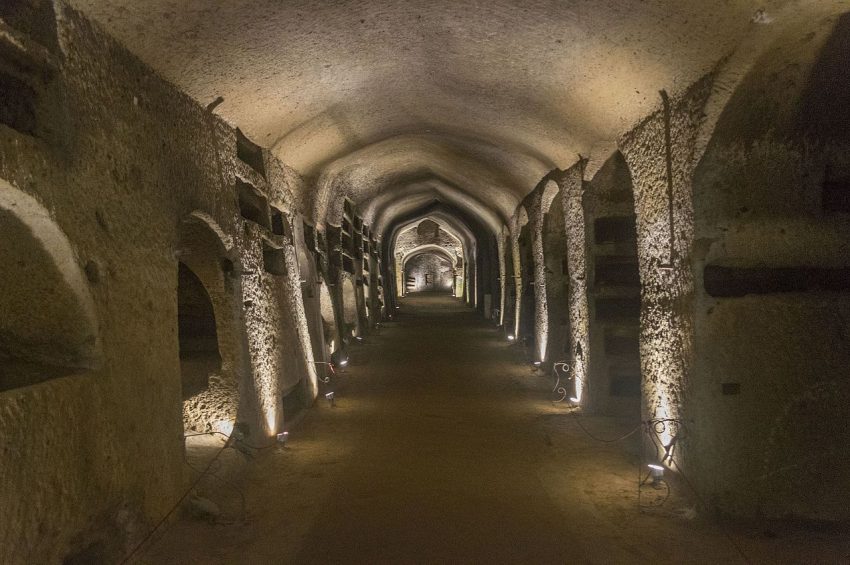
Catacombe di San Gennaro
CC BY-SA 4.0 / Dominik Matus
Cut into soft volcanic tuff beneath Rione Sanità, the Catacombs of San Gennaro form a vast early-Christian necropolis spread across two levels, San Gennaro Superiore and Inferiore. Wide, unusually tall corridors feel almost basilica-like as you pass rows of loculi niches, arcosoli family tombs, and occasional sarcophagi, with faint fresco traces and inscriptions still clinging to the walls. The oldest areas date to the 3rd–4th centuries and grew into a major burial and worship site after Bishop Agrippinus was laid here; an underground basilica space dedicated to him survives. Looting stripped many decorations, so what lingers most is the scale, the carved architecture, and the hush of a city built for the dead.
Location: Catacombs of San Gennaro, Via Capodimonte, Naples, Metropolitan City of Naples, Italy | Hours: From Mondays to Sundays from 10 am to 5 pm (Last admission 5 pm); Closed on Wednesdays | Price: Adults: €13.00 | Website | Distance: 2.3km
Powered by GetYourGuide

13. Royal Palace of Naples

Main Facade of Royal Palace of Naples
CC BY-SA 3.0 / pietro scerrato
Facing Piazza del Plebiscito, the Royal Palace (Palazzo Reale) is a vast 17th‑century court complex begun by Domenico Fontana on the site of the old viceroy’s residence, later reshaped by Spanish, Bourbon, and Napoleonic tastes. The long façade is punctuated by a parade of royal statues commissioned in 1888, turning the square into a stone timeline of rulers. Inside, the mood shifts from street bustle to grand staircases, frescoed halls, throne rooms, and a court theatre, with layers of Baroque and neoclassical decoration after restorations following an 1837 fire. Parts of the building also house the Biblioteca Nazionale Vittorio Emanuele III, keeping the palace a working cultural institution.
Location: Royal Palace of Naples, Piazza del Plebiscito, Naples, Metropolitan City of Naples, Italy | Hours: Thursday to Tuesday: 9:00 to 20:00. Closed Wednesdays. | Price: Adults: €15.00 | Website | Distance: 2.3km

14. Piazza del Plebiscito

Piazza del Plebiscito, Naples
CC BY-SA 4.0 / Argo Navis
A vast, fully pedestrianised ceremonial square framed by the Royal Palace on one side and the domed Basilica of San Francesco di Paola on the other, Piazza del Plebiscito feels like an outdoor stage. The basilica’s Pantheon-like portico and twin curving colonnades wrap the space in a theatrical sweep, while statues of past rulers line the palace façade. Named for the 21 October 1860 vote that brought the city into unified Italy, it also carries traces of Murat’s Napoleonic ambitions and Bourbon redesign. After serving as a car park in the 1960s–70s, it was repaved in traditional stone for the 1994 G7 and now fills with concerts, festivals, and evening crowds.
Location: Piazza del Plebiscito, Naples, Metropolitan City of Naples, Italy | Hours: As a public square, Piazza del Plebiscito is accessible at all hours | Price: Free | Distance: 2.4km
Powered by GetYourGuide

15. San Martino Monastery

San Martino Monastery and Museum
CC BY-SA 3.0 / pietro scerrato
Perched on the Vomero hill beneath Castel Sant’Elmo, the Certosa di San Martino began as a Carthusian monastery founded in 1368 under Queen Joan I and later became the National Museum of San Martino. Its pale-stone courtyards, cloisters, terraces, church, and gardens still read like a self-contained monastic village, reshaped by Cosimo Fanzago’s sweeping Baroque redesign from 1623. Inside, rooms display Spanish and Bourbon-era objects—maps, uniforms, ship models, and furnishings—that trace the city’s political and maritime life. Many visitors linger longest at the belvedere, where rooftops fall away to the Gulf and Vesuvius, especially at sunset.
Location: Largo S. Martino, 5, 80129 Napoli NA, Italy | Hours: Thursday to Tuesday: 8:30 - 17:00; Closed on Wednesdays | Price: Adults: €9.00 | Website | Distance: 2.5km

16. San Francesco di Paola
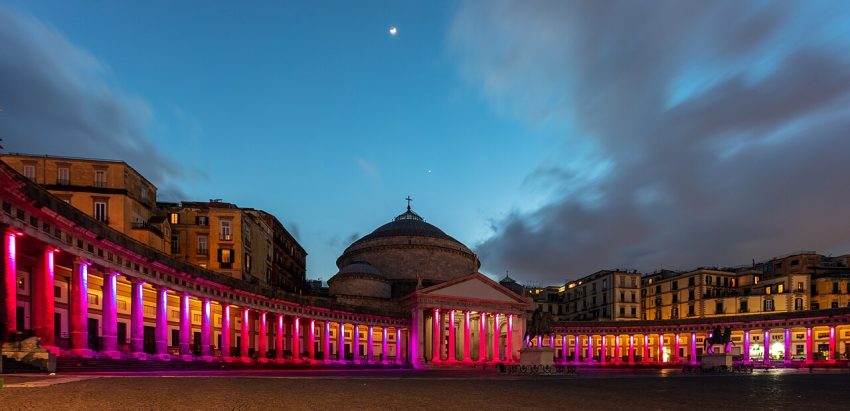
Basilica de San Francesco di Paola, Napoles
CC BY-SA 2.0 / "Diego Delso, delso.photo
San Francesco di Paola is a neoclassical church that forms the monumental backdrop to Piazza del Plebiscito, defined by a broad portico and sweeping curved colonnades that embrace the square. Begun under Joachim Murat as a Napoleonic monument, it was completed in 1816 by Ferdinand I and rededicated to Saint Francis of Paola, who once lived in a monastery on this site. Its Pantheon-inspired plan leads from the columned entrance into a bright circular rotunda, capped by a dome rising about 53 metres. Inside, the symmetry is punctuated by chapels, statues of saints and Church Fathers, and altarpieces spanning 18th- and 19th-century styles.
Location: San Francesco di Paola, Piazza del Plebiscito, Naples, Metropolitan City of Naples, Italy | Hours: Monday to Saturday: 6:45 am to 12 pm and 4:30 pm to 7:30 pm. Sundays: 8 am to 12 pm. | Price: Free | Distance: 2.5km

17. Napoli Sotterranea
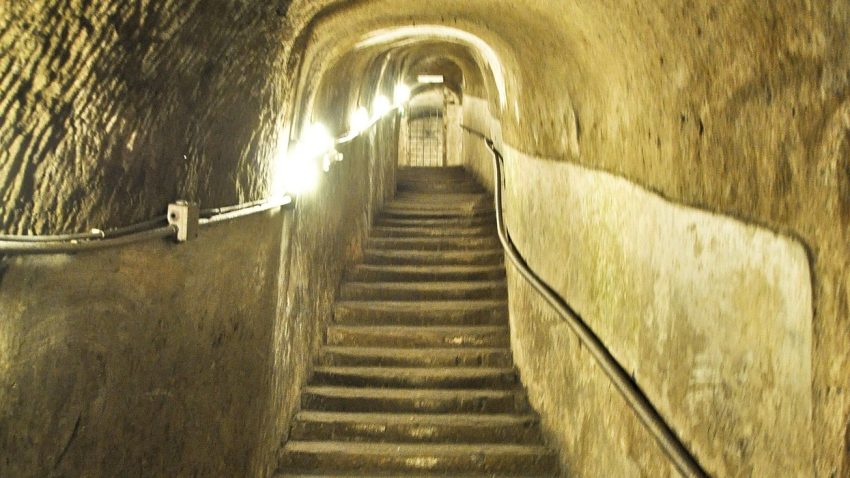
Napoli Sotterranea
Napoli Sotterranea
CC BY-SA 2.0 / Armando Mancini
Napoli Sotterranea is a vast underground network carved from soft volcanic tuff, revealing a second city beneath the streets. You descend steep staircases into cool cisterns first cut by Greeks around 470 BC, then threaded with Roman “cunicoli” aqueduct tunnels that once carried water across town. The experience turns tactile and intimate: chisel-scarred walls, echoing chambers, and occasional single-file passages lit by small lamps. In places, the past feels recent—WWII shelter areas with rough benches, alcoves, and walls marked by names, dates, and wartime doodles. The shift from ancient infrastructure to air-raid refuge is what lingers most.
Location: Napoli Sotterranea, Vico San Anna di Palazzo, Naples, Metropolitan City of Naples, Italy | Hours: Guided tours in English: daily at 10 am, 12 pm, 2 pm, 4 pm and 6 pm. | Price: Guided tour: € 10 | Website | Distance: 2.5km
Powered by GetYourGuide

18. Bourbon Tunnel

Galleria borbonica
Galleria borbonica
CC BY-SA 4.0 / Associazione Culturale Borbonica Sotterranea
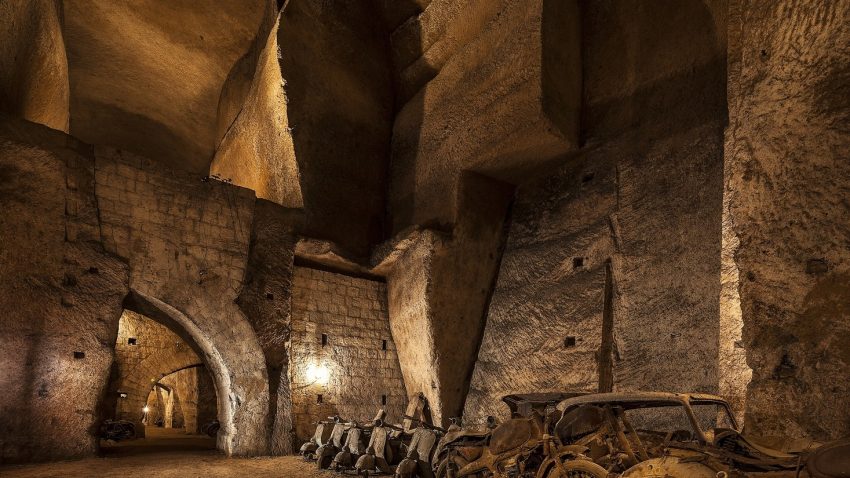
Bourbon Tunnel (Galleria Borbonica) is a subterranean passage cut through tuff beneath the area around Piazza del Plebiscito, built in the 19th century as a discreet royal escape and military corridor. Descending into its dim galleries, you move through a layered underworld of carved cisterns and traces of the older Carmignano aqueduct. The unfinished route later became a World War II air-raid shelter, and the atmosphere still feels utilitarian and improvised. Among the most memorable sights are clusters of abandoned vintage cars and scooters, broken statuary, and a discarded fascist-era monument, all left to gather dust in the cool, echoing chambers.
Location: Galleria Borbonica - Ingresso Via Morelli, Via Domenico Morelli, Naples, Metropolitan City of Naples, Italy | Hours: Friday, Saturday, Sunday and holidays: Tour Start times: 10:00, 12:00, 15:00, 17:00 | Price: Adults: €10.00 | Website | Distance: 2.6km
Powered by GetYourGuide

19. Castel Sant’Elmo

SantElmo
SantElmo
CC BY-SA 4.0 / Hotepibre
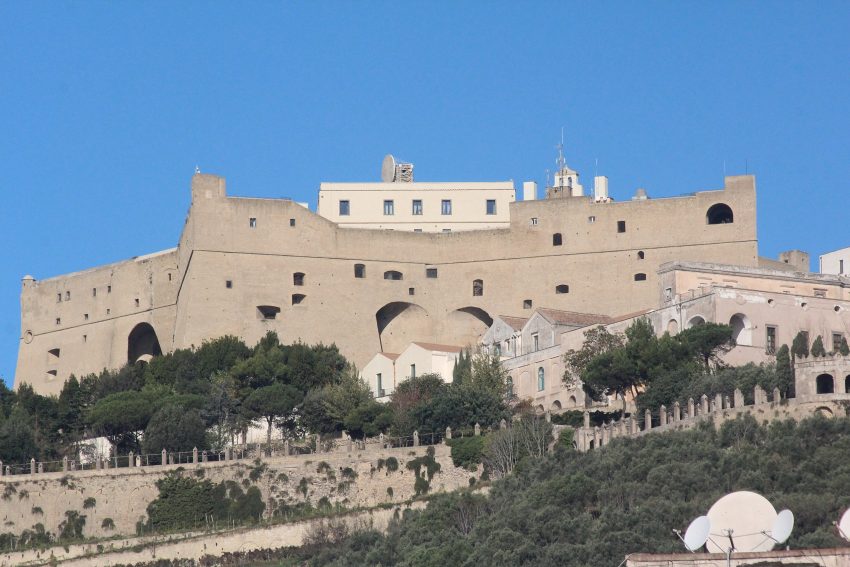
Perched on Vomero Hill beside the Certosa di San Martino, Castel Sant’Elmo is a stern, star-shaped fortress built to command the bay and the city below. Its story runs from a 10th-century church dedicated to Sant’Erasmo to a mid-16th-century artillery fort redesigned by Pedro Luis Escriva into a hexagonal plan with bastions and ramparts. Walking the upper terraces is the lasting memory: a near-360° sweep that frames Vesuvius, the Gulf, and the tight weave of rooftops like a map, especially striking at sunset. A lightning-triggered explosion in 1587 forced a rebuild under Domenico Fontana, yet the geometry endured. Inside, former military spaces now host exhibitions and an art-history library, with thoughtful Braille inscriptions along the way.
Location: Castel Sant'Elmo, Via Tito Angelini, Naples, Metropolitan City of Naples, Italy | Hours: Daily from 8:30 am - 7:30 pm (last entry 6:30 pm) | Price: €2.50 | Website | Distance: 2.6km
Powered by GetYourGuide

20. Fontana del Gigante

Fontana del GiganteNaples
CC BY-SA 4.0 / Paolo Villa
Set on the seafront promenade near Castel dell’Ovo, the Fontana del Gigante is a 17th-century Mannerist marble fountain that reads like a small triumphal gateway. Three arched bays are packed with heraldic shields, scrolling stonework, and lively sea creatures—dolphins, shells, and other marine motifs—that echo the bay in front of it. The fountain’s backstory is unusually nomadic: it began beside the Royal Palace near a colossal “Giant” Jupiter statue, was dismantled and stored for decades, then shifted around the port before settling here in 1906. Visitors linger for the framed views through the arches toward the marina and coastline, especially in soft evening light.
Location: Fontana del Gigante, Via Partenope, Naples, Metropolitan City of Naples, Italy | Hours: 24 hours | Price: Free | Distance: 2.9km

21. Castel Ovo
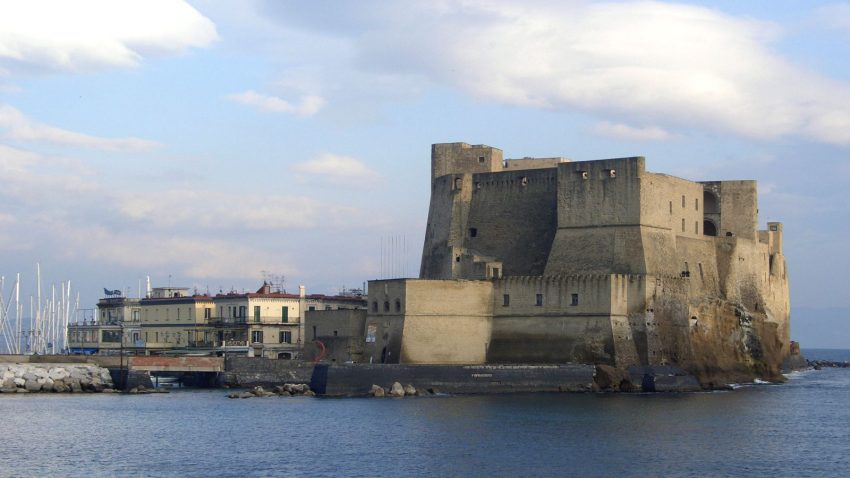
Napoli casteldellovo
CC BY-SA 2.0 / Mac9
Castel dell’Ovo (“Egg Castle”) sits on the former island of Megaride, reached by a causeway above the water, with ramparts that frame wide views across the Gulf toward Vesuvius and the curve of the Lungomare. A medieval legend says Virgil hid a magical egg in its foundations, binding the fortress—and the city’s fortune—to its safety. It is the oldest castle here, layered over Greek settlement traces and the remains of Lucullus’s Roman villa, later used as a fortified residence, treasury, and prison. Inside, expect austere stone passages and occasional exhibitions rather than palace-like rooms. Recent visitor reviews note restoration scaffolding at times, but the seafront atmosphere and Borgo Marinaro’s boats and seafood terraces still stand out.
Location: Castel dell'Ovo, Via Eldorado, Naples, Metropolitan City of Naples, Italy | Hours: Monday to Friday: 9 am to 7 pm; Sunday: 9 am to 1 pm. | Price: Free | Website | Distance: 3.1km

Best Day Trips from Naples

A day trip from Naples offers the perfect opportunity to escape the urban rhythm and discover the surrounding region's charm. Whether you're drawn to scenic countryside, historic villages, or cultural landmarks, the area around Naples provides a variety of easy-to-reach destinations ideal for a one-day itinerary. If you are looking to rent a car in Italy I recommend having a look at Discover Cars, first, as they compare prices and review multiple car rental agencies for you.

1. Mount Vesuvius
Mount Vesuvius
Mount Vesuvius
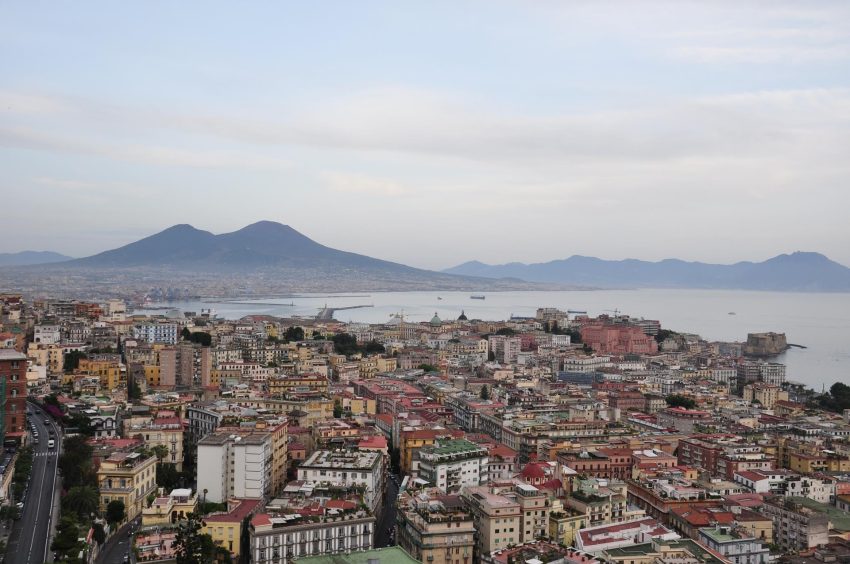
Mount Vesuvius, one of only two active volcanoes on the European mainland, rises majestically to about 1,281 meters above the Bay of Naples. Its symmetrical cone and steep, wooded slopes dominate the landscape, forming the heart of Mount Vesuvius National Park — a fertile area dotted with small farms and vineyards cultivating ancient grape varieties that thrive in volcanic soil.…
Location: Mount Vesuvius, Ottaviano, Metropolitan City of Naples, Italy | Hours: January – February: 9 am – 3 pm. March: 9 am – 4 pm. April, May & June: 9 am – 5 pm. July – August: 9 am – 6 pm. September: 9 am – 5 pm. October: 9 am – 4 pm. November – December: 9 am – 3 pm. | Distance: 13.9km
Visiting Mount Vesuvius

2. Pompeii

what to see in pompeii
The Pompeii ruins are a vast and intricate collection of ancient Roman remains, with Mount Vesuvius looming ominously in the distance. Once a thriving city of 20,000 mostly middle-class citizens, Pompeii's strategic location made it a crucial hub for trade between Rome and the broader Mediterranean. Pompeii was a bustling metropolis with chariots traversing its streets, an amphitheater hosting gladiator…
Visiting Pompeii
Powered by GetYourGuide

3. Sorrento

Sorrento
Sorrento
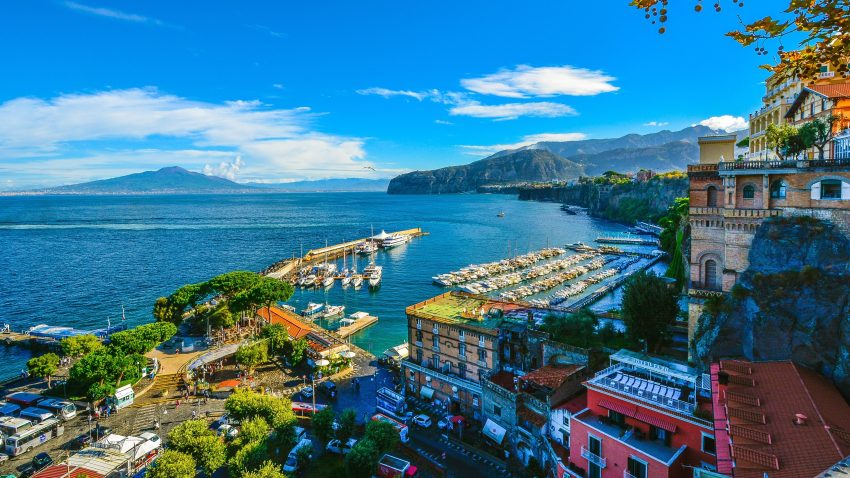
Sorrento, beautifully perched on a plateau overlooking the Bay of Naples, has been a favored tourist destination for nearly two centuries. Traditionally, it has been one of the preferred resorts for British visitors to Italy, and in recent decades, it has become Italy's leading package-holiday spot for English-speaking travelers. This historic seaside town has adeptly embraced tourism, offering a classic…
Visiting Sorrento
Powered by GetYourGuide

4. Capri

italy capri
italy capri
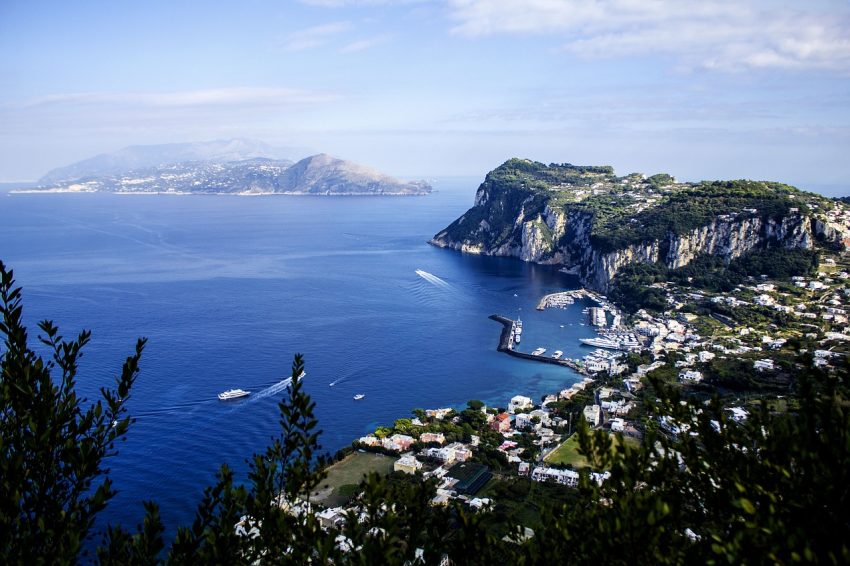
Visiting Capri, the enchanting island in the Bay of Naples, is a dreamlike experience that combines natural beauty with luxurious charm. Known for its dramatic cliffs, crystal-clear waters, and lush landscapes, Capri has long been a favored destination for travelers seeking a mix of relaxation and sophistication. The island’s iconic Blue Grotto, a sea cave illuminated by an ethereal blue…
Visiting Capri
Powered by GetYourGuide

5. Amalfi Coast

amalfi coast
amalfi coast
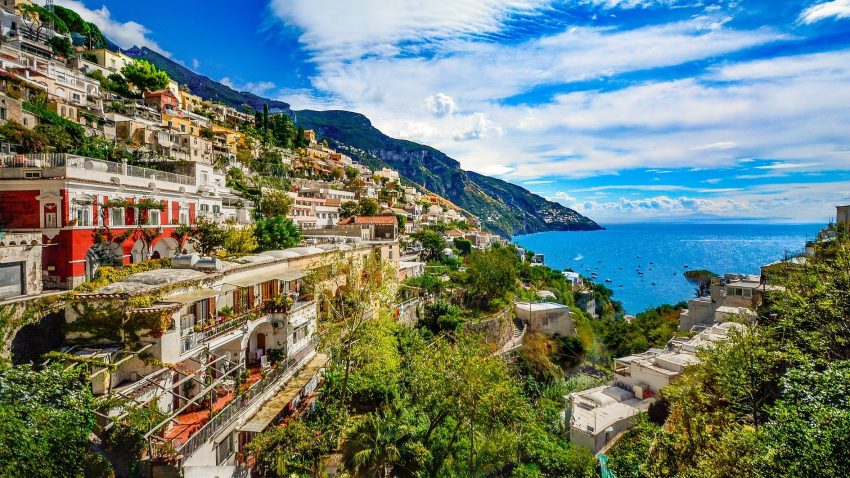
Stretching along the southern edge of Italy’s Sorrentine Peninsula in the Campania region, the Amalfi Coast is one of the most captivating coastal landscapes in the world. This UNESCO World Heritage area is celebrated for its dramatic scenery, where rugged cliffs plunge into turquoise waters and pastel-colored towns cling to steep hillsides. The region’s winding coastal road, the SS163, links…
Visiting Amalfi Coast

6. Salerno

Panorama of Salerno
Panorama of Salerno
CC BY-SA 4.0 / Cabalist12
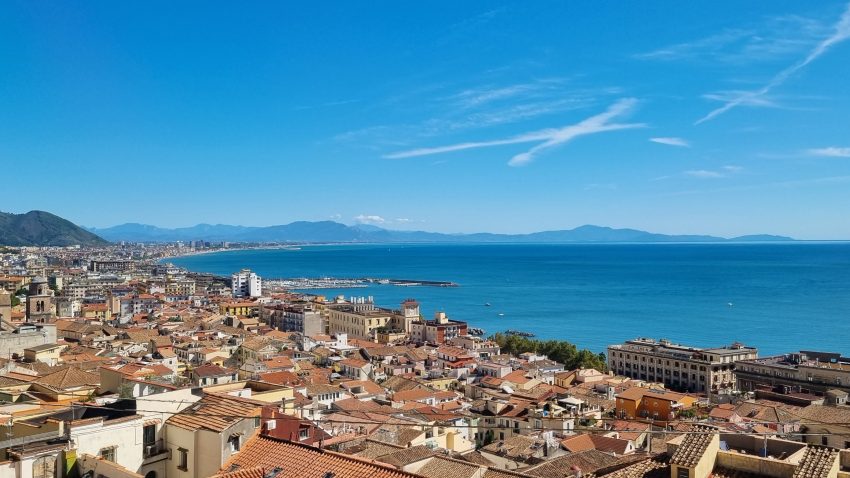
Nestled in the shadow of the soaring Sorrentine Peninsula, Salerno is one of the Campania region’s most overlooked and underrated cities. Combining the convenience of big-city life with the charm of a small town, it remains a delightful place that has yet to be discovered by mass tourism—let’s hope it stays that way! Founded by the Romans in the 2nd…
Visiting Salerno
Powered by GetYourGuide

7. Paestum

Templa at Paestum
Templa at Paestum
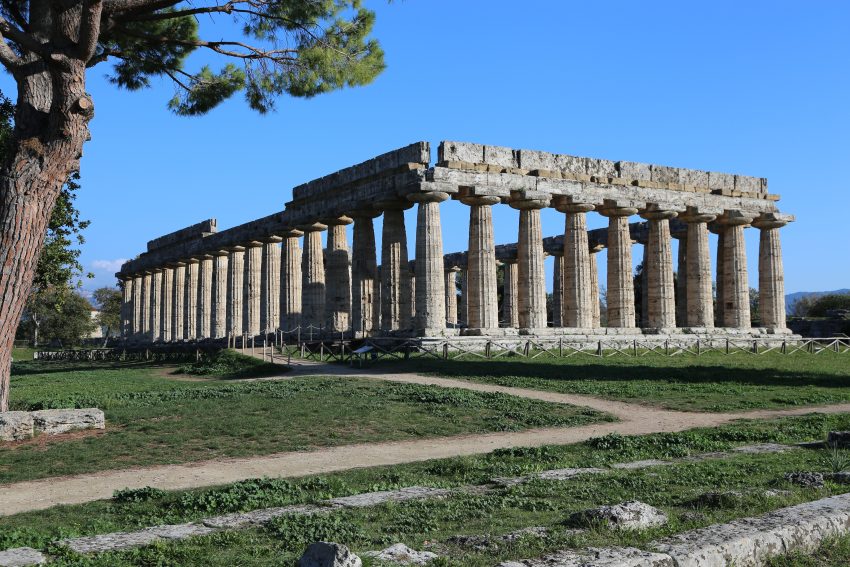
For history lovers and travellers drawn to the ancient Mediterranean, Paestum Archaeological Park is one of those places that feels almost unreal in its scale and preservation. On a broad, sunlit plain south of Salerno, you step into a landscape of weathered stone and wild grasses where three Doric temples still stand with a kind of calm authority, their columns…
Location: Paestum, SA, Italy | Hours: Daily: 08:30–19:30. | Price: €15 (March–November); €10 (December–February). Reduced: €2 (EU ages 18–25). Free: under 18. | Website | Distance: 78.5km
Visiting Paestum
Powered by GetYourGuide

8. Barrea

lake Barrea
lake Barrea
Visiting Barrea, a charming village nestled in the heart of Italy’s Abruzzo region, offers a tranquil escape into nature and history. Perched on a hill overlooking the stunning Lago di Barrea, this medieval village is surrounded by the rugged beauty of the Abruzzo, Lazio, and Molise National Park. The village’s narrow, winding streets lead to stone houses, ancient churches, and…
Visiting Barrea

Where to Stay in Naples

Staying in the historic center offers proximity to Spaccanapoli, the National Archaeological Museum, and authentic Neapolitan pizzerias. For a scenic waterfront stay, Chiaia or Posillipo provide stunning bay views and a more relaxed atmosphere.

A 3 to 4-day stay is ideal for exploring Naples’ historical sites, enjoying its food culture, and taking a trip to Pompeii. A 5-day stay allows for visiting Capri, the Amalfi Coast, or Mount Vesuvius.

Using the our Hotel and Accomodation map, you can compare hotels and short-term rental accommodations in Naples. Simply insert your travel dates and group size, and you’ll see the best deals for your stay.

Naples Accommodation Map

Best Time to Visit Naples

The best time to visit Naples, Italy, depends on your preferences for weather, crowds, and local events. Here’s a seasonal breakdown to help you decide:

  1. Spring (March to May): Spring is one of the best times to visit Naples. The weather is mild, with average temperatures ranging from 10°C (50°F) in early spring to about 22°C (72°F) in late May. The city is less crowded than in the summer, making it a great time to explore tourist attractions and enjoy the blossoming landscape without the peak season rush.
  2. Summer (June to August): This is the peak tourist season. The weather is warm and sunny, with temperatures often climbing above 30°C (86°F). While this is a popular time for tourists, it can be quite hot, especially for exploring the city on foot. However, summer is vibrant with numerous festivals and events, and the bustling atmosphere is very lively.
  3. Autumn (September to November): Autumn is another excellent time to visit. The temperatures start to cool down, making September and October ideal for sightseeing. The tourist crowds diminish, and you can enjoy a more relaxed visit. Also, the autumn light is beautiful for photography, especially in the historic parts of the city.
  4. Winter (December to February): Winters are generally mild compared to other European cities, with temperatures rarely dropping below 4°C (39°F). December can be quite festive with Christmas decorations and events. However, January and February are quieter, and although it’s off-season with fewer tourists, some attractions might have shorter hours or be closed.

Each season in Naples offers a unique charm, so the best time to visit would align with what you want to experience during your trip. If you prefer mild weather and fewer crowds, spring and autumn are ideal. For beach weather and lively cultural events, summer is the best choice. Winter offers a quieter, more subdued travel experience with the charm of festive decorations and cooler weather.

Annual Weather Overview

  • January 13°C
  • February 13°C
  • March 15°C
  • April 19°C
  • May 22°C
  • June 29°C
  • July 31°C
  • August 31°C
  • September 26°C
  • October 22°C
  • November 17°C
  • December 14°C

How to get to Naples

Getting to Naples, Italy, can be done through various means of transportation, depending on where you are starting from. Here are some of the common ways to reach this vibrant city:

By Air

  • Naples International Airport (NAP), also known as Aeroporto di Napoli-Capodichino, is located just a few kilometers from the city center. It serves numerous domestic and international flights. From the airport, you can take a taxi, a bus (Alibus), or arrange for a private transfer to get to the city center.

By Train

  • Naples Central Station (Napoli Centrale) is the main railway station and is well-connected to other major Italian cities like Rome, Milan, Florence, and Venice through high-speed trains (Frecciarossa, Italo, or Intercity). There are also regional trains connecting Naples to other parts of Campania.
  • The train from Rome to Naples, for example, takes about 1 to 2 hours, depending on whether you are on a high-speed train or a slower regional service.

By Car

  • Driving to Naples can be a good option if you want the flexibility of exploring the surrounding areas like the Amalfi Coast, Pompeii, and the countryside of Campania. Major highways connect Naples to the rest of Italy. From Rome, you can take the A1 Autostrada, which is a direct route to Naples.

By Bus

  • Long-distance buses connect Naples with many Italian cities. Companies like FlixBus offer comfortable and economical services. Buses may be a cheaper alternative to trains, although they might take longer, especially with traffic.

By Boat

  • Naples has a major port with ferries and hydrofoils connecting it to islands such as Capri, Ischia, and Sicily, as well as other coastal towns. This is a scenic way to arrive in Naples if you are coming from nearby islands or coastal regions.

Getting Around in Naples

Once in Naples, the public transport system, consisting of buses, trams, a metro system, and funiculars, provides good coverage and an easy way to navigate the city. However, the historical center is quite walkable, and many of the main sights are within walking distance of each other.

Consider the most convenient and efficient mode of transport based on your departure location and budget when planning your trip to Naples.
More from this area