Self-Guided Walking Tour of Avignon (2026)
This website uses affiliate links which earn a small commission at no additional cost to you.
Avignon is compact, atmospheric, and made for walking. Inside the old ramparts, you can move from grand medieval landmarks to quiet lanes in minutes, with the Rhône never far away and little pockets of Provençal life unfolding around you. This self-guided route is designed to feel natural rather than rushed, linking the city's headline sights with a few smaller detours that bring its character into focus.
The walk threads together the best things to see in Avignon, from the monumental Palais des Papes and the cathedral quarter to elegant plazas, boutique streets, and riverfront viewpoints. You'll get a sense of how Avignon became a powerhouse in the Middle Ages, why its stone architecture feels so imposing, and where to pause for the most rewarding perspectives and people-watching.
Because it's self-guided, you can shape the day around what matters to you-history first, photos first, or pastries first. Start early for softer light and fewer crowds, stretch the route with a museum stop, or break it up with a long lunch on a shaded terrace. Avignon rewards slow travel, and this walking tour is built to let you linger where the city feels most alive.
How to Get to Avignon
By Air: Avignon has a small airport (Avignon-Provence), but most travelers fly into larger hubs for better routes and prices. Marseille Provence Airport is usually the most convenient major gateway, with frequent onward connections into Avignon by train or coach; you can also consider Nîmes, Montpellier, Nice, or Lyon depending on where you're coming from and what fares look like. Once you land, the simplest approach is to head straight to the nearest main station and continue to Avignon Centre (for the old town) or Avignon TGV (for high-speed services). For the best deals and a seamless booking experience, check out these flights to Avignon on Booking.com.
By Train: Avignon is one of the easiest places in southern France to reach by rail, with two useful stations. Avignon TGV sits a few kilometres outside town on the high-speed network, making it fast from Paris and other major cities, while Avignon Centre is right by the ramparts and ideal if you want to step straight into the old town. If you arrive at Avignon TGV, you can transfer into town quickly by local train, shuttle bus, taxi, or rideshare-so choose the station that best matches your accommodation and itinerary. You can use SNCF Connect to check schedules, compare routes, and purchase tickets for National (SNCF ) and regional trains (TER). For a more streamlined experience, we recommend using Omio, which allows you to easily compare prices, schedules, and book tickets for both National and Regional travel across all of Europe, all in one place.
By Car: Driving to Avignon is straightforward, with quick access from the A7 (Autoroute du Soleil) and good links across Provence and the Luberon for day trips. The main thing to plan for is parking: the historic centre has restricted access and narrow streets, so it's usually easier to aim for a large paid car park near the ramparts and explore on foot from there. If you're staying overnight, check whether your hotel offers reserved parking or guidance for access rules, as routes and permissions can vary within the old city. If you are looking to rent a car in France I recommend having a look at Discover Cars, first, as they compare prices and review multiple car rental agencies for you.
By Bus: Long-distance coaches can be a cost-effective option, especially from nearby cities in Provence or from farther afield if you book ahead. Services typically arrive near central Avignon or at/near the main stations, which makes it easy to connect into the old town on foot or by local bus. Buses can take longer than trains, but they're useful if you're traveling on a tight budget or coming from places with limited rail links. [bus]
A Short History of Avignon
Avignon in Antiquity and the Early Middle Ages
Avignon’s earliest urban story is one of a strategic settlement that grew into a fortified town shaped by trade routes and river life. Over centuries, successive rulers and local powers strengthened its defences and institutions, laying the groundwork for the walled city that still defines the historic core. Even today, the city’s older street patterns feel medieval in their logic: narrow lanes, small squares, and routes that naturally funnel towards key civic and religious centres.
As Avignon developed through the early medieval period, religious authority became increasingly visible in the city's fabric. The hilltop presence of Avignon Cathedral reflects that long rise of ecclesiastical influence, with the surrounding precinct evolving as a focal point for worship, processions, and the city's most important ceremonies. Nearby, the Rocher des Doms Gardens sit on ground that has witnessed centuries of spiritual and civic life, later transformed into a place of calm with panoramic viewpoints that still help you read the city's geography and history in a single glance.
Avignon in the Papal Era
Avignon’s defining transformation came in the 14th century, when the city became the seat of the papacy and a centre of European power. The construction of the Palais des Papes was both a practical necessity and a statement: a vast, fortress-like complex designed to project authority, protect the papal court, and house administration on a scale few cities could match. Place du Palais became the ceremonial stage for this new order, where the rhythms of court life, diplomacy, and public spectacle played out beneath the palace walls.
This period also pulled artists, scholars, financiers, and builders into Avignon, accelerating cultural life and leaving behind a legacy of ecclesiastical art and refined patronage. The Musée du Petit Palais connects directly to that atmosphere, reflecting the tastes and networks that flourished around the papal court. Close by, La Mirande evokes the prestige of the historic quarter, where proximity to power shaped architecture, social standing, and the daily choreography of the elite.
Avignon from the Late Middle Ages to the Early Modern City
After the height of papal rule, Avignon continued to evolve as a regional centre with strong religious institutions and a lively urban economy. The Pont Saint-Bénézet became a lasting emblem of the city's relationship with engineering, commerce, and the river-its partial survival turning practical infrastructure into legend and symbol. Meanwhile, parish life and civic identity strengthened through churches such as Église Saint-Pierre d'Avignon, whose Gothic presence speaks to a city investing in local devotion, guild life, and communal pride.
Commerce and craft shaped daily life as much as monuments did. Streets like Rue Peyrolerie recall the dense network of medieval trades that once clustered by speciality, while the canalside atmosphere of Rue des Teinturiers preserves the memory of textile work and water-powered industry. The Hôtel des Monnaies points to a city embedded in wider economic systems, where money, regulation, and administration were central to maintaining influence and stability over time.
Avignon in the 18th and 19th Centuries
As modern ideas of citizenship and municipal governance took firmer hold, Avignon’s civic spaces became the settings for political life, public gatherings, and the performance of authority. Place de l’Horloge emerged as a key focal point, with the Hôtel de Ville d’Avignon reinforcing the city’s administrative identity and its shift toward modern civic institutions. The square’s role as a social stage-markets, announcements, celebrations-helped anchor a more outward-facing urban culture.
Urban change also came through infrastructure and planning, particularly in how people moved through the city. Rue de la République represents that push toward straighter, more connective streets that linked quarters and encouraged commerce, while still feeding into the older, more intricate medieval lanes nearby. These changes didn’t replace Avignon’s historic character so much as layer new movement patterns onto it, giving the city the mix of grandeur and intimacy that defines it now.
Avignon in the 20th Century to Today
In the modern era, Avignon has balanced preservation with reinvention, keeping its historic core vibrant rather than museum-like. Traditional food culture remains a living thread, and Les Halles d'Avignon captures that everyday continuity-locals shopping, seasonal produce, and the city's Provençal identity expressed through what's on the stalls. At the same time, former working areas have shifted roles as the city adapted to new economies, new residents, and new ways of using old spaces.
You can still see this layered story when moving between neighbourhoods and functions: places tied to storage, supply, and urban industry have evolved, and areas like Quartier de la Manutention hint at those practical foundations beneath the postcard image. The result is a city where medieval power, civic pride, craft tradition, and modern culture sit close together-best understood on foot, street by street, square by square.
Your Self-Guided Walking Tour of Avignon
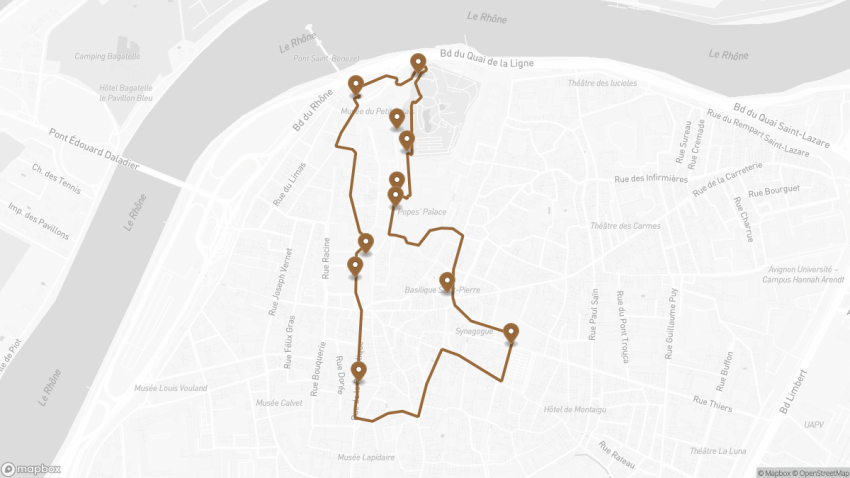
Explore Avignon on foot with our walking tour map, which guides you from one stop to the next as you discover the city at your own pace. Because this is a self-guided walking tour, you can skip places that do not interest you and stop for coffee whenever you like.
1. Rue de la Republique
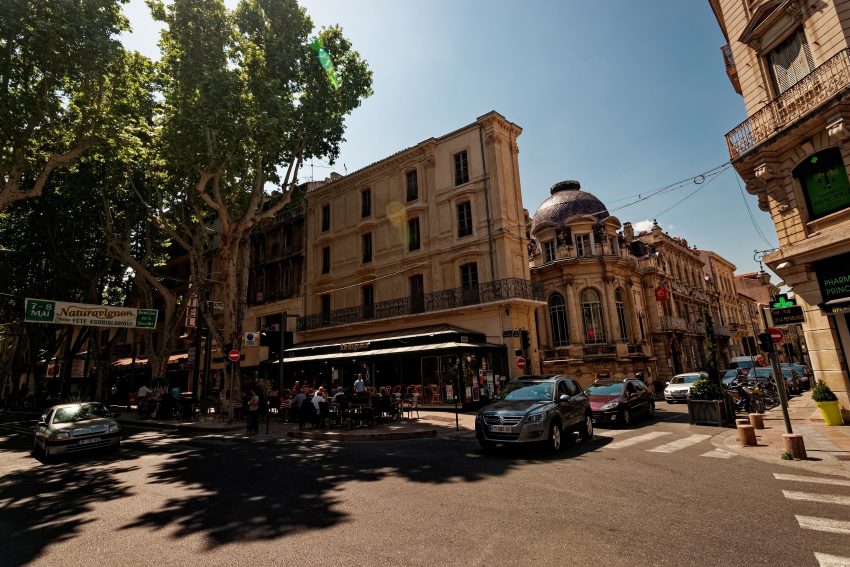
Rue de la République is Avignon’s principal modern axis through the historic center, created and reshaped in periods when French cities pushed for broader streets and improved circulation. Its character reflects a more “planned” urban moment, contrasting with the tight medieval lanes elsewhere in the old town.
The street’s history is written in its alignment and storefront rhythm: it connects key nodes and channels movement, making it a practical artery for residents and visitors alike. While it may feel more contemporary, it’s also a useful way to understand how Avignon adapted to new economic and social realities.
What to see here is partly architectural—facades, passageways, and the way side streets suddenly peel back into older medieval fabric—and partly experiential. Use it to move between major squares and monuments, but also duck into intersecting lanes to feel the abrupt shift from broad boulevard to intimate old-town street life.
Location: Rue de la République, 84000 Avignon, France | Hours: 24 Hours. | Price: Free.
2. Hôtel de Ville
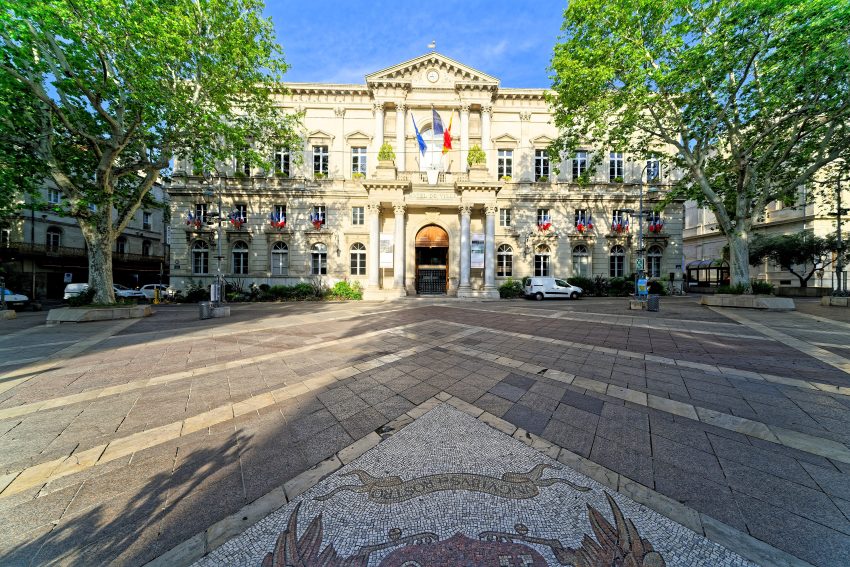
Avignon’s Hôtel de Ville represents the city’s municipal authority, reflecting the transition from papal dominance to civic administration. The building’s presence near Place de l’Horloge anchors the square as a political and social hub, and its architecture communicates order, ceremony, and governance.
Historically, town halls like this were more than offices: they were sites of negotiation, record-keeping, public proclamation, and civic ritual. In a city with such a strong ecclesiastical legacy, the Hôtel de Ville also signals balance—an urban identity that is not exclusively religious.
When you visit, study the façade and its relationship to the square. Look for emblematic details that express civic pride—inscriptions, coats of arms, and formal symmetry. Even if you don’t go inside, the building is best appreciated as part of the wider civic ensemble of the square.
Location: Pl. de l'Horloge, 84000 Avignon, France | Hours: Monday – Friday: 08:00–17:30. Closed on Saturday, Sunday. | Price: Free. | Website

3. Place de l’Horloge
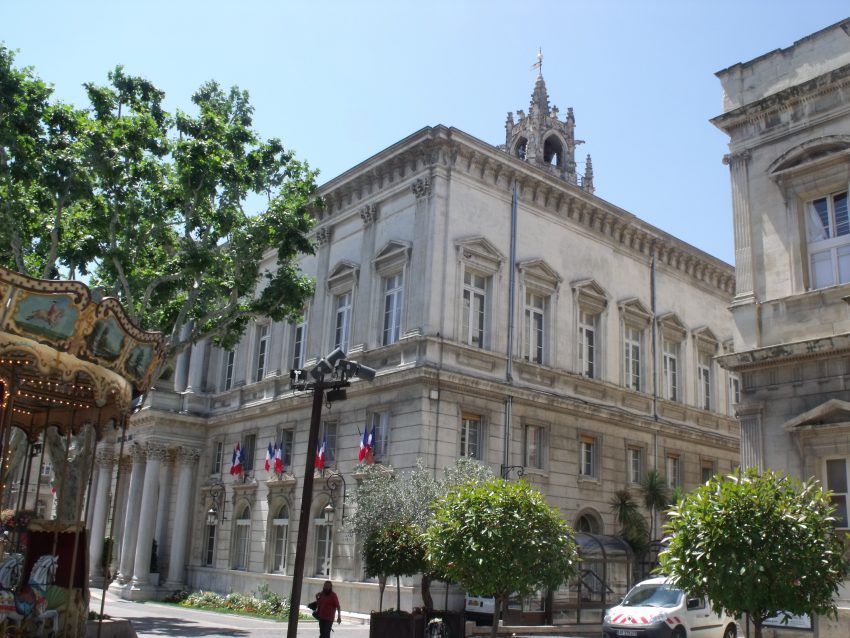
Place de l’Horloge developed as Avignon’s civic living room, shaped by the rhythms of commerce, theatre, and municipal life as the city evolved beyond its papal peak. The “clock” reference signals a public space organized by time and gathering—where announcements, meetings, and everyday social life centered.
Architecturally, the square reflects civic identity rather than ecclesiastical power. Facades, arcades, and prominent public buildings give it an ordered, ceremonial feel, but it remains a place designed for people to linger. It’s also a useful lens on Avignon’s later history: the city as a functioning municipality, not only a papal stage set.
To see it well, walk the perimeter and look up—balconies, window rhythms, and the way buildings frame the open space matter as much as what happens at ground level. If the theatre is open, it’s worth noting how performance and public space reinforce each other here, continuing a tradition of spectacle in a more civic key.
Location: Pl. de l'Horloge, 84000 Avignon, France | Hours: 24 Hours. | Price: Free.
4. Pont Saint-Bénézet
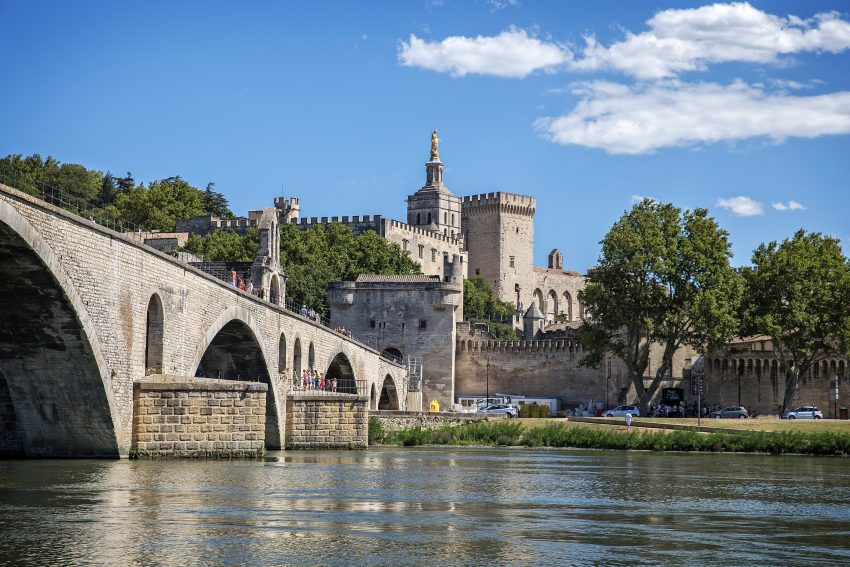
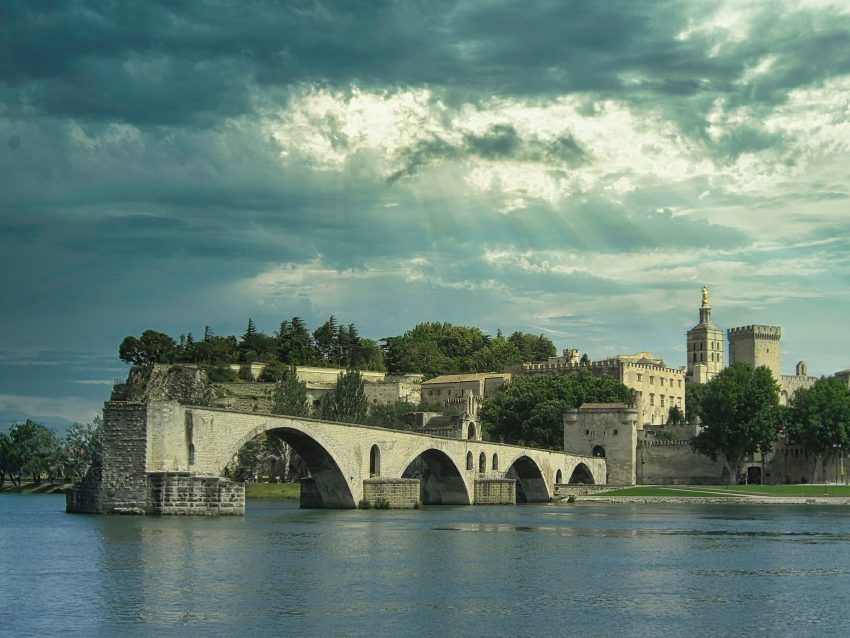
Pont Saint-Bénézet, famously associated with the “Pont d’Avignon,” began in the late 12th century and became a symbol of medieval engineering and devotion. The bridge’s story is inseparable from the Rhône itself: floods repeatedly damaged it, and by the 17th century much of the structure was abandoned, leaving the partial span that defines the site today.
What remains is powerfully evocative. The broken arches reaching into the river read like a historical diagram of what once connected Avignon across a difficult, shifting waterway. The bridge also carried a religious dimension, with the Chapel of Saint Nicholas embedded into the structure, reflecting how infrastructure and faith often overlapped in medieval life.
When you visit, focus on the surviving arches, the chapel, and the views back toward the palace skyline. From the bridge you can grasp the scale of the Rhône and the challenge it posed, and you’ll get some of the most iconic perspectives of Avignon’s fortified silhouette.
Location: Bd de la Ligne, 84000 Avignon, France | Hours: Daily: 10:00–17:00. | Price: Adults: €5; Reduced: €4; Under 8: free. | Website
5. Rocher des Doms Gardens
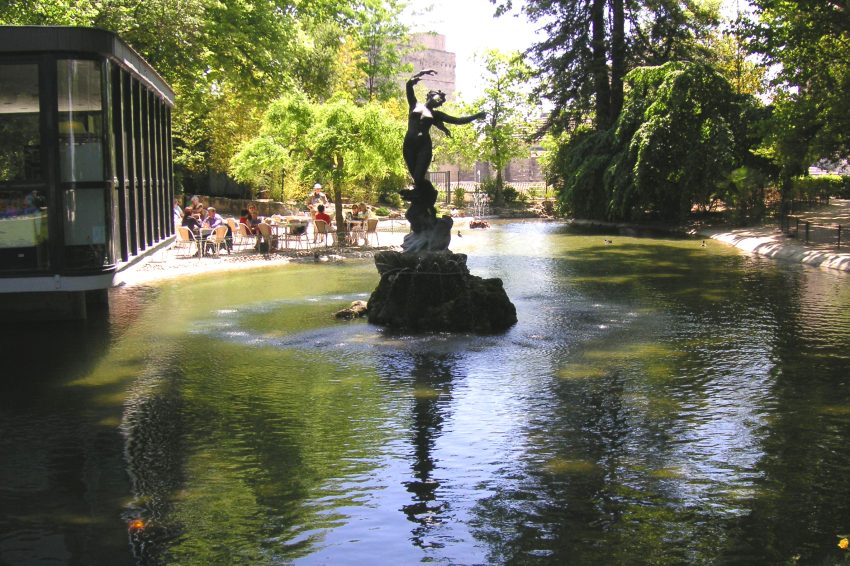
The Rocher des Doms is the rocky promontory that gave Avignon its natural defensive advantage, and the gardens on top were later shaped into a landscaped public retreat. This is where geology and history meet: long before formal paths and benches, the rock controlled movement, visibility, and access along the Rhône.
As a garden space, it balances calm with vantage. Shaded walks, terraces, and small water features soften the hard edge of the stone platform, while the elevated viewpoints remind you you’re standing on Avignon’s strategic high ground. The setting also connects visually to the palace and cathedral, reinforcing the idea of an upper city of power.
For what to see, treat it as a sequence of viewpoints. Look out over the Rhône, the Pont Saint-Bénézet, and the broad plain beyond, then turn back toward the old town’s rooftops. Visit at different times of day if you can: the change in light transforms the pale stone architecture and the river’s surface.
Location: 2 Mnt des Moulins, 84000 Avignon, France | Hours: Check official website. | Price: Free.
6. Musée du Petit Palais
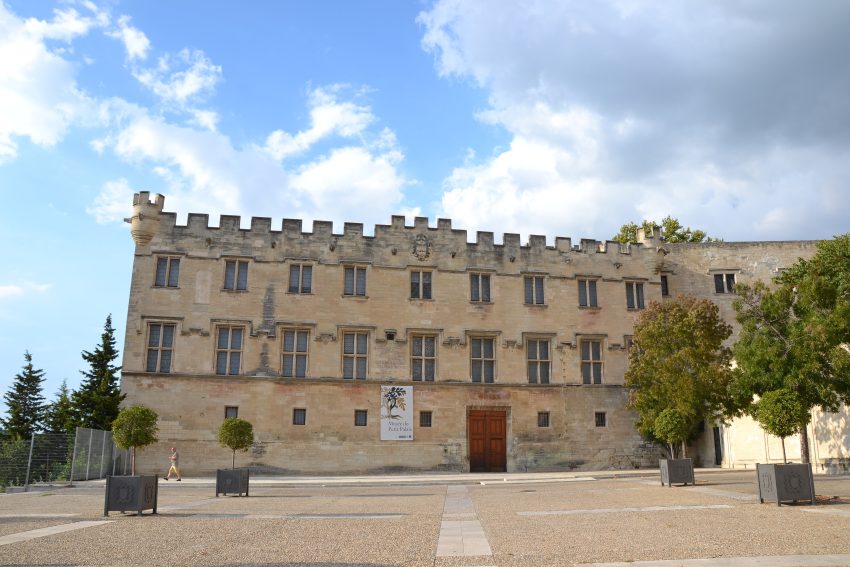
The Musée du Petit Palais occupies the former archbishops’ palace, a fitting setting for a collection shaped by Avignon’s religious and cultural prestige. The building’s history is intertwined with ecclesiastical power, and its reuse as a museum continues the site’s role as a place of patronage and art.
The museum is best known for early Italian painting and medieval works, offering a bridge between Avignon’s papal chapter and the broader artistic currents of Europe. You’ll see how devotional imagery evolved in technique and emotion, and how gold-ground traditions gradually gave way to more spatial realism and human expression.
Prioritize the galleries of Italian Primitives and medieval sculpture, then work outward to appreciate how the building frames the art—courtyards, stone stairways, and quieter rooms help the collection feel intimate rather than overwhelming. It’s an ideal counterpoint to the palace: less spectacle, more close-looking.
Location: Palais des archevêques, Pl. du Palais, 84000 Avignon, France | Hours: (Summer) April 1 – October 31; Tuesday – Sunday: 10:00–18:00. (Winter) November 1 – March 31; Tuesday – Friday: 11:00–18:00; Saturday – Sunday: 10:00–18:00; Closed on Monday. | Price: Free. | Website
7. Notre-Dame des Doms
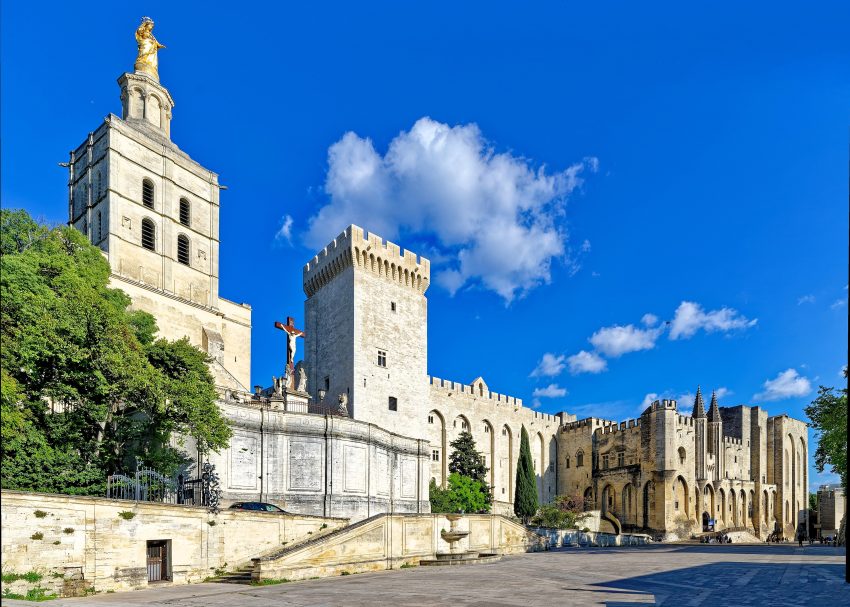
Notre-Dame des Doms is Avignon’s cathedral, rooted in Romanesque origins and expanded over centuries alongside the rise of the papal court. Its comparatively restrained exterior contrasts with the nearby palace’s fortress drama, but the cathedral’s presence is older and more continuous, reflecting Avignon’s long religious history before, during, and after the papal era.
The interior rewards a slower pace. Romanesque structure, later additions, and devotional spaces sit together, creating a sense of accumulated worship rather than a single “finished” design. The cathedral’s position on the Rocher des Doms also gives it a natural prominence, making it feel anchored to the rock itself.
Look for key sculptural and architectural details, and pay attention to the atmosphere: cool stone, softened light, and the way sound carries. Step outside to appreciate the cathedral in context—its relationship to the palace complex and the elevated setting is part of the experience, especially when you move between the cathedral, the square, and the gardens nearby.
Location: Pl. du Palais, 84000 Avignon, France | Hours: Tuesday – Sunday: 08:30–17:30. Closed on Monday. | Price: Free; donations appreciated. | Website
8. Place du Palais
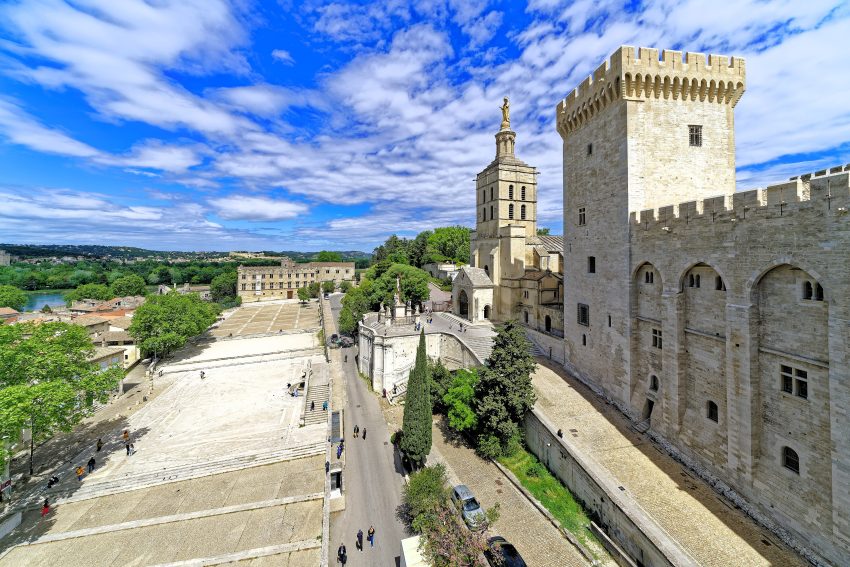
Place du Palais is the historic forecourt of Avignon’s papal complex, formed as the city’s political and ceremonial heart during the 14th century when the popes resided here. The square’s layout reflects layers of medieval urban life: clergy, merchants, and civic authorities all converged at the foot of the palace, and public announcements, processions, and markets would have spilled into this space.
What you see today is a dramatic “stone stage” framed by monumental façades, with the Palais des Papes dominating one side and the cathedral rising nearby. Take time to read the architecture: fortress-like walls, narrow medieval sightlines, and the way the buildings funnel you toward the palace entrances.
Look for viewpoints that capture the palace, cathedral, and surrounding old-town streets in one sweep, then linger to notice details you might miss at first glance: worn paving, old signage, and the constant interplay of light and shadow on Avignon’s pale stone. It’s also a practical starting point for nearby museums, gardens, and riverward routes.
Location: Pl. du Palais, 84000 Avignon, France | Hours: 24 Hours. | Price: Free.
9. Palais des Papes
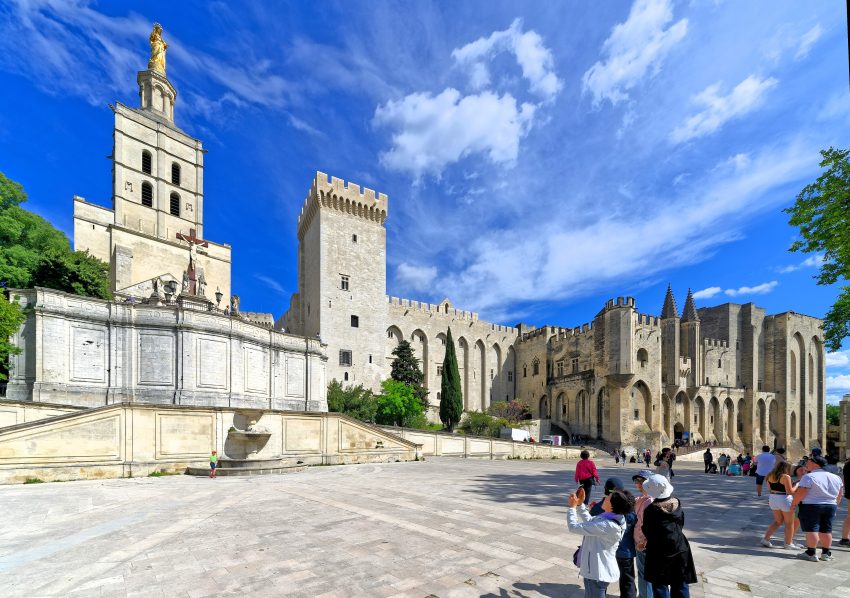
The Palais des Papes is one of Europe’s most important Gothic monuments, built largely in the 14th century when Avignon became the seat of the papacy. Part palace, part fortress, it embodies a period of extraordinary power and anxiety: high walls, towers, and controlled access were as essential as grand halls for ceremony and administration.
Inside, the scale is the main event. You move through immense rooms that once handled diplomacy, governance, and liturgical life, with a progression from public, formal spaces to more private papal quarters. Even where decoration has faded, the architecture still communicates authority through height, acoustics, and sheer mass.
Focus your visit on the great ceremonial rooms, the chapel spaces, and the circulation routes that show how the complex functioned. Seek out surviving frescoes and painted fragments where they remain, and don’t skip the ramparts and terraces: the views over Avignon’s rooftops and the Rhône plain help you understand why this was a strategic as well as spiritual capital.
Location: Pl. du Palais, 84000 Avignon, France | Hours: (January 1 – January 4) Daily: 10:00–18:00. (January 5 – February 6) Daily: 10:00–17:00. (February 7 – February 28) Daily: 10:00–18:00. (March 1 – November 1) Daily: 09:00–19:00. (November 2 – December 18) Daily: 10:00–17:00. (December 19 – December 31) Daily: 10:00–18:00. | Price: Adults: €12; Reduced: €10; Children (8–17): €6.50; Under 8: free. | Website
10. St. Peter's Basilica
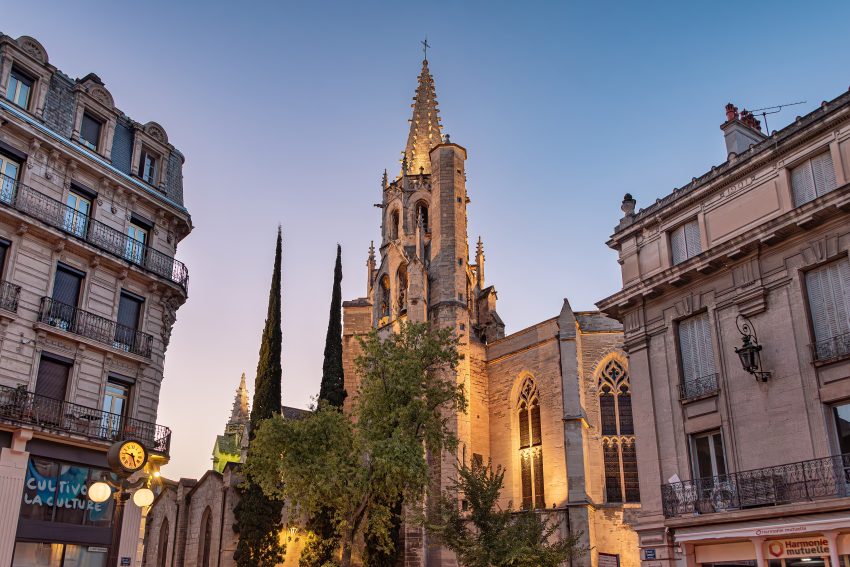
Avignon’s Saint-Pierre is a Gothic church closely tied to the city’s medieval religious landscape, distinct from the great cathedral nearby. It reflects the dense network of parish churches that served local communities while the papal court operated at a larger political scale.
The church is particularly known for its richly carved late-Gothic wooden doors, a showpiece of craftsmanship that signals how even “non-cathedral” churches could display serious artistic ambition. Inside, you’ll find a quieter, more intimate sacred space where details—chapels, altarpieces, and structural lines—reward close attention.
Spend time with the portal carvings first, then step inside and let your eyes adjust to the interior’s scale and light. Look for the interplay of stone structure and devotional art, and notice how the church sits within the surrounding streetscape: it feels woven into daily life rather than set apart on a grand forecourt.
Location: Pl. Saint-Pierre, 84000 Avignon, France | Hours: Monday – Saturday: 09:30–13:00 & 14:30–17:00. Sunday: Closed. | Price: Free; donations appreciated. | Website
11. Les Halles d’Avignon
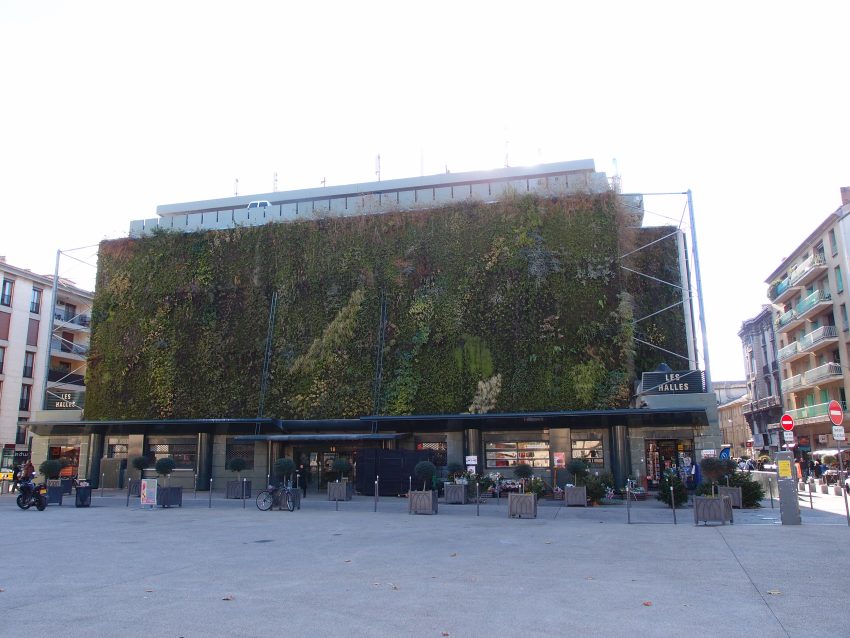
Les Halles is Avignon’s central covered market, rooted in the long Provençal tradition of local trade in produce, oils, cheeses, and seasonal specialties. While the current structure is modern compared to medieval Avignon, the function is ancient: a civic space where agriculture from the surrounding region becomes daily city life.
Markets like this are historical documents in motion. They reflect what grows locally, what people value, and how food culture expresses regional identity. In Avignon, that means a strong connection to the Rhône valley and nearby terroirs, with a practical emphasis on freshness and seasonality.
What to see is, above all, the stalls themselves—scan for what’s abundant that day, then notice the smaller artisans and specialty counters. Go with a shopper’s mindset: observe, taste if possible, and look for regional staples that tell you where you are, not just what’s popular everywhere.
Location: 18 Pl. Pie, 84000 Avignon, France | Hours: Tuesday – Sunday: 06:00–14:00. Closed on Monday. | Price: Free. | Website

Moira & Andy
Hey! We're Moira & Andy. From hiking the Camino to trips around Europe in Bert our campervan — we've been traveling together since retirement in 2020!
This website uses affiliate links which earn a small commission at no additional cost to you.
Walking Tour Summary
Distance: 2.5 km
Sites: 11
Walking Tour Map