St. Kilian Church, Röttingen
Church in Röttingen

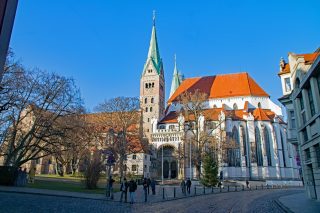
St. Kilian Church is the spiritual centerpiece of Röttingen, a late-Gothic parish church dedicated to Saint Kilian, the Irish missionary associated with the Christianization of Franconia. Even if you're not specifically seeking out churches, it's the kind of landmark you naturally drift toward while exploring the town-its spire rises above the rooftops, and the exterior stonework hints at the craftsmanship waiting inside.
For travelers who enjoy places that feel both historic and lived-in, the church is one of the must-see places in Röttingen, and it works especially well as a calm, reflective stop on a walking tour of Röttingen. Step in for a few minutes and you'll likely find a quiet contrast to the streets outside: filtered light, layered artworks, and a sense of continuity that's hard to replicate anywhere but a working parish church.
Table of Contents
- History and Significance of the St. Kilian Church
- Things to See and Do in the St. Kilian Church
- How to Get to the St. Kilian Church
- Practical Tips on Visiting the St. Kilian Church
- Where to Stay Close to the St. Kilian Church
- Is the St. Kilian Church Worth Visiting?
- For Different Travelers
- FAQs for Visiting St. Kilian Church
- Nearby Attractions to the St. Kilian Church
History and Significance of the St. Kilian Church
The church's dedication to Saint Kilian places it within a wider Franconian story that reaches back to the early medieval period, when local communities formed around missions, monasteries, and emerging towns. While the earliest origins are uncertain, tradition links a church presence here to very early foundations, with the current building reflecting a later moment when Röttingen had the means-and the will-to build in a more ambitious style.
Architecturally, the church is best appreciated as a late-Gothic statement: vertical lines, a confident tower, and a sense of structure designed to draw the eye upward. From the outside, it anchors the townscape; from the inside, it offers the classic Gothic experience of light and space shaped by stained glass and carefully arranged altars.
Its significance today is both religious and cultural. It remains an active place of worship, but it also functions as a living heritage site where visitors can connect with centuries of local identity through art, craftsmanship, and music.
Things to See and Do in the St. Kilian Church
Give yourself a moment to take in the transition from street to nave: the shift in sound, temperature, and light is part of the experience. The stained glass windows are often the first detail that catches attention, especially when the sun is angled just right and the interior takes on a soft, colored glow.
One of the key highlights is the late-medieval altarpiece, which rewards slow looking rather than a quick glance. Scenes from saints’ lives are typically dense with detail, and even without a deep art-history background, you can appreciate the storytelling and the patience behind the carving and painting.
If you enjoy music, keep an eye out for organ recitals or small performances when you’re in town. A good organ can transform a modest visit into something memorable, and churches like this often offer a rare chance to hear rich sound in the acoustic space it was made for.
How to Get to the St. Kilian Church
Most international visitors reach the region via Frankfurt Airport (FRA), Nuremberg Airport (NUE), or Munich Airport (MUC), then continue toward Würzburg and the Tauber Valley area. For the best deals and a seamless booking experience, check out these flights to Röttingen on Booking.com. From there, Röttingen is usually reached with a combination of regional connections and a final local leg.
By train, Würzburg Hauptbahnhof is the most practical rail hub for this corner of Franconia, with onward travel typically completed by bus or taxi depending on schedules.Train schedules and bookings can be found on Omio. Once you arrive in Röttingen, the church is easiest to reach on foot from the center.
Buses can be convenient for the final stretch, but timetables may be limited in the evenings and on Sundays, so it helps to plan with a little slack. If you’re linking multiple small towns in the Tauber Valley, a car can make the day far simpler and let you move at your own pace.If you are looking to rent a car in Germany I recommend having a look at Discover Cars, first, as they compare prices and review multiple car rental agencies for you.
Practical Tips on Visiting the St. Kilian Church
- Entrance fee: Entry to the church is generally free, though donations are welcome.
- Opening hours: Daily: 10:00–17:00
- Best time to visit: Late morning or mid-afternoon often gives the nicest interior light, especially if you want to linger by the stained glass.
- How long to spend: A focused visit can be 20-40 minutes, but art and architecture lovers may happily spend longer.
- Accessibility: Expect some steps and uneven surfaces typical of historic churches, with the easiest access usually through the main entrance when open.
- Facilities: Churches are often simple visitor environments, so plan cafés and restrooms in the town center before or after your visit.
Where to Stay Close to the St. Kilian Church
For a culture-heavy itinerary where you want to stay central and walk to the main sights, base yourself in Röttingen's historic core; for stronger transport links and a broader spread of restaurants, use Würzburg as your hub.
Staying in or near central Röttingen keeps everything pleasantly frictionless: you can wander to the church when the doors are open, return later for a different light, and build your day around small-town pacing rather than logistics. If your trip is built around day trips across Franconia, a Würzburg base can make planning simpler while still keeping Röttingen within easy reach for a dedicated half-day.
Add name here is a good choice if you want a walkable stay near the old town and a quiet evening routine. Add name here suits travelers who prefer a comfortable base with straightforward amenities for regional touring. Add name here works well if you want a simple, good-value option that prioritizes location and ease.
Is the St. Kilian Church Worth Visiting?
Yes, especially if you like places that deliver a strong sense of local character without needing a big time commitment. St. Kilian Church offers a calm, beautiful interior with enough art and architectural detail to feel substantial, even if you're only in town briefly.
It’s also a rewarding “contrast stop” in a small-town itinerary. You can pair it with outdoor wandering and viewpoints, and the church becomes the place that ties the experience to Röttingen’s deeper story rather than just its scenery.
What Other Travellers Say...

St. Kilian's Cathedral at Domstraße 40 in Würzburg is a renovated Romanesque Catholic cathedral whose nave features Baroque stucco and ceiling decoration; the building is free to enter and tours are available by appointment. Visitors praise its Romanesque architecture and striking Baroque interior, note a magnificent pipe organ and recommend attending a concert if possible, and many comment that the interior was rebuilt soberly yet superbly after heavy wartime damage, with some original details incorporated into the restoration.


For Different Travelers
Families with Kids
For families, the best approach is to keep the visit short and visual: stained glass, tower scale, and a few standout artworks rather than reading everything. Framing it as a quick “treasure hunt” for details-colors in windows, carved figures, symbols-can make the space feel engaging rather than quiet in a challenging way.
Plan a clear next step afterward, like a snack break or a short walk, so kids don’t feel like the church is the whole activity. A brief, well-paced visit often lands better than trying to stretch it.
Couples & Romantic Getaways
For couples, this is a gentle, atmospheric stop that naturally slows the day down. The interior light and the sense of stillness can feel surprisingly intimate, especially if you visit when the church is quiet and you can take your time without feeling hurried.
It also pairs well with an unstructured stroll afterward. Step out, wander a few lanes, and let the church visit set a calmer tone for the rest of the afternoon.
Budget Travelers
Budget travelers will appreciate that churches are often high-value cultural stops, even when they’re simple and low-key. You get meaningful architecture, art, and a real sense of place without building your day around paid attractions.
Use it as the anchor for a walking loop through town so the visit feels intentional. It’s an easy way to add depth to your itinerary while keeping costs controlled.
FAQs for Visiting St. Kilian Church
Getting There
Tickets & Entry
Visiting Experience
Tours, Context & Itineraries
Photography
Accessibility & Facilities
Food & Breaks Nearby
Safety & Timing
Nearby Attractions to the St. Kilian Church
- Burg Brattenstein: A historic castle complex that adds a dramatic backdrop to town life and becomes especially lively during summer performances.
- Rathaus Röttingen: A charming half-timbered town hall that's ideal for a quick architectural stop in the center.
- Weinmuseum Röttingen: A small museum that connects the town's identity to centuries of Tauber Valley viticulture and local winemaking culture.
- Vineyard-edge walks around Röttingen: Short paths near the town reveal the slope-and-valley landscape that shaped local wine traditions.
- Rothenburg ob der Tauber: A nearby medieval showpiece with walls, lanes, and classic Franconian postcard scenery for a contrasting day trip.
The St. Kilian Church appears in our Complete Guide to Visiting Röttingen!

Moira & Andy
Hey! We're Moira & Andy. From hiking the Camino to trips around Europe in Bert our campervan — we've been traveling together since retirement in 2020!
This website uses affiliate links which may earn a commission at no additional cost to you!
Planning Your Visit
Daily: 10:00-17:00
Entry to the church is generally free, though donations are welcome.
Nearby Attractions
- Rathaus Röttingen (0.1) km
Town Hall - Rippacher Turm (0.2) km
Tower - Mühlenturm (0.2) km
Tower - Rottingen Wine Museum (0.2) km
Museum - Brattenstein Castle (0.2) km
Castle - Hundheimer Torturm (0.3) km
Tower - Weikersheim Palace (6.1) km
Palace - Deutschordensschloss (Castle of the Teutonic Order) (14.0) km
Castle - Klingentor (20.9) km
City Gate - Rothenburg Museum (21.0) km
Museum