Basílica de San Vicente, Ávila
Church in Ávila

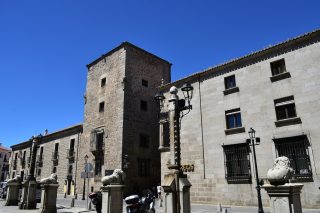
Ávila has no shortage of headline monuments, but Basílica de San Vicente is the place that tends to stop people mid-walk. Set beside the medieval walls, it's a powerful, honey-stoned Romanesque basilica with a presence that feels both austere and ornate at once-severe lines, then sudden bursts of carved detail that reward a slower look.
It's one of the top sights in Ávila for architecture lovers, but the real magic is how it blends artistry with legend. Built on the traditional site linked to the martyrs Vicente, Sabina, and Cristeta, the basilica has a story that's deeply woven into the city's identity, and it fits naturally into a walking tour of Ávila without needing any complicated logistics.
Table of Contents
- History and Significance of the Basílica de San Vicente
- Things to See and Do in the Basílica de San Vicente
- How to Get to the Basílica de San Vicente
- Practical Tips on Visiting the Basílica de San Vicente
- Where to Stay Close to the Basílica de San Vicente
- Is the Basílica de San Vicente Worth Visiting?
- For Different Travelers
- FAQs for Visiting Basílica de San Vicente
- Nearby Attractions to the Basílica de San Vicente
History and Significance of the Basílica de San Vicente
The basilica's importance begins with its origin story: local tradition places the burial of the three sibling martyrs directly in the rock here, turning the site into a place of devotion long before the grand stone church took shape. Over the centuries, that early cult of memory evolved into a major pilgrimage focus for Ávila, and the basilica became one of the city's defining sacred landmarks.
Construction was a long, start-and-stop affair, which is often exactly why buildings like this feel so layered and compelling. The core is Romanesque-rounded arches, heavy volumes, and a sense of deliberate symmetry-yet the project stretched far enough in time to incorporate later refinements, giving the interior a more complex rhythm than you might expect at first glance.
Beyond the legend, Basílica de San Vicente is widely regarded as one of Spain's strongest Romanesque ensembles, particularly for sculpture. It is the kind of place that helps you understand how Ávila's medieval power and piety were expressed not only through walls and fortifications, but through stonework meant to teach, commemorate, and inspire.
Things to See and Do in the Basílica de San Vicente
Begin outside, because the basilica’s best “first impression” is its carved portals. The western and southern entrances are richly decorated, and taking a few minutes to scan the figures and patterns sets you up to notice similar motifs once you step inside.
Inside, the essential stop is the cenotaph of the titular martyrs, carved in polychrome stone. Even if you’re not a specialist, it’s hard not to be impressed by the depth and narrative energy in the sculpture-this is Romanesque storytelling in three dimensions, and it anchors the entire visit.
As you move through the nave and aisles, look for the way the space is structured and vaulted, with a steady, processional feel that draws you toward the eastern end. If you enjoy local devotion and city lore, seek out the image of the Virgen de la Soterraña, closely associated with Ávila’s religious life and traditions.
How to Get to the Basílica de San Vicente
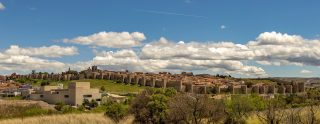
If you’re already exploring the old town, the basilica is an easy walk and sits right by the medieval walls, so it’s simple to combine with wall viewpoints and nearby churches without doubling back.
For most international travellers, the nearest major airport is Madrid-Barajas (MAD), with onward connections to Ávila by train or long-distance coach. For the best deals and a seamless booking experience, check out these flights to Ávila on Booking.com. Ávila's train station has direct links with Madrid, and from there it's a short taxi ride or a manageable walk into the historic centre depending on where you're staying. Train schedules and bookings can be found on Omio.
Long-distance buses can be a very practical choice from Madrid and regional cities, often dropping you close enough to continue on foot or by a quick taxi hop. If you're driving, aim to park outside the tightest historic streets and walk in, as the area around the walls is much easier to enjoy without a car. If you are looking to rent a car in Spain I recommend having a look at Discover Cars, first, as they compare prices and review multiple car rental agencies for you.
Practical Tips on Visiting the Basílica de San Vicente
- Entrance fee: €3. Reduced: €2.20 (over-12s, students, seniors). Free: under 12 with an adult; clergy; Ávila residents.
- Opening hours: (Summer) Monday, Wednesday, Thursday, Friday & Saturday: 10:00–19:00; Tuesday: 10:00–14:00 & 15:00–19:00; Sunday & Public holidays: 16:00–18:00. (Winter) Monday – Saturday: 10:00–13:30 & 16:00–18:30; Sunday & Public holidays: 16:00–18:00.
- Official website: https://basilicasanvicente.es/
- Best time to visit: Go mid-morning for a calm atmosphere and good natural light, then continue your route along the walls and into the old town.
- How long to spend: Allow 45-75 minutes if you want to appreciate the sculpture and details, or 25-40 minutes for a focused highlights visit.
- Accessibility: Expect historic paving outside and some uneven thresholds; the interior is generally calm to navigate, but mobility can be affected by steps and the building’s age.
- Facilities: This is a working church rather than a museum complex, so plan restrooms and longer breaks around nearby cafés and main squares.
Where to Stay Close to the Basílica de San Vicente
For a culture-heavy itinerary, base yourself inside the walled old town so you can walk to the main monuments early and late; if your trip is more about easy arrivals and onward travel, staying nearer the station area can make logistics smoother while still keeping the centre within quick reach.
For a classic old-town stay that keeps you close to the walls and the basilica’s doorstep, Sofraga Palacio is a strong choice with a refined historic feel. If you want to be right in the thick of Ávila’s main monument zone, Hotel Palacio de los Velada places you within easy walking distance of nearly everything you’ll want to see. For a quieter, garden-set base in a historic building that still sits comfortably within the old city, Parador de Ávila is ideal for a more spacious, unhurried stay.
Is the Basílica de San Vicente Worth Visiting?
Yes, especially if you want to see Romanesque Ávila at its most confident and artistic. The basilica's sculpture alone makes it a standout, and the way the building sits beside the walls gives it an atmosphere that feels unmistakably tied to the city.
It also works beautifully as a “depth stop” in a busy itinerary: less crowded than some headline sights, but arguably more memorable if you enjoy craftsmanship, symbolism, and spaces with a strong sense of place.
What Other Travellers Say...

San Vicente de Ávila is a Romanesque church with Gothic elements just outside the city walls on Plaza de San Vicente; visitors praise its striking architecture, well‑kept interior and art, a thoughtful audio tour (bring earphones) that highlights features like an ornate carved and painted sepulcher and a Madonna dressed in Mudejar style, and staff who guide visitors through the crypt and displays — many say it rewards a visit at sunset when the building glows and is a must-see alternative to the main cathedral.


For Different Travelers
Families with Kids
This can be a great stop for families if you keep it short and story-led, focusing on the idea of the city walls, the martyrs’ legend, and “spot the carvings” outside. Pair it with a wall walk or a nearby square afterwards so kids can reset their energy.
If you’re visiting with a stroller, the biggest challenge is usually the historic paving around the basilica rather than the time spent inside. A good approach is to plan a flexible loop that lets one adult step in briefly while the other waits outside if needed.
Couples & Romantic Getaways
For couples, Basílica de San Vicente is one of those places that feels quietly cinematic, especially when you arrive from the walls and see the façade rising in front of you. The interior is calm and contemplative, which makes it a lovely contrast to busier viewpoints.
Build it into a slow, wandering route-basilica, walls, then a café or a late lunch-so the day feels like a sequence of atmospheres rather than a checklist. If you enjoy photography, the portals and the surrounding streets are particularly rewarding when the light softens later in the day.
Budget Travelers
This is an excellent value stop because it delivers a “major monument” experience without the time or cost of large museum complexes. If you plan your day on foot, you can combine it with the walls, nearby churches, and scenic viewpoints for a full day of sightseeing that stays budget-friendly.
To keep spending down, time your visit as part of a broader walking loop so you’re not relying on taxis for short hops. The basilica’s location by the walls also makes it easy to navigate without paid transport.
History Buffs
History buffs will get a lot from this visit because it’s not only Romanesque in style, but also deeply tied to the city’s origin stories and devotional geography. The basilica helps you see how medieval communities built identity around sacred sites, relic traditions, and the power of narrative.
Take your time with the portals and the cenotaph, because that’s where the “text” of the building is most legible. Even without a guide, you can read the basilica as a document of medieval belief, patronage, and artistic ambition.
FAQs for Visiting Basílica de San Vicente
Getting There
Tickets & Entry
Visiting Experience
Tours, Context & Itineraries
Photography
Accessibility & Facilities
Food & Breaks Nearby
Safety & Timing
Nearby Attractions to the Basílica de San Vicente
- Ávila City Walls: The city's defining landmark, with walkable sections and viewpoints that frame the old town dramatically.
- Ávila Cathedral: A fortress-like Gothic cathedral that blends seamlessly into the defensive fabric of the historic centre.
- Convento de Santa Teresa: A key pilgrimage-linked site that deepens your understanding of Ávila's spiritual history.
- Plaza del Mercado Chico: The city's central square area, perfect for a quick coffee and a pulse-check on local life.
- Basílica de San Pedro: A quieter Romanesque church that makes an excellent companion stop for architecture lovers.
The Basílica de San Vicente appears in our Complete Guide to Visiting Ávila!

Moira & Andy
Hey! We're Moira & Andy. From hiking the Camino to trips around Europe in Bert our campervan — we've been traveling together since retirement in 2020!
This website uses affiliate links which may earn a commission at no additional cost to you!
Planning Your Visit
(Summer) Monday, Wednesday, Thursday, Friday & Saturday: 10:00-19:00; Tuesday: 10:00-14:00 & 15:00-19:00; Sunday & Public holidays: 16:00-18:00.
(Winter) Monday - Saturday: 10:00-13:30 & 16:00-18:30; Sunday & Public holidays: 16:00-18:00.
€3. Reduced: €2.20 (over-12s, students, seniors). Free: under 12 with an adult; clergy; Ávila residents.
Nearby Attractions
- San Vicente Garden (0.1) km
City Walls, Gardens and Park - Puerta de San Vicente (0.1) km
City Gate - Palacio de Sofraga (0.1) km
Palace - Museo de Ávila (0.2) km
Museum and Palace - Palacio de los Verdugo (0.2) km
Palace - Casa de la Misericordia (0.2) km
Historic Building - Casa Carnicerías (0.2) km
Historic Building and Tourist Office - Walls of Ávila (0.2) km
City Walls - Palacio del Rey Niño (0.2) km
Palace - Palacio de los Águila (0.2) km
Palace