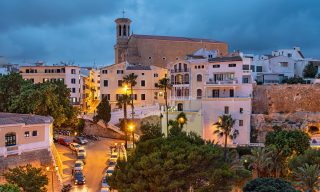
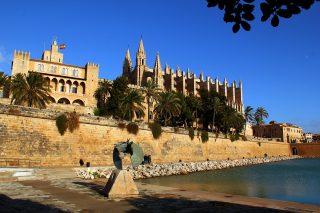
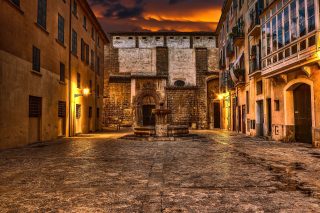
Puerta de los Judios, Palma de Mallorca
City Gate in Palma de Mallorca

Today there is no physical gate to walk through at the Puerta de los Judios, but the spot where the great door of the Judería once stood is still quietly marked in Palma's old town. At the crossroads of Carrer de Monti-Sion and Carrer del Sol, the former Gate of the Call Major connected the Jewish community with the heart of the city, and standing here you can imagine people passing through on their way to trade, worship or visit neighbours, making this one of the things to do in Palma de Mallorca if you like tracking down places that are more about memory than monuments.
The street leading up to the old gate is now called Carrer del Call, a reminder of the Call Major, or Jewish quarter, that once spread through this part of the city. On the ground you will see a SEFARAD symbol set into the pavement, linking Palma with more than twenty other cities across Spain that commemorate Jewish heritage in the same way. It is easy to miss if you are rushing, so this is best appreciated when you slow down and look closely at what lies under your feet, a highlight of any walking tour of Palma de Mallorca that focuses on layers of history.
Table of Contents
- History and Significance of the Puerta de los Judios
- Things to See and Do in the Puerta de los Judios
- How to Get to the Puerta de los Judios
- Practical Tips on Visiting the Puerta de los Judios
- Where to Stay close to the Puerta de los Judios
- Is the Puerta de los Judios Worth Visiting?
- FAQs for Visiting Puerta de los Judios
- Nearby Attractions to the Puerta de los Judios
History and Significance of the Puerta de los Judios
In medieval Palma, the Puerta de los Judios (Gate of the Jews) was the principal entrance into the Call Major, the city's main Jewish quarter. Positioned where Carrer de Monti-Sion meets Carrer del Sol, the gate formed both a physical and symbolic threshold between the Jewish community and the wider Christian city. Traders, scholars, families and visitors would have passed in and out of this doorway daily, carrying goods and news, and shaping the social and economic life of Palma.
The Judería was a self-contained world with its own synagogue, houses, workshops and communal spaces, and the Puerta de los Judios served as its main point of contact with the rest of the city. Over the centuries, as conditions for Jews in Iberia deteriorated and expulsions and conversions reshaped communities, the built fabric of the quarter changed and the gate itself disappeared. Yet the memory of the doorway and its role as a connector between two worlds has never entirely faded, surviving in street names and historical accounts.
In recent years, Palma has joined other Spanish cities in acknowledging this heritage more visibly. The SEFARAD symbol at the former gate location is part of a wider effort to recognise the Sephardic legacy across the Iberian Peninsula. It stands not just as a marker of where a gate once stood, but as a reminder of the people who lived here and the culture that contributed to Mallorca’s identity long before modern tourism arrived.
Things to See and Do in the Puerta de los Judios
The main “sight” here is subtle: there is no reconstructed gate or big monument, only the urban fabric and the SEFARAD plaque set into the pavement. Start by walking up Carrer del Call, imagining how it once led directly towards the main entrance of the Judería. When you reach the junction with Carrer de Monti-Sion and Carrer del Sol, take a moment to situate yourself and picture the gate that once spanned this space.
Look down to find the SEFARAD symbol on the ground. The design shows a stylised map of the Iberian Peninsula, representing Spain and Portugal, with Hebrew letters integrated into the form. The word “Sefarad” is spelled out in Hebrew letters that correspond to S, F, R and D, the biblical name for Spain, and within them the letters Z, V, K and R form the word “Zojer,” meaning “To remember.” It is a compact piece of visual storytelling, expressing both place and memory in a single emblem.
Once you have found the symbol and absorbed its meaning, use the spot as a starting point to wander the surrounding streets. Knowing that you are at the former Puerta de los Judios changes the way you read the area around you: ordinary-looking façades, churches and narrow lanes become part of a much older narrative of coexistence, tension and disappearance. This is not a stop for spectacular photos, but for quiet reflection and a different way of seeing Palma's old town.
How to Get to the Puerta de los Judios
Most visitors reach Palma via Palma de Mallorca Airport, the island's main international gateway with frequent flights from across Spain and Europe. For the best deals and a seamless booking experience, check out these flights to Palma de Mallorca on Booking.com. From the airport, airport buses and taxis connect you quickly to the city centre, from where it is easy to walk into the historic quarter.
If you are staying elsewhere on the island, regional trains link towns like Inca, Sa Pobla and Manacor with Palma's Estació Intermodal near Plaça d'Espanya.Train schedules and bookings can be found on Omio. From there, you can walk into the old town, following signs or a map towards Carrer de Monti-Sion, Carrer del Sol and Carrer del Call. Local buses also stop around Plaça d’Espanya if you prefer to shorten the walk.
Drivers can follow the main roads into Palma and park in one of the underground or multi-storey car parks near the edge of the old quarter, then explore on foot.If you are looking to rent a car in Spain I recommend having a look at Discover Cars, first, as they compare prices and review multiple car rental agencies for you. Once you are in the maze of historic streets, look out for Carrer del Call and follow it to the crossroads where the Puerta de los Judios once stood.
Practical Tips on Visiting the Puerta de los Judios
- Suggested tips: Bring a map or marked route so you do not miss the SEFARAD symbol, and combine the visit with other Jewish heritage sites in the area for a fuller picture.
- Best time to visit: Any time of day works, but early morning or late afternoon are quieter and make it easier to pause and look around without the distraction of heavy foot traffic.
- Entrance fee: There is no entrance fee; this is a public street location you can visit freely.
- Opening hours: Accessible at all times as part of the public street network in Palma’s old town.
- How long to spend: Around 10-20 minutes is enough to find the symbol, read any nearby information and get your bearings before exploring the surrounding streets.
- Accessibility: The streets are paved and generally accessible, though some surfaces may be uneven; visitors with mobility needs should still find it manageable with care.
- Facilities: There are no specific facilities at the site itself; cafés, shops and public toilets can be found elsewhere in the old town.
- Photography tip: Focus on close-up shots of the SEFARAD symbol and wider compositions that place it within the context of the narrow streets and surrounding buildings.
- Guided tours: Consider joining a Jewish heritage or historic-centre walking tour, which will usually include this location and provide more background than you get from the pavement marker alone.
- Nearby food options: The old town is full of cafés and tapas bars, so it is easy to combine a short visit here with a coffee, snack or lunch nearby.
Where to Stay close to the Puerta de los Judios
Staying in Palma's historic centre makes it simple to weave the Puerta de los Judios into your explorations. A comfortable and convenient choice is Hotel Almudaina, which sits within easy walking distance of the old quarter and the main shopping streets. For a more intimate stay in a restored historic building, Boutique Hotel Posada Terra Santa places you right in the maze of narrow lanes that define this part of town. If you prefer a stylish base near both the old town and the waterfront, Hotel Basilica offers a good balance of character and convenience for exploring sites like the Puerta de los Judios and the nearby cathedral.
Is the Puerta de los Judios Worth Visiting?
If you are looking for grand architecture, the Puerta de los Judios may feel understated, but if you value places where history is remembered rather than rebuilt, it is definitely worth seeking out. The SEFARAD symbol and the street names around it act as quiet prompts to think about the Jewish community that once passed through this gate every day and how their story fits into the wider history of Mallorca. As a short, reflective stop woven into a broader walk through the old town, it adds depth and nuance to your understanding of Palma.
What Other Travellers Say...

Call Jueu (Jewish Quarter), located at Carrer del Call 19 in Palma’s Centre, is a peaceful, car-free area of narrow lanes where visitors praise the quiet streets, old wood structures, patios and attractive architecture—ideal for a sunset stroll or a relaxed wander—though several visitors note there are no visible signs or markings indicating its historical Jewish significance.


FAQs for Visiting Puerta de los Judios
Nearby Attractions to the Puerta de los Judios
- Iglesia de Montesión: A Baroque Jesuit church built on the former main synagogue site, just a short walk away and closely linked to the history of the Jewish quarter.
- Maimó ben Faraig Centre: A small cultural centre and tourist office that explains Palma's Jewish heritage and displays sections of ancient Roman walls.
- Palma Cathedral La Seu: The city's landmark Gothic cathedral overlooking the bay, easily reached on foot from the old Jewish quarter.
- Royal Palace of La Almudaina: A historic royal residence beside the cathedral, blending Moorish and Gothic influences and offering guided visits.
- Museu de Mallorca: The island's main museum housed in a 16th century mansion, with collections that span archaeology, fine arts and decorative objects from across Mallorca.
The Puerta de los Judios appears in our Complete Guide to Visiting Palma de Mallorca!

Moira & Andy
Hey! We're Moira & Andy. From hiking the Camino to trips around Europe in Bert our campervan — we've been traveling together since retirement in 2020!
This website uses affiliate links which may earn a commission at no additional cost to you!
Planning Your Visit
Accessible at all times as part of the public street network in Palma’s old town.
There is no entrance fee; this is a public street location you can visit freely.
Nearby Attractions
- Centre Maimó ben Faraig (0.1) km
Museum - Museo de Mallorca (0.1) km
Museum - Església de Santa Eulàlia (0.1) km
Church - Iglesia de Montesión (0.1) km
Church - Banys Arabs (Arab Baths) (0.1) km
Baths - Convent of San Francisco (0.1) km
Convent - Bishop's Garden (0.2) km
Gardens - Palma's Secret Synagogue (0.2) km
Historic Site - Plaza de Cort (0.2) km
Square - Statue of Jehuda Cresques (0.2) km
Statue