Prasat Preah Vihear, Siem Reap

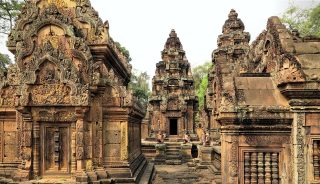
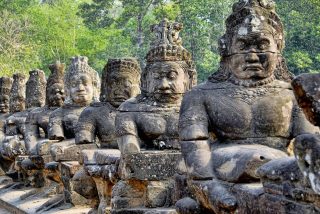
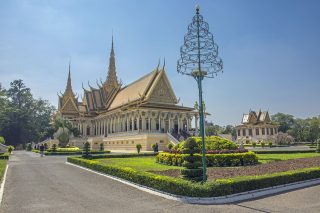
Buddhist Temple near Siem Reap

Temple of Preah Vihear
CC BY-SA 3.0 / CHAMRAT CHAROENKHET

Prasat Preah Vihear is an ancient Hindu temple complex in northern Cambodia, set on the edge of a 525-metre cliff in the Dângrêk Mountains near the Thai border. Though it's sometimes discussed in relation to Siem Reap itineraries, it sits far from the city and feels more like a remote mountain sanctuary than an easy day-stop. The site is recognized as a UNESCO World Heritage property and is dedicated to Shiva, with a processional layout that climbs through courtyards, halls, and sanctuaries.

What stands out most is the way the architecture follows the landscape: a causeway and stairways link a sequence of levels, and each terrace shifts your perspective over the plains below. I’d come here if you enjoy Khmer stonework, dramatic viewpoints, and places where the journey is part of the experience. It’s best suited to travelers comfortable with a longer road trip and some walking on uneven surfaces, rather than anyone trying to keep a tightly packed, city-based schedule.

History and Significance of the Prasat Preah Vihear

Origins in the Khmer Empire

Prasat Preah Vihear developed over several centuries during the Khmer Empire, with construction generally dated from the 9th to the 12th centuries. It was established as a Hindu sanctuary dedicated to Shiva, reflecting the religious life and state patronage of the period.

Architecture shaped by the mountain

Unlike many Khmer temples that spread across flat ground, this complex is organized along a rising axis up the mountain. A chain of courtyards, halls, and shrines is connected by a causeway and staircases, creating a deliberate approach that builds toward the main sanctuary.

Modern recognition and border context

The temple’s dramatic setting and preservation helped earn it UNESCO World Heritage status. In modern times it has also been associated with a Cambodia-Thailand territorial dispute, though for visitors today it is primarily experienced as a quiet, high-elevation archaeological site with exceptional views.

Things to See and Do in the Prasat Preah Vihear

I focus first on the main processional route: walking the linked courtyards and passageways makes the design easy to understand, and it’s where you’ll notice the Khmer sandstone work and carved details as the complex rises toward the central shrine. I also take my time at the cliff edge, because the panoramic views over the plains are a defining part of the visit and change as you move between levels.

For a slower second pass, I look for how each terrace frames the landscape differently-this alignment between stone architecture and natural setting is one of the site’s most memorable qualities. If you enjoy photography, I find it rewarding to pause at transitions between levels, where stairways and gateways naturally create strong lines and layered compositions.

How to Get to the Prasat Preah Vihear

The nearest major airport for most travelers is Siem Reap-Angkor International Airport, with Phnom Penh International Airport as another option depending on your route. For the best deals and a seamless booking experience, check out these flights to Siem Reap on Booking.com.

Cambodia's rail network does not provide a practical train route to the temple area, so a train-based approach from Siem Reap isn't a realistic option. Train schedules and bookings can be found on Omio.

Most visitors reach Prasat Preah Vihear by road and then continue up toward the summit area; expect a longer drive and plan for time on winding roads before walking around the complex.

Is the Prasat Preah Vihear Worth Visiting?

Yes-Prasat Preah Vihear is best for travelers who want a dramatic, high-setting Khmer temple and don't mind that it's remote and time-consuming compared with Siem Reap's closer sights. The combination of cliff-top views and a stepped, processional layout makes it feel meaningfully different from lowland temple visits. It's less essential if you're short on time in Siem Reap, dislike long drives, or need easy, flat access throughout; in those cases, treat it as optional and focus on nearer sites.

What Other Travellers Say...

Reviews Summary

Preah Vihear Temple sits atop a cliff in the Dangrek range on the Cambodia–Thailand border and is a remote, well‑preserved Hindu sanctuary dedicated to Shiva with an 800‑metre axis of sanctuaries, stairways and carved stone ornamentation; visitors report spectacular cliff views over the Cambodian plain, cool winds as you approach, minimal crowds, military presence near the border, and food stalls and parking near the top. Travelers say tickets are bought at the base (locals free, tourists pay), the access road includes steep sections and options to ride your own motorbike or take a vehicle service, and some visitors have enjoyed overnight stays nearby and moonlit, quiet visits that feel spiritual.

viasna phon
5 months ago
"🌄 Preah Vihear Temple – My Solo Journey on Two WheelsnI’ve had the privilege of visiting Preah Vihear Temple twice, and each time was unforgettable.This ancient mountaintop sanctuary, perched high along the Cambodia–Thailand border, is more than just a UNESCO World Heritage Site — it’s a place of mystery, silence, and raw spiritual energy. On my last trip, I rode solo on my motorbike through winding mountain roads, arriving just before sunset. I was allowed to sleep overnight near the temple, right beside a police gate — a rare and humbling experience. The officers were kind and respectful, making me feel safe as a lone traveler. What made the trip even more surreal was when I decided to walk around the temple at 11PM, under the moonlight. The silence of the night, the cool mountain air, and the ancient stones bathed in soft shadows gave me chills. It felt like stepping back in time — just me, the wind, and the spirit of the mountain. Preah Vihear is not just a destination. It’s a spiritual pilgrimage, especially for those who go alone. If you're a motorbike traveler, a history lover, or a soul seeker — this temple, and the road to it, will change you...."
Shuge Wu
7 months ago
"Beside all of the best thing that Temple has what I’ve noticed it was that the stuff there was so nice. I’ve been too many temples, but this one gotthe best hospitality. For local, it’s free and for tourists I think it’s $1.25 for the ticket. For the road to the top, there’s two short steep road (45°) which kind of scary. And you got choices between riding on your own or taking the car or motor service for $2.5 per person...."
guru pawan
11 months ago
"Even though this a 3 hour one way drive from Angkor it's worth all the time leave early so you don't end up in a very hot sun and take refilled waterbottles to hydrate. You need to buy tickets at the base of the mountain it's quite cheap along with a open drive car. It's very historical also you would have a view of Thailand from the tip of the mountain. Cold winds sometimes cool you down as u walk towards the great temple. There is almost zero waiting time and very less people visit this place. Wash r rinse your legs and hands in the perfect cold water in the man made pond it's perfect for a lovely hot day as u enter the temple...."
PAUL RATHA YEM
a year ago
"The most iconic ancient temples of Cambodia. Situated on the edge of a plateau that dominates the plain of Cambodia, the Temple of Preah Vihear isdedicated to Shiva. The Temple is composed of a series of sanctuaries linked by a system of pavements and staircases over an 800 metre long axis and dates back to the first half of the 11th century AD. Nevertheless, its complex history can be traced to the 9th century, when the hermitage was founded. This site is particularly well preserved, mainly due to its remote location. The site is exceptional for the quality of its architecture, which is adapted to the natural environment and the religious function of the temple, as well as for the exceptional quality of its carved stone ornamentation...."
K Szys
11 months ago
"Absolutely magicalnAnd sole reason I did a 1200km 3 days long motorcycle escapade from Phnom Penh Access is $ 15 and you can ride your own moto tothe top. Ticket office is 7km down the mountain and you need to stop there to buy a ticket otherwise you can't pass the gate into the park. Final top parking is 100m away from the lowest set of ceremonial stairs. Parking offers a good selection of food stalls and resistants. The temple is about 800m long and you will.larer need to walk back more less the same distance. The final point of the temple is spectacular cliff view down south ovelokking Cambodian planes. East and west you are able to see a long row of similar cliff mountains one after another. A lot of military presence as literally 100m north is a border. Actually google maps shows that parking is on the Thai side but it must be a glitch. You do see some Thai houses maybe 250m away and some towns behind the mountain...."

Practical Tips on Visiting the Prasat Preah Vihear

  • Best time to visit: Go earlier in the day to enjoy cooler temperatures and clearer views from the cliff-top terraces.
  • How long to spend: Allow time for the on-site walk through the courtyards and viewpoints, plus significant travel time to and from the mountain.
  • Accessibility: Expect uneven stone surfaces, staircases, and sloped paths; it can be challenging for limited mobility.
  • Facilities: Treat it as a remote archaeological site and plan ahead with water and sun protection, as services can be limited compared with city attractions.

Where to Stay Close to the Prasat Preah Vihear

For most travelers, the best base is central Siem Reap if your priority is pairing the trip with Angkor-area temples and other cultural sights, since Prasat Preah Vihear is typically visited as a longer day trip rather than an easy local stop. If you want walkability to restaurants and a straightforward city base between excursions, consider Jaya House River Park or Park Hyatt Siem Reap.

If you prefer a quieter stay with a resort feel after a long day on the road, Sofitel Angkor Phokeethra Golf & Spa Resort can suit travelers who value space and downtime over being in the busiest central blocks.

FAQs for Visiting the Prasat Preah Vihear

Getting There

It isn’t in Siem Reap city; the temple sits in northern Cambodia in the Dângrêk Mountains near the Thai border, so it requires a road journey from Siem Reap.
There isn’t a walkable route from central Siem Reap; you’ll need to travel by road first, then walk around the temple complex at the summit.
A train connection isn’t practical for this destination, so the usual approach is to arrange road transport from Siem Reap and continue by vehicle toward the mountain before walking on-site.
Visitors typically approach by road and then walk around the complex; driving can be worth it if you’re comfortable with a long, winding route and want flexibility with timing.

Tickets & Entry

Access is generally managed as a heritage site, so plan on needing a ticket to enter and explore the temple complex rather than expecting a free exterior-only visit.
It typically covers entry to the temple complex so you can walk the linked courtyards, stairways, and viewpoints up to the main sanctuary.
Most travelers buy tickets in person as part of the visit; booking ahead is usually less important than planning transport and timing for the drive.
It is generally open to visitors, but exact hours can vary, so it’s smart to confirm locally when you’re planning a long day trip.
As a sacred, historic site, follow posted guidance, stay on permitted paths, and avoid climbing on fragile structures or entering any marked restricted areas.

Visiting Experience

If time is tight, prioritize the main processional route through the courtyards up toward the central sanctuary and spend a few focused stops at the cliff-top viewpoints.
It’s usually not a priority for a single day in Siem Reap because of the distance; you’ll likely get more value from closer Angkor-area sites.
Because it’s remote, the simplest plan is to treat it as the main objective of the day and build your route around the drive, viewpoints, and time on the mountain rather than trying to stack many stops.
It’s better as a fair-weather stop, since the views are a major part of the experience and rain can make walking surfaces more slippery.

Tours, Context & Itineraries

No-its location makes it unsuitable for city walking tours, and it’s usually approached as a dedicated road trip.
A guide can add useful context to the layout and carvings, but independent visits also work well if you’re mainly going for the scenery and the processional walk through the ruins.
On-site, keep it simple: follow the main path through the linked courtyards and stairways, then loop back with extra time at the viewpoints on different levels.

Photography

Yes-the combination of long sightlines through gateways, sandstone details, and cliff-top panoramas makes it especially photogenic.
Earlier in the day often gives cooler conditions and clearer visibility across the plains, which helps for wide landscape shots.
Follow any posted rules and be respectful in sanctuary areas; restrictions can vary by zone, especially in more sensitive parts of the complex.
Look for a composition that uses the causeway, stairways, or gateways as leading lines, then include the drop-off and distant plains to show the cliff-top setting.

Accessibility & Facilities

It can be difficult due to stairs, uneven stone, and changes in elevation across the terraces.
Facilities can be limited compared with city attractions, so plan ahead and don’t rely on extensive on-site services.
You can usually find spots to pause along the route and at terrace areas, but seating isn’t guaranteed, so short standing breaks may be more realistic.
It can work for families with older kids who are steady on uneven ground, but strollers are impractical on stairs and rough surfaces.

Food & Breaks Nearby

Because the site is remote, it’s easiest to plan meals around your road route and bring water, rather than expecting a café scene at the summit.
This visit is usually planned as a single-purpose day trip, so most food stops are better arranged back in Siem Reap where options are broader.

Safety & Timing

Most visits happen during daytime; given the distance and road conditions, it’s generally better to plan to return before dark.
Early morning is often preferable for cooler temperatures and clearer views, which are central to the experience.

The Prasat Preah Vihear appears in our Complete Guide to Visiting Siem Reap!

Moira & Andy
Moira & Andy

Hey! We're Moira & Andy. From hiking the Camino to trips around Europe in Bert our campervan — we've been traveling together since retirement in 2020!

Read our full story here

This website uses affiliate links which may earn a commission at no additional cost to you!

Planning Your Visit

Hours:

7.30 AM - 5.30 PM but note that the ticket counter closes by 4 PM.

Price:

USD 10

Siem Reap: 145 km
Powered by GetYourGuide

Nearby Attractions