Neak Poan – The Mystical Island Temple, Siem Reap
Buddhist Temple near Siem Reap
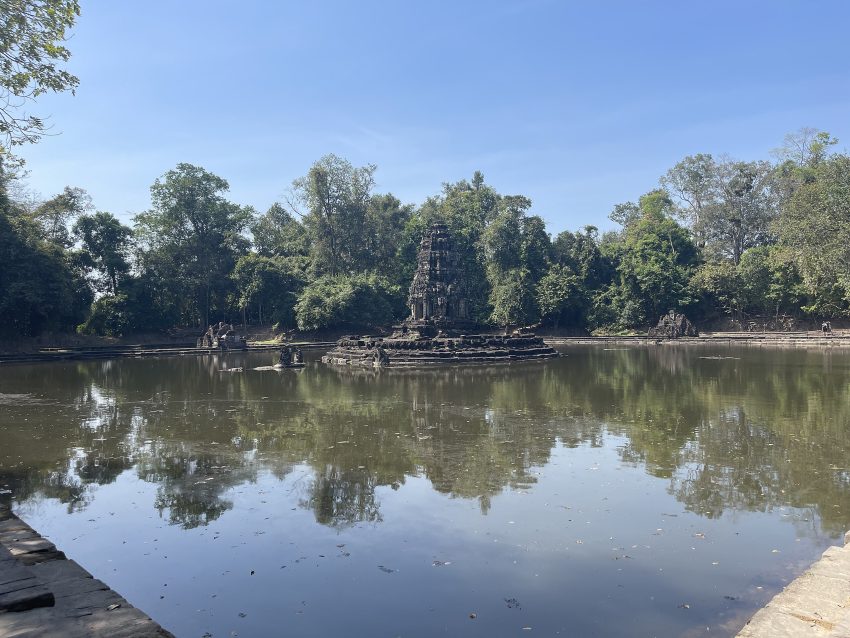
Neak Poan - The Mystical Island Temple is a distinctive Angkor-era temple complex on a man-made island in the Jayatataka Baray reservoir, in the Siem Reap area of Cambodia. Reached by a long walkway across the water, it feels set apart from the busier monuments, with a compact central sanctuary surrounded by basins and small shrines arranged to the cardinal directions.
What makes Neak Poan memorable is its water-focused design: a central basin and four linked outer basins, with spouts shaped as a lion, horse, elephant, and human. I find it best for travelers who enjoy symbolic architecture, quiet scenery, and slower pacing-especially when the light is soft and the baray feels calm-plus anyone curious about Jayavarman VII’s Buddhist-era monuments.
Table of Contents
- History and Significance of the Neak Poan – The Mystical Island Temple
- Things to See and Do in the Neak Poan – The Mystical Island Temple
- How to Get to the Neak Poan – The Mystical Island Temple
- Is the Neak Poan – The Mystical Island Temple Worth Visiting?
- Practical Tips on Visiting the Neak Poan – The Mystical Island Temple
- Where to Stay Close to the Neak Poan – The Mystical Island Temple
- FAQs for Visiting the Neak Poan – The Mystical Island Temple
History and Significance of the Neak Poan - The Mystical Island Temple
Jayavarman VII and a Buddhist healing vision
Neak Poan was built during the reign of King Jayavarman VII (1181-1218 AD), a period known for major state-sponsored building projects and Buddhist imagery. The temple’s layout is unusual within Angkor: it is centered on water and symbolic purification rather than long galleries or towering enclosures.
The complex is often understood as a “healing” design inspired by Lake Anavatapta, a legendary lake in Buddhist cosmology believed to be the source of all water. Here, water is imagined as purified in the central basin before flowing outward to the surrounding basins.
Symbolic water engineering and sacred imagery
The central shrine sits on a double circular lotus base, surrounded by a large basin, with four smaller shrines placed at the cardinal points. Each cardinal shrine connects to an outer basin and features a spout that channels water through carved heads of a lion, horse, elephant, and human, reinforcing the idea of transformed, beneficial water.
Carvings of Avalokiteshvara decorate the central shrine, and beneath the nagas encircling the structure is a statue of the horse Balaha, associated with Avalokiteshvara in a previous incarnation. Together, the imagery and water layout create a compact but conceptually rich monument.
Things to See and Do in the Neak Poan - The Mystical Island Temple
I’d start by taking the walkway slowly and watching how the temple reveals itself across the baray-this approach is part of the experience. Once on the island, I focus on the central lotus-based sanctuary and then circle the main basin to understand the four cardinal shrines and how each one links to an outer basin.
After the core loop, I look closely at the spouts (lion, horse, elephant, and human) and the Avalokiteshvara carvings on the central shrine. If you have a little extra time, I also like walking the nature trail around the outer edge for peaceful views over the reservoir and a closer look at the ancient laterite retaining walls.
How to Get to the Neak Poan - The Mystical Island Temple
The nearest major airport is Siem Reap-Angkor International Airport (SAI), from which you travel into the Siem Reap area and onward to the Angkor complex. For the best deals and a seamless booking experience, check out these flights to Siem Reap on Booking.com.
Train travel to Siem Reap is limited compared with road options, so most visitors rely on buses or private transfers rather than arriving by rail. Train schedules and bookings can be found on Omio.
By car or tuk-tuk, Neak Poan is typically visited as part of an Angkor route, with drop-off and parking areas used near the access point before you continue on foot along the walkway to the island.
Is the Neak Poan - The Mystical Island Temple Worth Visiting?
Neak Poan is worth a short stop if you want a calmer, more contemplative Angkor temple with an unusual water-and-healing concept and a scenic approach across the baray. It’s best for travelers who enjoy symbolism, layout, and atmosphere more than monumental interiors. It’s less essential if your time is tight and you’re prioritizing the biggest headline temples, or if you prefer sites with extensive structures to explore-Neak Poan’s impact comes from its setting, basins, and design rather than sheer scale.
What Other Travellers Say...
Neak Poan Temple sits on an artificial island in a large baray near Siem Reap and offers a serene, lakeside setting reached by a long walkway over still, lotus-filled water; visitors describe a calm, almost dreamlike atmosphere best enjoyed in soft morning or late afternoon light, with a peaceful path around the island, abundant greenery and bird sounds, and a compact central temple once used as a healing sanctuary that feels spiritual, photogenic and refreshingly different from the grander nearby temples.


Practical Tips on Visiting the Neak Poan - The Mystical Island Temple
- Best time to visit: Go when the light is softer (morning or later afternoon) for a calmer feel and better views across the baray.
- How long to spend: Plan for a short visit that includes the walkway, the central basin loop, and a little time for details; add extra time if you want the outer-edge trail.
- Accessibility: Expect a fair amount of walking, including the long approach along the walkway and uneven temple surfaces around the basins.
- Facilities: Keep expectations simple on-site; treat this as a focused temple stop and plan most breaks around your wider Angkor route.
Where to Stay Close to the Neak Poan - The Mystical Island Temple
Base yourself in central Siem Reap around the Old Market/Pub Street and the river so you can easily arrange early temple departures while still having walkable dining and services at night.
These hotels in central Siem Reap make practical bases for day trips to Neak Poan and the wider Angkor Archaeological Park. FCC Angkor by Avani works well for good choice if you want a walkable riverfront location for restaurants and evening strolls, with straightforward tuk-tuk pickups for Angkor temple days. Angkor Paradise Hotel works well for convenient for travellers who want quick road access for early starts to Angkor, plus easy reach of central Siem Reap for meals and supplies. Tanei Angkor Resort & Spa works well for a sensible option if you prefer a quieter base with easier vehicle access and parking, while still being a short ride from the town centre.
FAQs for Visiting the Neak Poan - The Mystical Island Temple
Getting There
Tickets & Entry
Visiting Experience
Tours, Context & Itineraries
Photography
Accessibility & Facilities
Food & Breaks Nearby
Safety & Timing
The Neak Poan – The Mystical Island Temple appears in our Complete Guide to Visiting Siem Reap!

Moira & Andy
Hey! We're Moira & Andy. From hiking the Camino to trips around Europe in Bert our campervan — we've been traveling together since retirement in 2020!
This website uses affiliate links which may earn a commission at no additional cost to you!
Nearby Attractions
- Neak Pean (0) km
Buddhist Temple - Krol Ko Temple (0.6) km
Buddhist Temple - Ta Nei Temple (1.6) km
Buddhist Temple - Ta Som (2) km
Buddhist Temple - Banteay Prey Temple (2.1) km
Buddhist Temple - Ta Keo (2.5) km
Buddhist Temple - Preah Khan (2.5) km
Buddhist Temple - Prasat Leak Neang (2.5) km
Buddhist Temple - Thommanon Temple (2.6) km
Buddhist Temple - Victory Gate of Angkor Thom (3.1) km
City Gate