Pont Roma, Pollenca
Historic Site in Pollenca
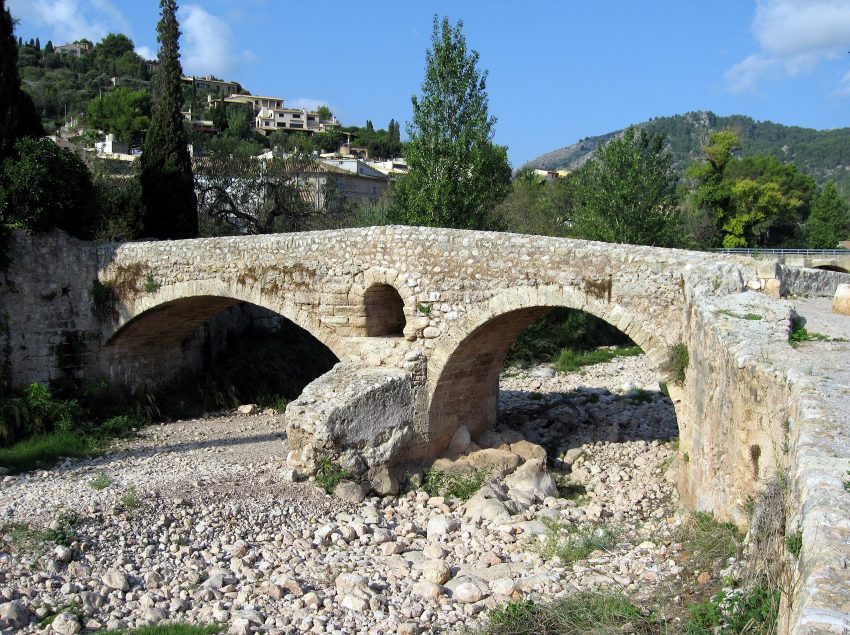
Pont Roma is one of the most tangible traces of Roman Mallorca, a modest yet remarkably well-preserved stone bridge that once linked the Roman town of Pol-lentia with the lands beyond. Spanning what was once a much wider river, it served as the only crossing point in this area, making it one of the top attractions in Pollensa today for visitors who enjoy matching ancient history to the landscapes they see around them. Standing on the arches, it is easy to imagine legions, traders, and townsfolk making their way to and from the Roman capital.
The story of Pont Roma goes back to 123 BC, when Quintus Caecilius Metellus finally brought the island under Roman control after long conflicts tied to the Punic Wars. The foundation of Pol-lentia as the island's capital turned this part of northern Mallorca into a strategic hub, and the bridge became a key piece of infrastructure for movement and trade. Today, the setting is quiet and green, with the river reduced and the town of Pollensa nearby, and visiting the bridge is a highlight of any walking tour of Pollensa, especially if you like combining gentle countryside with deep history.
History and Significance of the Pont Roma
When the Romans secured Mallorca in 123 BC under Quintus Caecilius Metellus, they reshaped the island with new towns, roads, and infrastructure. Pol-lentia, near present-day Alcúdia, became the Roman capital, and Pont Roma formed part of the wider network that connected this urban centre to surrounding agricultural lands and inland routes. In an era when rivers were serious obstacles, a permanent stone bridge was a mark of strategic planning and engineering confidence.
The bridge's importance lay in its exclusivity: at the time, it was effectively the only way to cross the local river, which flowed much broader than it does today. This made Pont Roma essential for military movements, trade caravans, and communication between coastal settlements and the hinterland. Its enduring structure, still standing centuries later, speaks to the quality of Roman masonry and the care with which such vital links were built.
As the Roman Empire receded and later powers reshaped Mallorca, Pol-lentia declined, but the bridge remained in use and in collective memory. Today, Pont Roma stands as one of the finest surviving Roman structures on the island, a quiet testament to the era when Roman engineers reorganised the Balearic landscape. For modern visitors, it is a rare chance to see, touch, and walk across a piece of everyday Roman infrastructure rather than a grand temple or theatre.
Things to See and Do in the Pont Roma
Visiting Pont Roma is all about slowing down and paying attention to details. Start by walking across the bridge itself, noticing the curve of the arches, the texture of the stonework, and the way the structure aligns with the riverbed. Even if water levels are low, you can picture a much fuller river flowing beneath, turning this compact bridge into a vital crossing point between fields, settlements, and the Roman capital at Pol-lentia.
Step off the bridge and explore the paths around it for different angles and photo opportunities. From the banks, you can appreciate how the arches distribute weight and how the bridge sits naturally within the landscape. The setting is peaceful, with greenery and rural views that make it easy to imagine the surrounding area as farmland supplying Roman markets and garrisons.
Many visitors choose to combine Pont Roma with a wider exploration of Pollensa and nearby Alcúdia. You can visit the archaeological remains of Pol-lentia to see the remnants of the Roman town that the bridge once served, then return to Pont Roma to complete the picture. Along the way, stop in Pollensa's old town for a coffee in the main square or a climb up to a viewpoint, stitching together Roman, medieval, and modern layers in a single relaxed day.
How to Get to the Pont Roma
To reach Pont Roma, most travellers first arrive on Mallorca via Palma de Mallorca Airport, which serves numerous routes from across Europe and beyond. For the best deals and a seamless booking experience, check out these flights to Pollenca on Booking.com. From the airport, you can pick up a rental car or use public transport to travel north towards Pollensa, which is the nearest town to the bridge.
If you are coming from mainland Spain by train, you will travel to coastal cities such as Barcelona or Valencia before transferring to a ferry or flight to Mallorca, as there is no direct rail connection to the island itself.Train schedules and bookings can be found on Omio. Once on Mallorca, buses and roads link Palma with Port de Pollença and Pollensa, from where you can make your way to Pont Roma.
Driving is often the most straightforward way to visit Pont Roma, especially if you want to combine it with other northern sights such as Alcúdia, Formentor, or local beaches.If you are looking to rent a car in Spain I recommend having a look at Discover Cars, first, as they compare prices and review multiple car rental agencies for you. From Pollensa, local roads and signposting guide you towards the bridge, and parking is usually possible nearby, followed by a short walk along quiet lanes or paths to reach the site.
Practical Tips on Visiting the Pont Roma
- Suggested tips: Wear comfortable shoes, as you will likely walk on uneven surfaces and grassy paths around the bridge and river.
- Best time to visit: Early morning or late afternoon offers softer light for photos and a more tranquil atmosphere, especially in busy summer months.
- Entrance fee: Free to visit; the bridge and surroundings are accessible as an open historic site.
- Opening hours: Accessible at most times as an outdoor site
- How long to spend: Around 30-60 minutes is enough to explore the bridge and surroundings, longer if you link it with a walk or picnic along nearby paths.
- Accessibility: Access involves uneven ground and possibly narrow paths; visitors with reduced mobility may find it challenging to get close to the bridge itself.
- Facilities: There are no major facilities directly at the bridge; plan to use toilets, cafés, and shops in Pollensa before or after your visit.
- Photography tip: Try shooting from both the bridge and the riverbank to capture the arches and their reflection when water levels allow; low-angle shots emphasise the structure’s solidity.
- Guided tours: Some local tours or guides include Pont Roma as part of a Roman and medieval history circuit around Pollensa and Alcúdia; these can add helpful context.
- Nearby food options: Head back into Pollensa’s old town for restaurants, tapas bars, and cafés clustered around the main square and side streets.
Where to Stay close to the Pont Roma
Staying in Pollensa or nearby Port de Pollença makes it easy to visit Pont Roma while enjoying the broader attractions of northern Mallorca. In Pollensa itself, Jumele Boutique Hotel offers a charming base within walking distance or a short drive of the bridge and the town's historic centre. For a seafront option with easy road access to Pont Roma and the surrounding countryside, Hotel Illa d Or combines traditional elegance with beautiful bay views. Travellers seeking a relaxed yet stylish stay near both Pollensa and Alcúdia might choose Son Sant Jordi, a characterful townhouse-style hotel that works well as a hub for exploring Roman sites, mountain drives, and coastal walks.
Is the Pont Roma Worth Visiting
Pont Roma is definitely worth visiting if you are interested in Roman history, subtle heritage sites, or gentle countryside walks. It may not have the drama of a fortress or the crowds of a big resort, but its quiet arches and rural setting offer a powerful sense of continuity with Mallorca's ancient past. Combined with nearby Pol-lentia, Pollensa's old town, and the wider northern coastline, the bridge adds depth to your understanding of the island and stands out as a quietly memorable stop on your itinerary.
What Other Travellers Say...

The Roman Bridge of Pollença, on Carrer del Pont Romà in Pollença, is a modest, well-preserved footbridge with a cobblestone surface that makes a pleasant photo stop and a convenient place to park and walk into the old town; visitors note debate over whether it’s truly Roman or medieval, but agree it’s an attractive, worthwhile landmark.


FAQs for Visiting Pont Roma
Nearby Attractions to the Pont Roma
- Pollensa old town: A charming network of stone streets, a lively central square, and viewpoints reached by stepped climbs, perfect for combining with a visit to the bridge.
- Roman city of Pol-lentia in Alcúdia: Archaeological remains of Mallorca's Roman capital, offering streets, houses, and public buildings that complement the story of Pont Roma.
- Port de Pollença: A relaxed seafront resort with a long promenade, cafés, and easy access to beaches and boat trips.
- Cap de Formentor Lighthouse: A dramatic clifftop viewpoint at Mallorca's northern tip, reached by a spectacular coastal road from nearby Port de Pollença.
- Alcúdia old town and walls: A beautifully preserved walled town with medieval ramparts, narrow lanes, and a popular market, a short drive from Pollensa and Pont Roma.
The Pont Roma appears in our Complete Guide to Visiting Pollenca!

Moira & Andy
Hey! We're Moira & Andy. From hiking the Camino to trips around Europe in Bert our campervan — we've been traveling together since retirement in 2020!
This website uses affiliate links which may earn a commission at no additional cost to you!
Planning Your Visit
Accessible at most times as an outdoor site
Free to visit; the bridge and surroundings are accessible as an open historic site.
Nearby Attractions
- Calvari Steps in Pollensa (0.5) km
Historic Site and Viewing Point - Mare de Deu dels Angels Church (0.6) km
Church - Convent of Sant Domingo (0.8) km
Convent and Museum - Santuari del Puig de Maria (1.6) km
Monastery - Santuari de Lluc (13.0) km
Monastery - Cap de Formentor Lighthouse (19.0) km
Lighthouse - Royal Carthusian Monastery, Valldemossa (38.7) km
Monastery - Capdepera Lighthouse (43.7) km
Lighthouse - Cuevas del Hams (45.6) km
Cave - Palma Aquarium (46.1) km
Aquarium