Palacio de los Dávila, Ávila
Palace in Ávila

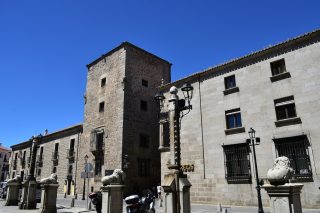
Palacio de los Dávila is one of those Ávila sights that feels like it's hiding in plain view: a noble residence that doubles as a defensive structure, literally stitched into the inside line of the city walls. The first impression is pure stone-and-power-granite façades, heavy openings, and the sense that this wasn't just a beautiful address, it was part of the city's security system.
Because it sits right by the Gate of El Rastro and the southern wall line, it's easy to fold into a walking tour of Ávila, and it's one of the top sights in Ávila for travelers who like their history tangible rather than theoretical. Even if you only give it a few minutes, the mix of medieval military features and later Renaissance flourishes makes it feel like a whole timeline carved into one building.
Table of Contents
- History and Significance of the Palacio de los Dávila
- Things to See and Do in the Palacio de los Dávila
- How to Get to the Palacio de los Dávila
- Practical Tips on Visiting the Palacio de los Dávila
- Where to Stay Close to the Palacio de los Dávila
- Is the Palacio de los Dávila Worth Visiting?
- For Different Travelers
- FAQs for Visiting the Palacio de los Dávila
- Nearby Attractions to the Palacio de los Dávila
History and Significance of the Palacio de los Dávila
Palacio de los Dávila was built in phases between the 13th and 16th centuries, which is exactly why it reads so richly today: you can spot Gothic forms beside later additions that feel more refined and representational. This wasn't unusual in Ávila's Old Town, where elite families upgraded and expanded properties over generations, but it's unusually legible here because the palace is physically tied into the fortified wall.
One of the most interesting ideas behind the building is strategic rather than decorative. Ávila's walls weren't only defended from the outside; inside, a “second line” of fortified palaces and mansions helped protect the city against both external attacks and internal unrest. Palacio de los Dávila is a prime example of that logic-noble architecture that also functions as urban fortification.
The palace’s link to the Puerta del Rastro area reinforces that defensive purpose. The oldest part is associated with the Gate of El Rastro, and the way the palace meets the wall line makes it feel less like a standalone monument and more like a working component of the medieval city.
Things to See and Do in the Palacio de los Dávila
Begin with the west façade, where the Gothic character still comes through clearly: look for the pointed porch and the geminate windows higher up, which give the building a distinctly medieval profile even before you clock the defensive details. Then move around to read the palace as a fortress-machicolations and merlons on the north side make it obvious that this was built to watch, control, and withstand pressure, not simply to impress.
Don’t miss the sculpted storytelling on the doors and stonework. The semi-circular arches with large voussoirs feel almost “wall-like” in their thickness, and the reliefs above the western doorway-wild chained figures flanked by knights with trumpets-are exactly the kind of detail that makes you stop, step closer, and start noticing how expressive stone can be.
If you’re there around midday, the 16th-century gallery-vantage point opening onto the walls above the Gate of El Rastro is especially rewarding, because the light helps you read the geometry and depth of the wall line. And if you can glimpse the courtyard, the presence of Vetton animal sculptures adds a much older layer to the story, while the Mudéjar tradition visible in parts of the complex hints at how many cultural threads run through Ávila’s built heritage.
How to Get to the Palacio de los Dávila
The closest major international airport for Ávila is Madrid-Barajas Airport (MAD). For the best deals and a seamless booking experience, check out these flights to Ávila on Booking.com. Valladolid Airport (VLL) can also make sense if it aligns with a wider Castile and León itinerary. For the best deals and a seamless booking experience, check out these flights to Ávila on Booking.com.
From Madrid, trains run to Ávila, and from the station you can continue by taxi, local bus, or a straightforward walk toward the walled Old Town.Train schedules and bookings can be found on Omio. If you’re already staying inside the walls, the palace is an easy on-foot stop near the Gate of El Rastro area, and it naturally links into other wall-side monuments.
Long-distance buses also connect Madrid and regional cities with Ávila, often at a lower cost than rail, and usually leave you close enough to reach the Old Town quickly. If you're driving, it's simplest to park outside the walled centre and walk in through a gate, which avoids narrow streets and makes your route smoother.If you are looking to rent a car in Spain I recommend having a look at Discover Cars, first, as they compare prices and review multiple car rental agencies for you.
Practical Tips on Visiting the Palacio de los Dávila
- Entrance fee: Free to view externally.
- Opening hours: 24 Hours
- Official website: https://www.avilaturismo.com/en/palace-of-davila
- Best time to visit: Aim for late morning to early afternoon if you want stronger light on the stonework, or early evening if you prefer a quieter, more atmospheric feel along the wall line.
- How long to spend: 15-25 minutes works well as a focused exterior stop, or 45-60 minutes if you’re pairing it with the Gate of El Rastro area and a slow wall-side wander.
- Accessibility: The approach is on historic streets with uneven paving, so expect cobbles and occasional slopes; the easiest access is by sticking to the wider Old Town lanes before cutting in.
- Facilities: There are no dedicated visitor facilities at the palace façade itself, so plan cafés and restrooms around the cathedral zone and main plazas.
Where to Stay Close to the Palacio de los Dávila
For a culture-heavy itinerary, stay inside Ávila’s walled Old Town near the cathedral and main historic streets; for a smoother logistics-first stay (parking and quick arrivals), base just outside the walls and walk in for sightseeing.
For a stylish, wall-side base that feels distinctly Ávila, Sofraga Palacio puts you right in the historic flow while still feeling like a retreat after a day of stone-and-history wandering. If you want a classic “sleep beside the cathedral” location that keeps you close to everything you’ll walk to, Hotel Palacio Valderrábanos is an excellent Old Town anchor for early starts and late strolls. And for a smaller, character-led stay that sits right by the walls, Hotel Las Leyendas is a strong pick if you like a more intimate, historic-house feel.
Is the Palacio de los Dávila Worth Visiting?
Yes-particularly if you enjoy places where architecture still “does the job it was built for.” Palacio de los Dávila isn't just a pretty façade; it's a fortified palace that explains, in stone, how Ávila's elite lived and defended themselves from within the walls.
It’s also a very efficient stop: close to other wall-adjacent sights, highly photogenic, and packed with details that reward a short visit. Even if you only see it from the outside, it’s the kind of monument that makes the whole Old Town feel more medieval and more real.
What Other Travellers Say...

Palacio de los Dávila sits on Plaza Pedro Dávila in Ávila and is a well‑preserved fortified palace that occupies nearly an entire block and adjoins the city wall; visitors praise its impressive, spacious façade and fortress‑like entrance, note ancient stone figures in the courtyard, and say it's worth walking around even if it's closed—interior visits require prior arrangement and photography may be restricted because the family still lives there.


For Different Travelers
Families with Kids
This works best as a “spot the castle features” stop: towers, defensive stonework, and the idea of a palace that also functioned like part of the wall. Kids often engage quickly when you frame it as a real-world fortress rather than a quiet monument.
Keep it short and connect it to something more active immediately afterward-walking along the wall line, heading to a viewpoint, or turning it into a mini scavenger hunt for carvings and unusual windows.
Couples & Romantic Getaways
Palacio de los Dávila shines when you slow down and let the details do the talking. The wall-side streets around here feel especially atmospheric in softer light, and the palace's mix of medieval severity and Renaissance finesse makes for great “walk-and-talk” pacing.
Pair it with an unhurried old-town loop: palace, gate, a quiet church interior, then a long café stop near the cathedral. It's an easy way to make Ávila feel intimate rather than itinerary-driven.
Budget Travelers
This is a high-value stop because it’s essentially a free open-air history lesson, and you can build a whole route of similar exterior-only sights around it. Combine it with gates, plazas, and viewpoints to get a full day of highlights without stacking entrance fees.
If you’re choosing where to spend, use free stops like this to create breathing room in your budget for one paid “big hitter” elsewhere, such as a ramparts section or a museum that genuinely adds depth.
History Buffs
Come here to read the city’s defensive logic from the inside out. The palace makes the “second line of defence” idea concrete, and the visible layering from the 13th to 16th centuries is a great reminder that medieval cities evolved constantly rather than being built in one perfect moment.
Look closely at transitions-doorways, window styles, and the famous 1541 Renaissance window and inscription-because this is where the building stops being generic medieval and becomes specifically Dávila, specifically Ávila.
FAQs for Visiting the Palacio de los Dávila
Getting There
Tickets & Entry
Visiting Experience
Tours, Context & Itineraries
Photography
Accessibility & Facilities
Food & Breaks Nearby
Safety & Timing
Nearby Attractions to the Palacio de los Dávila
- Walls of Ávila: Walk a nearby section to understand how palaces like this reinforced the city's defences from within.
- Puerta del Rastro: A wall gate beside the palace area that helps you read this corner of the Old Town as a working fortified system.
- Convento de Santa Teresa: A key Teresian landmark and museum stop that adds spiritual history to your wall-and-palace route.
- Ávila Cathedral: The city's cathedral-fortress is essential for grasping Ávila's blend of faith, power, and fortification.
- Mirador de Los Cuatro Postes: The classic panoramic viewpoint for photographing the entire walled city in one unforgettable frame.
The Palacio de los Dávila appears in our Complete Guide to Visiting Ávila!

Moira & Andy
Hey! We're Moira & Andy. From hiking the Camino to trips around Europe in Bert our campervan — we've been traveling together since retirement in 2020!
This website uses affiliate links which may earn a commission at no additional cost to you!
Planning Your Visit
24 Hours
Free to view externally.
Nearby Attractions
- Torreón de los Guzmanes (0.1) km
Palace - Palacio de Los Superunda (0.1) km
Palace - Iglesia de San Juan Bautista (0.1) km
Church - Palacio de Los Almarza (0.1) km
Palace - Plaza Mercado Chico (0.1) km
Square - El Convento de Santa Teresa (0.2) km
Convent - Palacio de Valderrábanos (0.2) km
Palace - Puerta de Santa Teresa (0.2) km
City Gate - Los Velada Palace (0.2) km
Hotel and Palace - Palacio de Núñez Vela (0.2) km
Palace