Palacio de los Águila, Ávila
Palace in Ávila

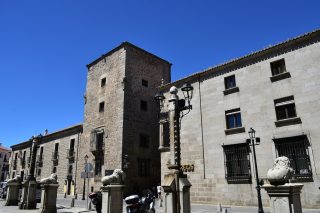
The Palacio de los Águila is a striking 16th-century Renaissance palace tucked inside Ávila's walled old town, best known for a show-stopping Plateresque portal that feels almost like a stone retablo on a domestic façade. Even when you only see it from the street, the palace has that unmistakable “noble Ávila” character-granite, symmetry, and decoration deployed to signal status without losing the city's severe medieval mood.
Because it sits among the monuments intramuros, it fits naturally into a walking tour of Ávila, and it's easy to treat as one of the must-see places in Ávila for travellers who enjoy architecture beyond churches and fortifications. At the moment it is closed to visitors, but it remains a worthwhile stop to understand how Renaissance taste arrived in the city and how aristocratic houses shaped the look and feel of Ávila's historic lanes.
Table of Contents
- History and Significance of the Palacio de los Águila
- Things to See and Do in the Palacio de los Águila
- How to Get to the Palacio de los Águila
- Practical Tips on Visiting the Palacio de los Águila
- Where to Stay Close to the Palacio de los Águila
- Is the Palacio de los Águila Worth Visiting?
- For Different Travelers
- FAQs for Visiting the Palacio de los Águila
- Nearby Attractions to the Palacio de los Águila
History and Significance of the Palacio de los Águila
The palace dates to the 16th century and is associated with the Águila family, with sources also referring to it as the Palacio de Don Miguel del Águila. Like many Ávila mansions of the period, it expresses Renaissance order on a compact urban footprint, balancing a strong public face with an inward-looking courtyard plan designed for privacy, light, and ceremony.
Its Plateresque doorway is the key to its significance: this was an era when façades became a kind of social language, and the palace’s portal-framed by richly ornamented pilasters-announces lineage and ambition in a style that blends Italianate Renaissance ideas with distinctly Spanish exuberance. It is not just decorative; it is a statement of identity embedded in stone.
The building also carries a cultural afterlife beyond architecture. It is linked to the literary imagination through its association as a setting in Enrique Larreta’s La gloria de Don Ramiro, reinforcing how Ávila’s palaces often function as atmospheric anchors for stories of honour, lineage, and Old Castile.
Things to See and Do in the Palacio de los Águila
Start with the exterior portal, which is the palace’s headline feature even when the interior is not accessible. Look for the way the ornament concentrates around the door-an intentional framing device that turns entry into theatre, with sculpted details that reward a slow, close-up view.
If you can glimpse into the interior from any open threshold or courtyard access on special occasions, the palace is organised around an arcaded patio. The courtyard’s segmental arches create a softer rhythm than the more typical semicircular arcades, giving the space an elegant, slightly refined profile that feels very “late medieval turning Renaissance.”
Finally, use the palace as a navigation point rather than a standalone visit: pause here, then continue to nearby churches, wall sections, and plazas. Even from outside, it adds variety to an itinerary by shifting your attention from sacred architecture to the domestic grandeur of Ávila’s noble families.
How to Get to the Palacio de los Águila
Reaching the palace is straightforward once you are inside Ávila’s walled historic centre, as it sits among walkable streets close to the city’s main monument zone.
For most travellers, Madrid-Barajas Airport (MAD) is the most practical international gateway for reaching Ávila, followed by onward connections into the city. For the best deals and a seamless booking experience, check out these flights to Ávila on Booking.com. Trains between Madrid and Ávila are a convenient option, and from Ávila's station you can continue by taxi or on foot depending on where you are staying within the old town. Train schedules and bookings can be found on Omio.
Long-distance buses from Madrid and regional hubs are also common and often place you close enough to continue easily into the centre. If you are driving, the simplest approach is to park outside the tightest historic streets and walk in, since the intramuros area is best explored on foot. If you are looking to rent a car in Spain I recommend having a look at Discover Cars, first, as they compare prices and review multiple car rental agencies for you.
Practical Tips on Visiting the Palacio de los Águila
- Entrance fee: Not applicable (currently closed to the public).
- Opening hours: Currently Closed.
- Official website: https://www.avilaturismo.com/que-ver/palacio-de-los-aguila
- Best time to visit: Treat it as an exterior architecture stop during daylight, when the portal’s carvings read clearly and you can appreciate the façade’s depth.
- How long to spend: 10-20 minutes is enough for a satisfying look and photos, then fold it into a wider old-town loop.
- Accessibility: As a street-side stop, it is generally manageable, but the surrounding lanes can have uneven historic paving.
- Facilities: There are no dedicated visitor facilities at the building itself, so plan cafés and restrooms around nearby plazas.
Where to Stay Close to the Palacio de los Águila
For a culture-heavy itinerary, base yourself inside Ávila’s walled Old Town so you can walk to the main sights early and late without transport planning.
For a refined historic base with easy access to the intramuros lanes, Sofraga Palacio is a strong choice that keeps you close to the monument core. If you want a classic central stay near the cathedral area, Hotel Palacio de los Velada makes it easy to build a full day on foot. For a quieter, more spacious option within the historic quarter, Parador de Ávila suits travellers who prefer a calmer pace between sightseeing blocks.
Is the Palacio de los Águila Worth Visiting?
Yes, even if you only experience it from the outside right now. The Plateresque portal is one of those details that makes Ávila’s old town feel layered and lived-in, not just monumental, and it adds a distinctly Renaissance counterpoint to the city’s Romanesque and Gothic rhythm.
It is also a useful “context stop” that helps you read the social history of Ávila. Seeing how noble residences presented themselves-through carved stone, proportion, and urban placement-makes the rest of the city's architecture feel more connected and intentional.
What Other Travellers Say...

Palace of Los Águila at C. Juan Arias 4 in Ciudad Rodrigo is noted for its detailed stonework and draws fans of the Sharpe series; visitors report a largely courtyard-focused visit and some praise it as a must-see while others find little beyond the courtyard, and several visitors warn that posted opening hours may be out of date so it can be unexpectedly closed.


For Different Travelers
Families with Kids
This works best as a quick exterior stop rather than a long visit, which is ideal for families moving through the old town. Turn it into a simple challenge-spot the most ornate details on the doorway, then compare it to the plainer stonework you see elsewhere.
Because it is centrally placed, it is easy to pair with a nearby plaza break. Keeping the stop short and story-led helps children stay engaged without feeling like they are being dragged through “another historic building.”
Couples & Romantic Getaways
For couples, the palace is a lovely slow-travel moment: a quiet street, a richly carved doorway, and the sense that Ávila’s history lives in details, not just headline monuments. It is the kind of stop that feels intimate precisely because it is not a big-ticket attraction.
Use it as part of a wandering route rather than a fixed appointment. A brief pause here, then a café stop nearby, often creates the best rhythm for a romantic day in Ávila’s intramuros lanes.
Budget Travelers
This is a strong budget-friendly stop because the main experience is visual and exterior-based, so it adds value without adding cost. It is also centrally located, which means you can string it together with other nearby highlights without spending on local transport.
The best approach is to cluster several “detail stops” like this across the old town-palace façades, churches from the outside, wall viewpoints-so your day feels full and varied even with minimal paid entries.
FAQs for Visiting the Palacio de los Águila
Getting There
Tickets & Entry
Visiting Experience
Tours, Context & Itineraries
Photography
Accessibility & Facilities
Food & Breaks Nearby
Safety & Timing
Nearby Attractions to the Palacio de los Águila
- Ávila Cathedral: A fortress-like Gothic cathedral that anchors the old town and rewards a slow exterior circuit.
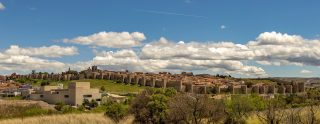
- The Walls of Ávila: The city's defining landmark, with walkable sections and viewpoints that frame Ávila's skyline.
- Plaza del Mercado Chico: A central square area that is perfect for a short break and a sense of local daily life.
- Basílica de San Vicente: A Romanesque masterpiece known for its sculpted portals and the martyrs' cenotaph.
- Convento de Santa Teresa: A key Saint Teresa site that adds deeper context to Ávila's spiritual heritage.
The Palacio de los Águila appears in our Complete Guide to Visiting Ávila!

Moira & Andy
Hey! We're Moira & Andy. From hiking the Camino to trips around Europe in Bert our campervan — we've been traveling together since retirement in 2020!
This website uses affiliate links which may earn a commission at no additional cost to you!
Planning Your Visit
Currently Closed.
Not applicable (currently closed to the public).
Nearby Attractions
- Palacio de los Verdugo (0.1) km
Palace - Palacio de Bracamonte (0.1) km
Palace - Palacio de Sofraga (0.1) km
Palace - Marshal Gate (0.1) km
City Gate, City Walls and Historic Site - Puerta de San Vicente (0.1) km
City Gate - Los Velada Palace (0.1) km
Hotel and Palace - Plaza Mercado Chico (0.2) km
Square - Palacio del Rey Niño (0.2) km
Palace - San Vicente Garden (0.2) km
City Walls, Gardens and Park - Ávila Cathedral (0.2) km
Cathedral