Lakenhalle, Ghent
Historic Building, Historic Site and Monument in Ghent
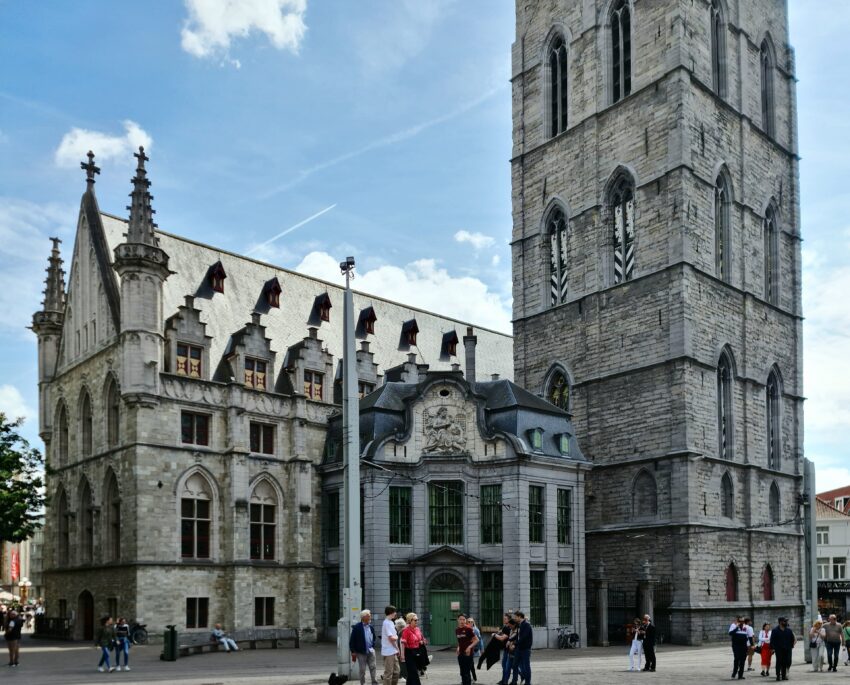
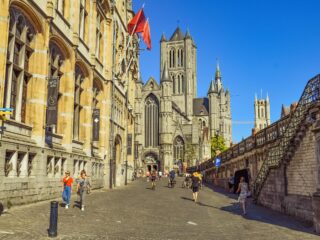
Lakenhalle in Ghent stands next to the Belfry and serves as a former cloth hall rather than a standard museum. It is a compact historic building tied closely to the city's medieval trade quarter.
The building makes more sense when you know what it was for: this was where Ghent’s textile business once operated. Today, visitors come for the façade, the connection to the Belfry, and the unusual Mammelokker annex, which adds a small but memorable detail to the stop. It suits travelers who like urban history, architecture, and short sightseeing breaks more than long indoor visits.
History and Significance of the Lakenhalle
Lakenhalle was built for Ghent's cloth trade, which helped turn the city into a major medieval commercial center. The hall gave merchants a purpose-built place for woolens and textiles, reflecting how important the trade was to daily civic life.
Medieval Origins
Construction began in 1425, but the building was still unfinished decades later. Only seven of the original eleven bays had been completed at that stage, showing that the project developed in a slow and uneven way.
Later Additions and New Uses
By the early 20th century, four more bays were added to complete the structure more fully. As the cloth trade declined, the hall no longer served its original role and other groups moved in, including a militia guild and a fencing school.
The Mammelokker Annex
The smaller annex beside the hall dates from 1741 and was used as guards’ quarters and as the entrance to the city jail until 1902. Its name, Mammelokker, refers to the sculpture above the door based on the Roman story of Pero and Cimon, which gives this side of the complex a very different character from the main hall.
Things to See and Do in the Lakenhalle
The main thing to do here is simply stand back and read the building as part of the Belfry complex. I found that the hall works best as a short architectural stop, where the scale of the façade and the links to Ghent’s trade past are easy to take in from the street.
Don’t miss the Mammelokker annex, especially the sculpture above the entrance. It adds a clear narrative to an otherwise restrained civic building and is the detail most likely to stay with casual visitors.
Because the visit is free, it also works well as a low-commitment pause between other sights in the center. If you enjoy spotting how a city reused the same building for trade, administration, and correctional functions, this is the sort of place that rewards a few unhurried minutes.
How to Get to the Lakenhalle
Brussels Airport is the main international gateway for Ghent, with onward rail or road connections into the city. For the best deals and a seamless booking experience, check out these flights to Ghent on Booking.com.
Ghent is easy to reach by train, and the historic center is then a straightforward onward trip on foot, by tram, or by local transport. Train tickets and schedules can be found directly on the SNCB/NMBS website for Belgian services. For a more convenient experience, consider using Omio, where you can easily compare prices, schedules, and book tickets in one place.
If you are driving, it is usually easier to park outside the tightest part of the center and walk in from there. If you are looking to rent a car in Belgium I recommend having a look at Discover Cars, first, as they compare prices and review multiple car rental agencies for you.
Is the Lakenhalle Worth Visiting?
Lakenhalle is worth a short stop if you are already exploring central Ghent, but it is less essential if you are trying to keep your day focused on larger landmarks. Treat it as an optional architectural and historical pause: best for visitors who enjoy civic buildings, trade history, and compact sights; skip it if you want a longer indoor attraction or a deeper museum-style visit.
What Other Travellers Say...


Practical Tips on Visiting the Lakenhalle
- Entrance fee: Free.
- Opening hours: 24 Hours.
- Best time to visit: Go in the morning or late afternoon for softer light on the façade and fewer crowds around the Belfry area.
- How long to spend: Plan 15–30 minutes if you are just viewing the exterior and annex. Add a little longer if you want to linger over the details or combine it with nearby sights.
- Accessibility: The exterior stop is straightforward at street level, but any interior access may be limited by the building’s historic layout. Expect uneven paving in the surrounding old town streets.
- Facilities: There are no dedicated visitor facilities at the hall itself, so use nearby cafés, shops, and public amenities in the city center.
Where to Stay Close to the Lakenhalle
For a culture-heavy stay, base yourself in Ghent’s historic center so you can walk to the Belfry, the cloth hall, and the main squares without relying on transport. That keeps this stop easy to add to an evening stroll or a short sightseeing day.
If you want a practical central base, look for hotels near the core rather than farther out, since the area around Lakenhalle is best experienced on foot. Nearby stays work best for travelers who value walkability and an easy start to sightseeing days, while quieter or parking-focused options are better chosen on the edge of the center rather than right beside the monument.
FAQs for Visiting the Lakenhalle
Tickets & Entry
Visiting Experience
Accessibility & Facilities
Safety & Timing
The Lakenhalle appears in our Complete Guide to Visiting Ghent!

Moira & Andy
Hey! We're Moira & Andy. From hiking the Camino to trips around Europe in Bert our campervan — we've been traveling together since retirement in 2020!
This website uses affiliate links which may earn a commission at no additional cost to you!
Planning Your Visit
24 Hours.
Free.
Nearby Attractions
- Belfort (0) km
Historic Building, Monument and Tower - Sint-Baafskathedraal (0.1) km
Attraction, Cathedral and Religious Building - Stadhuis (0.1) km
Historic Building, Historic Room and Town Hall - Sint-Niklaaskerk (0.2) km
Church, Historic Building and Historic Site - Korenmarkt (0.2) km
Historic Site, Market and Square - St Michael's Bridge (0.3) km
Bridge, Historic Building and Viewing Point - Gaslei & Korenlei (0.4) km
Canal, Historic Building and Walk - Vrijdagmarkt (0.4) km
Market, Monument and Square - Kraanlei and Patershol Quarter (0.4) km
Area, Historic Site and Walk - Dulle Griet (0.4) km
Historic Site, Monument and Square