Château de Pontivy, Vannes
Castle near Vannes
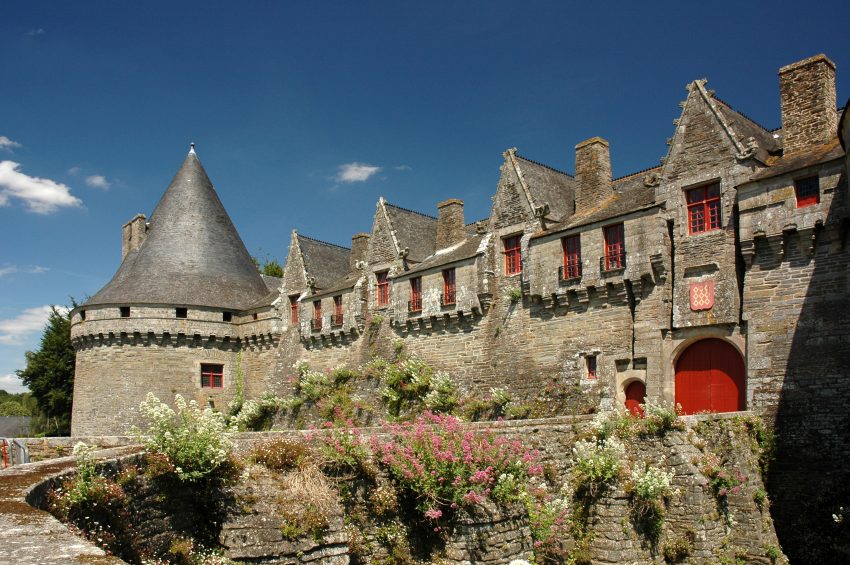
Château de Pontivy is the kind of place that makes you slow down as you approach-less polished “palace visit,” more atmospheric fortress that anchors the town. Also known as Château des Rohan, it sits on the northern edge of Pontivy's older quarter, its heavy towers and thick walls giving the skyline a distinctly medieval silhouette. Even if you only come for a look from outside, it feels like stepping into the strategic heart of inland Brittany.
What makes it special is the contrast: this is clearly a defensive castle, but it's also full of refined details once you know where to look-sculpted dormers, decorative stonework, and those small design choices that hint at comfort and status as much as security. It's easy to see why it's one of the top attractions in Pontivy, and it fits naturally into a walking tour of Pontivy that threads together ramparts, riverside paths, and the old streets.
Table of Contents
- History and Significance of the Château de Pontivy
- Things to See and Do in the Château de Pontivy
- How to Get to the Château de Pontivy
- Practical Tips on Visiting the Château de Pontivy
- Where to Stay Close to the Château de Pontivy
- Is the Château de Pontivy Worth Visiting?
- For Different Travelers
- FAQs for Visiting Château de Pontivy
- Nearby Attractions to the Château de Pontivy
History and Significance of the Château de Pontivy
Château de Pontivy rose under the powerful Rohan family at the end of the Middle Ages, when Brittany's great noble houses were still building fortresses designed to hold territory and project authority. Its position-commanding the approaches to the old town-was not accidental. From here, the Rohans could defend Pontivy while also stamping their identity onto the town's most prominent high ground.
Architecturally, the castle captures a turning point: it retains the mass and logic of late medieval military design, yet the building is not purely utilitarian. The stonework and openings reflect a gradual shift toward a residence that could impress as well as protect. In other words, it’s a fortress with ambition-designed for artillery-era realities, but with an eye on comfort and display.
In recent years, the château has also become a symbol of preservation in progress. A major collapse in the 2010s triggered extensive restoration and archaeological work, which is why the interiors are not freely open today. That ongoing reconstruction adds a modern layer to the story: you’re not just looking at a historic monument, you’re seeing a landmark that Pontivy is actively rebuilding for the future.
Things to See and Do in the Château de Pontivy
Start with the overall shape: the remaining towers, stout curtain walls, and the way the structure sits above the town all help you read the castle as a defensive machine. Walk around it slowly and look for changes in masonry and openings-subtle clues to later modifications, when the château began to lean more toward residence than battlefield.
The best experience, if you can time it, is joining a guided visit that includes the courtyard and any accessible interior spaces. These tours usually add the “missing pieces” that you can't easily imagine from the outside alone-how circulation worked, where key rooms sat, and how the castle balanced security with day-to-day life. Even when interiors are limited, stepping through the gate into the heart of the complex gives you a much stronger sense of scale.
Pair the château with Pontivy’s riverside and canal-side walks for an easy, satisfying half-day. The surrounding streets and viewpoints are part of the pleasure here: the castle reads differently from each angle, and the town’s calm pace makes it easy to linger, take photos, and connect the fortress to the landscape it was built to control.
How to Get to the Château de Pontivy
Pontivy is inland, so most visitors arrive via a larger transport hub and continue by road. The nearest airports are typically Lorient South Brittany, Rennes Bretagne, Dinard Bretagne, and Brest Bretagne. For the best deals and a seamless booking experience, check out these flights to Vannes on Booking.com.
By train, the simplest plan is to arrive at a major station such as Vannes, Lorient, Saint-Brieuc, or Rennes, then continue to Pontivy by regional bus, taxi, or rideshare. You can use SNCF Connect to check schedules, compare routes, and purchase tickets for National (SNCF ) and regional trains (TER). For a more streamlined experience, we recommend using Omio, which allows you to easily compare prices, schedules, and book tickets for both National and Regional travel across all of Europe, all in one place.
Regional buses link Pontivy with surrounding towns, and once you’re in the centre it’s an easy walk to the château-follow signs for the old town and head toward the higher ground at the northern end of the historic streets. If you’re driving, Pontivy is straightforward to reach via the regional road network, and you can usually find parking a short walk from the old town and castle area. If you are looking to rent a car in France I recommend having a look at Discover Cars, first, as they compare prices and review multiple car rental agencies for you.
Practical Tips on Visiting the Château de Pontivy
- Entrance fee: Free to see from outside; guided tour tickets typically €7 standard, €5 reduced, €22 family (2 adults + 2 children).
- Opening hours: 24 Hours (exterior viewpoints and surrounding grounds).
- Official website: https://www.tourisme-pontivycommunaute.com/explorer/pontivy/chateau-de-pontivy/
- Best time to visit: Aim for a clear morning or late afternoon so you can enjoy the changing light on the stone and combine it with a relaxed stroll through the old town.
- How long to spend: Plan 30-45 minutes for exterior viewpoints, or 1.5-2 hours if you’re joining a guided visit and want time to explore the surrounding streets after.
- Accessibility: Expect uneven surfaces and some slopes around the old town; if mobility is a concern, focus on the best viewpoints that can be reached by gentler streets.
- Facilities: Treat this as a town-centre stop-cafés, restrooms, and conveniences are easiest to find a few minutes away in central Pontivy rather than directly at the castle.
Where to Stay Close to the Château de Pontivy
For a culture-heavy itinerary, base yourself in central Pontivy near the old town and canal so you can walk everywhere; if your trip is more about road-tripping or quick access in and out, choose a practical hotel on the edges with easy parking.
For a stay that keeps you close to the château and the historic centre, The Originals City, Hôtel du Château, Pontivy is a convenient option for walking access and an easy in-town rhythm. If you prefer a smaller, character-led place right in the centre, Hôtel Le Rohan puts you close to shops, restaurants, and the old streets you’ll likely explore alongside the castle.
If you’re travelling by car and want a straightforward, modern base with simpler logistics, ibis Styles Pontivy Centre Bretagne works well as a practical launch point while still keeping the château within easy reach.
Is the Château de Pontivy Worth Visiting?
Yes-especially if you enjoy places that feel integrated into everyday town life rather than set apart as a perfectly curated attraction. The château’s current visiting reality (excellent exterior experience, interiors mainly via guided access) actually suits Pontivy: it encourages you to treat the castle as part of a wider walk through canalside paths, old streets, and viewpoints, which is often more memorable than a quick “in-and-out” monument stop.
It's particularly worthwhile if you like reading architecture-spotting defensive features, then noticing the decorative touches that reveal status and changing tastes. Even without a full interior visit, Château de Pontivy gives you a strong sense of Brittany's noble history and the way a fortress can shape a town's identity.
What Other Travellers Say...

Château de l'Hermine in Vannes sits on Rue Porte Poterne and is praised for its well kept gardens, attractive presentation and pleasant views from the ramparts, making it a photogenic spot to wander, relax and enjoy the scenery.


For Different Travelers
Families with Kids
Keep it playful by treating the exterior like a “fortress hunt”-towers, thick walls, and the best viewpoints become the activity. If a guided visit is available during your dates, it’s often the easiest way to turn history into stories kids can follow without needing long attention spans.
Couples & Romantic Getaways
Visit in the late afternoon when the stone warms in the light, then drift into the old town for a slow meal. The castle works well as a shared “anchor stop” before a canalside stroll that feels calm and local rather than overly touristic.
Budget Travelers
This is a strong value stop because the exterior experience is rewarding on its own, and Pontivy is generally easy to explore on foot. Build a low-cost afternoon by pairing the castle viewpoints with the canal towpath and a simple bakery lunch in the centre.
History Buffs
Focus on the castle as a late-medieval stronghold adapting to new warfare realities, then look for the moments where residence and display begin to take over. If you can join a guided visit, you’ll get the clearest explanation of the restoration story and what archaeologists have learned since the major collapse.
FAQs for Visiting Château de Pontivy
Getting There
Tickets & Entry
Visiting Experience
Tours, Context & Itineraries
Photography
Accessibility & Facilities
Food & Breaks Nearby
Safety & Timing
Nearby Attractions to the Château de Pontivy
- The Canal de Nantes à Brest: A scenic towpath walk right in town, perfect for stretching your legs and seeing Pontivy at its calmest pace.
- The Blavet riverside paths: A gentle riverside stroll that pairs naturally with the castle and gives you great landscape context for the town.
- The medieval quarter of Pontivy: A compact area of older streets where the town’s historic character is easiest to feel between viewpoints and cafés.
- Napoléonville district: A contrasting, planned part of Pontivy that shows how the town expanded and reinvented itself beyond the medieval core.
- The Napoléon Express (seasonal): A heritage-style train experience that adds a memorable, slow-travel element if you're exploring central Brittany in summer.
The Château de Pontivy appears in our Complete Guide to Visiting Vannes!

Moira & Andy
Hey! We're Moira & Andy. From hiking the Camino to trips around Europe in Bert our campervan — we've been traveling together since retirement in 2020!
This website uses affiliate links which may earn a commission at no additional cost to you!
Planning Your Visit
24 Hours (exterior viewpoints and surrounding grounds).
Free to see from outside; guided tour tickets typically €7 standard, €5 reduced, €22 family (2 adults + 2 children).
Nearby Attractions
- Château de Josselin (33.6) km
Castle - Forteresse de Largoët (46.2) km
Castle - Hôtel de Ville (48.2) km
Historic Building - Musée des beaux-arts de Vannes (48.4) km
Museum - Cathédrale Saint-Pierre de Vannes (48.4) km
Cathedral - Musée d'histoire et d'archéologie de Vannes (48.5) km
Museum - Vannes et sa Femme (48.5) km
Historic Building - Remparts de Vannes (48.5) km
City Walls - Place des Lices (48.6) km
Historic Site and Market - Lavoirs de la Garenne (48.6) km
Historic Building