Banys Arabs (Arab Baths), Palma de Mallorca
Baths in Palma de Mallorca
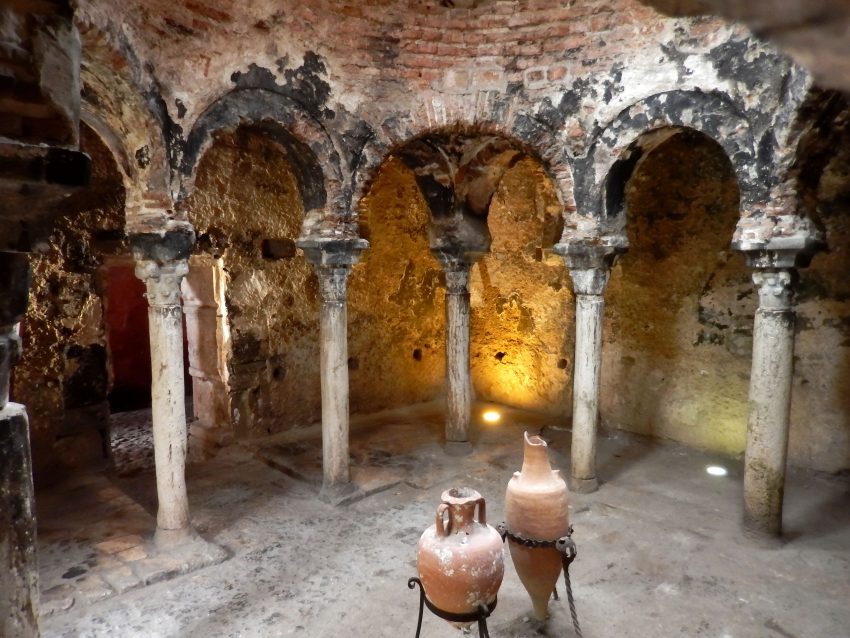
Tucked away in a quiet corner of Palma's old town, the Arab Baths (Banys Arabs) are one of the things to do in Palma de Mallorca if you want to glimpse the island's layered past beyond beaches and bars. Here, in a tiny hammam complex built over reused Roman and Byzantine columns, you stand inside one of the few surviving traces of Medina Mayurqa, as the city was known under Islamic rule. The brick arches, mismatched capitals and soft light filtering through star-shaped openings create a surprisingly intimate space, especially once you imagine it filled with steam and murmured conversation a thousand years ago.
Step through the doorway and you move from the bustle of the modern city into a sheltered garden of jasmine, palms and subtropical plants that feels a highlight of any walking tour of Palma de Mallorca. It is small, yes, but that is part of the charm: you can sit in the shade, listen to water trickling and picture the lives of the people who once came here to wash, relax and socialise. With the hot room and warm room still standing, and the cold room lost to time, the baths are a rare survivor from an era when bathing culture was central to daily life.
History and Significance of the Arab Baths
Mallorca's history is famously layered, and the Arab Baths are a perfect example of how those layers literally sit on top of one another. After the Romans and Byzantines came and went, their cities left scattered columns, capitals and carved stones lying around the site of Medina Mayurqa. When the Arabs took control of the island, they drew on this ready-made stock of building material, recycling Roman and Byzantine fragments to create their hammams - practical, elegant and perfectly adapted to the local love of bathing.
Over the centuries, much of the Islamic-era city vanished under later construction, especially after the Catalan conquest led by James I in 1229. The Arab Baths, however, survived in part thanks to their solid construction and continued use as humble outbuildings and gardens. The hot and warm rooms, with their reused columns and capitals, stood the test of time even as pipework, flooring and decorative finishes faded or failed. What you see today is a ruin, but an eloquent one: the bones of a bathhouse that has endured for more than a millennium.
From a historical point of view, the baths are significant because they preserve a rare, tangible link to the period of Muslim rule in Mallorca. Their design reflects the classic hammam layout - a sequence of hot, warm and cold rooms - and the engineering knowledge needed to manage heat and steam. In a city where later Gothic and Baroque buildings often steal the limelight, this modest complex reminds you that Mallorca’s story is also deeply Mediterranean and Islamic, shaped by centuries of cultural exchange.
Things to See and Do in the Arab Baths
The core of the site is the hot room, a square chamber supported by twelve slender columns capped with an eclectic mix of capitals. Some are clearly Roman, others Byzantine, all reused by Arab builders who were more interested in structural performance than stylistic purity. Above, the domed ceiling is pierced by small circular and star-shaped openings, which once helped regulate light and temperature and still create beautiful shafts of sunlight on bright days.
Look closely at the details: traces of plaster, the brickwork of the dome and the subtle curves of the barrel vaults that support it. The room’s 24 ventilation holes and five openings in the dome hint at the clever passive climate control that once made the hammam comfortable. The adjacent warm room, simpler but still atmospheric, completes the picture of how this small bath complex functioned when water and steam were flowing through the space.
Outside, the garden is almost as much of a draw as the baths themselves. Paths lead you past citrus trees, palms, jasmine-covered arches and dense greenery that feels worlds away from the nearby traffic and shopping streets. It is an easy place to linger, especially in the heat of the day, when the shade and cool stone of the old baths offer a natural retreat. Bring a book, find a bench and let the centuries wash over you - this is one of the best places to visit in Palma de Mallorca if you enjoy small, atmospheric historic corners rather than grand monuments.
How to Get to the Arab Baths
The Arab Baths sit in Palma's historic centre, just a short walk from the cathedral (La Seu) and the seafront, tucked into the maze of narrow streets of the old town.
Most visitors arrive in Mallorca via Palma de Mallorca Airport, which is well connected to the city centre by buses and taxis; from the city centre it is a straightforward walk through the old streets to reach the baths. For the best deals and a seamless booking experience, check out these flights to Palma de Mallorca on Booking.com.
If you are already on the island, you can take a train from towns such as Inca or Manacor to Palma's Estació Intermodal in Plaza de España, then either walk down through the old town or hop on a city bus towards the cathedral and continue on foot from there. Train schedules and bookings can be found on Omio.
City buses and plenty of taxis criss-cross Palma, and many routes stop near the cathedral or Parc de la Mar; from these points it is only a few minutes' walk into the old streets where the baths are located. If you are driving, follow signs to central Palma and use one of the underground car parks near the seafront or cathedral, then leave the car behind and explore the old town on foot; the streets around the Arab Baths are narrow and not car-friendly. If you are looking to rent a car in Spain I recommend having a look at Discover Cars, first, as they compare prices and review multiple car rental agencies for you.
Practical Tips on Visiting the Arab Baths
- Suggested tips: Combine a visit to the Arab Baths with Palma Cathedral and the surrounding old-town streets for a compact but rich historical walk; the baths are small, so they fit easily into a half-day itinerary.
- Best time to visit: Late morning or late afternoon, when the light through the dome openings is beautiful and the garden offers welcome shade; early in the day is usually quieter if cruise ships are in port.
- Entrance fee: €2.50
- Opening hours: From April to November, opening hours are from 9:30 a.m. to 8:00 p.m. From December to March, opening hours are from 9:30 a.m. to 7:00 p.m.
- How long to spend: Around 20-40 minutes is enough to explore the baths and enjoy the garden; allow longer if you like to sit and soak up the atmosphere.
- Accessibility: Access involves uneven surfaces and some steps; the site may be challenging for visitors with limited mobility, and there is no active bathing facility, just the historic structure.
- Facilities: Facilities are basic; there are no extensive services on-site, but cafés, shops and restrooms are available in the surrounding streets and near the cathedral.
- Photography tip: A wide-angle lens works well inside the hot room to capture the circle of columns and the dome above; step back into the garden for shots framing the arches with greenery.
- Guided tours: Some walking tours of Palma's historic centre include the Arab Baths; a guide can help you imagine the original heating and water systems and place the hammam in the wider context of Islamic Mallorca.
- Nearby food options: Once you are finished, head towards the cathedral or Plaza Mayor area for tapas bars, bakeries and ice-cream parlours, perfect for a break after exploring the old town.
Where to Stay close to the Arab Baths
Staying in Palma's old town makes visiting the Arab Baths effortless, as you can reach them on foot in just a few minutes while also having the cathedral, harbour and main shopping streets on your doorstep. For a boutique experience in a restored historic building, Boutique Hotel Posada Terra Santa offers characterful rooms and a quiet, elegant atmosphere in the heart of the old city. If you like a blend of design and comfort with views towards the bay, Santa Clara Urban Hotel & Spa places you within easy walking distance of both the baths and the cathedral. Another appealing option is Hotel Basilica, a stylish hotel set in a former manor house, ideal if you want to stay surrounded by history while having quick access to the main sights.
Is the Arab Baths Worth Visiting
The Arab Baths are absolutely worth visiting, especially if you appreciate small, atmospheric sites that tell big stories. This is not a grand palace or a vast museum; it is a compact hammam ruin and garden that quietly preserves a millennium of history within its walls. Standing among the twelve columns of the hot room, looking up at the dome perforated with light wells, you get a rare, almost tactile sense of Medina Mayurqa and the people who once lived, bathed and talked here.
Because they are so close to the cathedral and other major landmarks, the baths slot neatly into any exploration of Palma's historic centre. They offer cool shade in summer, a peaceful pause from busy streets, and a reminder that Mallorca's identity was shaped not only by Catalan and Christian rulers, but also by Romans, Byzantines and Arabs. If you want your time in Palma to go beyond the beach and the shopping streets, the Arab Baths provide exactly that deeper layer.
What Other Travellers Say...

Baños árabes sits tucked down a quiet side street in Palma’s Centre and preserves the remains of an Arab bathhouse surrounded by a tranquil garden with flowering plants and a lemon tree; visitors describe it as small and simple but enchanting, with informative panels (and a tri‑lingual video) that explain the hammam, a peaceful space to wander and rest after touring, and basic facilities noted by reviewers.


FAQs for Visiting Arab Baths
Nearby Attractions to the Arab Baths
- Palma Cathedral (La Seu) - The city's iconic Gothic cathedral overlooking the bay, with soaring interiors and stunning views over the waterfront.
- Royal Palace of La Almudaina - A historic royal residence beside the cathedral, blending Islamic and Gothic architecture and still used for official ceremonies.
- Parc de la Mar - A lakeside park beneath the cathedral’s walls, perfect for a stroll with views of the city skyline and harbour.
- Palma Old Jewish Quarter - A network of narrow medieval streets near the baths, inviting you to wander, get pleasantly lost and discover hidden courtyards.
- Plaza Mayor - A lively main square filled with cafés, shops and street performers, ideal for a drink or snack after exploring the baths and nearby alleys.
The Banys Arabs (Arab Baths) appears in our Complete Guide to Visiting Palma de Mallorca!

Moira & Andy
Hey! We're Moira & Andy. From hiking the Camino to trips around Europe in Bert our campervan — we've been traveling together since retirement in 2020!
This website uses affiliate links which may earn a commission at no additional cost to you!
Planning Your Visit
From April to November, opening hours are from 9:30 a.m. to 8:00 p.m.
From December to March, opening hours are from 9:30 a.m. to 7:00 p.m.
€2.50
Nearby Attractions
- Museo de Mallorca (0.1) km
Museum - Iglesia de Montesión (0.1) km
Church - Puerta de los Judios (0.1) km
City Gate - Bishop's Garden (0.1) km
Gardens - Museu Diocesa de Mallorca (0.2) km
Museum - Palma's Secret Synagogue (0.2) km
Historic Site - Centre Maimó ben Faraig (0.2) km
Museum - Teatre Municipal Xesc Forteza (0.2) km
Theatre - La Seu: the Cathedral of Palma (0.3) km
Cathedral - Convent of San Francisco (0.3) km
Convent