Prasat Leak Neang, Siem Reap
Buddhist Temple in Siem Reap
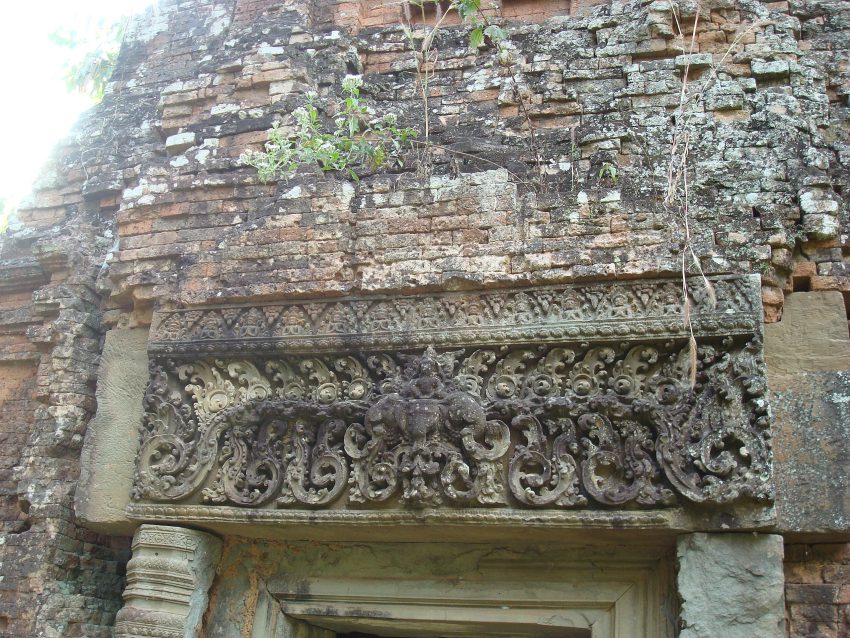
Prasat Leak Neang is a small, single-tower brick temple in Siem Reap's Angkor Archaeological Park, set opposite Pre Rup. Compact and easy to miss at speed, it has a square base of about 4.5 metres per side and rises in three false levels, each marked by false doors. The sanctuary faces east, and the most noticeable surviving decoration is the lintel above the entrance, carved with Indra riding Airavata.
What makes this temple particularly interesting is its epigraphy: inscriptions on the door frames are catalogued as K.265 and are associated with a date of 960 AD, during the reign of King Rajendravarman II. Because it’s a single structure with limited ornament, it suits visitors who enjoy brief, detail-focused stops-especially anyone curious about Angkor-era inscriptions, how small shrines were composed, and how quickly the atmosphere changes once you step away from the larger monuments nearby.
Table of Contents
- History and Significance of the Prasat Leak Neang
- Things to See and Do in the Prasat Leak Neang
- How to Get to the Prasat Leak Neang
- Is the Prasat Leak Neang Worth Visiting?
- Practical Tips on Visiting the Prasat Leak Neang
- Where to Stay Close to the Prasat Leak Neang
- FAQs for Visiting the Prasat Leak Neang
History and Significance of the Prasat Leak Neang
10th-century Angkor (Rajendravarman II)
Inscriptions on the door frames (K.265) place Prasat Leak Neang in the mid-10th century, with a date given as 960 AD during the reign of King Rajendravarman II (944-968 AD). The surviving texts are carved on both sides of the door jambs, with lines written in Khmer.
According to readings discussed by George Coedès, the south doorframe inscription records a royal decree that includes land donations connected to five temples and communities, including Indresvara (Bakong), Vnam Kantal (Bakheng), and Paramesvara (Preah Ko), along with two corporations tasked with distributing property. A further ordinance is noted on the north side; while its date is not readable, it is attributed to the same era.
What the building tells you
Architecturally, the temple is straightforward: a single brick structure with a square plan and three false tiers, each articulated with false doors. This simplicity helps highlight how inscriptions and a few surviving carvings can carry much of a site’s historical weight, even when most decorative elements have disappeared.
Coedès also suggested the site may share characteristics with Vrah Thkval, hinting at broader patterns in small-shrine design and function during this period.
Things to See and Do in the Prasat Leak Neang
I treat Prasat Leak Neang as a quick, close-up temple: walk around the tower slowly, note the east-facing entrance, and look carefully at the remaining lintel carving of Indra on Airavata. Because it's a single sanctuary rather than a complex, the experience is about observing proportions, brickwork, and the rhythm of the false doors on each side.
On the northern side, I like to pause above the false door where faint traces of a decorated arch and pediment can still be made out. If you’re interested in inscriptions, the door-frame texts (K.265) are the key feature to look for, even if you’re only viewing them as carved surfaces rather than reading the lines.
How to Get to the Prasat Leak Neang
The nearest airport is Siem Reap-Angkor International Airport (SAI), with onward travel into Siem Reap before continuing to Angkor Archaeological Park. For the best deals and a seamless booking experience, check out these flights to Siem Reap on Booking.com.
Siem Reap does not have a central passenger rail service comparable to major rail hubs, so train travel is generally not a practical way to reach the city for most itineraries. Train schedules and bookings can be found on Omio.
By road, it’s easiest to travel within Angkor Park by car or tuk-tuk and stop near Pre Rup, then cross to the small temple opposite; parking is typically informal along the road rather than at a dedicated lot.
Is the Prasat Leak Neang Worth Visiting?
Prasat Leak Neang is worth a short stop if you're already visiting Pre Rup and want a quieter, more minimal shrine where inscriptions and one strong lintel carving do most of the talking. It's best for visitors who enjoy small-scale architecture, epigraphy, and brief detours between bigger temples. It's less essential if you're prioritising major monuments or dramatic restoration work, since this is a single brick tower with limited surviving decoration; treat it as optional if time is tight.
What Other Travellers Say...
Prasat Leak Neang is a small, solitary temple with a single tower set in a clearing amid rice paddies and jungle north of the road near Pre Rup; it's quiet and often free of other visitors, reached by a narrow, sometimes rudimentary path suitable for walking, mountain bike, or motorbike (not for cars or tuk‑tuks), and makes a short detour on the grand circuit if you have time but can be skipped if you prefer larger sites.


Practical Tips on Visiting the Prasat Leak Neang
- Best time to visit: Go earlier in the day for softer light on the east entrance and a calmer feel before the nearby sites draw most visitors.
- How long to spend: 10-20 minutes is usually enough to circle the tower, check the lintel, and look for the traces of decoration on the north side.
- Accessibility: Expect uneven ground around a small, standalone structure; it may be difficult for wheelchairs or anyone who needs smooth paths.
- Facilities: Don't count on dedicated facilities at this small stop; plan to use services around the larger nearby temples or back in Siem Reap.
Where to Stay Close to the Prasat Leak Neang
For most travelers, the best base is central Siem Reap, where you can balance early starts to Angkor with easy access to restaurants and evening downtime. If your priority is temple time, choose somewhere that makes dawn departures simple and keeps you close to pickup points for Angkor routes; if your priority is nightlife and dining, stay nearer the central areas where you can walk to food and shops after a day in the park.
A practical, well-located option is Raffles Grand Hotel d'Angkor, which suits travelers who want a quieter, heritage-style base close to the Angkor road. For a central, convenient stay near the main dining and shopping area, consider Park Hyatt Siem Reap. If you prefer a large full-service hotel with straightforward transport logistics, Sofitel Angkor Phokeethra Golf & Spa Resort is a good fit for travelers who value on-site amenities and easy transfers to the temples.
FAQs for Visiting the Prasat Leak Neang
Getting There
Tickets & Entry
Visiting Experience
Tours, Context & Itineraries
Photography
Accessibility & Facilities
Food & Breaks Nearby
Safety & Timing
The Prasat Leak Neang appears in our Complete Guide to Visiting Siem Reap!

Moira & Andy
Hey! We're Moira & Andy. From hiking the Camino to trips around Europe in Bert our campervan — we've been traveling together since retirement in 2020!
This website uses affiliate links which may earn a commission at no additional cost to you!
Nearby Attractions
- Ta Keo (0.2) km
Buddhist Temple - Thommanon Temple (0.4) km
Buddhist Temple - Victory Gate of Angkor Thom (0.8) km
City Gate - Kmoch Gate (Gate of the Dead) (0.9) km
City Gate - Ta Nei Temple (1) km
Buddhist Temple - Ta Prohm (Tomb Raider Temple) (1.5) km
Buddhist Temple - Preah Khan (2.1) km
Buddhist Temple - Prasat Suor Prat (2.1) km
Tower - Terrace of the Leper King (2.4) km
Historic Site - Terrace of the Elephants (2.4) km
Historic Site