Aqueduct of San Telmo, Málaga
Aqueduct in Málaga
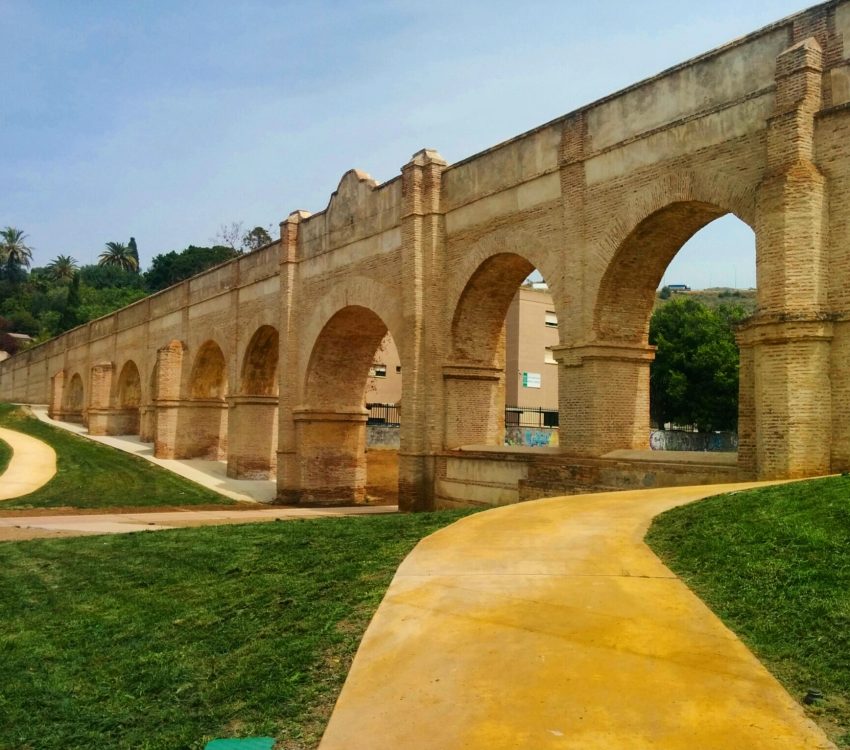
Tucked into the hills above Malaga's Ciudad Jardín district, the Aqueduct of San Telmo is one of the top sights in Malaga if you're curious about the city's lesser-known stories. Built in the 18th century to bring fresh water from the Guadalmedina River into the growing port city, this impressive structure once stretched for more than 10 km, crossing ravines and valleys on 33 bridges and 30 aqueduct sections. Today, its surviving arches and channels are a reminder that long before beach resorts and tapas bars, Malaga's fortunes depended on ambitious infrastructure like this.
The aqueduct was commissioned by Bishop Molina Lario, whose vision transformed it into one of Spain's largest hydraulic works of its time, even supplying the historic Jardín Botánico de Málaga along the way. Although parts of the system have been lost or hidden by modern development, walking or driving through the foothills where its arches still stand feels like uncovering a secret chapter in the city's past, often visited on walking tours of Malaga that look beyond the usual cathedral-and-museum circuit.
Table of Contents
- History and Significance of the Aqueduct of San Telmo
- Things to See and Do in the Aqueduct of San Telmo
- How to Get to the Aqueduct of San Telmo
- Practical Tips on Visiting the Aqueduct of San Telmo
- Where to Stay close to the Aqueduct of San Telmo
- Is the Aqueduct of San Telmo Worth Visiting?
- FAQs for Visiting Aqueduct of San Telmo
- Nearby Attractions to the Aqueduct of San Telmo
History and Significance of the Aqueduct of San Telmo
The Aqueduct of San Telmo was conceived in the 18th century, when Malaga's population and commercial importance were growing and a reliable water supply had become critical. Bishop Molina Lario championed the project, recognising that a steady flow of fresh water from the Guadalmedina River would support both daily life and economic expansion. What emerged was an ambitious system of channels, tunnels, bridges, and aqueducts that became one of the most important hydraulic works in Spain during that century.
In its final form, the aqueduct ran for more than 10 kilometres from its intake on the river to the city, crossing difficult terrain with a series of 33 bridges and 30 aqueduct sections. These structures combined functionality with restrained elegance: sturdy stone arches marching across gullies and slopes, carrying water in covered channels to protect it from contamination and evaporation. At a time when many European cities still struggled with unreliable or unsafe water supplies, Malaga’s new system was a source of civic pride as well as practical benefit.
Beyond serving homes and fountains, the Aqueduct of San Telmo also supplied the Jardín Botánico de Málaga (now La Concepción Historical-Botanical Garden), helping to irrigate the lush plant collections that still thrive there today. Over the centuries, urban growth and new infrastructure have obscured or damaged parts of the aqueduct, but its remaining stretches are now appreciated as heritage landmarks and protected where possible. Together, they tell the story of an era when engineering ambition reshaped Malaga's future.
Things to See and Do in the Aqueduct of San Telmo
Visiting the Aqueduct of San Telmo today is more about tracing fragments than seeing a single, intact monument, but that is part of its charm. In the hills around the Ciudad Jardín district and along the road that climbs toward the Montes de Málaga, you can spot sections of the old structure-arched bridges spanning small ravines, stone channels running along slopes, and masonry piers rising beside modern roads. It feels like a treasure hunt, rewarding those who keep their eyes open.
One of the most photogenic sections is where a series of arches stride across a green valley, the pale stone contrasting with the vegetation and distant city views. Here, it is easy to imagine water flowing silently along the top of the structure, heading toward Malaga’s fountains and homes. Depending on current access and safety measures, you may be able to walk near some of these segments on local paths or view them safely from roadside pull-offs.
For a fuller experience, combine your aqueduct exploring with a visit to the Jardín Botánico-Histórico La Concepción, which once benefitted directly from its water. Strolling among exotic plants, historic villas, and shaded avenues, you get a sense of how this 18th-century engineering project helped sustain not just the city but also its gardens and estates. Together, the scattered arches and the lush botanical gardens create a satisfying narrative arc from infrastructure to everyday life and leisure.
How to Get to the Aqueduct of San Telmo
The surviving sections of the Aqueduct of San Telmo lie mainly in and above Malaga's Ciudad Jardín district, in the foothills north of the city centre. The easiest way to start your visit is to base yourself in Malaga itself and arrive via Málaga-Costa del Sol Airport, which is well connected to other Spanish and European cities and sits a short ride from the centre. For the best deals and a seamless booking experience, check out these flights to Málaga on Booking.com.
From the city, there is no direct train to the aqueduct area, but local buses and taxis connect the centre with Ciudad Jardín and the northern suburbs.Train schedules and bookings can be found on Omio. Bus routes heading toward Ciudad Jardín or up the road to the Montes de Málaga Natural Park can bring you close to some viewpoints, after which you will explore on foot.
Travelling by car gives you the most flexibility, allowing you to follow the old aqueduct route loosely by using the roads that climb into the hills behind Malaga.If you are looking to rent a car in Spain I recommend having a look at Discover Cars, first, as they compare prices and review multiple car rental agencies for you. From the city centre, you drive north through Ciudad Jardín and continue along the main mountain road (often signposted toward the Montes de Málaga), watching for safe places to pull over and look for surviving arches. Always park only where permitted and avoid walking along busy road sections without pavements.
Practical Tips on Visiting the Aqueduct of San Telmo
- Suggested tips: Treat your visit like a mini excursion into Malaga’s hinterland-wear comfortable shoes, bring water, and be prepared for uneven ground near viewpoints.
- Best time to visit: Mornings and late afternoons are best, especially in summer, when temperatures are lower and the light is softer on the stone arches and surrounding hills.
- Entrance fee: Free; surviving sections are viewed from public roads, paths, and open spaces.
- Opening hours: 24 Hours
- Official website: https://visita.malaga.eu/en/what-to-see-and-do/culture/historic-monuments/monuments/san-telmo-aqueduct-p103617
- How long to spend: Allow 1-2 hours if you are combining several viewpoints or linking the aqueduct with a visit to the Jardín Botánico-Histórico La Concepción.
- Accessibility: Access varies; some vantage points are near roads and easier to reach, while others involve rough paths or slopes that may be unsuitable for visitors with reduced mobility.
- Facilities: There are no dedicated facilities at most viewpoints, but you will find cafés, shops, and toilets in Ciudad Jardín or back in Malaga’s centre.
- Photography tip: A zoom lens can help pick out arches and details from safe vantage points; overcast days or golden-hour light often bring out the textures of the stone better than harsh midday sun.
- Guided tours: Check whether any local walking tours or specialist excursions focus on Malaga’s historic water systems, as these can add expert context to what you are seeing.
- Nearby food options: Before or after your visit, stop in Ciudad Jardín or central Malaga for traditional tapas, local seafood, or a relaxed café break.
Where to Stay close to the Aqueduct of San Telmo
While there are some local accommodations in the northern districts, most visitors will find it easiest to stay in central Malaga and visit the Aqueduct of San Telmo as a half-day trip. A classic central choice is AC Hotel Málaga Palacio, which offers comfortable rooms and a rooftop terrace with sweeping city and harbour views. For a boutique feel in the old town, Room Mate Larios places you right on Malaga’s main pedestrian street, with easy access to buses heading toward Ciudad Jardín. If you prefer a quieter residential neighbourhood still within reach of the aqueduct area, Hotel Málaga Monte Victoria offers a more local feel in the hills above the city centre.
Is the Aqueduct of San Telmo Worth Visiting?
If you are the kind of traveller who enjoys digging beneath the surface of a destination, the Aqueduct of San Telmo is well worth seeking out. It will not deliver the polished, postcard-perfect experience of Malaga's cathedral or museums, but it offers something different: a direct connection to the city's 18th-century ingenuity and the infrastructure that made modern Malaga possible. For those who like combining light hiking or scenic drives with history and photography, this aqueduct is quietly rewarding and adds a unique dimension to your time in the city.
What Other Travellers Say...

Acueducto San Telmo Ciudad Jardín sits on the waterfront at C. Llobregat 14 in Málaga and is a pleasant, free, always-open spot to stroll, relax, walk pets and let children play in a nearby park; visitors praise its spacious, safe atmosphere and striking aqueduct, note convenient parking, and suggest it could use a bit more upkeep due to occasional litter.


FAQs for Visiting Aqueduct of San Telmo
Nearby Attractions to the Aqueduct of San Telmo
- Jardín Botánico-Histórico La Concepción: A lush historical garden once supplied by the aqueduct's waters, filled with exotic plants, shaded paths, and elegant viewpoints.
- Montes de Málaga Natural Park: A mountainous natural area above the city, ideal for hiking, scenic drives, and panoramic views over Malaga and the coast.
- Malaga Historic Centre: The city's compact old town with the cathedral, Roman theatre, and lively streets lined with cafés and tapas bars.
- Gibralfaro Castle: A hilltop fortress overlooking Malaga, offering sweeping views of the harbour, city, and surrounding hills, including some of the countryside crossed by the aqueduct.
- Museum of Malaga: An impressive museum housed in the old customs building, showcasing the city's archaeological and fine arts collections in a single, elegant space.
The Aqueduct of San Telmo appears in our Complete Guide to Visiting Málaga!

Moira & Andy
Hey! We're Moira & Andy. From hiking the Camino to trips around Europe in Bert our campervan — we've been traveling together since retirement in 2020!
This website uses affiliate links which may earn a commission at no additional cost to you!
Planning Your Visit
24 Hours
Free; surviving sections are viewed from public roads, paths, and open spaces.
Nearby Attractions
- Jardin Botanico Malaga (1.7) km
Gardens - Museo del Vidrio y Cristal (2.5) km
Museum - Teatro Cervantes (2.6) km
Theatre - Museo Casa Natal (2.6) km
Historic Building and Museum - Plaza de la Merced (2.7) km
Monument, Square and Statue - Castillo de Gibralfaro (2.7) km
Castle - Iglesia de Santiago (2.8) km
Church - Picasso Museum (2.9) km
Museum - Church of San Agustin (2.9) km
Church - Roman Theatre (2.9) km
Historic Site and Theatre