Ruins of Acinipo, Ronda
Ruins near Ronda
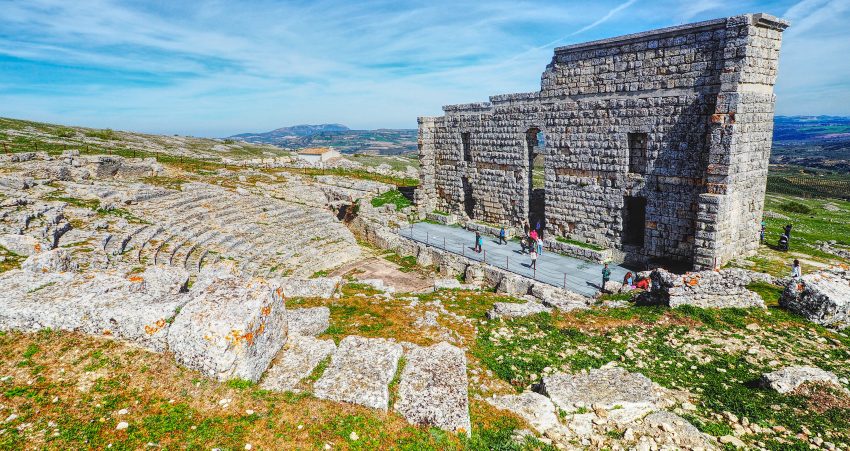
Acinipo is a small but powerful Roman ruin set on a high limestone plateau about 20 kilometres from Ronda, often called Ronda la Vieja (“Old Ronda”) because people once assumed it was the city's earliest settlement. What you find today is an atmospheric archaeological site where the wind, the open sky, and the silence do almost as much work as the stones-especially once you step into the theatre and imagine the sound of voices carrying across the hillside.
It's one of the best places to visit in Ronda if you're happy to add a short countryside detour to your itinerary, because it gives you a direct, uncluttered experience of Roman urban planning and a theatre that still feels remarkably intact. It also pairs well with a walking tour of Ronda: visit Acinipo in the morning for ruins and views, then return to town for the old streets, bridges, and viewpoints in the afternoon.
History and Significance of the Acinipo
Acinipo was a Roman city that flourished in the early Imperial period, and while the surrounding landscape feels remote today, it once supported an organised urban centre with public buildings and a clear street grid. Ancient references and later inscriptions associated with the site point to a community with civic identity, religious life, and the status to build in stone and stage public events.
Some historians link its development to the aftermath of the Battle of Munda (45 BC), suggesting it may have been established or expanded for veterans, while nearby Arunda (the Roman-era settlement associated with modern Ronda) evolved on its own track. Whether or not you follow every detail of that debate, the takeaway is clear: this region was not a backwater, and Acinipo belonged to a network of Roman towns that connected inland Andalusia with wider trade and administration.
The city declined from late antiquity and was eventually abandoned, with power and population concentrating more firmly around the defensible position of Ronda. The nickname Ronda la Vieja lingers because it captures what the place feels like-an older, quieter “version” of the region's history, left on the plateau while the living city moved on.
Things to See and Do in the Acinipo
The headline sight is the Roman theatre, a 1st-century BC structure built into the slope and sized for a crowd of around 2,000. The seating and the orchestra area are what tend to impress first, because they’re preserved well enough that you can read the shape of performance: where the audience sat, where sound pooled, and how the landscape itself became part of the stage.
Beyond the theatre, walk slowly through the broader city footprint and look for the logic of a Roman town rather than isolated ruins. The layout is based on intersecting main streets and rectangular blocks, and you can still sense the “order” of the place-public areas, domestic zones, and the civic core clustered around communal life.
If you have time, do a final lap for the views. Acinipo's setting is one of its greatest assets: the ruins sit high above the surrounding countryside, and the openness makes the site feel spacious and calm, even when other landmarks around Ronda are busy.
How to Get to the Acinipo
The nearest major airport is Málaga Airport, which is the most common arrival point for visiting Ronda and the surrounding countryside. For the best deals and a seamless booking experience, check out these flights to Ronda on Booking.com. Seville Airport is another workable option if you're building a wider Andalusia route that includes multiple cities. For the best deals and a seamless booking experience, check out these flights to Ronda on Booking.com.
Ronda is well connected by train, and rail is a comfortable way to arrive without worrying about urban parking before you head out to the countryside. Train schedules and bookings can be found on Omio. Once you’re in Ronda, you’ll need to switch to road transport to reach Acinipo, as the site sits outside town on rural roads.
You can reach Acinipo from Ronda by local road, and driving is the simplest option because it lets you arrive early and leave on your own schedule. If you are looking to rent a car in Spain I recommend having a look at Discover Cars, first, as they compare prices and review multiple car rental agencies for you. If you don’t have a car, the most practical approach is to take a taxi from Ronda and arrange a return time, since public transport options to the plateau are limited and not as convenient as the route suggests on a map.
Practical Tips on Visiting the Acinipo
- Entrance fee: Free
- Opening hours: Monday: Closed; Tuesday to Saturday: 10.00 to 17.00; Sunday: 09.00 to 14.00 Guided tours: Two tours every Saturday and Sunday at 10:30 a.m. and 12:00 p.m.,
- Official website: https://www.juntadeandalucia.es/cultura/enclaves/enclave-arqueologico-acinipo
- Best time to visit: Go early for the most peaceful experience and the clearest sense of the site’s scale without interruptions. Late afternoon can also be rewarding when the light softens and the countryside looks more dramatic from the plateau.
- How long to spend: Allow 60-90 minutes for a relaxed visit that includes the theatre, a walk through the main ruins, and time for views. If you enjoy reading sites slowly and taking photos, two hours feels unhurried.
- Accessibility: The terrain is uneven and exposed, with rough surfaces that can be challenging for limited mobility. Even for confident walkers, sturdy shoes help because the ground can be stony and slippery after rain.
- Facilities: Expect minimal services on-site, so bring water and any snacks you want, especially in warmer months. Plan restrooms and a proper break back in Ronda before or after the visit.
Where to Stay Close to the Acinipo
For a culture-heavy itinerary, the best area to base yourself is central Ronda near the old town and gorge viewpoints so you can see the main sights on foot at quieter hours; if your trip focus is efficient transport and day-trip logistics, staying closer to Ronda's station side can make arrivals, departures, and early starts easier.
If you want to be right in the historic heart with classic views and a short walk to Ronda’s main landmarks, Parador de Ronda is a strong base for a one- or two-night stay. For a smaller, characterful option that suits travelers who like old-town atmosphere, Soho Boutique Palacio San Gabriel works well. If you prefer a refined stay with a calmer feel while still being walkable to the centre, Hotel Montelirio is a good fit.
Is the Acinipo Worth Visiting?
Yes, especially if you want Roman history without crowds and barriers between you and the site. Acinipo feels open, honest, and direct: a theatre you can truly “read,” a town plan you can sense as you walk, and a landscape that makes the ruins feel grounded in real geography rather than detached museum pieces.
It's also worth visiting because it complements Ronda rather than competing with it. Ronda delivers drama through bridges and viewpoints; Acinipo adds depth through time and quiet space, making your overall experience of the region feel more complete.
What Other Travellers Say...

Ruins of Acinipo sits on a 32-hectare archaeological site near Ronda, where visitors can explore a well-preserved Roman theatre alongside remains of houses and baths; the site is free to enter, quiet, has parking and toilets, and can be seen in about 30 minutes while enjoying expansive views and a peaceful setting.


For Different Travelers
Families with Kids
Acinipo can be a great family stop if you frame it as a “real Roman theatre” adventure rather than a long archaeology lesson. The theatre seating makes the site easy to understand visually, and kids often enjoy picking a “best seat” and imagining what a performance would have felt like.
The main challenge is exposure and uneven ground, so it helps to keep suggesting small objectives: theatre first, then a short ruins loop, then a viewpoint moment. If you bring water and a simple snack, the visit stays comfortable and upbeat.
Couples & Romantic Getaways
For couples, Acinipo is less about romance in the traditional sense and more about atmosphere: wind, open horizons, and the feeling of having a historic place mostly to yourselves. It’s a quietly cinematic setting, especially if you visit when the light is softer and the plateau looks golden.
It also makes a satisfying contrast with the busier viewpoints in town. Do Acinipo first, then return to Ronda for an evening stroll and dinner-by the time you're back, the old town will feel even more alive after the stillness of the ruins.
Budget Travelers
Acinipo is a high-value outing because it offers a substantial experience with minimal add-ons: you're paying mostly in time and transport, not in constant ticketing or guided experiences. If you're trying to keep costs down, it's an excellent way to add variety to a Ronda stay without turning the day into a paid-attraction crawl.
The key is planning transport efficiently. Pair the visit with another nearby countryside stop or a scenic drive, then finish with free highlights in Ronda like viewpoints and promenades, so your day feels full without spending much.
History Buffs
If you love Roman urbanism, Acinipo is rewarding because it’s not just “a few stones” but a coherent civic site anchored by a theatre. You can stand in the orchestra and see how the slope, the seating, and the open space were designed for performance and public life, not simply to impress.
It's also a good place to think about regional change over time: why cities rise, why they decline, and how power shifts to more defensible or better-connected locations. The site's abandonment and the growth of Ronda nearby make a tangible case study in how landscapes shape settlement history.
FAQs for Visiting Acinipo
Getting There
Tickets & Entry
Visiting Experience
Tours, Context & Itineraries
Photography
Accessibility & Facilities
Food & Breaks Nearby
Safety & Timing
Nearby Attractions to the Acinipo
- Ronda Old Town: A historic core of plazas and lanes that rewards slow wandering after a countryside outing.
- Puente Nuevo: The iconic bridge and gorge crossing that delivers Ronda's most dramatic sense of scale.
- Alameda del Tajo: A park promenade with viewpoints that pair perfectly with an evening stroll back in town.
- Mirador de Ronda: A classic gorge-edge viewpoint where the Serranía landscape spreads out in wide layers.
- Setenil de las Bodegas: A striking nearby village known for houses built into rock overhangs, ideal as a scenic add-on.
The Ruins of Acinipo appears in our Complete Guide to Visiting Ronda!

Moira & Andy
Hey! We're Moira & Andy. From hiking the Camino to trips around Europe in Bert our campervan — we've been traveling together since retirement in 2020!
This website uses affiliate links which may earn a commission at no additional cost to you!
Planning Your Visit
Monday: Closed; Tuesday to Saturday: 10.00 to 17.00; Sunday: 09.00 to 14.00
Guided tours: Two tours every Saturday and Sunday at 10:30 a.m. and 12:00 p.m.,
Free
Nearby Attractions
- Cueva del Gato (11.6) km
Cave and Pool - Paseo De Los Ingleses (11.7) km
Park and Viewing Point - Alameda del Tajo (11.8) km
Park - Plaza de Toros de Ronda (11.9) km
Bullring and Historic Site - Plaza del Socorro (11.9) km
Square - Paseo de Orson Welles (11.9) km
Street - Monumento al Toro (11.9) km
Monument - Mirador de Ronda (12.0) km
Viewing Point - Paseo de Blas Infante (12.0) km
Park - Paseo de Ernest Hemingway (12.1) km
Viewing Point