Temple of Augustus and Rome, Ankara
Roman Site in Ankara

The Temple of Augustus and Rome is a compact but important Roman-era ruin in Ankara, located in the Altındağ district right next to the Hacı Bayram Mosque. Built around 25-20 BC, it marks the early Roman presence in the province of Galatia, and today you can still make out key parts of the structure, including sections of the side walls and the main entrance area.
What makes this site stand out is not its size, but its inscriptions: the Monumentum Ancyranum, preserving the Res Gestae Divi Augusti in Latin and Greek. Even if you’re not a specialist, it’s striking to see text carved into stone that has shaped how historians understand Augustus and the early empire. It’s best for travelers interested in ancient history, and it also works well as a short, atmospheric stop while exploring Ulus and nearby landmarks on foot.
Table of Contents
- History and Significance of the Temple of Augustus and Rome
- Things to See and Do in the Temple of Augustus and Rome
- How to Get to the Temple of Augustus and Rome
- Is the Temple of Augustus and Rome Worth Visiting?
- Practical Tips on Visiting the Temple of Augustus and Rome
- Where to Stay Close to the Temple of Augustus and Rome
- FAQs for Visiting the Temple of Augustus and Rome
History and Significance of the Temple of Augustus and Rome
From Phrygian sanctuary to Roman monument
The temple was constructed soon after Rome consolidated control in central Anatolia, replacing an earlier Phrygian temple that had been destroyed in the 2nd century BC. Dedicated to Emperor Augustus and the goddess Roma, it functioned as a statement of imperial authority at a key moment of expansion into Galatia.
The Res Gestae and the Monumentum Ancyranum
Its global scholarly importance comes from the inscriptions on its walls: the Res Gestae Divi Augusti, Augustus’s account of his achievements, carved in both Latin and Greek. This copy is the most complete surviving version of the text, making the site a cornerstone for classical studies and the history of the early Roman Empire.
Rediscovery and modern importance
The inscriptions were rediscovered and documented in 1555 by Ogier Ghiselin de Busbecq, an ambassador of Ferdinand of Austria. Since then, the temple has remained one of Ankara’s most historically significant Roman sites, valued as much for what it says as for what still stands.
Things to See and Do in the Temple of Augustus and Rome
I focus first on the surviving walls and the ornate doorway area, where you can still trace sections of the Latin and Greek inscriptions. Even when the text is faint or hard to read up close, the sheer presence of the carved lines gives you a sense of how the building once functioned as a public monument, not just a place of worship.
I also like stepping back to look for the outline of the original six-column façade, which helps you picture the temple’s scale. Finally, don’t rush the setting: standing between the Roman remains and the neighboring Hacı Bayram complex is one of the most memorable parts of the visit, with two very different eras sharing the same space.
How to Get to the Temple of Augustus and Rome
The nearest major airport is Ankara Esenboğa Airport, with onward travel into Ankara city before continuing to the Ulus/Hacı Bayram area. For the best deals and a seamless booking experience, check out these flights to Ankara on Booking.com.
Arrive by train to Ankara’s main station, then connect onward to Ulus and continue on foot toward Hacı Bayram. You can use the official TCDD Taşımacılık website to check schedules, compare routes, and purchase tickets for Türkiye’s national and regional trains operated by TCDD. For a more streamlined experience (especially if you prefer an English interface or want to compare across countries), we recommend using Omio, which allows you to easily compare prices, schedules, and book train tickets across Türkiye and the rest of Europe — all in one place.
By car, aim for the Ulus/Hacı Bayram area and be prepared for busy streets; driving is most useful if you’re combining several stops across the city. If you are looking to rent a car in Türkiye I recommend having a look at Discover Cars, first, as they compare prices and review multiple car rental agencies for you.
Is the Temple of Augustus and Rome Worth Visiting?
It's worth a short stop, especially if you're already in Ulus or visiting nearby sights, because the inscriptions are historically exceptional even if the remaining ruins are modest. It's best for travelers who enjoy archaeology, Roman history, or layered cityscapes where different periods sit side by side. Skip it if you're looking for a large, immersive ruin complex or a long indoor visit; in that case, treat it as optional and prioritize bigger museum-style experiences in Ankara.
What Other Travellers Say...
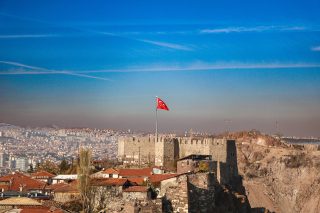
Temple of Augustus sits in a public square in Altındağ, Ankara, where a well-preserved section of Roman wall bears an inscription honoring the first emperor; the remains are visible beside a mosque and set within a small square with nearby parks, shops, restaurants and views toward Ankara Castle. Visitors note the site is compact—essentially one standing wall and an area in front—so it's a quick, free stop while exploring Ulus; the mosque garden setting means modest dress is advised and some find surrounding commercial activity diminishes the ancient atmosphere.


Practical Tips on Visiting the Temple of Augustus and Rome
- Best time to visit: Spring and autumn are the most comfortable for walking around Ulus, with milder weather and fewer crowds.
- How long to spend: Plan on 30-45 minutes for the temple area, longer if you’re pairing it with the mosque complex and nearby streets.
- Accessibility: Expect uneven ground; moderate mobility helps for moving around the ruins and the surrounding square.
- Facilities: On-site facilities are limited; you’ll find cafés and shops nearby in the Hacı Bayram and Ulus area.
Where to Stay Close to the Temple of Augustus and Rome
Base yourself in Ulus (Ankara's historic center) for the shortest trips to the Temple of Augustus and Rome and easy access to nearby museums and transit.
These hotels give you a practical base for visiting the Temple of Augustus and Rome and exploring central Ankara. Divan Çukurhan works well for a convenient choice for travellers prioritizing walkable access to Ankara Castle and the Ulus historic core, with straightforward taxi connections to the temple area. Radisson Blu Hotel, Ankara works well for well-suited for travellers who want quick public-transport links and an easy base for moving between Ulus sights and other parts of the city. Ankara HiltonSA works well for a good fit if you prefer a quieter, more residential-feeling area with dining nearby, while still being a manageable taxi/metro ride to Ulus and the temple.
FAQs for Visiting the Temple of Augustus and Rome
Getting There
Tickets & Entry
Visiting Experience
Tours, Context & Itineraries
Photography
Accessibility & Facilities
Food & Breaks Nearby
Safety & Timing
The Temple of Augustus and Rome appears in our Complete Guide to Visiting Ankara!

Moira & Andy
Hey! We're Moira & Andy. From hiking the Camino to trips around Europe in Bert our campervan — we've been traveling together since retirement in 2020!
This website uses affiliate links which may earn a commission at no additional cost to you!
Planning Your Visit
Nearby Attractions
- Hacı Bayram Mosque (0) km
Mosque - Column of Julian (0.2) km
Roman Site - Ankara Roman Theater (0.3) km
Roman Site - Ulus Square (0.4) km
Monument and Square - War of Independence Museum (0.5) km
Museum - Roman Baths of Ankara (0.5) km
Roman Site - Museum of Anatolian Civilizations (0.7) km
Museum - Erimtan Archaeology & Art Museum (0.8) km
Museum - Ankara Citadel (0.8) km
Castle - Melike Hatun Mosque (0.9) km
Mosque