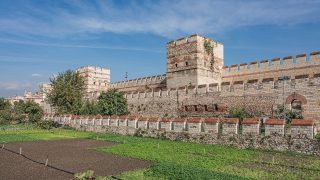
Ankara Roman Theater
Roman Site in Ankara

Ankara Roman Theater is an ancient open-air theater ruin in the historic Ulus district of Ankara, Türkiye. Dating to around the 2nd century AD (when the city was known as Ancyra), it's one of the capital's oldest surviving landmarks and a straightforward stop for anyone curious about Ankara's Greco-Roman layer.
Today you'll see a compact archaeological site with preserved seating areas, remains of the stage and orchestra, and interpretive panels that help you read the layout. It's not a vast, fully intact theater, but its elevated setting adds atmosphere with views toward Ulus and the Ankara Citadel. I'd especially recommend it to travelers building a walk around central Ulus-pairing it with nearby Roman and Ottoman-era highlights-rather than treating it as a standalone destination.
Table of Contents
- History and Significance of the Ankara Roman Theater
- Things to See and Do in the Ankara Roman Theater
- How to Get to the Ankara Roman Theater
- Is the Ankara Roman Theater Worth Visiting?
- Practical Tips on Visiting the Ankara Roman Theater
- Where to Stay Close to the Ankara Roman Theater
- FAQs for Visiting the Ankara Roman Theater
History and Significance of the Ankara Roman Theater
Roman Ancyra (around the 2nd century AD)
Archaeological evidence places the construction of the Ankara Roman Theater around the 2nd century AD, during the Roman Empire, when Ankara was known as Ancyra. Like other Roman theaters, it functioned as a civic venue-used for entertainment and public gatherings-within the life of the city.
Discovery and excavation (20th century)
The ruins came to light through 20th-century excavations, with major work carried out between 1982 and 1986 by the Museum of Anatolian Civilizations. Finds included key elements of a classical Roman theater such as the orchestra area, stage remains, audience seating, and vaulted parados buildings.
Protection and restoration (1992-2010)
The site was declared a protected area in 1992. Restoration work in 2009-2010 focused on stabilizing and partially reconstructing parts of the theater; some of the restoration choices (including the use of white marble rather than local Ankara stone) have been debated, but the work aimed to preserve the monument's structure.
Things to See and Do in the Ankara Roman Theater
I’d start by walking the seating area and then pausing near the stage and orchestra remains to picture how the space worked for performances and gatherings. Because the site is relatively small, it’s easy to take your time and focus on details in the masonry and the relationship between the theater’s different sections.
After that, I like to use the elevated position for a few quiet minutes taking in the surrounding cityscape-Ulus below and the Ankara Citadel nearby. If you enjoy context, look for the interpretive panels and any on-site 3D restoration models, which help translate the surviving fragments into a clearer mental map.
How to Get to the Ankara Roman Theater
The nearest airport is Ankara Esenboğa Airport (ESB), with onward travel into the city center by road-based transport. For the best deals and a seamless booking experience, check out these flights to Ankara on Booking.com.
Ankara has mainline rail connections via Ankara Train Station; from there you can continue toward Ulus using city transport or a short taxi ride. You can use the official TCDD Taşımacılık website to check schedules, compare routes, and purchase tickets for Türkiye’s national and regional trains operated by TCDD. For a more streamlined experience (especially if you prefer an English interface or want to compare across countries), we recommend using Omio, which allows you to easily compare prices, schedules, and book train tickets across Türkiye and the rest of Europe — all in one place.
Driving is possible with limited street parking nearby, but this stop is easiest on foot as part of an Ulus walk that links multiple sights close together. If you are looking to rent a car in Türkiye I recommend having a look at Discover Cars, first, as they compare prices and review multiple car rental agencies for you.
Is the Ankara Roman Theater Worth Visiting?
Yes-Ankara Roman Theater is worth a short stop if you're interested in archaeology, Roman-era city life, or you're already exploring Ulus on foot. It's best for travelers who enjoy reading ruins and imagining missing structures, rather than those expecting a dramatic, fully preserved amphitheater experience. Treat it as optional if your time in Ankara is tight or you prefer highly curated museum-style sites; and skip it if uneven ground or ongoing restoration activity would make the visit frustrating.
What Other Travellers Say...
Ancient Roman Theater in Ulus, Ankara sits on Bentderesi Cd. in the Kale/Altındağ area and is open daily (9:00–19:00 most days, 10:00–17:00 on Sunday); visitors describe it as a concrete-augmented ruin with scattered ancient stones and note ongoing restoration work, while others praise it as a visible Roman-era theater that once held thousands.


Practical Tips on Visiting the Ankara Roman Theater
- Best time to visit: Spring and autumn are the most comfortable for walking around Ulus, with milder temperatures.
- How long to spend: Plan for about 30-45 minutes, longer if you like photography or reading the interpretive panels.
- Accessibility: Expect uneven surfaces; it is not fully suitable for wheelchairs and can be tricky for anyone with limited mobility.
- Facilities: There are basic amenities nearby, with public restrooms in the Ulus district rather than comprehensive on-site facilities.
Where to Stay Close to the Ankara Roman Theater
Base yourself in Ulus (Ankara's historic center) for the shortest trips to the Ankara Roman Theater and easy access to nearby museums and the citadel area.
These hotels are practical bases for visiting the Ankara Roman Theater and exploring central Ankara. Divan Çukurhan works well for best for staying in the historic core, with quick access to Ulus sights and a short ride to the theater and nearby museums. Radisson Blu Hotel, Ankara works well for good for public-transport convenience in Ulus, making it easy to combine the theater with other central stops without relying on taxis. Hotel İçkale works well for a practical choice if you want a more straightforward arrival by car or train and prefer a less old-town setting while still being a short drive from Ulus.
FAQs for Visiting the Ankara Roman Theater
Getting There
Tickets & Entry
Visiting Experience
Tours, Context & Itineraries
Photography
Accessibility & Facilities
Food & Breaks Nearby
Safety & Timing
The Ankara Roman Theater appears in our Complete Guide to Visiting Ankara!

Moira & Andy
Hey! We're Moira & Andy. From hiking the Camino to trips around Europe in Bert our campervan — we've been traveling together since retirement in 2020!
This website uses affiliate links which may earn a commission at no additional cost to you!
Planning Your Visit
Nearby Attractions
- Temple of Augustus and Rome (0.3) km
Roman Site - Hacı Bayram Mosque (0.4) km
Mosque - Column of Julian (0.4) km
Roman Site - Museum of Anatolian Civilizations (0.4) km
Museum - Erimtan Archaeology & Art Museum (0.5) km
Museum - Ankara Citadel (0.5) km
Castle - Ulus Square (0.5) km
Monument and Square - Çengelhan Rahmi M. Koç Museum (0.6) km
Museum - War of Independence Museum (0.6) km
Museum - Melike Hatun Mosque (0.7) km
Mosque