Complete Guide to Central Anatolia & Cappadocia (2026)
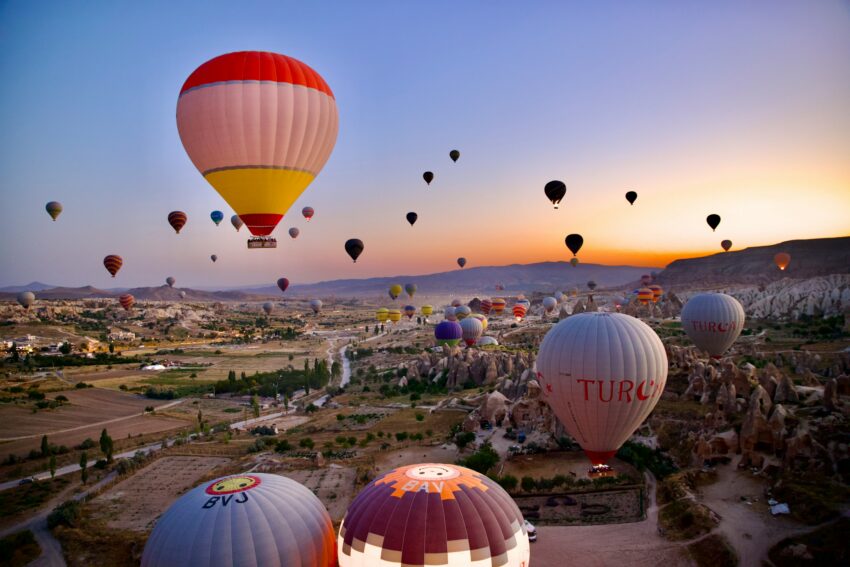
Central Anatolia & Cappadocia, Türkiye feels like the meeting point between deep history and wide-open landscapes. This is a region of ancient trade routes, volcanic scenery, grand Seljuk monuments, conservative religious traditions, modern Turkish capital life, and some of the country's most memorable small towns. You can move from Ankara's broad boulevards and museums to Konya's spiritual heritage, then on to the rock-cut churches, valleys, and cave hotels of Göreme, Uçhisar, and Ürgüp without ever feeling that the character of the region has become repetitive.
What makes the area especially rewarding is the contrast between city and countryside. Ankara brings politics, culture, and a more urban rhythm, while places such as Avanos, Ortahisar, Mustafapaşa, and Göreme feel rooted in older patterns of daily life. In Cappadocia, the landscape itself becomes part of the attraction, with soft volcanic stone carved into homes, chapels, monasteries, and underground refuges over many centuries. In Central Anatolia more broadly, the appeal often comes from historic caravanserais, citadels, Seljuk mosques, and a food culture built around wheat, meat, dairy, and slow-cooked regional dishes.
It is also a region that rewards slower travel. Rather than rushing through on a whistle-stop tour, it works best when you give time to walking in valleys, lingering in old quarters, and using towns as bases for day trips. Cappadocia is the obvious headline destination, but Konya, Ankara, Kayseri, Eskişehir, and smaller historic settlements all add different layers to the experience, making this one of Türkiye's richest areas for travelers who enjoy both culture and landscape.
Table of Contents
- Cities of Central Anatolia & Cappadocia
- History of Central Anatolia & Cappadocia
- Central Anatolia & Cappadocia, Türkiye in Antiquity and Early Civilizations
- Central Anatolia & Cappadocia, Türkiye Under Persian, Greek, and Roman Rule
- Central Anatolia & Cappadocia, Türkiye in the Byzantine and Early Christian Era
- Central Anatolia & Cappadocia, Türkiye in the Seljuk and Medieval Period
- Central Anatolia & Cappadocia, Türkiye in the Ottoman and Republican Periods
- Cities of Central Anatolia & Cappadocia
- Best Time to Visit Central Anatolia & Cappadocia
- How to get to Central Anatolia & Cappadocia
- Festivals in Central Anatolia & Cappadocia
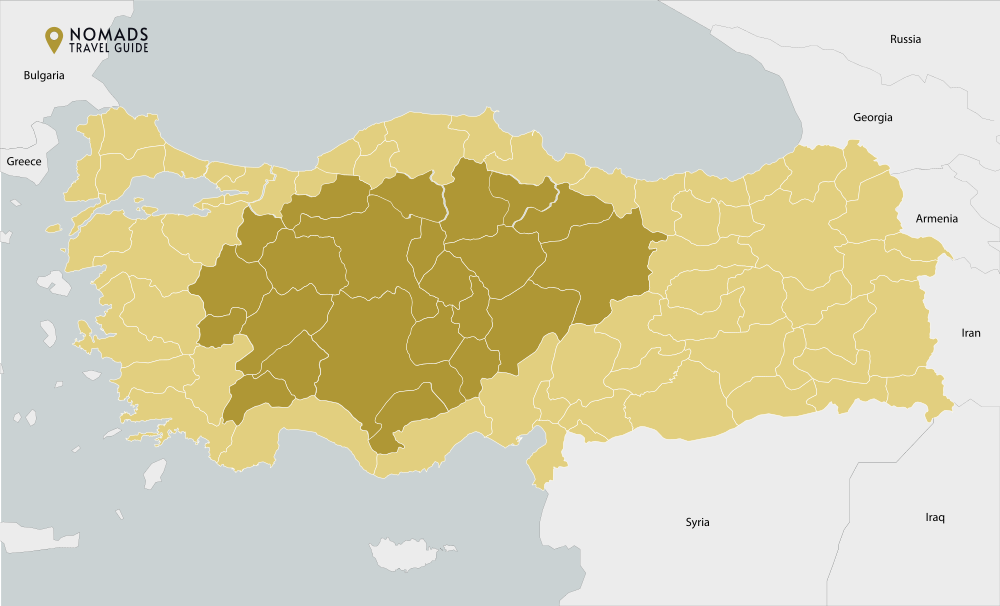
Cities of Central Anatolia & Cappadocia
Ankara

Ankara, the capital city of Türkiye, sits proudly in the heart of Anatolia, surrounded by sweeping plains and gentle hills that define the country’s central region. Often overlooked in favor of Istanbul, Ankara offers a fascinating blend of government, culture, and contemporary life. Its wide boulevards, grand public buildings, and vibrant university atmosphere create a dynamic cityscape that balances modern energy with authentic Turkish charm. As the nation’s political and administrative hub, it’s where history, governance, and art intersect - a city that reflects the soul of modern Türkiye.
Visitors to Ankara will find a city of contrasts - sleek modern districts and lively cafes stand side by side with traditional markets, old neighborhoods, and tranquil parks. The city’s elevated position gives it a crisp, continental climate and stunning panoramic views, especially from areas like Atakule Tower and Ankara Castle. The cultural scene is vibrant, with excellent theatres, art galleries, and music venues that celebrate both Turkish and international talent. Food lovers can also explore Ankara’s thriving dining scene, where classic Anatolian dishes are reimagined in stylish restaurants or served in cozy, family-run eateries.
Ankara is one of the best places to visit in Türkiye for travelers seeking to understand the country beyond its coastal resorts. It’s a place where visitors can experience daily life as locals do - sipping Turkish tea in leafy parks, browsing bustling bazaars, and exploring museums that tell the story of a nation reborn. With its friendly atmosphere, efficient transport, and central location, Ankara serves as both a rewarding destination in its own right and a convenient base for exploring the wider Anatolian heartland.
View our Ankara Guide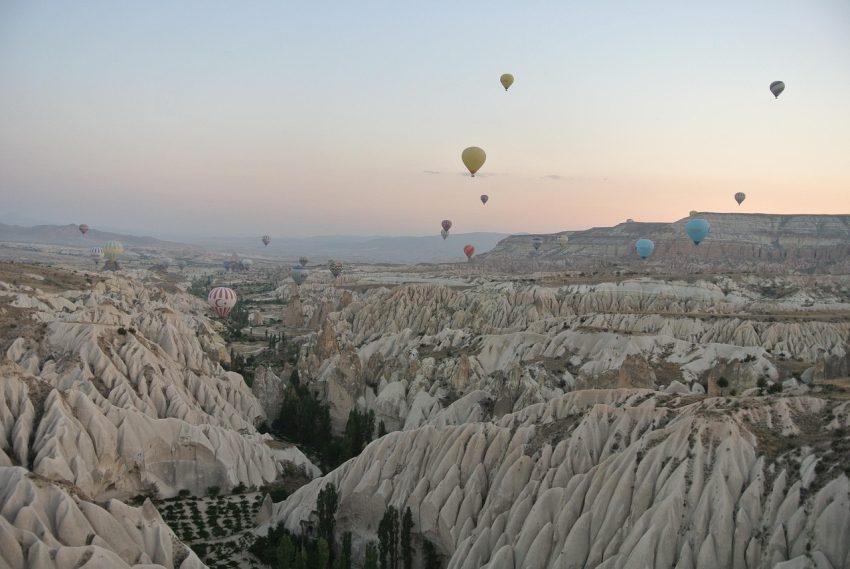

Göreme
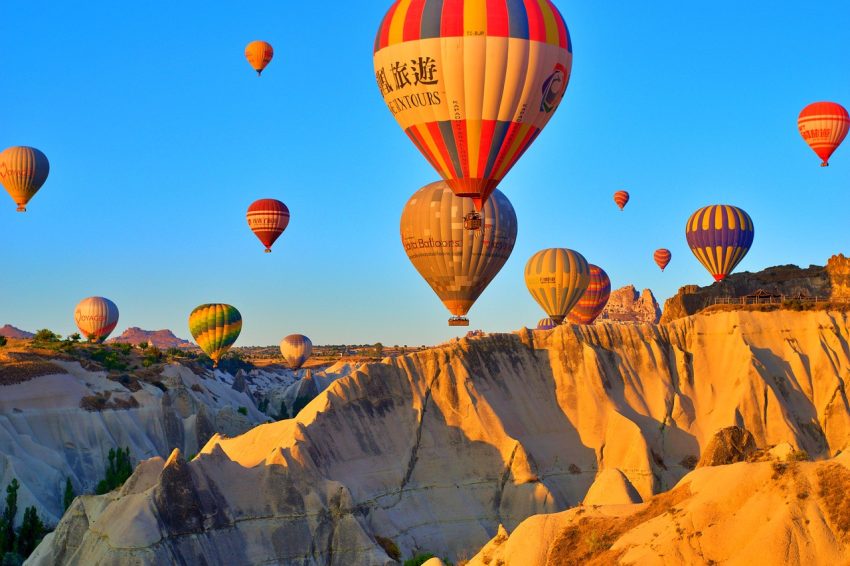
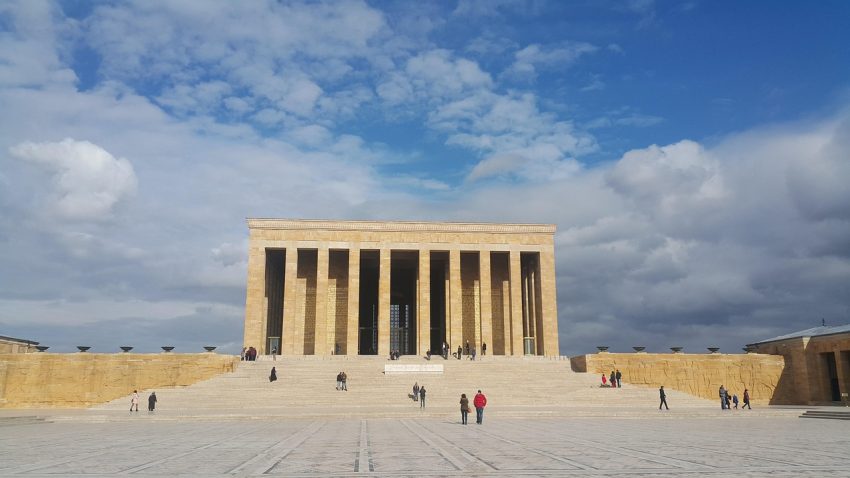
Tucked within the surreal valleys of Cappadocia in central Türkiye, Göreme is a place that feels like it belongs to another world. The town sits among honey-colored rock formations, carved over millennia by wind and volcanic activity into towering fairy chimneys and cave homes. As the gateway to Cappadocia’s most iconic landscapes, Göreme attracts travelers from around the globe who come to marvel at its unique geology, ancient churches, and mesmerizing sunrise views. Göreme is one of the best places to visit in Türkiye, offering an unforgettable blend of natural beauty, adventure, and serenity.
Visiting Göreme is as much about atmosphere as exploration. The town’s narrow lanes are lined with boutique cave hotels, rooftop terraces, and friendly cafés where visitors gather to watch the sky fill with colorful hot-air balloons each morning. You can spend your days hiking through valleys like Love, Rose, and Pigeon, or simply relax and absorb the peace of this otherworldly landscape. Every viewpoint feels cinematic - the kind of place that makes you pause and take it all in.
Whether you’re wandering through the open-air museums, savoring local Anatolian cuisine, or taking that once-in-a-lifetime balloon flight, Göreme offers a rare harmony of adventure and stillness. The town captures the essence of Cappadocia: a landscape shaped by time, faith, and imagination. It’s a destination that lingers in your memory long after you’ve left - a reminder that magic can be found right here on Earth.
View our Göreme GuideHistory of Central Anatolia & Cappadocia
Central Anatolia & Cappadocia, Türkiye in Antiquity and Early Civilizations
The story of Central Anatolia & Cappadocia, Türkiye begins long before the classical age. The region was shaped by early Anatolian civilizations, most famously the Hittites, whose political and cultural influence left a lasting mark across central Türkiye. Over time, local communities adapted to the plateau’s demanding climate and made use of its defensible landscapes, fertile pockets of land, and important overland trade routes. In Cappadocia, soft volcanic rock also encouraged a very different kind of settlement history, allowing people to carve practical and protective spaces directly into the land.
Central Anatolia & Cappadocia, Türkiye Under Persian, Greek, and Roman Rule
As empires expanded across Anatolia, Central Anatolia & Cappadocia, Türkiye became part of wider political and commercial systems. Under the Persians, Cappadocia developed as a distinct satrapy, and later Hellenistic and Roman influence connected the region more closely to the eastern Mediterranean world. Roads, military movement, taxation, and urban growth all became more structured in this period. Christianity also spread deeply here, and Cappadocia eventually became one of the great centers of early Christian monasticism, leaving behind rock-cut churches and religious complexes that still define the region’s image today.
Central Anatolia & Cappadocia, Türkiye in the Byzantine and Early Christian Era
The Byzantine centuries gave Central Anatolia & Cappadocia, Türkiye some of its most remarkable surviving heritage. In times of instability, communities in Cappadocia expanded underground cities and sheltered worship spaces into the tuff rock, while monasteries and painted churches flourished in valleys around Göreme and elsewhere. This was a period in which religion, daily survival, and architecture became tightly intertwined. The result is a landscape where spiritual history is still visible not only in monuments, but in the very form of villages and cliff faces.
Central Anatolia & Cappadocia, Türkiye in the Seljuk and Medieval Period
The arrival and consolidation of Turkish rule transformed Central Anatolia & Cappadocia, Türkiye once again. The Seljuks made Konya a major political and cultural center, and their era left caravanserais, mosques, madrasas, and a sophisticated architectural legacy across the region. Trade routes linking east and west gained renewed importance, and Central Anatolia became a crucial corridor for commerce, scholarship, and courtly culture. This was also the age most closely associated with Mevlana Jalal al-Din Rumi in Konya, whose spiritual legacy still shapes the identity of the region.
Central Anatolia & Cappadocia, Türkiye in the Ottoman and Republican Periods
Under the Ottomans, Central Anatolia & Cappadocia, Türkiye remained important as an inland heartland of agriculture, religion, and regional trade, even if imperial attention often focused more heavily on the coasts and major western cities. In the twentieth century, the rise of the Turkish Republic gave the region new prominence when Ankara became the national capital. Since then, the area has developed along two parallel tracks: Ankara as the administrative and political center of modern Türkiye, and Cappadocia as one of the country's most distinctive heritage and tourism landscapes. Konya, Kayseri, and other cities have also expanded while keeping strong ties to their older identities.
Best Time to Visit Central Anatolia & Cappadocia
Visiting Central Anatolia & Cappadocia, Türkiye in Spring
Spring is one of the best times to visit Central Anatolia & Cappadocia, Türkiye. The weather is generally milder, valley walks are much more comfortable, and the landscape begins to soften after winter. In Cappadocia, this is a strong season for hiking, viewpoints, and longer outdoor days without the full intensity of summer crowds. In Ankara and Konya, spring also makes city sightseeing more pleasant, especially for travelers who plan to spend time exploring museums, citadels, and historic quarters on foot.
Spring is also one of the most appealing festival periods. Ankara’s cultural calendar becomes especially lively in April, and depending on the year, late spring can also overlap with Cappadox in Cappadocia. For travelers who want a balance of good weather, culture, and manageable visitor numbers, spring is an excellent choice.
Visiting Central Anatolia & Cappadocia, Türkiye in Summer
Summer is the high season for much of Central Anatolia & Cappadocia, Türkiye, especially in Cappadocia itself. Long daylight hours, dry weather, and the reliability of outdoor conditions make this a popular time for balloon flights, sunrise viewpoints, open-air dining, and road trips between towns. The trade-off is heat, particularly in exposed valleys and on treeless plateau landscapes, so early starts and slower afternoons are the most sensible way to travel.
This is also when some of the region’s most photogenic events take place, including Balloon Fest Cappadocia and a number of other outdoor cultural gatherings. Summer suits travelers who want atmosphere, long days, and strong festival energy, but it is less ideal for those who dislike heat or prefer quieter travel.
Visiting Central Anatolia & Cappadocia, Türkiye in Autumn (Best)
Autumn is often the strongest all-round season to visit Central Anatolia & Cappadocia, Türkiye. The temperatures are usually more comfortable than summer, the light can be beautiful across Cappadocia’s valleys and rock formations, and harvest season gives parts of the region a particularly appealing feel. It is a very good time for combining cities with countryside, since both urban sightseeing and outdoor exploration tend to be easier.
The seasonal calendar is another advantage. September brings grape-related events and cycling festivals in Cappadocia, while October brings the internationally known Cappadocia Ultra-Trail. For many travelers, autumn offers the best balance of scenery, weather, and atmosphere, especially if you want an active trip without the harsher edge of midsummer.
Visiting Central Anatolia & Cappadocia, Türkiye in Winter
Winter gives Central Anatolia & Cappadocia, Türkiye a very different character. In Cappadocia, snow can transform the valleys, fairy chimneys, and stone villages into something almost unreal, and the colder months can be especially memorable for travelers who like photography and quieter streets. Ankara and Konya remain worthwhile in winter too, particularly for museums, religious sites, and food-focused city breaks, though you need to be prepared for colder temperatures and occasional weather-related disruption.
The season’s great cultural highlight is December in Konya, when the Mevlâna commemorations and Şeb-i Arus ceremonies draw visitors interested in spirituality, music, and ritual. Winter is less about covering lots of ground and more about atmosphere, layered history, and choosing a few places to experience properly.
Annual Weather Overview
- January 6°C 46°F
- February 8°C 50°F
- March 12°C 57°F
- April 18°C 68°F
- May 21°C 73°F
- June 26°C 82°F
- July 29°C 88°F
- August 31°C 92°F
- September 27°C 83°F
- October 21°C 73°F
- November 15°C 62°F
- December 8°C 50°F
How to get to Central Anatolia & Cappadocia
Getting to Central Anatolia & Cappadocia, Türkiye by Air
The main air gateways into Central Anatolia & Cappadocia, Türkiye are Ankara Esenboğa Airport for the capital and wider central plateau, Kayseri Airport for eastern Cappadocia access, and Kapadokya Airport near Nevşehir for the core tourist zone around Göreme, Uçhisar, Ürgüp, and Avanos. For many travelers, Kayseri and Nevşehir are the most practical arrivals for Cappadocia, while Ankara works well if you want to combine the capital with places such as Beypazarı, Eskişehir, or onward rail travel. Konya Airport is another useful option if your trip centers on Seljuk heritage and Mevlana-related sights before continuing elsewhere in the region.
Getting to Central Anatolia & Cappadocia, Türkiye by Train
Train travel is one of the best ways to move into and around parts of Central Anatolia & Cappadocia, Türkiye, especially if Ankara is part of the trip. Ankara is the key rail hub, with high-speed and conventional rail connections making it an excellent starting point for journeys onward to cities such as Konya, Eskişehir, and beyond. Cappadocia itself does not sit directly on the main passenger rail network, so travelers usually combine train travel with a road transfer from Ankara, Kayseri, or Konya depending on their route. For current routes, tickets, and schedules, use TCDD Taşımacılık [trains].
Getting to Central Anatolia & Cappadocia, Türkiye by Road
Road travel gives you the most flexibility in Central Anatolia & Cappadocia, Türkiye. Long-distance buses connect Ankara, Konya, Kayseri, Nevşehir, Aksaray, and many smaller towns, and the intercity road network is generally the easiest way to reach places that are not directly served by rail. Driving is especially useful in Cappadocia if you want to move between Göreme, Uçhisar, Ortahisar, Mustafapaşa, Avanos, and the more remote valleys and underground cities at your own pace. Distances are manageable, but the best approach is usually to choose a base and explore in loops rather than changing hotels every night.
Getting Around Central Anatolia & Cappadocia, Türkiye
Getting around within the region depends on which part you are visiting. In Ankara and Konya, local public transport and taxis make city sightseeing straightforward. In Cappadocia, local minibuses and tours exist, but they do not always line up neatly with sunrise viewpoints, hiking routes, or smaller villages, so many travelers rely on rental cars, private transfers, or organized excursions. Göreme is a practical base for first-time visitors, Ürgüp works well for a slightly broader town feel, and Uçhisar or Ortahisar suit travelers who want a quieter stay with easy access to scenic viewpoints. Kayseri and Nevşehir are mainly transport gateways, while Konya and Ankara are destinations in their own right rather than just transit points.
Festivals in Central Anatolia & Cappadocia
- Cappadox, Cappadocia
Usually held in May or June, Cappadox is one of the region’s signature cultural events, blending music, contemporary art, gastronomy, and outdoor experiences in dramatic valley settings. It has become one of the best examples of how Cappadocia’s landscape can be used as a stage for creative events. - Cappadocia Tent Festival, Cappadocia
Usually in June, this festival brings a more outdoors-focused and youthful atmosphere to the region. It appeals to travelers who want to experience Cappadocia beyond sightseeing, with a stronger emphasis on camping, music, and open-air community events. - Balloon Fest Cappadocia, Ürgüp and surrounding areas
Usually in July, this is one of the most visually striking events in the region, with international balloon participation and sky-filled displays above the Cappadocian landscape. It turns one of the area’s everyday icons into a full-scale festival spectacle. - International Cappadocia World Dance Festival, Avanos
Usually in summer, this festival brings performers from different countries to Avanos and adds a lively international dimension to the local calendar. It is one of the better events for seeing the region animated by performance rather than purely by sightseeing. - Traditional Kaymak Festival, Kaymaklı
Usually in August, this local festival highlights one of the area’s best-known dairy products and gives visitors a more community-based experience of Central Anatolian food culture. Folk performances and competitions make it more than just a culinary event. - Ürgüp Grape Harvest Festival, Ürgüp
Usually in September, this is one of the best seasonal festivals for travelers interested in wine, vineyards, and harvest traditions. Parades, tastings, performances, and the strong local identity of Ürgüp make it a standout autumn event. - Salcano Cappadocia Cycling Festival, Cappadocia
Usually in September, this long-running event attracts cyclists to the region’s valleys and upland roads. It adds a sporty edge to the calendar and shows how Cappadocia functions not just as a heritage destination, but also as an active-travel landscape. - Salomon Cappadocia Ultra-Trail, Cappadocia
Usually in October, this is one of the region’s highest-profile outdoor events, drawing runners from around the world. It has helped position Cappadocia as a serious destination for endurance sports as well as sightseeing. - International Ankara Music Festival, Ankara
Usually in April, this is one of Ankara’s longest-running international cultural events. It brings major orchestras, ensembles, and soloists to the capital and is one of the clearest examples of Central Anatolia’s more formal arts scene. - Mevlâna Whirling Dervishes Festival (Şeb-i Arus), Konya
Held in December, this is one of the most important spiritual and cultural events in the whole region. Centered on the commemoration of Rumi in Konya, it brings together ceremonies, performances, and a deeply rooted sense of religious heritage that makes it unlike any other event in Central Anatolia.