Skopje, North Macedonia: The Ultimate Travel Guide 2026
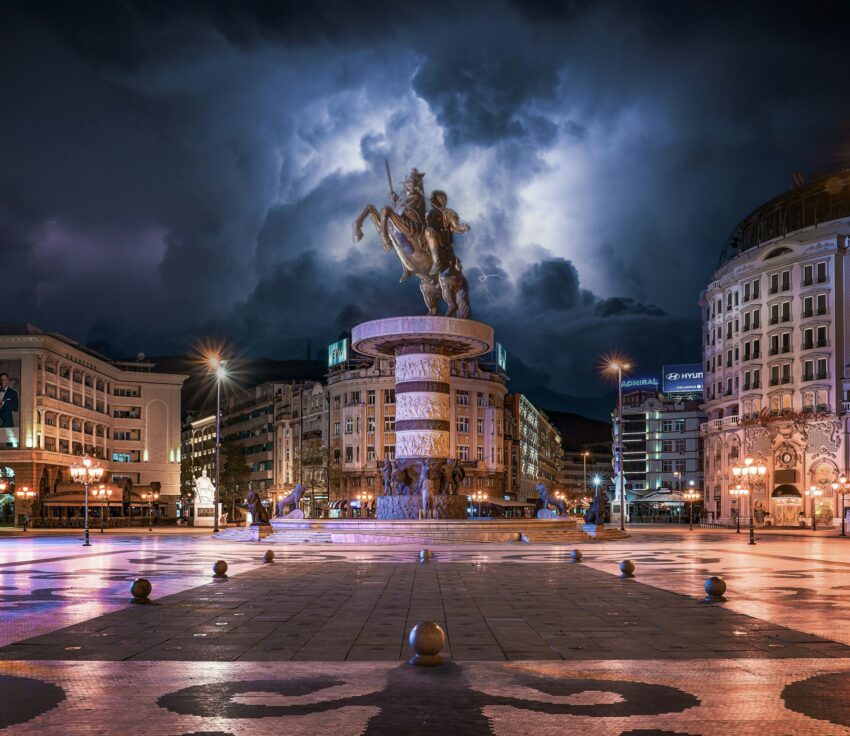
The Complete Guide to Skopje

Skopje is North Macedonia's capital in the central Vardar River valley, framed by Mount Vodno to the south and the Skopska Crna Gora range to the north. The city feels like two places stitched together: a lively Ottoman-era bazaar quarter of tea houses and craft shops, and a modern center of wide boulevards, bridges, and bold monuments. You come for the contrasts-minarets and churches, riverside promenades, and viewpoints that put the whole basin at your feet. It suits travelers who like walking cities with strong street life, café culture, and plenty to photograph.

Most first-time visitors gravitate to the riverfront and the stone bridge area, then drift into the Old Bazaar where the pace slows and the smells of grilled kebapi and fresh burek take over. Skopje is compact enough to explore on foot, but it also rewards short rides to places like Matka Canyon or the cable car up Vodno for sunset. The urban character is a mix of Balkan bustle and Mediterranean-style evenings, with locals lingering late over coffee and rakija. If you enjoy cities where daily life is as interesting as the sights, Skopje delivers.

Skopje's appeal is also practical: it's affordable, easy to navigate, and a convenient base for day trips across North Macedonia. Museums and memorials add context without requiring a packed itinerary, and the city's restaurant scene ranges from old-school grills to contemporary Macedonian kitchens. Expect a bit of visual chaos in the center-some love it, some don't-but it's part of the city's conversation with itself. Skopje is best for curious, open-minded travelers who want a destination that feels unpolished in places yet deeply characterful.

History of Skopje

Ancient Scupi and the Roman imprint

Skopje’s story begins with Scupi, a Roman settlement positioned to control routes through the Vardar corridor. Earthquakes and shifting frontiers repeatedly tested the town, but the strategic valley location kept drawing people back. Remains of Scupi sit outside today’s center, hinting at an early urban plan that once anchored the region’s trade and administration.

As power changed hands, the settlement’s role as a crossroads endured, setting a pattern that still defines Skopje’s identity. The city’s later neighborhoods and roads continued to follow the logic of movement through the valley. Visitors today can sense that “gateway” character in how quickly the city transitions from riverbanks to hills and out toward mountain passes.

Byzantine and medieval fortifications

In the medieval period, Skopje’s defensive position became central, with fortifications on the hill above the river shaping the city’s silhouette. The fortress area—known today as Kale—helped define a high/low city relationship that still organizes how people navigate the center. Control of the town shifted among regional powers, and each phase left traces in religious sites and street patterns.

These centuries established the habit of building on prominent viewpoints and along the river crossing points. The Stone Bridge area became a natural hinge between districts, a role it still plays for pedestrians. The sense of layered urban memory is strongest when you look from Kale down toward the bazaar and the newer civic core.

Ottoman Skopje and the Old Bazaar

Ottoman rule transformed Skopje into a major Balkan town, and the Old Bazaar grew into a dense commercial quarter of hans, hammams, mosques, and workshops. The bazaar’s narrow lanes and small storefronts reflect a city organized around guilds, trade, and neighborhood life. Many of the most atmospheric streets visitors walk today follow this Ottoman-era fabric.

Public buildings such as baths and caravanserais anchored social life, and several survive as cultural venues or landmarks. The bazaar’s mix of religious and commercial architecture created a distinct urban rhythm—quiet courtyards, busy alleys, and sudden open squares. That rhythm remains one of Skopje’s most distinctive experiences for travelers.

Yugoslav modernization and the 1963 earthquake

In the 20th century, Skopje became a key city within Yugoslavia, with new institutions and housing expanding beyond the historic core. The 1963 earthquake was a defining rupture, destroying large parts of the city and forcing a complete rethink of planning and construction. International aid and modernist ideas shaped the rebuilding, leaving a legacy of bold civic buildings and broad avenues.

Visitors can still spot this era in concrete landmarks and the city’s more open, planned spaces. The post-earthquake reconstruction also reinforced the river as an organizing axis, with bridges and embankments tying districts together. Skopje’s modern identity is inseparable from this period of loss, reinvention, and architectural experimentation.

Independence-era reinvention and today’s cityscape

After North Macedonia’s independence, Skopje entered a new phase of nation-building expressed through monuments, museums, and redesigned public spaces. The city center’s dramatic statues and neoclassical facades created a striking, sometimes controversial, visual narrative. This reinvention sits alongside older layers, making the central area feel like a living debate about identity.

At the same time, Skopje’s café culture, creative venues, and riverside promenades have continued to evolve, giving the city a contemporary pulse beyond the headline landmarks. The result is a capital where Ottoman lanes, Yugoslav modernism, and recent monumental projects coexist within a short walk. For visitors, that density of eras is exactly what makes Skopje memorable.

Moira & Andy
Moira & Andy

Hey! We're Moira & Andy. From hiking the Camino to trips around Europe in Bert our campervan — we've been traveling together since retirement in 2020!

Read our full story here

Visiting Skopje for the first time and wondering what are the top places to see in the city? In this complete guide, I share the best things to do in Skopje on the first visit. To help you plan your trip, I have also included an interactive map and practical tips for visiting!

This website uses affiliate links which earn a small commission at no additional cost to you.
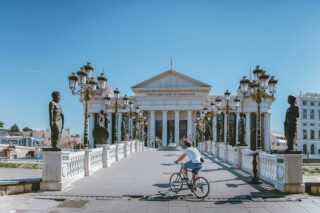
12 Best places to See in Skopje

This complete guide to Skopje not only tells you about the very best sights and tourist attractions for first-time visitors to the city but also provide insights into a few of our personal favorite things to do.

This is a practical guide to visiting the best places to see in Skopje and is filled with tips and info that should answer all your questions!

1. Memorial House of Mother Teresa
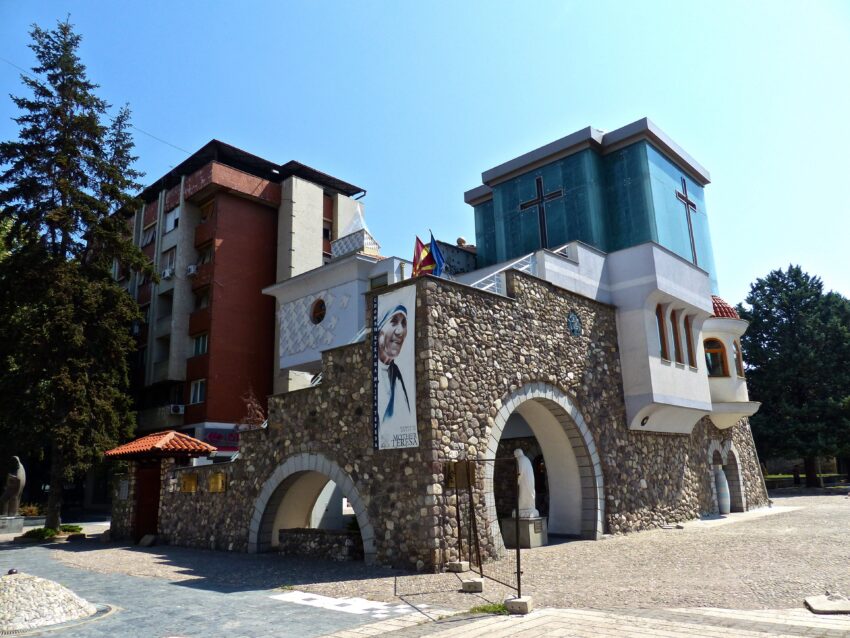
Memorial House of Mother Teresa
CC BY-SA 2.0 / John Crane
Memorial House of Mother Teresa in Skopje is a small memorial museum and cultural space dedicated to the city’s most famous humanitarian. Set on Macedonia Street, it marks the site connected with the Sacred Heart of Jesus Roman Catholic Church, where Mother Teresa was baptized. Inside, visitors find relics linked to her life, a museum display, and lifelike sculptures that help frame her story in a direct, accessible way. The house is less about grandeur and more about a focused visit that works well for travelers who want a short, reflective stop tied to Skopje’s modern identity and Mother Teresa’s early years.
Location: Macedonia St 1000, Skopje 1000, North Macedonia | Hours: Check official website. | Price: Free. | Distance: 0.6km

Here is a complete selection of hotel options in Skopje. Feel free to review each one and choose the stay that best suits your needs.

2. Stone Bridge

Stone Bridge
Stone Bridge
CC BY-SA 3.0 / Делфина
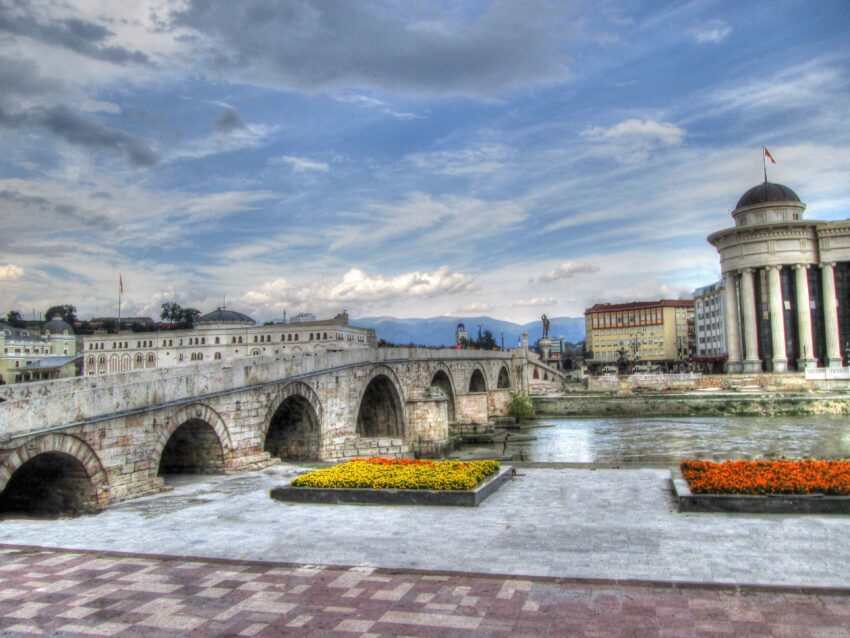
Stone Bridge spans the Vardar River in central Skopje and functions as both a working crossing and a landmark tied closely to the city’s identity. Built of stone blocks and set on a series of semicircular arches, it connects Macedonia Square with the Old Bazaar, so it sits right on the seam between Skopje’s newer centre and its older quarter. The bridge has been repaired more than once after damage over the centuries, which adds to its layered feel. It is a good stop for visitors who want a clear sense of how the city is divided, joined, and represented in its public spaces.
Location: Ura e Gurit, 1000 Shkupi, North Macedonia | Hours: 24 Hours. | Price: Free. | Distance: 0.6km

Traveling to a country with a different currency? Avoid ATM transaction fees and pay in local currency with a Wise Card. Having used it for over 5 years, we've saved loads on fees!

3. Macedonia Square

Macedonia Square
Macedonia Square
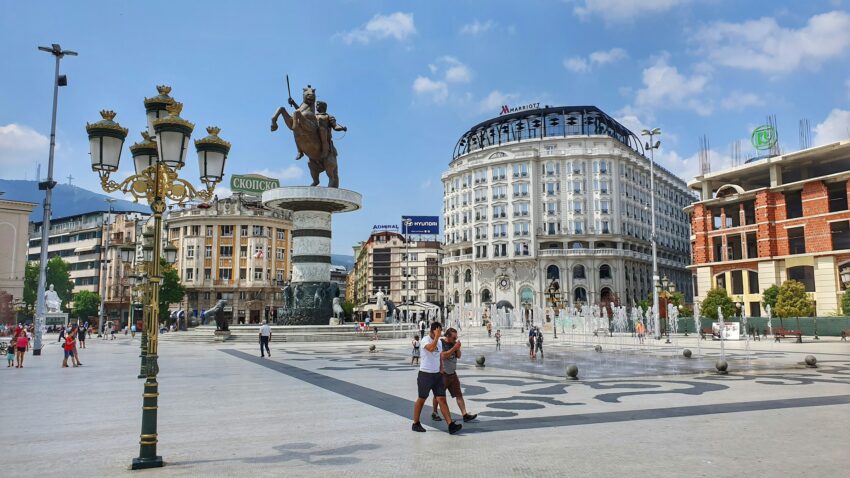
Macedonia Square is the central square in Skopje and a major open space in the city’s core. It covers a large area, sits near the Vardar River, and functions as a setting for civic gatherings, public celebrations, and seasonal events. Visitors notice the flagpole, monuments linked to modern Macedonian identity, and the square’s role as a daily meeting point rather than a single-purpose attraction. It also carries layers of national symbolism, including associations with independence and the city’s recovery after the 1963 earthquake. For travelers, it works best as a short, practical stop while exploring central Skopje.
Location: Macedonia Square, 1000 Skopje, North Macedonia | Hours: 24 Hours. | Price: Free. | Distance: 0.6km

Explore Skopje at your own pace with our self-guided walking tour! Follow our curated route to discover must-see sights and local secrets that makes Skopje one of the best places to visit in North Macedonia.

4. National Archaeological Museum Macedonia
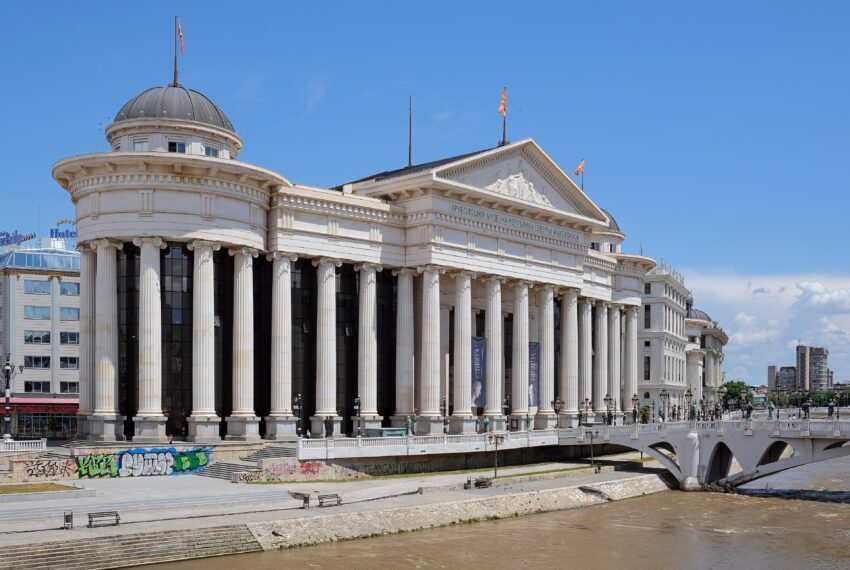
National Archaeological Museum Macedonia
CC BY-SA 4.0 / kallerna
National Archaeological Museum Macedonia in Skopje is a museum stop focused on the country’s archaeological record, set in a prominent modern building by the river and close to Macedonia Square. The exterior stands out for its Skopje 2014 styling, with grand columns, glass, and a bridge connection to the central area. Inside, the visit is about artifacts gathered from across North Macedonia, arranged as a chronological look at the region’s past. It suits travelers who want a clear, compact museum visit and anyone interested in archaeology more than large-scale art or interactive displays.
Location: Кеј Димитар Влахов 1000, Skopje 1000, North Macedonia | Hours: Tuesday – Sunday: 10:00–18:00. Closed on Monday. Last tickets are sold by 17:00. | Price: 400 MKD for foreign visitors; 200 MKD for students with valid ISIC or Euro 26 cards; 700 MKD for a family ticket. Free entry applies on selected days and for certain visitor categories. | Website | Distance: 0.7km

5. Kale Castle
Kale Castle
Kale Castle
CC BY-SA 4.0 / kallerna
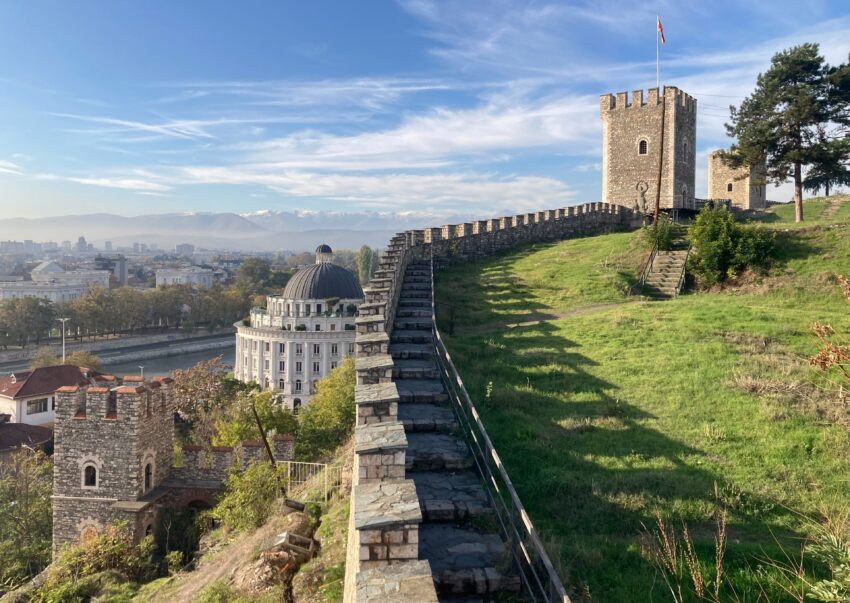
Kale Castle, better known as Skopje Fortress, sits above the Old Town on a hill that gives a wide view over the city. Visitors come for the remaining towers, broken walls, and the sense of scale rather than for a polished monument. The site reaches back to the 6th century, with earlier habitation on the hill and building material reused from the Roman city of Skupi. Its position on Skopje’s coat of arms underlines how closely it is tied to the city’s identity. It suits travelers who like historic sites, open-air viewpoints, and low-key stops that do not take a full day.
Location: Samoilova, Skopje 1000, North Macedonia | Hours: 24 Hours. | Price: Free. | Distance: 0.7km

6. Church of the Ascension of Jesus
Church of the Ascension of Jesus
CC BY-SA 3.0 / Darkocv
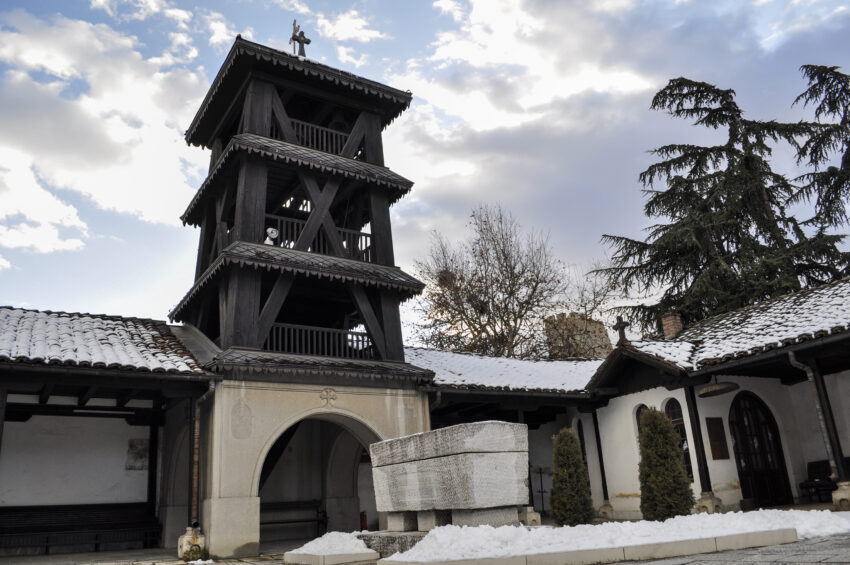
The Church of the Ascension of Jesus is an Eastern Orthodox church in Skopje that rewards a short, focused visit. Built in the mid-16th century and later altered in the 19th century, it is known for its three-nave layout, arched ceilings, women’s gallery, and carefully finished iconostasis. The church also carries political and religious significance tied to shifting Orthodox affiliations under Ottoman rule. Inside the churchyard, the oak gate and the white sarcophagus linked to Gotse Delchev add another layer of interest. It suits visitors who enjoy historic religious architecture and places with a strong local backstory.
Location: 2C2P+77Q, Samoilova, Skopje 1000, North Macedonia | Hours: Check official website. | Price: Free; donations appreciated. | Distance: 0.9km

7. Kapan Han
Kapan Han
Kapan Han
CC BY-SA 2.0 / https://commons.wikimedia.org/wiki/File:Kale_Skopje_Fortress.jpg
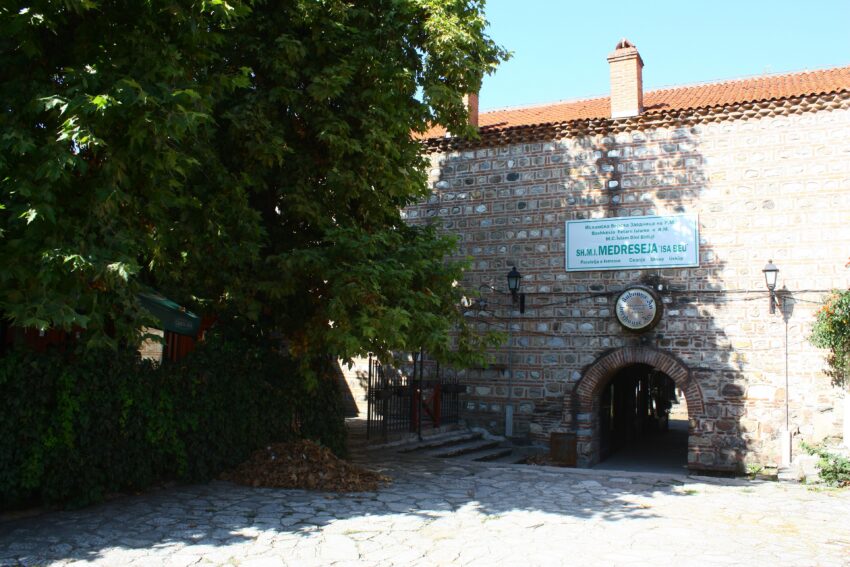
Kapan Han in Skopje’s Old Bazaar is a former caravanserai from the mid-15th century, built under Isa-Beg Isaković as part of his waqf. It was designed to support travelers and trade, with 44 rooms, two entrances, and space for horses on the east side. The name is linked to a weighing device used at the entrance, which fits its market-oriented role. Today, it is best understood as a compact historic building rather than a large museum, and part of it now serves as a restaurant. Visitors usually come for the architecture, the setting inside the bazaar, and a quick look at one of the city’s better-preserved Ottoman commercial structures.
Location: Grafishte, Shkupi 1000, North Macedonia | Hours: 24 Hours. | Price: Free. | Distance: 1km

8. Čifte Hammam
Čifte Hammam
Čifte Hammam
CC BY-SA 2.0 / Rašo.
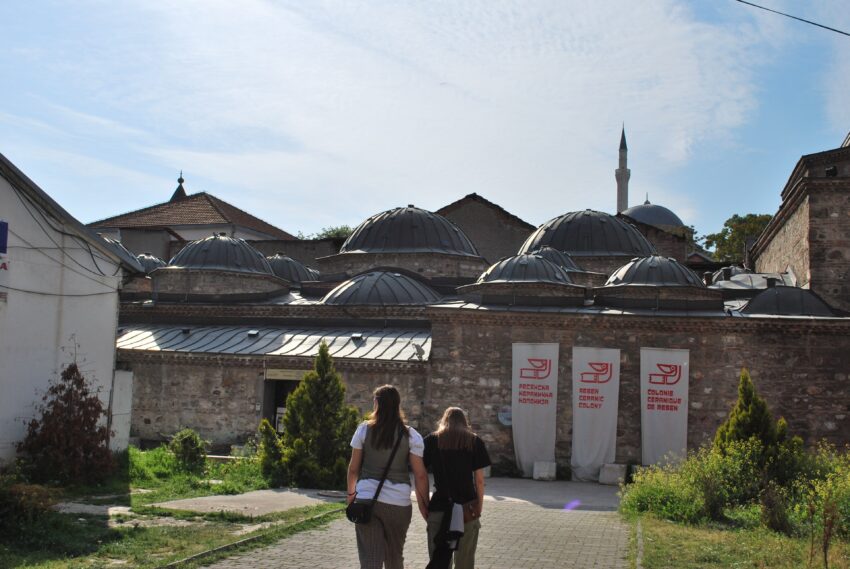
Čifte Hammam in Skopje is a mid-15th-century Ottoman bathhouse that now serves as an exhibition space within the National Gallery of North Macedonia. Built for Isa-Beg Ishaković, it was originally tied to the income of his charitable endowment and designed as a double hammam with separate male and female sections. Visitors notice the preserved bathhouse layout, including the divided rooms and the sense of scale inside the old structure. It is a good stop for travelers interested in Ottoman architecture, gallery spaces, and the Old Bazaar area, especially if they prefer a short cultural visit rather than a large museum visit.
Location: 2C2P+FW7, Arhiepiskop Angelarij, Skopje 1000, North Macedonia | Hours: Monday – Sunday: 10:00–18:00. | Price: Free. | Website | Distance: 1km

9. Mustafa Pasha Mosque
Mustafa Pasha Mosque
CC BY-SA 2.0 / aiva
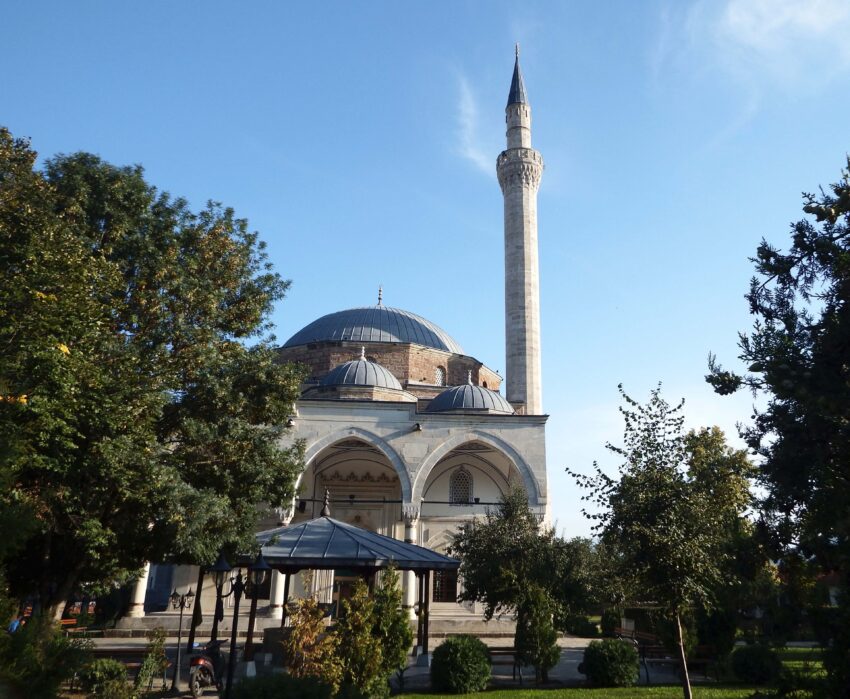
Mustafa Pasha Mosque is a preserved Ottoman-era mosque on a plateau above Skopje’s Old Bazaar. Built in 1492 by Çoban Mustafa Pasha, it has stayed largely intact, which gives the site a more original feel than many later-restored monuments. Visitors also notice the adjacent türbe, linked to Umi, the daughter of Mustafa Pasha, along with the rose garden that softens the setting. It suits travelers interested in historic architecture, religious heritage, and a brief stop that adds context to a walk through the old part of the city.
Location: MK MK, Fort Kale, Мустафа Пашина Џамија, Fort Kale 1000, Shkupi 1000, North Macedonia | Hours: 24 Hours. | Price: Free. | Distance: 1km

10. Suli An
Suli An
Suli An
CC BY-SA 2.0 / Darko Nikolovski
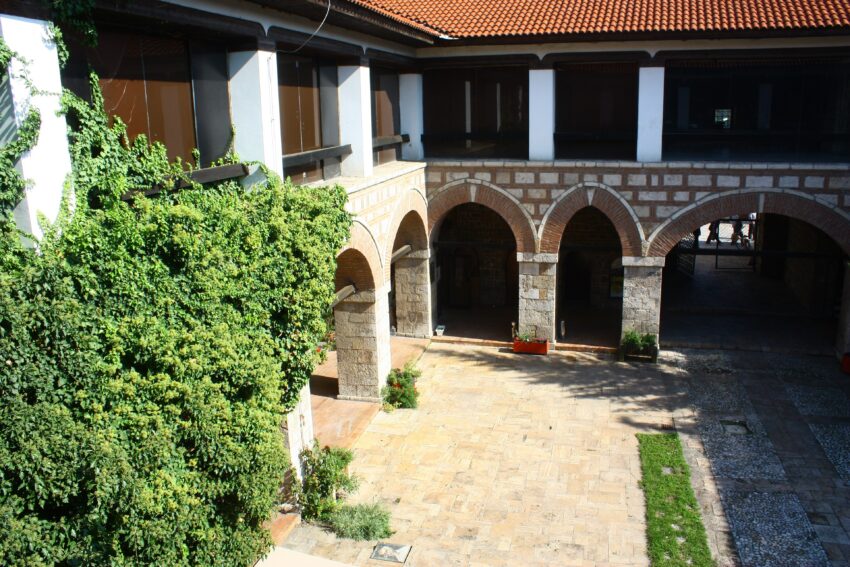
Suli An is a historic Ottoman han in Skopje’s Old Bazaar, now used as a museum and arts space. Built in the first half of the 15th century, it once served traders with storage on the ground floor and rooms above for overnight stays. The building was badly damaged by fire and later by the 1963 earthquake, then reconstructed in 1972. Today, visitors come for the thick stone walls, arches, and the sense of a commercial stop that was adapted for modern cultural use.
Location: 2C2Q+J3X, Rruga e Bit Pazarit, Shkupi 1000, North Macedonia | Hours: 24 Hours. | Price: Free. | Distance: 1.1km

11. Old Bazaar
Old Bazaar
Old Bazaar
CC BY-SA 2.0 / xiquinhosilva
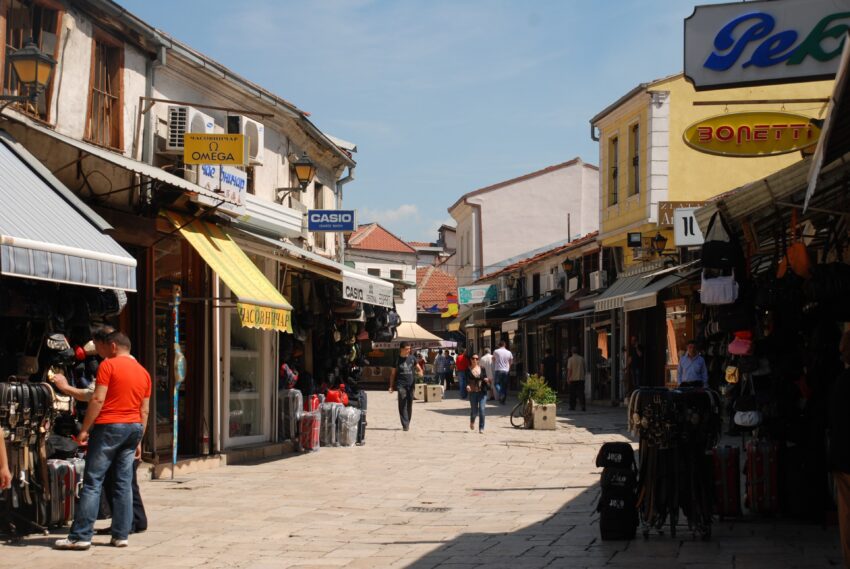
The Old Bazaar in Skopje sits across the Vardar River from the modern center and remains one of the city’s most distinctive historic districts. Its streets mix working market life with Ottoman-era mosques, caravanserais, hans, a clocktower, and a few newer additions from later rebuilding. The area’s long history includes repeated damage and reconstruction, which gives it a layered, uneven feel rather than a polished one. It suits visitors who want a compact but characterful stop with architecture, small museums, and a clear sense of how Skopje developed over time.
Location: MK, Shkupi 1000, North Macedonia | Hours: 24 Hours. | Price: Free. | Distance: 1.1km

12. Sultan Murad Mosque and The Clock Tower
Sultan Murad Mosque and The Clock Tower
CC BY-SA 3.0 / Ilievski Vladimir
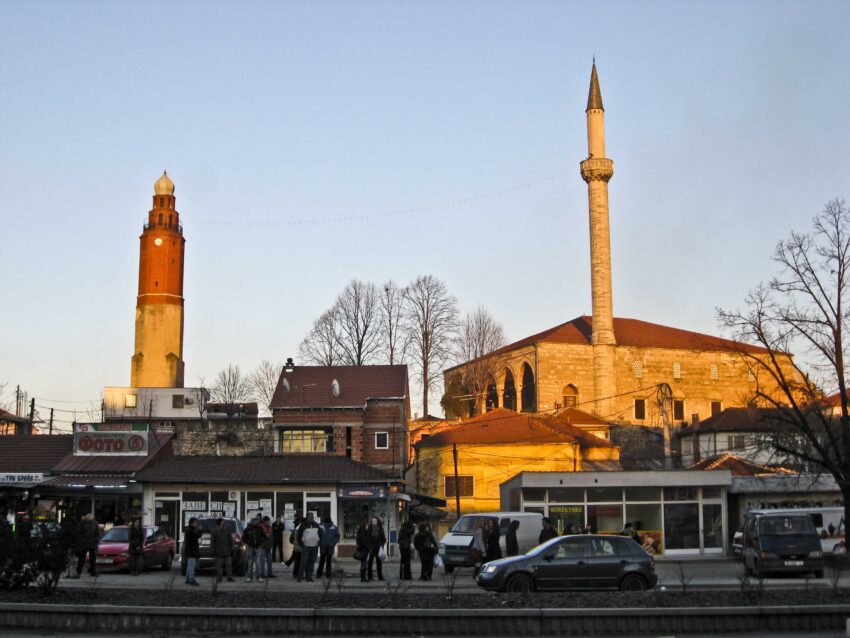
Sultan Murad Mosque and The Clock Tower form a compact historic complex in Skopje that reflects the city’s Ottoman-era layer. The mosque is known as one of the oldest in the Balkans and was commissioned in the 15th century, while the clock tower adds a separate landmark with its own long civic history. Visitors notice the brick-and-stone construction, the two türbes beside the mosque, and the tower rising from an older defensive base. It suits travelers who want a short cultural stop with architectural detail and a sense of how different periods of Skopje overlap in one place.
Location: 2C2R+JH6, Skopje 1000, North Macedonia | Hours: 24 Hours. | Price: Free. | Distance: 1.4km

Best Day Trips from Skopje

A day trip from Skopje offers the perfect opportunity to escape the urban rhythm and discover the surrounding region's charm. Whether you're drawn to scenic countryside, historic villages, or cultural landmarks, the area around Skopje provides a variety of easy-to-reach destinations ideal for a one-day itinerary.

1. Kukës
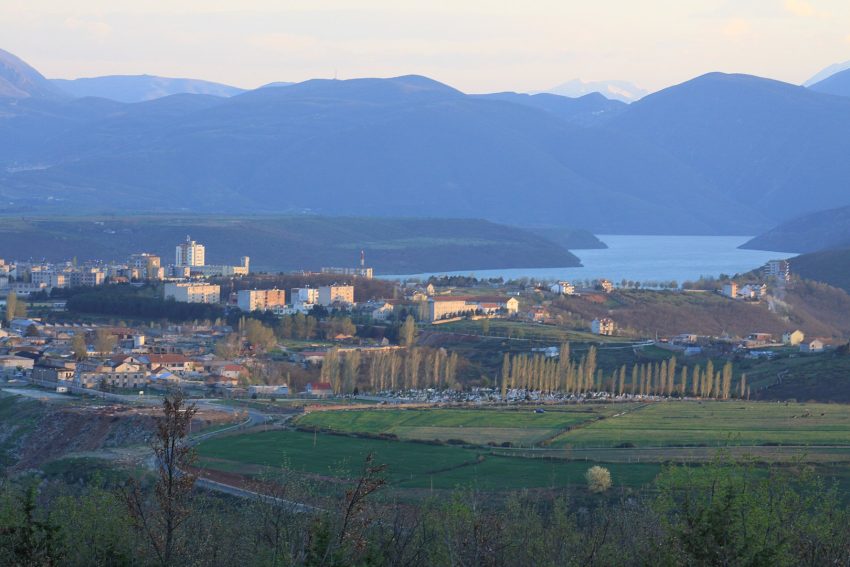
Bashki Kukesi Tirana
CC BY-SA 4.0 / Jonuz Kola
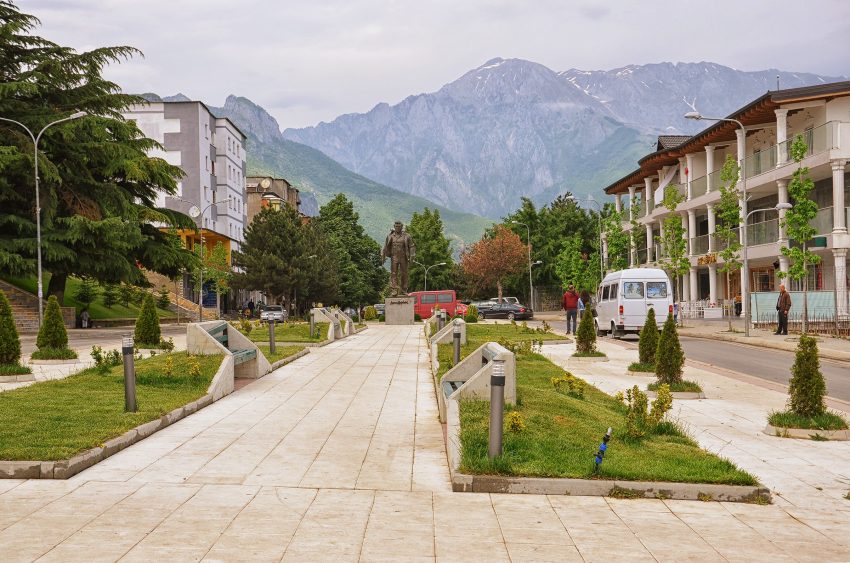
Kukës, a city nestled in the Highlands of Northeast Albania, is a destination rich in history, culture, and natural beauty. Known for its breathtaking landscapes, Kukës is surrounded by towering mountains, including the Albanian Alps and the Korab range, which provide a dramatic backdrop to the city. The Drin River flows through the region, adding to its picturesque charm. Kukës…
Visiting Kukës
Powered by GetYourGuide

2. Peshkopi

Peshkopia Albania
Peshkopia Albania
CC BY-SA 4.0 / Cave2596
Peshkopi is a charming town nestled in Northeast Albania, surrounded by stunning mountain landscapes. The town's location makes it an ideal base for outdoor enthusiasts looking to explore the Albanian Alps. Visitors can enjoy activities such as hiking, trekking, and birdwatching in the nearby mountains, which offer some of the most breathtaking views in the country. The serene environment, combined…
Visiting Peshkopi
Powered by GetYourGuide

3. Ohrid

The Complete Guide to Ohrid
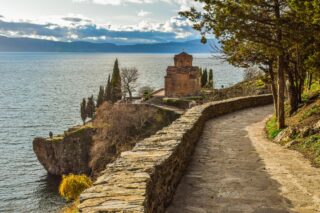
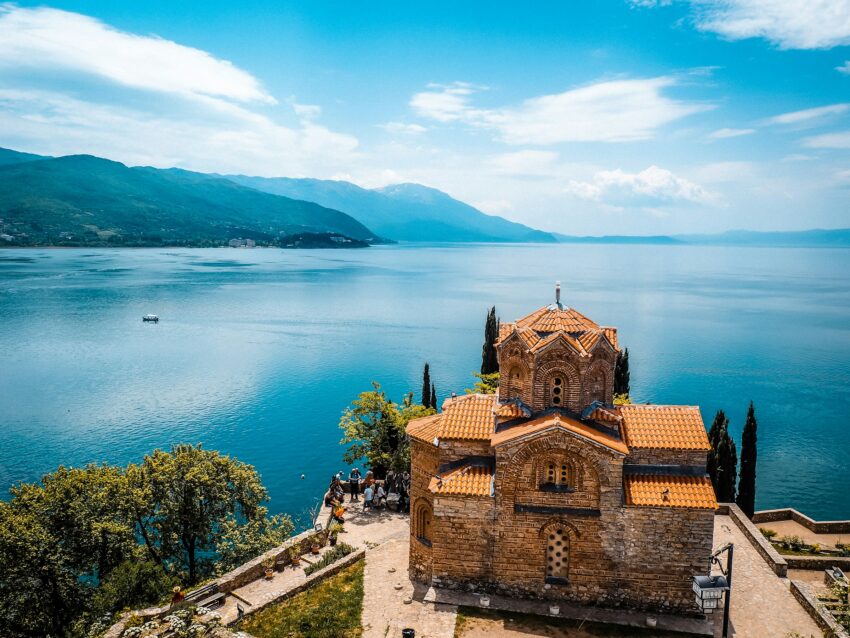
Ohrid sits on the northeastern shore of Lake Ohrid in southwestern North Macedonia, where steep cobbled lanes drop from a hilltop Old Town to a long lakeside promenade. The city feels both intimate and lively: fishermen’s boats bob beside café terraces, while church domes and stone houses peek out from cypress trees above. You come for the lake’s clear water,…
Visiting Ohrid

4. Bajram Curri

Bajram Curr Tropoje Albania
CC BY-SA 4.0 / Pasztilla aka Attila Terbócs
Bajram Curri is a charming town located in Northeast Albania nestled in the Albanian Alps. It offers visitors a peaceful retreat surrounded by breathtaking natural beauty. The town serves as a gateway to some of Albania's most stunning landscapes, including the rugged mountains, deep valleys, and pristine rivers. Outdoor enthusiasts will appreciate the ample hiking opportunities, as the surrounding area…
Visiting Bajram Curri
Powered by GetYourGuide

5. Burrel

Burrel Square albania 1
CC BY-SA 4.0 / Albinfo
Burrel, nestled in the middle of  Central Albania, it offers visitors a unique blend of natural beauty, historical significance, and authentic Albanian charm. Set amidst majestic mountains and lush green valleys, Burrel boasts stunning scenery that appeals to nature lovers and outdoor enthusiasts. The town is surrounded by picturesque landscapes, offering ample opportunities for hiking, birdwatching, and exploring the pristine…
Visiting Burrel

6. Pukë

Qyteti i Pukes
Qyteti i Pukes
CC BY-SA 4.0 / Jonuz Kola
Pukë is a charming town nestled in Northeast Albania in the foothills of the Albanian Alps, offering visitors a serene retreat surrounded by breathtaking natural beauty. The town is set amidst lush green valleys, rivers, and dramatic mountain landscapes, making it an ideal destination for nature lovers. Visitors can enjoy activities like hiking, birdwatching, and exploring the nearby lakes, which…
Visiting Pukë

7. Librazhd

Librazhd Town
Librazhd Town
CC BY-SA 3.0 / James Frankcom
Librazhd is a picturesque town nestled in Southeast Albania, offering visitors a tranquil retreat amidst stunning natural landscapes. Surrounded by the majestic Shebenik Mountains and the Shebenik-Jabllanica National Park, the area is a haven for outdoor enthusiasts. Hiking trails, pristine lakes, and diverse flora and fauna make it an ideal destination for nature lovers seeking adventure and serenity. The town…
Visiting Librazhd

8. Rrëshen (Mirditë)

1280px Rreshen from distance
CC BY-SA 1.0 / Albinfo
Rrëshen, nestled in Northwest Albania, offers a unique blend of cultural heritage, scenic beauty, and authentic Albanian experiences. Surrounded by rolling hills, lush valleys, and majestic mountains, Rrëshen is a haven for nature lovers. The nearby Drin River adds to the scenic charm, offering opportunities for leisurely walks along its banks or adventurous rafting trips. Boasting a rich history dating…
Visiting Rrëshen (Mirditë)
Powered by GetYourGuide

9. Pogradec

View Pogradec, Albania
CC BY-SA 4.0 / Pasztilla aka Attila Terbócs
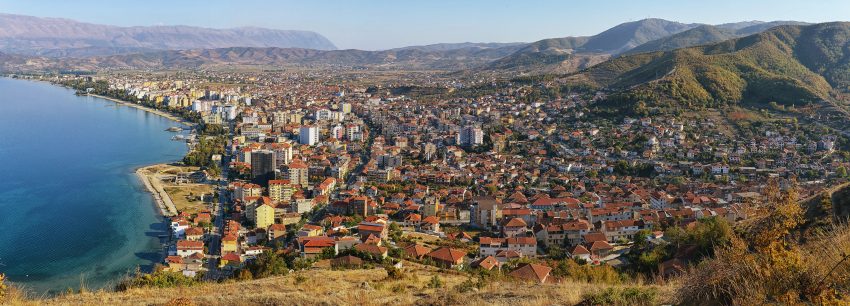
Pogradec is a town on the shores of Lake Ohrid in Southeast Albania. The lake, which is one of the oldest and deepest in Europe at 300 meters, dominates the town’s landscape and atmosphere. On the south and west sides, Pogradec is surrounded by hills, while the northern and eastern sides are bordered by the shimmering lake. Across the water…
Visiting Pogradec
Powered by GetYourGuide

10. Theth

Theth
Theth
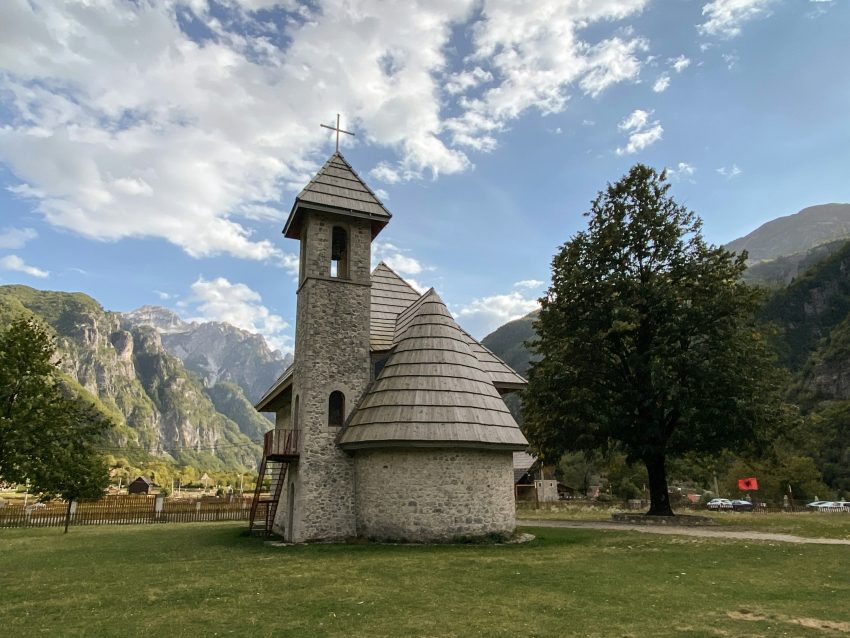
Visiting Theth is like stepping into a hidden world of breathtaking alpine beauty and traditional mountain life. Tucked deep within the Albanian Alps, Theth is surrounded by towering peaks, dense forests, and crystal-clear rivers. The journey to get there, whether via the winding road from Shkodër or through hiking routes, is part of the adventure, offering dramatic views at every…
Visiting Theth
Powered by GetYourGuide

11. Porta Macedonia

Porta Makedonija, Skopje on a sunny day
Porta Makedonija, Skopje
CC BY-SA 2.0 / Rašo.
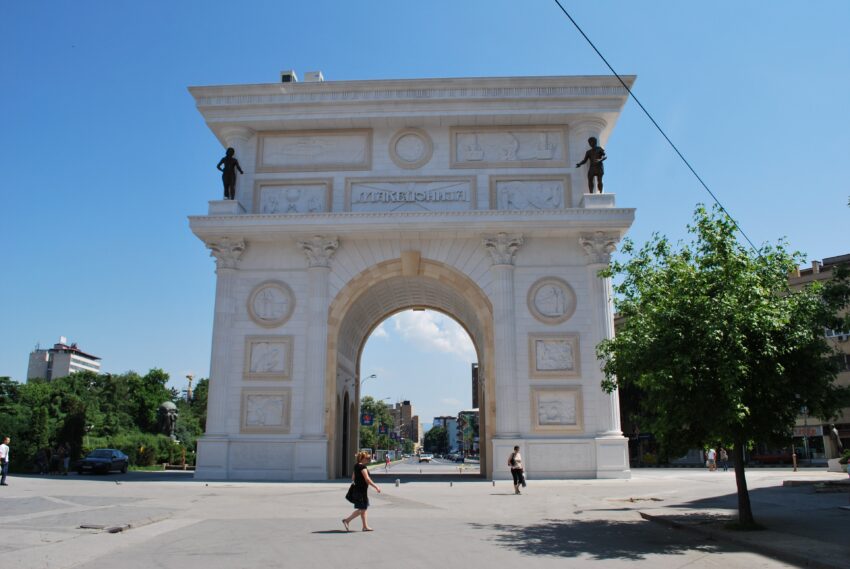
Porta Macedonia is one of the most recognisable modern landmarks in central Skopje, standing close to Macedonia Square and the main pedestrian route through the city centre. Built as a triumphal arch, it is hard to miss: a tall, pale stone gateway decorated with reliefs that refer to episodes, figures and symbols from Macedonian history. It is not an ancient…
| Hours: The exterior can be viewed at any time. | Price: Free to view from outside | Distance: 5139.9km
Visiting Porta Macedonia

Where to Stay in Skopje

For first-time visitors who want to walk everywhere, stay near Macedonia Square and the riverfront so you can cross easily between the modern center and the Old Bazaar. This area is convenient for museums, restaurants, and evening strolls, and it’s the simplest base if you have only one or two nights. A central, full-service option with reliable amenities is Skopje Marriott Hotel. If you prefer a quieter sleep, ask for a room away from the main square-facing sides.

If you’re coming for food, nightlife, and a more local neighborhood feel, Debar Maalo is a strong choice with leafy streets and a dense cluster of cafés and grills. It’s still walkable to the center, but you’ll feel removed from the busiest monument zones, especially in the evenings. A well-known base here is Hotel City Park, which suits travelers who value a calmer setting near parks and embassies. This neighborhood works well for couples and repeat visitors who want to settle into Skopje’s daily rhythm.

For atmosphere and quick access to Ottoman-era lanes, consider staying on the edge of the Old Bazaar rather than deep inside it. You’ll be close to early-morning bakery runs and late dinners, while keeping easier taxi access and a shorter walk to the river crossings. A boutique-style option that fits this location is Hotel Arka. Choose this area if you like character and don’t mind a bit of nighttime buzz on weekends.

Business travelers or those arriving by car often prefer areas with simpler parking and faster exits to the highway toward Matka or other day trips. In these zones, you trade some walkability for convenience, larger rooms, and easier logistics for early departures. A practical choice with a more corporate feel is DoubleTree by Hilton Skopje. It’s a good fit if your trip mixes meetings with sightseeing and you plan to use taxis for the center.

Using the our Hotel and Accomodation map, you can compare hotels and short-term rental accommodations in Skopje. Simply insert your travel dates and group size, and you’ll see the best deals for your stay.

Skopje Accommodation Map

How to get to Skopje

Getting to Skopje by air

Nearest airports: Skopje International Airport (SKP) is the main gateway, located southeast of the city. From the airport, you can reach the center by taxi or prebooked transfer; confirm the price before departing and keep small cash handy. Buses and shuttles operate on some schedules, but late-night arrivals are often easiest by taxi. If you are connecting from the region, check seasonal routes as frequencies can change.

Getting to Skopje by train

Skopje’s main station sits a short distance from the center and is connected by taxis and local buses. International and regional services vary by season and infrastructure works, so it’s smart to verify timetables close to your travel date. For planning and tickets, start with MŽ Transport (Macedonian Railways) and cross-check with the operator in the country you’re departing from. Train travel can be slower than buses on some routes, but it’s a scenic way to approach the Vardar valley.

Getting to Skopje by Car

Driving to Skopje is straightforward via the main north–south corridor through the Vardar valley, with highways linking toward Serbia and Greece. Expect heavier traffic at peak hours around the center and bridges, and be prepared for assertive local driving habits. Parking is easiest in paid garages or designated street zones rather than trying to squeeze into the bazaar area. If you’re continuing to Matka or Vodno, a car adds flexibility, but you’ll still want to walk once you’re in the core.

Travelling around Skopje

Skopje is highly walkable around the river, the Stone Bridge, Macedonia Square, and the Old Bazaar, and most highlights are within a compact radius. Taxis are inexpensive by European standards; ask for the meter or agree a fare before getting in, especially at night. Public buses cover the city well for longer hops, though routes can be confusing for first-timers without a local app or help from your accommodation. For day trips like Matka Canyon, you can use local buses, taxis, or organized tours depending on how much time you want to save.

More from this area