Self-Guided Walking Tour of Ohrid
This website uses affiliate links which earn a small commission at no additional cost to you.
Ohrid is a lakeside city of stone lanes, red-roofed houses, old churches and wide views across one of Europe’s most atmospheric lakes. Its historic centre rises from the waterfront into a compact Old Town where cafés, small squares and traditional houses sit close to Byzantine churches, Ottoman-era streets and the remains of ancient and medieval fortifications.
The city’s history gives the walk much of its character. Known in antiquity as Lychnidos, Ohrid later became an important religious and cultural centre, especially during the medieval period when churches, monasteries and scholarship shaped its identity. Today, that layered past can still be seen in places such as the Ancient Theatre, Church of St. Sophia, Plaošnik, King Samoil’s Fortress and the Church of St. John at Kaneo.
How to Get to Ohrid
By Air: Ohrid is served by Ohrid St. Paul the Apostle Airport, which has seasonal and scheduled flight links that vary through the year. Direct routes change by season, so it is worth checking flights before planning around a specific airport connection. If there is no convenient direct service, many travellers fly into Skopje and continue to Ohrid by road. For the best deals and a seamless booking experience, check out these flights to Ohrid on Booking.com.
By Train: Ohrid does not have a direct passenger railway station, so train travel is not usually the simplest way to arrive. The nearest practical rail options are elsewhere in North Macedonia, with onward travel by bus or car needed to reach Ohrid. For most visitors, especially those coming from Skopje, the bus is normally more straightforward than combining rail and road. Train schedules and bookings can be found on Omio.
By Car: Driving to Ohrid gives you the most flexibility, especially if you want to combine the city with Lake Ohrid viewpoints, Struga, the Bay of Bones, Galičica National Park or the Monastery of Saint Naum. Parking is more limited in and around the Old Town, so it is usually better to leave the car near your accommodation or in a designated parking area, then explore the historic centre on foot.
By Bus: Buses are one of the most practical ways to reach Ohrid from Skopje, with regular services usually operating between the capital and the lake. Journey times are commonly around three hours or a little more, depending on the service, road conditions and season. If you are already in the Balkans and plan to bus to Ohrid, here is a list of cities with buses that go directly to Ohrid:
- From Macedonia: Skopje, Bitola, Kičevo, Struga, Prilep, Veles, Tetovo
- From Albania: Tirana, Durres, Elbasan
- From Greece: Thessaloniki
- From Kosovo: Pristina
How to get around the city: Ohrid’s historic core is best explored on foot. The Old Town has narrow streets, steps, slopes and pedestrian-friendly lanes, while the waterfront is easy to follow at a slower pace. Taxis are useful for reaching the bus station, airport, outlying hotels or lake attractions, but the main sights on this route are close enough together that walking is the most rewarding option.
A Short History of Ohrid
Ancient Ohrid and the City of Lychnidos
Ohrid’s early history is tied to the ancient city of Lychnidos, a settlement that developed into an important centre long before the medieval churches and fortress walls that now dominate the visitor experience. The Ancient Theatre of Ohrid is the clearest surviving reminder of this older urban world, with its stone seating and hillside setting showing how public life, performance and civic identity were already part of the city’s character in antiquity.
The theatre is usually dated to the Hellenistic period, and later Roman influence reshaped the region’s urban and cultural life. Although much of ancient Ohrid is hidden beneath later layers, the survival of the theatre gives the city a rare point of contact with its pre-Christian past. It also helps explain why Ohrid feels more layered than many small historic towns: the medieval churches did not appear in isolation, but grew over a much older settlement.
This ancient foundation still affects how visitors experience Ohrid today. The climb through the Old Town passes from Ottoman-era streets to medieval churches and then to the theatre, making the city’s history feel compressed into a short distance. Rather than being separated into museum-style zones, Ohrid’s ancient and later monuments sit almost on top of each other.
Early Christian and Byzantine Ohrid
Ohrid became especially important during the Christian and Byzantine periods, when churches, monasteries and religious art shaped the city’s identity. Its exceptional collection of churches, frescoes and icons made it one of the most important spiritual centres in the wider region.
Plaošnik is central to this story. Associated with Saint Clement of Ohrid, it became one of the great religious and scholarly sites of the region, and the reconstructed Church of Saints Clement and Panteleimon now stands above an archaeological area where early Christian and medieval remains overlap. This is one of the places where Ohrid’s role as a spiritual and educational centre is easiest to understand.
The Church of St. Sophia is another major landmark from this period. Its architecture and frescoes reflect Ohrid’s status as an ecclesiastical centre, while the city’s many smaller churches show how deeply religious life shaped its streets and skyline. The Church of St. John at Kaneo, set dramatically above the lake, later became one of Ohrid’s defining images, linking sacred architecture with the landscape itself.
Medieval Ohrid and King Samoil’s Fortress
In the medieval period, Ohrid became closely associated with the First Bulgarian Empire and the rule of Tsar Samoil. King Samoil’s Fortress, with its long defensive walls and views over the city and lake, remains the most visible symbol of this era. The fortress did not simply protect the town; it also announced Ohrid’s political and strategic importance.
The city’s upper slopes were shaped by this defensive landscape. Gates, walls, churches and residential quarters developed around the fortified core, creating the layered Old Town that survives today. Moving between the fortress, Plaošnik and the Ancient Theatre gives a strong sense of how closely power, religion and urban life were connected.
For visitors, the fortress is more than a viewpoint. It helps explain why Ohrid grew as a hill town as well as a lake town. Its defensive position gave the city security, while the lake connected it to trade, travel and religious movement. That combination made Ohrid both protected and outward-looking.
Ottoman Ohrid and the Old Bazaar
Under Ottoman rule, Ohrid’s urban life continued to evolve. Mosques, bazaars, workshops and domestic architecture added new layers to the city, especially around the lower town and commercial streets. The Old Bazaar area, Ali Pasha Mosque and traditional lanes show how Ohrid remained an active town rather than becoming only a preserved religious centre.
This period also shaped the everyday rhythm of Ohrid. Streets used for trade, small workshops and local markets linked the waterfront with the residential quarters above. The National Workshop for Handmade Paper reflects this craft tradition in a modern visitor-friendly form, showing how older skills and local production still form part of the city’s identity.
Ottoman Ohrid did not erase the earlier Christian city. Instead, it added another layer beside it. That is why the route through Ohrid can move from mosque to bazaar, from church to fortress, and from lakefront promenade to archaeological site in a relatively short distance.
Modern Ohrid and Its UNESCO Heritage
In the modern period, Ohrid became increasingly valued for both its cultural heritage and its natural setting. The city’s churches, icons, archaeological remains, traditional houses and lakefront views helped establish it as one of the most important heritage destinations in the Balkans.
Tourism has made Ohrid more accessible, but it has also increased pressure on the lake and historic environment. Development, traffic, pollution and the need to protect the region’s historic character remain important issues for the future of the city and lake.
For travellers, this makes responsible visiting important. Staying in the centre, walking between sights, using local businesses and avoiding unnecessary car journeys around the Old Town all help keep the visit low-impact. Ohrid’s appeal lies in the fact that its history, lake and townscape still work together, and that balance is what makes the city so memorable.
Where to Stay in Ohrid
To make the most of visiting Ohrid and this walking tour, you should consider staying overnight in or close to the centre, especially if you want to start early, enjoy the Old Town before the busiest part of the day and return to the lakefront in the evening. The most atmospheric base is the Old Town, particularly around Varosh and the streets near St. Sophia, where places such as Villa Varosh and Villa Sofija put you close to churches, viewpoints, the Ancient Theatre and the upper part of the route.
If you prefer easier access to restaurants, flatter evening strolls and lakefront views, the waterfront and central promenade area are a good choice. Staying here keeps you close to the harbour, main square and lakeside cafés, while still allowing you to walk up into the Old Town when you are ready. Options in this area include Hotel Tino Ohrid and Villa St. Sofija, both useful for travellers who want central access without being too far from the water.
For a slightly quieter stay with more space, the area south-east of the busiest centre can work well, especially if you are combining the walking route with lake time, parking or a more relaxed hotel stay. Unique Resort & Spa is a practical option in this part of the city, with easier road access than the tightest Old Town streets while still being close enough to reach the centre on foot or by short taxi ride.
Your Self-Guided Walking Tour of Ohrid
Discover Ohrid on foot with our walking tour map guiding you between each stop as you explore its lakefront, Old Town lanes, ancient theatre, historic churches, archaeological sites and fortress views. As this is a self-guided walking tour, you are free to skip places, change the order, linger at viewpoints and take coffee stops whenever you want.
1. Ohrid Main Square
Ohrid Main Square is the natural meeting point of the old town, shaped by centuries of trade, civic life, and lakefront commerce. The space has long functioned as a public stage where local markets, announcements, and everyday social life played out under the influence of Byzantines, medieval rulers, and the Ottoman period. Its modern layout reflects a town that has continuously adapted while keeping its historic core walkable and human-scaled.
Architecturally, the square is less about one monument and more about the ensemble: traditional façades, small shops, cafés, and the steady flow between the upper town and the lakeside. It is typically where visitors first sense Ohrid’s layered identity, with old stonework and newer storefronts sitting side by side. The square also acts as a practical orientation point before heading to nearby churches, the bazaar area, or the lake promenade.
What to see is largely in the details and the atmosphere. A slow circuit reveals street-level textures: carved stone thresholds, small courtyards glimpsed through gates, and views that open toward the lake as streets dip downhill. It is also one of the best places to time a visit for changing light, when the surrounding buildings and the hills above the town start to glow.
Location: St. Clement of Ohrid, St Clement of Ohrid, Ohrid 6000, North Macedonia | Hours: 24 Hours. | Price: Free.

2. Ali Pasha Mosque
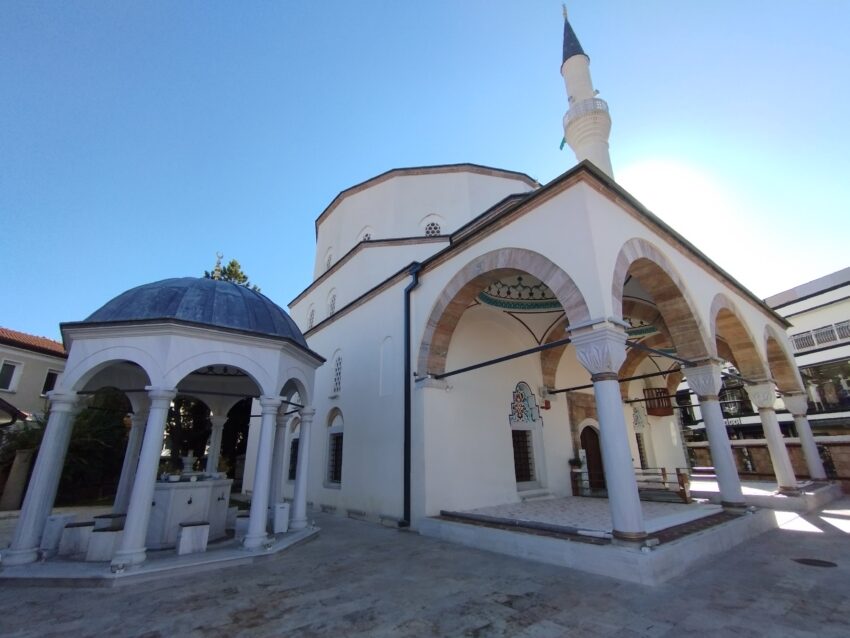
Ali Pasha Mosque is a reminder of Ohrid’s Ottoman-era urban fabric, when mosques, baths, and bazaars anchored neighbourhood life. While Ohrid is widely associated with early Christianity and medieval churches, the Ottoman centuries left an equally real imprint on the town’s skyline and street plan. Mosques like this were typically placed to serve both worship and community functions, with surrounding lanes supporting small-scale trade.
The building’s presence is often felt through its proportions and position rather than lavish ornament. Ottoman religious architecture tends to communicate calm authority: simple geometric massing, a prayer hall oriented toward Mecca, and the vertical emphasis of a minaret. Even when interiors are restrained, the structure still signals the multicultural history of the town and the daily rhythms that once centred here.
When visiting, the main focus is the exterior context and how it sits within the surrounding streets. Look for the relationship between the mosque, nearby houses, and the flow of foot traffic, which often preserves older patterns of movement. If access is possible, quiet observation of the prayer space and its light is the most meaningful “sight,” more than any single decorative feature.
Location: 4R82+55X, St Clement of Ohrid, Ohrid 6000, North Macedonia | Hours: 24 Hours. | Price: Free.
3. Old Bazaar Street
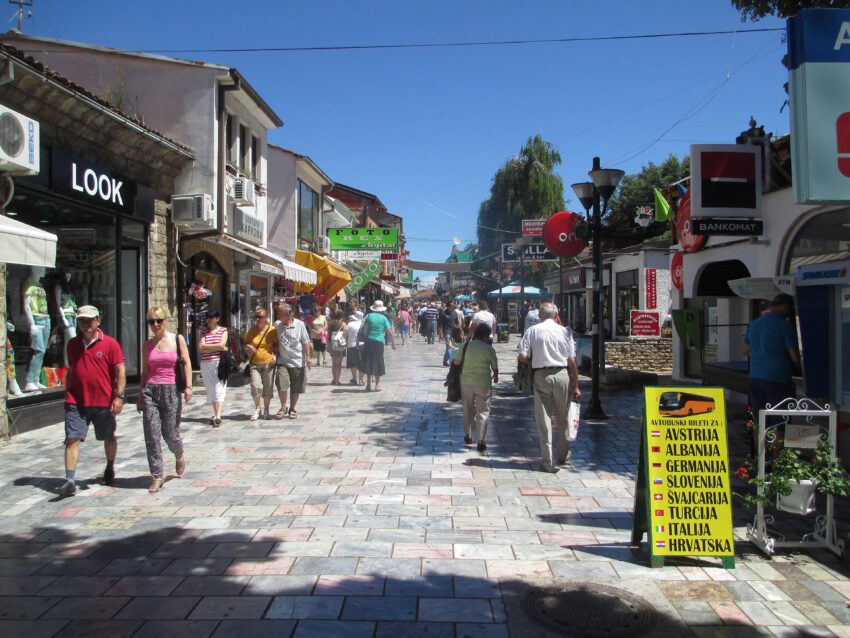
Old Bazaar Street reflects Ohrid’s long-standing role as a local commercial hub, especially during the Ottoman centuries when bazaar districts organised craft guilds and everyday retail. The bazaar tradition is about function first: narrow lanes that stay cooler in summer, shopfronts designed for quick transactions, and a density that encourages browsing. Over time, individual businesses changed, but the street logic of trade remained.
Historically, streets like this were where skilled makers worked within a recognisable ecosystem of workshops, suppliers, and customers. Textiles, metalwork, leather goods, and household items would have been common staples, with social life unfolding alongside commerce. Even today, the mix of small premises and informal street life carries that older bazaar energy.
What to see here is the survival of scale. Notice the tight frontage widths, the way doors and windows are arranged for display, and the occasional older stone or timber elements embedded in later renovations. The street is also valuable as a connector, linking the town’s major sights to the lake-facing areas through an environment that feels lived-in rather than museum-like.
Location: 4Q7X+FV9, St Clement of Ohrid, Ohrid 6000, North Macedonia | Hours: 24 Hours. | Price: Free.
4. St. Clement Monument
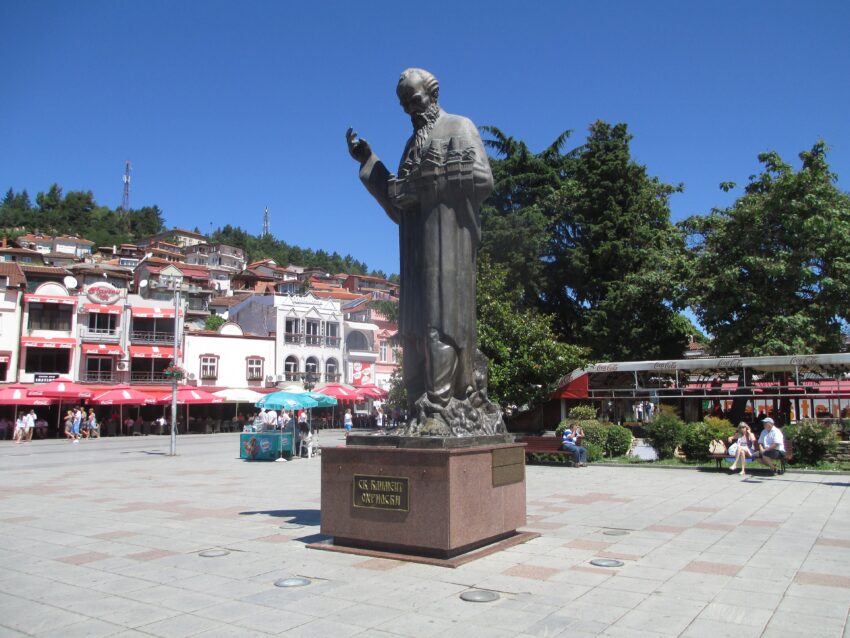
The St. Clement Monument honours Saint Clement of Ohrid, a pivotal figure in the cultural and religious history of the region. Clement is associated with the spread of Christian learning and the nurturing of Slavic literacy traditions tied to the work of Saints Cyril and Methodius and their disciples. In Ohrid’s historical memory, he represents education, faith, and the idea of Ohrid as a centre of scholarship.
Monuments like this are less about ancient authenticity and more about modern commemoration. They signal how a city chooses to represent its past in public space, turning historical legacy into a visible civic identity. The presence of the monument reflects a broader narrative: Ohrid as a place where religion, language, and education intersected over centuries.
When visiting, look at how the monument is positioned in relation to movement and gathering, because that placement is part of its meaning. The sculpture and inscription details usually carry the message: teaching, blessing, or guidance motifs are common in depictions of Clement. It is also a useful stop for understanding why nearby church sites and archaeological areas carry such weight in Ohrid’s story.
Location: 4Q7X+3RF, Ohrid, North Macedonia | Hours: 24 Hours. | Price: Free.
5. Church of St. Sophia
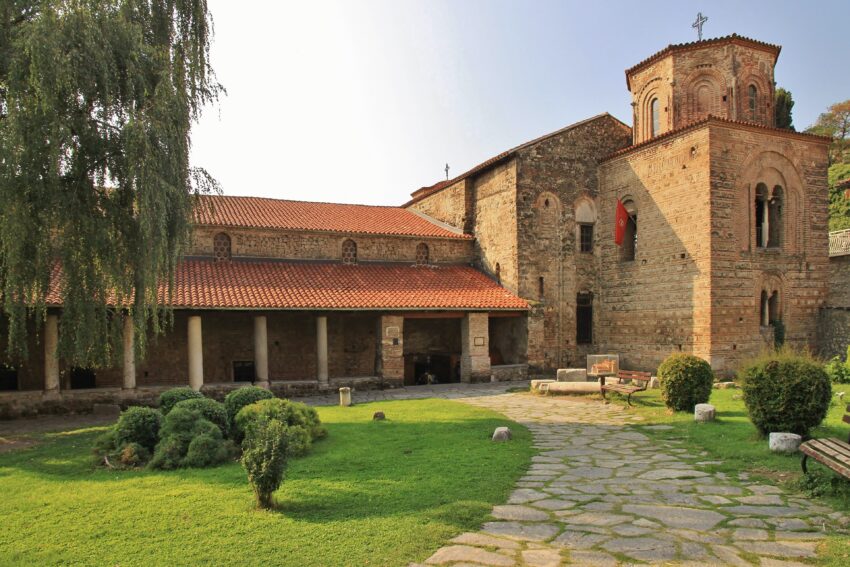
The Church of St. Sophia is one of Ohrid’s most historically significant churches, associated with the medieval period when the town was a major religious centre. Its importance is closely tied to its surviving frescoes, which are valued for their artistic and theological themes and for what they reveal about Orthodox visual culture. The building’s history reflects shifts in patronage and power, including periods when sacred spaces across the region were repurposed under changing rule.
Architecturally, it has the gravitas of a major ecclesiastical building rather than a small chapel. The interior volume and wall surfaces were designed to carry imagery and ritual, with fresco programmes structured to guide the eye and reinforce doctrine. Even without deep specialist knowledge, the sense of continuity—stone, paint, light, and silence—comes through immediately.
What to see is primarily inside: the fresco layers, the faces and colour tones, and the way the artwork sits within the architecture. Spend time noticing how figures are arranged in registers and how scenes are positioned to match liturgical space. Outside, the church’s setting within the old town makes it a strong reference point for understanding how Ohrid’s medieval core developed around major religious institutions.
Location: Цар Самоил 88, Ohrid 6000, North Macedonia | Hours: 24 Hours. | Price: Free; donations appreciated.
6. Ancient Theatre of Ohrid

The Ancient Theatre of Ohrid dates to the Hellenistic era and reflects the spread of Greek-style urban culture through the region. The theatre’s form—tiered seating carved into a hillside—was designed for acoustics and visibility, making performance a shared civic experience. Later centuries brought different uses and attitudes toward such sites, as political and religious contexts shifted.
Archaeologically, theatres often reveal multiple phases: construction, modification, and periods of neglect or reuse. In Ohrid, the surviving structure shows how public entertainment and civic gatherings were built into the landscape. The site also helps ground the town’s story beyond the medieval period, pointing to much older layers beneath the better-known churches.
What to see is the geometry and the setting. Walk the seating lines to understand the scale, then look outward to appreciate how the hillside was selected to carry sound and frame the audience’s view. If the stage area is accessible, it is worth standing there briefly to sense how the space “reads” from performer to crowd.
Location: Ilindenska, Ohrid 6000, North Macedonia | Hours: 24 Hours. | Price: Free.
7. King Samoil Fortress
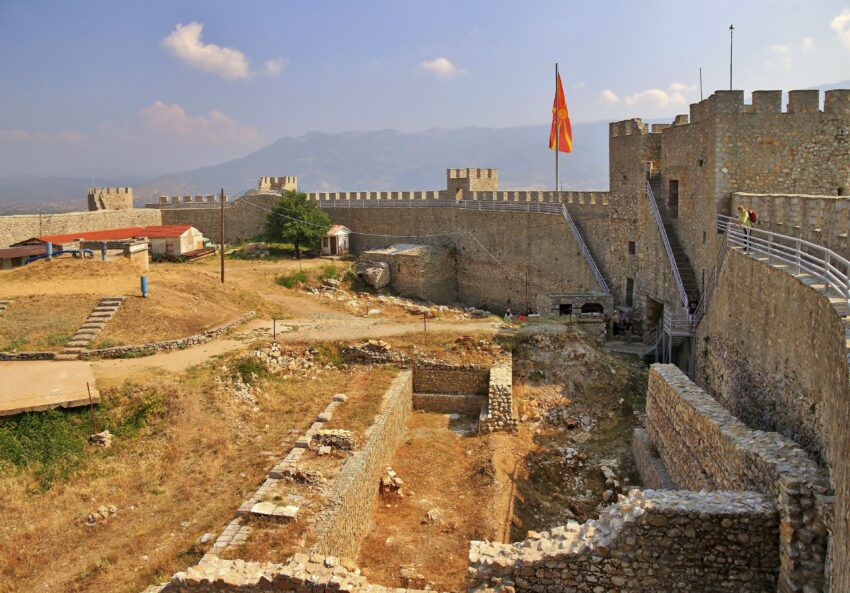
King Samoil Fortress dominates Ohrid’s upper town and is tied to the medieval era when the region was contested by powerful neighbours and local rulers. The fortifications are associated with Tsar Samuil’s period, when strategic strongholds mattered for controlling routes, lakeside access, and regional authority. Like many forts, what survives today reflects rebuilding and reinforcement across different centuries, not a single frozen moment.
The fortress is primarily a military landscape: walls, towers, and lookout points designed for defence and surveillance. Its position explains its purpose immediately, because the view controls approaches by land and water. The structure also frames Ohrid’s medieval identity, placing the better-known religious sites within a broader picture of governance and security.
What to see is the panoramic logic of the place. Walk along accessible wall sections and look for how the fort follows the ridge, using steep slopes as natural protection. The main reward is the viewpoint over Lake Ohrid and the old town rooftops, which makes the relationship between geography and history easy to grasp.
Location: 4Q7R+XCW, Kuzman Kapidan, Ohrid 6000, North Macedonia | Hours: 24 Hours. | Price: Free.
8. Plaošnik Archaeological Site
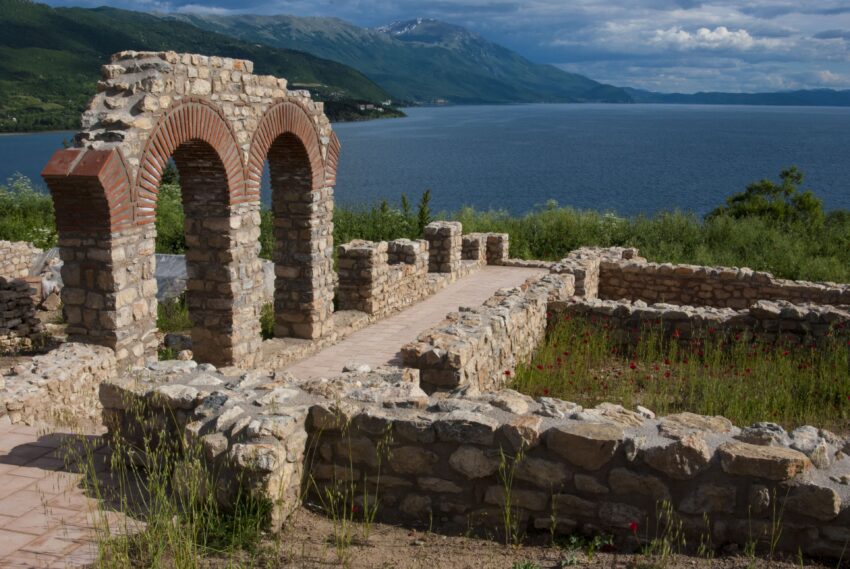
Plaošnik is one of Ohrid’s key archaeological zones, where early Christian history, medieval scholarship, and modern reconstruction converge. The site is closely associated with Saint Clement and with the idea of Ohrid as a centre of learning and church life. Excavations have revealed remains from different periods, showing a long continuum of sacred and communal use rather than a single-era snapshot.
What makes Plaošnik compelling is the density of layers: foundations, walls, and fragments that point to earlier buildings beneath later ones. It illustrates how religious sites were often rebuilt in place, with new structures drawing legitimacy from older sacred ground. The site therefore functions both as archaeology and as a statement about continuity in local identity.
What to see is the site plan and the evidence of successive phases. Pay attention to changes in masonry styles and how footprints of older structures are preserved or marked. The setting also rewards lingering, because the open-air layout helps visitors understand how major ecclesiastical complexes related to the surrounding town and landscape.
Location: 4Q7R+483, Kaneo Plaosnik Pateka, Ohrid 6000, North Macedonia | Hours: 24 Hours. | Price: Free.
9. Church of St. John at Kaneo
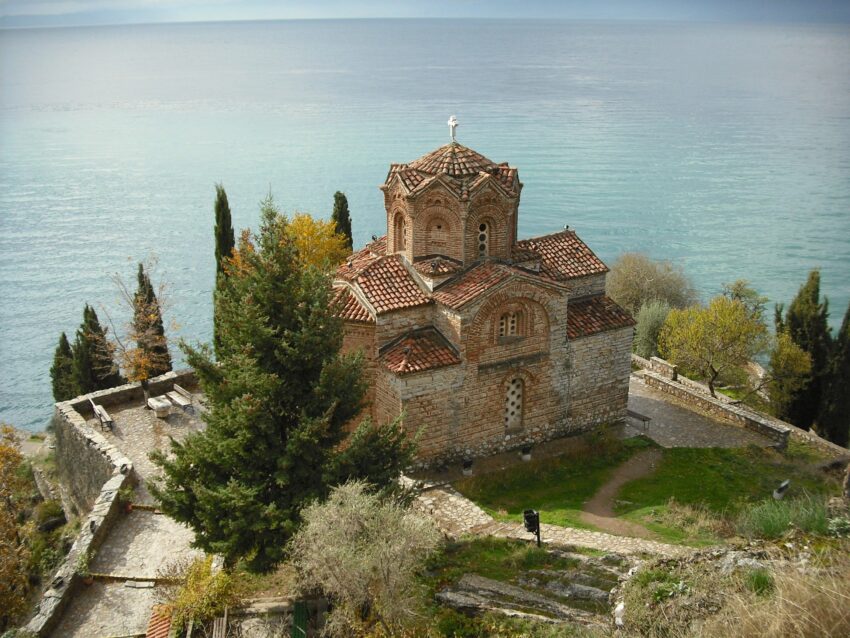
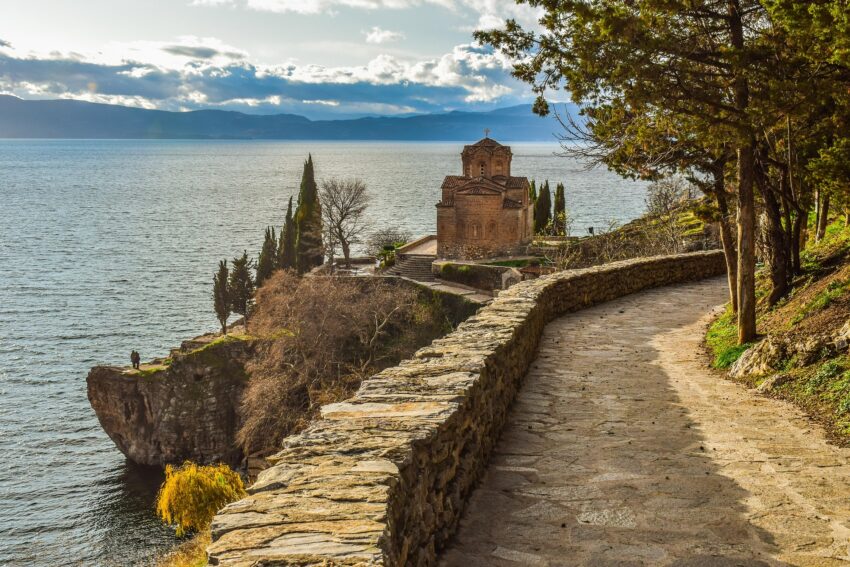
The Church of St. John at Kaneo is iconic for its cliffside position above Lake Ohrid, combining medieval architecture with a dramatic natural setting. The church is typically dated to the medieval period, and its enduring fame comes as much from the silhouette and location as from scale. It represents how sacred spaces were often placed to command views, cultivate contemplation, and anchor communities to the landscape.
Architecturally, it is compact, with a form that reads cleanly against the sky and water. The building’s materials and proportions reflect regional Orthodox church design, adapted to a tight site. Even when interiors are modest, the combination of stonework, light, and quiet makes the place feel deliberate and self-contained.
What to see is the approach and the viewpoint. The best experience is taking time to look back at the church from a slightly lower angle, where cliff, lake, and structure align into a single composition. Once at the church, the primary “sight” is the relationship between architecture and lake horizon, which explains why this small building has become one of Ohrid’s defining images.
Location: 4Q6Q+CGJ, Kocho Racin, Ohrid 6000, North Macedonia | Hours: 24 Hours. | Price: Free; donations appreciated.

Moira & Andy
Hey! We're Moira & Andy. From hiking the Camino to trips around Europe in Bert our campervan — we've been traveling together since retirement in 2020!
This website uses affiliate links which earn a small commission at no additional cost to you.
Walking Tour Summary
Distance: 3.5 km
Sites: 9