Carcassonne, France: The Ultimate Travel Guide 2026
Carcassonne
Carcassonne

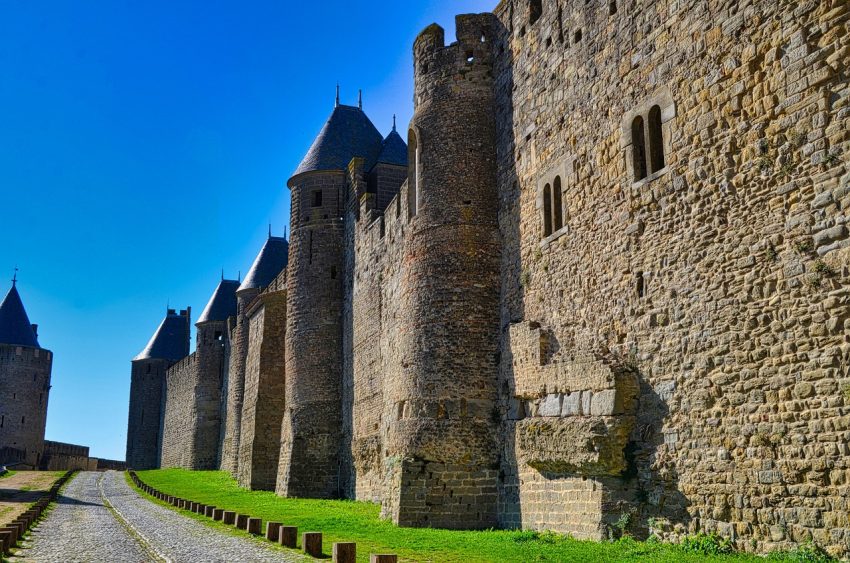
Visiting Carcassonne is like stepping into a fairy tale, with its impressive medieval fortress that dominates the skyline. The city is known for its well-preserved citadel, which provides a glimpse into the past with its stone walls, turrets, and narrow cobblestone streets. Walking through the streets of La Cité, the historic walled area, feels like wandering through a living museum, and the views of the surrounding countryside are spectacular.

The atmosphere in Carcassonne is charming, especially in the evening when the city is lit up, creating a magical ambiance. Aside from the citadel, visitors can explore its quaint shops, cafes, and the beautiful Basilica of Saint-Nazaire. Whether you're enjoying a leisurely boat ride along the Aude River or savoring the local gastronomy, Carcassonne offers plenty of activities to fill a few days of exploration in this picturesque southern French town.

History of Carcassonne

Ancient Origins of Carcassonne

Carcassonne’s history dates back to ancient times, with evidence of settlements in the area from the Neolithic period. The Romans established the town of Carcaso in the 2nd century BCE, marking the early foundation of the city. During this time, it was an important point for trade and communication, sitting at a strategic crossroads between different civilizations.

Medieval Carcassonne: The Rise of the Citadel

By the 12th century, Carcassonne began to emerge as a key fortification in the region, particularly during the Albigensian Crusade. The Counts of Carcassonne fortified the city, building the impressive double walls that are still a defining feature today. The fortifications helped Carcassonne withstand numerous sieges, including during the Cathar Crusade when the city was briefly under siege by the forces of the French crown.

Carcassonne Under French Rule

In 1258, Carcassonne became part of the French kingdom when it was annexed by King Louis IX after the Treaty of Paris. Under French rule, the city continued to be an important military and administrative center. Over time, however, the strategic importance of Carcassonne diminished, and much of the fortifications were abandoned or fell into disrepair.

Restoration of Carcassonne

In the 19th century, the city of Carcassonne underwent a major restoration under the direction of the architect Eugène Viollet-le-Duc, who sought to restore the medieval fortress to its former glory. The restoration, which began in the mid-1800s, was controversial, as Viollet-le-Duc added elements based on his own interpretations of medieval architecture. However, his work succeeded in preserving the fortress and earning Carcassonne recognition as one of France’s most iconic medieval landmarks.

Modern Carcassonne

Today, Carcassonne is a UNESCO World Heritage site, known for its impressive fortified city and well-preserved medieval structures. It remains a popular tourist destination, attracting visitors from all over the world who come to explore its rich history and stunning architecture. While its military significance has faded, Carcassonne’s role as a cultural and historical treasure continues to endure.

Moira & Andy
Moira & Andy

Hey! We're Moira & Andy. From hiking the Camino to trips around Europe in Bert our campervan — we've been traveling together since retirement in 2020!

Read our full story here

Visiting Carcassonne for the first time and wondering what are the top places to see in the city? In this complete guide, I share the best things to do in Carcassonne on the first visit. To help you plan your trip, I have also included an interactive map and practical tips for visiting!

This website uses affiliate links which earn a small commission at no additional cost to you.
Powered by GetYourGuide

36 Best places to See in Carcassonne

This complete guide to Carcassonne not only tells you about the very best sights and tourist attractions for first-time visitors to the city but also provide insights into a few of our personal favorite things to do.

This is a practical guide to visiting the best places to see in Carcassonne and is filled with tips and info that should answer all your questions!

1. Canal du Midi
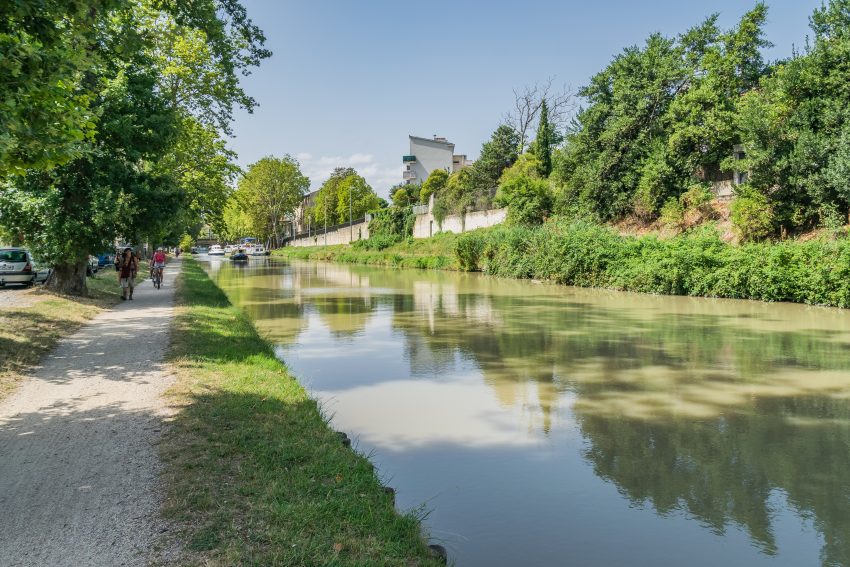
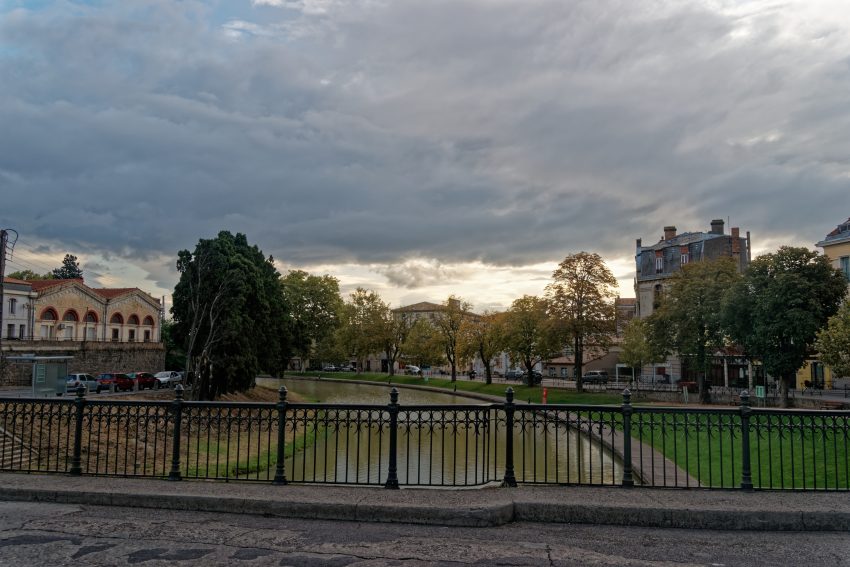
Canal du Midi in Carcassonne, Aude, France
CC BY-SA 4.0 / Krzysztof Golik
The Canal du Midi in Carcassonne is a 17th-century waterway engineered under Pierre-Paul Riquet to link inland routes between the Atlantic and Mediterranean systems, now protected as UNESCO World Heritage. In town it slips through a greener, quieter stretch, with easy access at Port de Carcassonne and the first locks opposite the SNCF train station. What visitors remember here are the working details: moored boats at the port, tree-lined towpaths, and the lock infrastructure that still choreographs the water’s level changes. Nearby, the Fresquel double lock and its navigable aqueduct show how the canal was later rerouted to sit closer to the city. It’s a calm counterpoint to the stone drama of Carcassonne, and especially photogenic in soft morning or late-day light.
Location: Canal du Midi de Carcassonne, Carcassonne, France | Hours: 24 Hours. Closed on no days (public canal banks and access points); boat trips, lock operations, and port services run to separate seasonal timetables. | Price: Free (public access to the canal banks and walking/cycling access points in Carcassonne). Cruises and some activities are extra. | Website | Distance: 0.2km


We recommend to rent a car in France through Discover Cars, they compare prices and review multiple car rental agencies. Book your rental car here.

2. Pont Marengo

Pont Marengo
Pont Marengo
CC BY-SA 4.0 / Txllxt TxllxT
Pont Marengo is the bridge over the Canal du Midi that links central Carcassonne with the railway station, making it a small crossing with outsized day-to-day importance. Named for Napoleon’s 1800 Battle of Marengo, it bears a plaque marking its early-19th-century origins and was inaugurated in 1810. What visitors notice most is the canal working in real time: just beside the bridge, boats line up at the Port Marengo lock and slowly lift or drop through the chamber. The structure’s later 1889 widening—completed in a brisk 32 days—left it with distinctive railings and candelabras, a practical fix to a once-dangerous, narrow span.
Location: Pont Marengo, 11000 Carcassonne, France | Hours: 24 Hours. | Price: Free. | Distance: 0.2km

Here is a complete selection of hotel options in Carcassonne. Feel free to review each one and choose the stay that best suits your needs.

3. Gare de Carcassonne

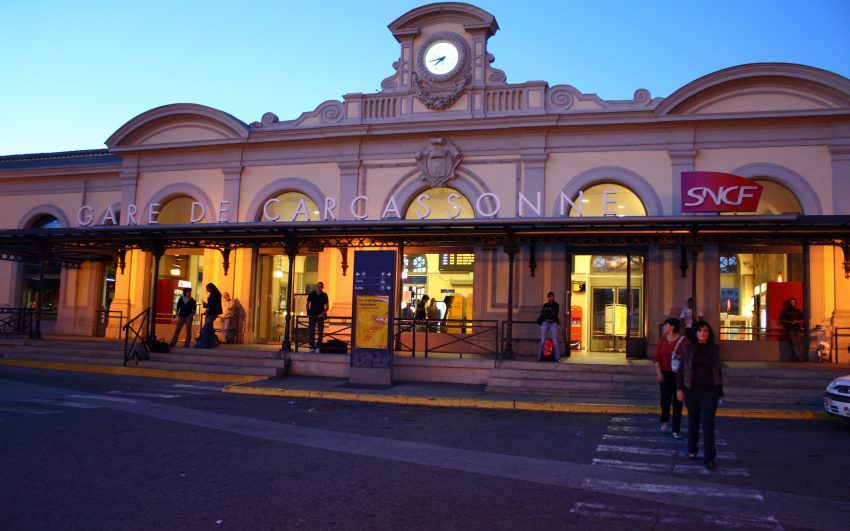
Gare de Carcassonne
Gare de Carcassonne
CC BY-SA 2.0 / Andy Mitchell
Gare de Carcassonne is the city’s main railway station in the Bastide (lower town), a practical gateway for arriving and departing by SNCF services. Opened in 1857, it still reads as a classic 19th‑century station from the outside, with a central block, two wings, and a clock-topped façade. Inside, travelers notice a large 8×3‑meter fresco by Jean Camberoque (installed in 1995) celebrating the Aude’s landscapes, plus a Station Buffet mural showing actor Philippe Noiret waiting for a train. It sits near the Canal du Midi and serves TGV, Intercités, and TER Occitanie trains, with recent track works completed in 2022. The modern interior, clear boards, and lifts make it easy to handle luggage.
Location: 1 Av. du Maréchal Joffre, 11000 Carcassonne, France | Hours: Monday – Sunday: 05:30–22:50. | Price: Free. | Website | Distance: 0.2km

Traveling to a country with a different currency? Avoid ATM transaction fees and pay in local currency with a Wise Card. Having used it for over 5 years, we've saved loads on fees!

4. Eglise des Carmes

Eglise des Carmes
Eglise des Carmes
CC BY-SA 4.0 / Letsliveinfrance.com
Eglise des Carmes is a late-13th-century Carmelite church in Carcassonne’s Bastide, a compact lesson in Mediterranean Gothic away from the citadel crowds. Inside, the broad single nave is edged by ten small chapels, with leaf-carved capitals and a mix of artworks that reward slow looking—19th-century murals by Marius Engalhière, traces of earlier frescoes, and a choir window showing Elijah in a chariot of fire. Look, too, for surviving 14th-century timber roofwork and painted wood details. The building’s scars are part of the experience: after Revolution-era misuse and later alterations, restoration still affects access, as recent visitors note.
Location: 62 Rue Georges Clemenceau, 11000 Carcassonne, France | Hours: Check official website. | Price: Free; donations appreciated. | Distance: 0.2km

Explore Carcassonne at your own pace with our self-guided walking tour! Follow our curated route to discover must-see sights and local secrets that makes Carcassonne one of the best places to visit in France.

5. Bastion Saint-Martial

Bastion Saint-Martial
CC BY-SA 4.0 / Didier Descouens
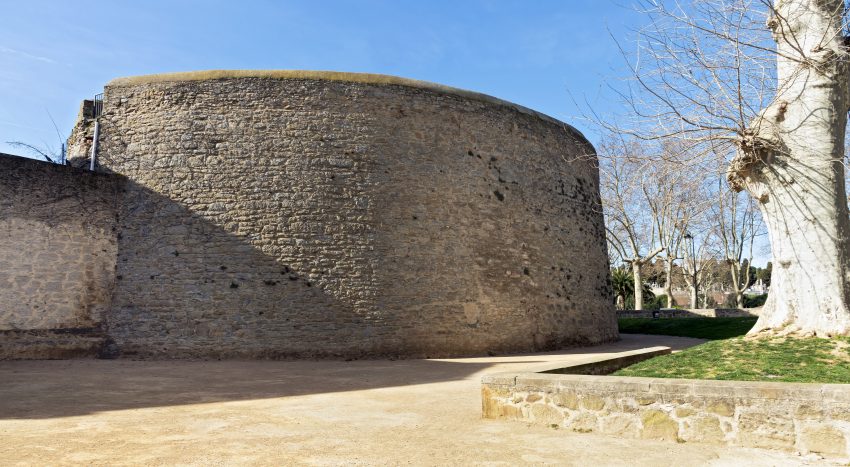
Bastion Saint-Martial is a surviving fragment of Carcassonne’s lower-town ramparts, a circular stone mass that still anchors the streets around Boulevard Omer Sarraut. Partly veiled in ivy and facing the Jardin des Plantes, it hints at the 16th-century defenses that once ringed the Bastide Saint-Louis. The site’s layers are tangible: a section was used as a cemetery in the late 1700s, and later street works cut away part of the western side as the neighborhood expanded. Restored in 1999, excavations revealed buried wall sections and added a small path, lighting, and grass edging. Visitors mainly linger for close-up masonry details rather than big views.
Location: 11000 Carcassonne, France | Hours: 24 Hours. | Price: Free. | Website | Distance: 0.3km

6. Jardin André Chénier
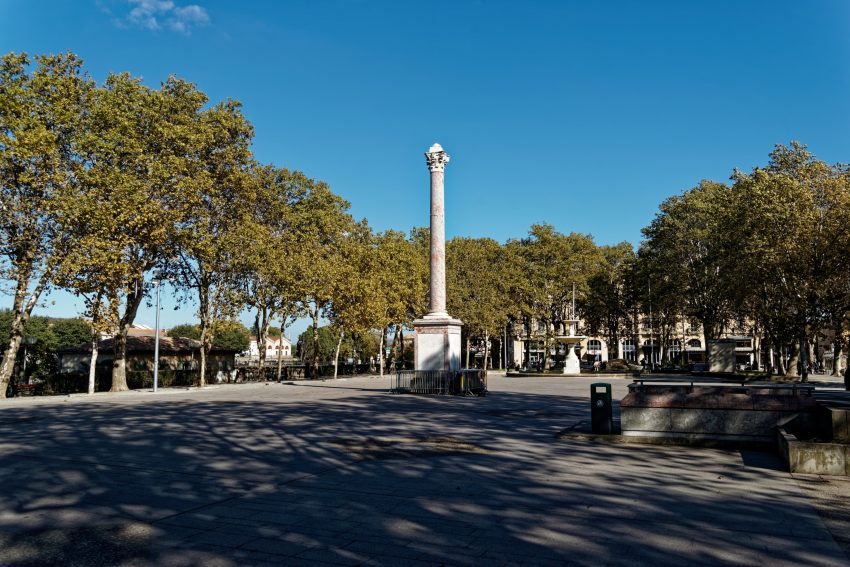
Jardin André Chénier
CC BY-SA 4.0 / Txllxt TxllxT
Jardin André Chénier is a compact, leafy garden-square in Carcassonne’s Bastide, a few minutes from the SNCF station and the Canal du Midi, created in 1826 as the city expanded around the canal port. Shaded alleys, benches, fountains, and flower beds make it an easy place to pause, even if parts feel more urban than park-like. Look for the Caunes-Minervois marble column erected in 1828, originally intended for the Grand Trianon at Versailles, and the monument and 1905 fountain honoring former mayor Omer Sarraut. Renamed for poet André Chénier in 1954, it was refreshed in a 2016–2018 renovation that kept its heritage features while improving the public space.
Location: 33 Bd Omer Sarraut, 11000 Carcassonne, France | Hours: 24 Hours. | Price: Free. | Website | Distance: 0.3km

7. St. Vincent Church
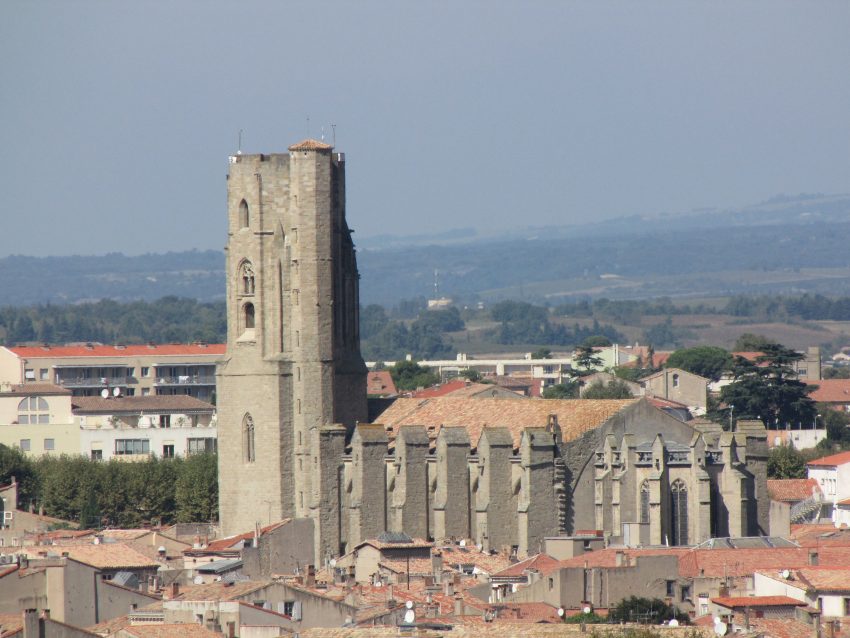
St. Vincent Church
St. Vincent Church
CC BY-SA 4.0 / MathieuMD
St. Vincent Church (Église Saint-Vincent) is a major Languedoc Gothic parish church in Carcassonne’s Bastide Saint-Louis, built and enlarged between the 13th and 14th centuries. Step inside and the scale is the first surprise: a notably broad nave (about 20.25 m wide) under a high vaulted ceiling around 23.5 m, with 15th-century stained glass and rosettes shifting the light as you move. The 14th-century main portal is framed by stone figures including Saint Vincent and Saint Louis. Above it all rises a 54 m octagonal bell tower with a 47-bell carillon; visitors can climb 232 steps to a steady platform for a clear panorama over the city’s grid and beyond.
Location: 79 Rue du Dr Albert Tomey, 11000 Carcassonne, France | Hours: Monday – Friday: 14:30–18:00. Saturday: 10:00–12:00 & 14:30–18:00. Sunday: 14:30–18:00. | Price: Church: Free. Tower: €2.50 (adult). | Website | Distance: 0.3km

8. Rue Verdun
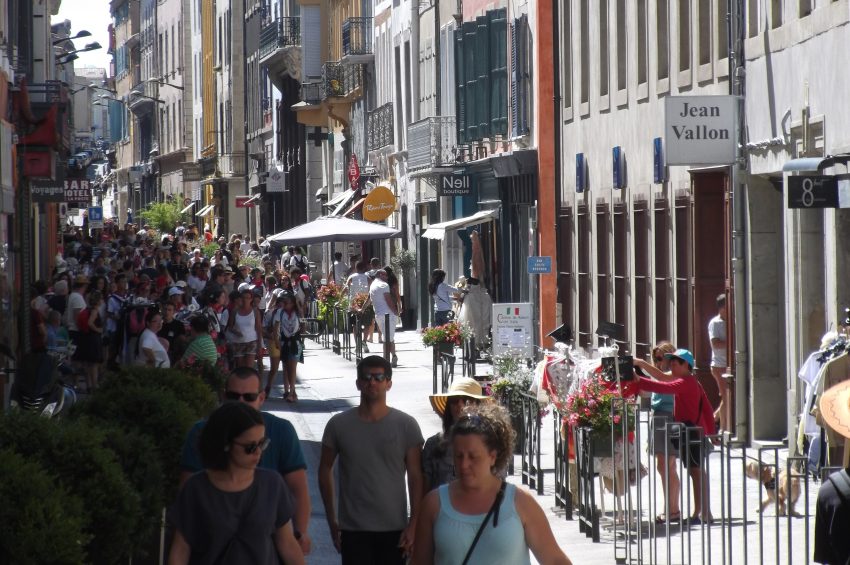
Rue Verdun
Rue Verdun
CC BY-SA 4.0 / APB11
Rue Verdun is a busy commercial street in Carcassonne that runs from around Place Carnot and continues into the Bastide Saint-Louis, making it a useful thread between the fortified Cité and the lower town’s everyday life. What visitors remember is the steady run of shops and cafés, from bakeries like Maison Juliette to specialty food stops such as La Ferme, plus wine and cookware emporiums. Browse book stalls, stationers, souvenir and gift shops, cheese counters, and small art galleries as the street shifts from medieval-era lanes near the Cité to the more traffic-filled grid of the Bastide. On market days—Tuesday, Thursday, and Saturday—the food stalls add extra bustle and local color.
Location: Rue de Verdun, 11000 Carcassonne, France | Hours: 24 Hours. | Price: Free. | Distance: 0.4km

9. Place Carnot
Place Carnot
Place Carnot
CC BY-SA 4.0 / John Samuel
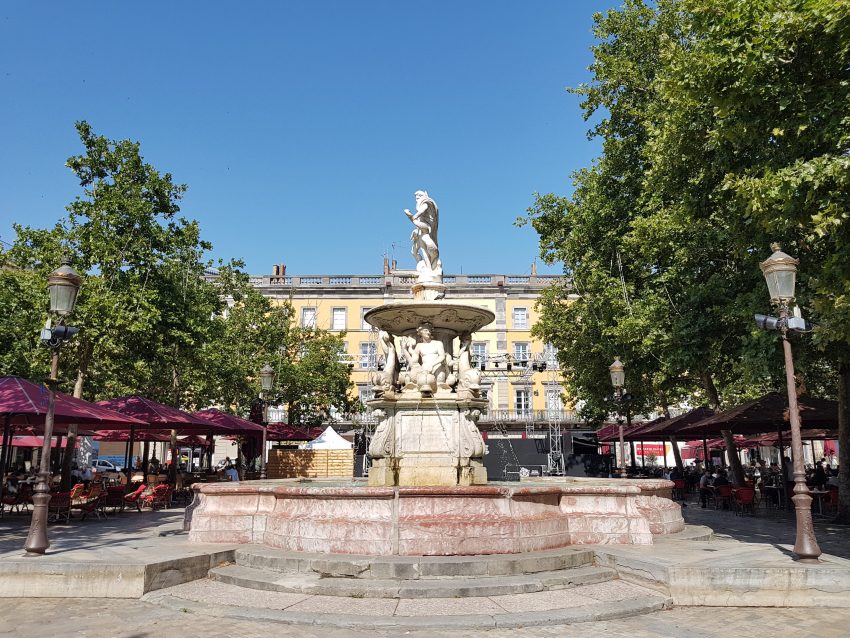
Place Carnot is the main square of Carcassonne’s lower town (the Bastide Saint-Louis), laid out in 1355 and still the neighborhood’s everyday meeting point. It has worn a string of political names over the centuries before settling on Carnot in 1889, after Lazare Carnot of the French Revolution. The space is stone-paved and centered on the Neptune Fountain: the sea god poised above a round basin, supported by nymphs, with dolphins jetting water, sculpted by the Italian Barata family. On Tuesday, Thursday, and Saturday, open-air market stalls take over, and café tables fill with people lingering over coffee or pastis under the plane trees.
Location: Pl. Carnot, 11000 Carcassonne, France | Hours: 24 Hours. | Price: Free. | Distance: 0.4km

10. Ecole Jean Jaurès
Ecole Jean Jaurès
Ecole Jean Jaurès
CC BY-SA 4.0 / Krzysztof Golik
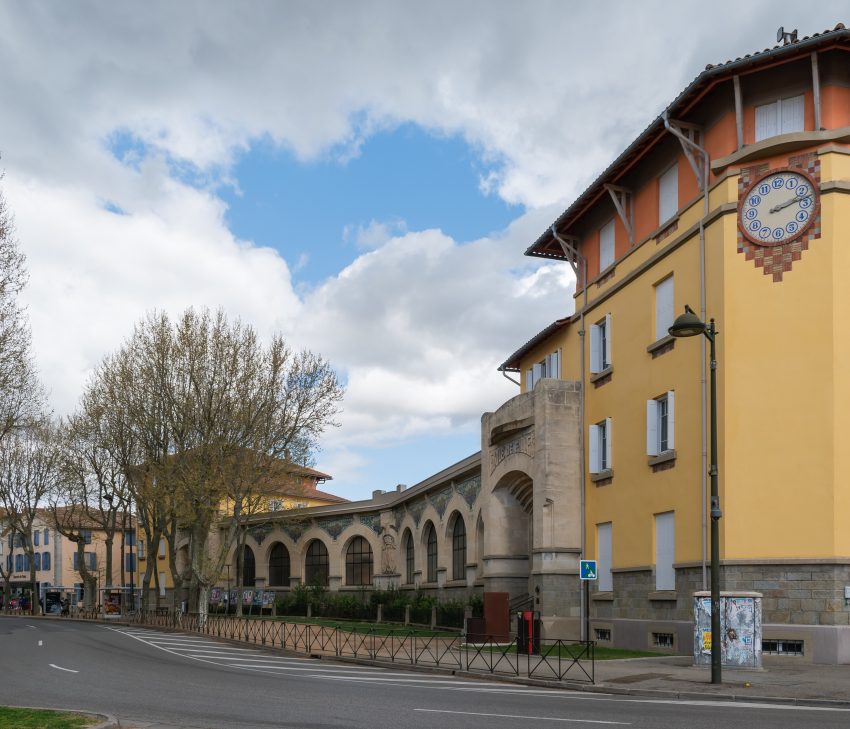
Ecole Jean Jaurès is a large public school on Boulevard Jean Jaurès in central Carcassonne, a working civic landmark rather than a ticketed sight. Opened in 1928 and inaugurated by President Gaston Doumergue, it was built on the site of the former city prison and designed by Emile Bertrand and Guillaume Vidal, with Paul Enderlin finishing the project. From the street, the building stands out for a grand façade that echoes medieval Carcassonne and a courtyard lined with a dense “forest” of columns. Named for the politician Jean Jaurès, it’s a reminder of the city’s everyday life—students, parents, and neighborhood rhythms—between the Bastide and the routes toward the Cité.
Location: 16 Bd Jean Jaurès, 11000 Carcassonne, France | Hours: Check official website. | Price: Free. | Distance: 0.4km

11. Chapelle des Dominicains
Chapelle des Dominicains
CC BY-SA 4.0 / Didier Descouens
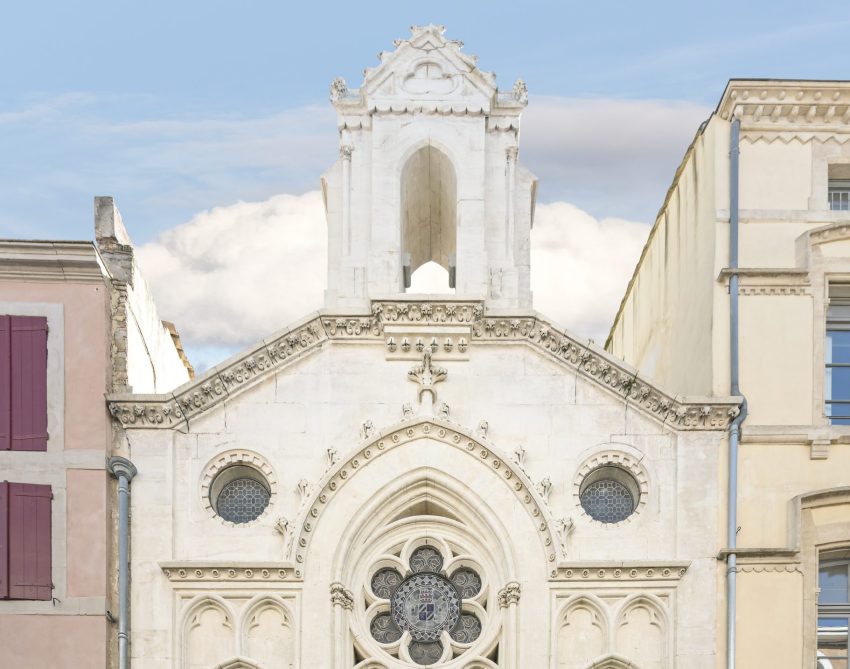
Chapelle des Dominicains is a compact neo-Gothic chapel on Rue de Verdun in Carcassonne’s lower town, built around 1860 by Dominican sisters and long tied to girls’ education. After that institution dissolved in the early 20th century, the building repeatedly reinvented itself—serving as an antiques shop, then a Jeanne-d’Arc boarding school, and even a dance school in the nave until 1979. Today it functions as a cultural venue, so what you see is often a rotating art exhibition set within pointed arches, stained glass, and crisp 19th-century decorative details. Visitors tend to remember it as a small, calm stop, sometimes more gallery than monument.
Location: 17 Rue de Verdun, 11000 Carcassonne, France | Hours: Check official website. | Price: Free; donations appreciated. | Distance: 0.4km

12. Place Gambetta
Place Gambetta
Place Gambetta
CC BY-SA 4.0 / Txllxt TxllxT
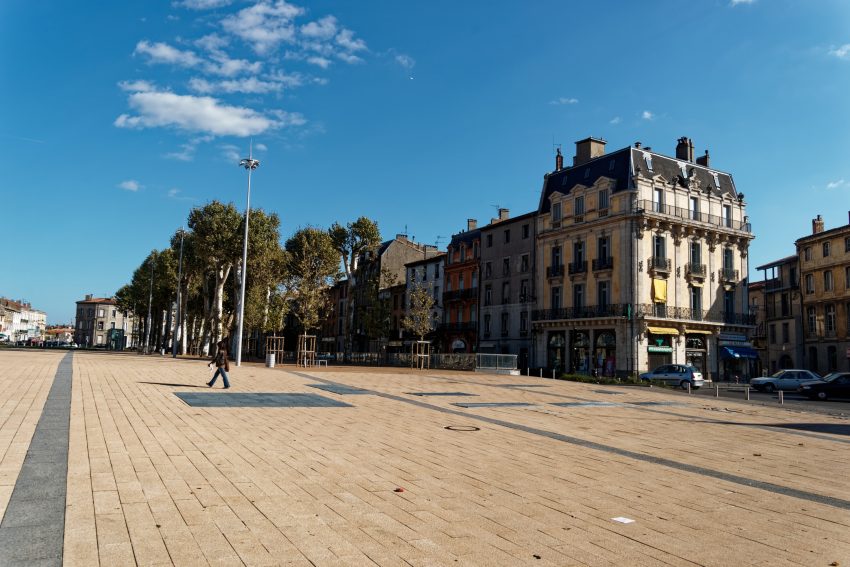
Place Gambetta is a broad, elongated public square in Carcassonne’s lower town (the Bastide Saint-Louis), named for republican statesman Léon Gambetta. It’s memorable for its long central promenade planted with shrubs and flowers, framed by tall shade trees and benches where locals pause between errands. Modern sculptures punctuate the space, and fountains plus a shallow paddling pool draw families on warm days. At one end, a French tricolour flies above a World War II memorial, adding a note of civic solemnity to an otherwise relaxed setting. The square is edged by handsome buildings, including the Museum of Modern Art, and a car park sits beneath it, keeping the surface pleasantly pedestrian.
Location: Sq. Gambetta, 11000 Carcassonne, France | Hours: 24 Hours. | Price: Free. | Distance: 0.5km

13. Maison des Mémoires
Maison des Mémoires
Maison des Mémoires
CC BY-SA 4.0 / APB11
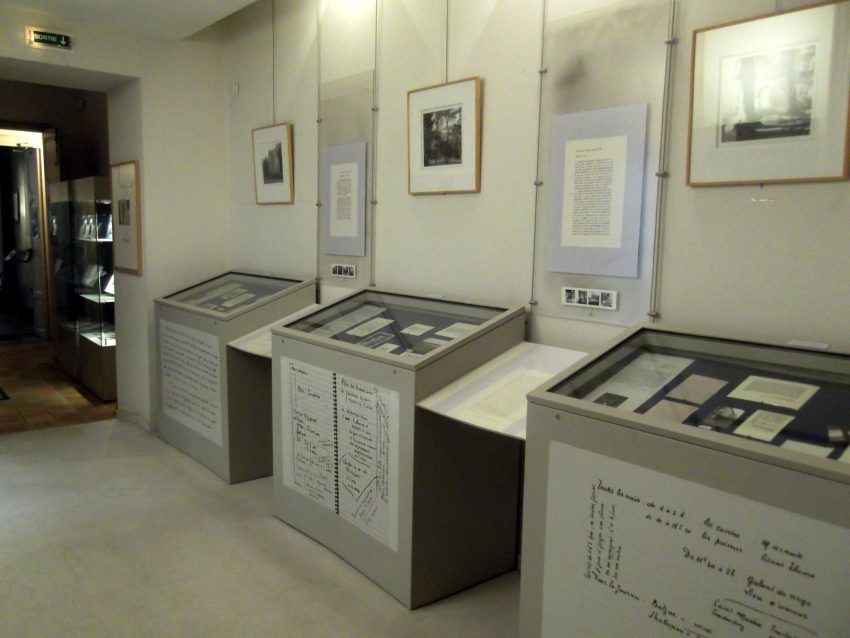
Maison des Mémoires (Maison Joë Bousquet) is a small museum in Carcassonne’s Bastide Saint-Louis, set in a preserved 16th-century townhouse on Rue de Verdun. It matters because it was the home of poet Joë Bousquet (1897–1950), paralyzed after World War I, who turned his room into an intellectual salon; visitors still see that room kept as it was. Displays trace his writing and the artistic circles he drew in, with references to figures such as René Magritte, Max Ernst, and Simone Weil. The building’s layered past—once linked to local civic life and later cultural research—adds context beyond the medieval city image. Travelers often remember the quiet, house-like layout, and the shifting temporary exhibitions that can change the whole visit.
Location: 53 Rue de Verdun, 11000 Carcassonne, France | Hours: Tuesday – Saturday: 09:45–13:00 & 14:00–18:00. Closed on Sunday, Monday. Closed on public holidays. | Price: Free. | Website | Distance: 0.5km

14. Musée des Beaux-Arts
Musée des Beaux-Arts
CC BY-SA 4.0 / APB11
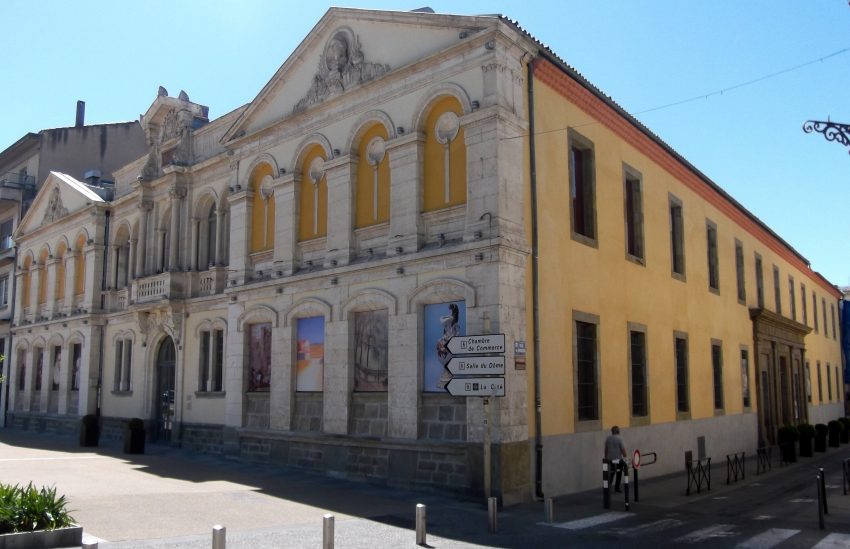
In Carcassonne’s Bastide Saint-Louis, the Musée des Beaux-Arts occupies the former présidial court, a civic building whose façade was fully restored in 1900. Founded in 1836 by local enthusiasts of art, history, and archaeology, it now presents its collection across eleven period-based rooms, making the visit feel like a compact walk through time. Expect French, Italian, and Austrian paintings from the 16th to early 19th centuries, Napoleonic-era works alongside ceramics, and Dutch and Flemish schools leading into neo-impressionism. Later rooms move into 20th–21st-century art, including the interwar years and the School of Paris. Temporary exhibitions and occasional talks add variety, and visitors often note how quiet and uncrowded it can feel.
Location: 15 Bd Camille Pelletan, 11000 Carcassonne, France | Hours: (Summer) April 1 – September 30; Daily: 10:00–12:30 & 13:30–18:00. (Winter) October 1 – March 31; Tuesday – Saturday: 10:00–12:30 & 13:30–18:00. Closed on Sunday, Monday. | Price: Free. | Website | Distance: 0.5km

15. Dôme de l’Ancien Hôpital
Dôme de l’Ancien Hôpital
CC BY-SA 2.0 / Winniepix
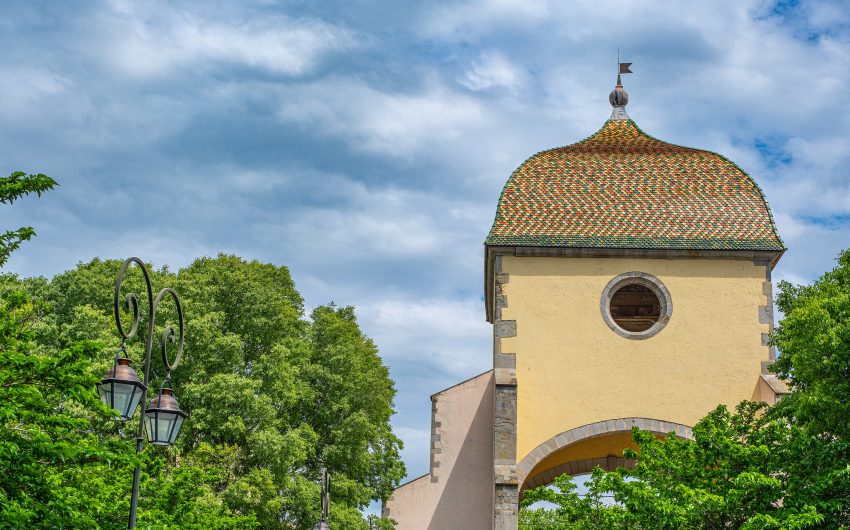
In Carcassonne, the Dôme de l’Ancien Hôpital is a surviving fragment of the former Hôtel-Dieu, an 18th-century hospital funded by Guillaume IV Castanier in 1728 and completed in 1748. What visitors notice first is the small, colorful dome: its glazed tiles shift in tone as sun and clouds move, making it a rewarding stop for a slow circle and a few photos. The original complex was planned around a Greek-cross layout with a central chapel positioned so bedridden patients could follow services, a telling detail of how care and faith once intertwined. Demolished in 1977, the dome and an entrance door on Rue Georges-Brassens remain as a quiet marker of civic philanthropy and everyday urban memory.
Location: 1060 Chem. de la Madeleine, 11000 Carcassonne, France | Hours: 24 Hours. | Price: Free. | Website | Distance: 0.6km

16. Bastion de Montmorency
Bastion de Montmorency
CC BY-SA 4.0 / Pere López Brosa
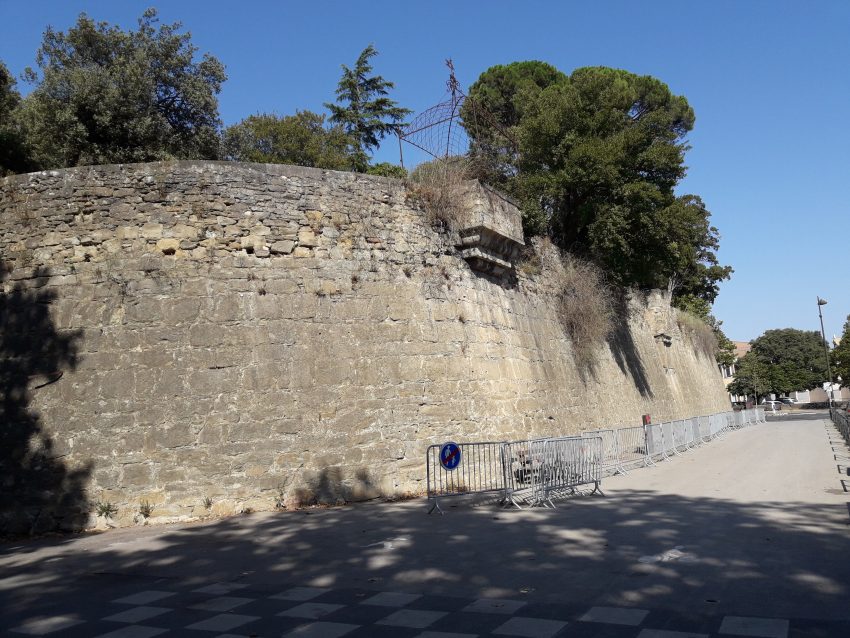
Bastion de Montmorency is a late-16th-century fortification in Carcassonne’s lower town (Bastide Saint-Louis), built during the Wars of Religion when defenses shifted to meet gunpowder warfare. Near the Pont-Vieux, its low, angled geometry reads differently from medieval vertical walls, and the “lug” bastion layout hints at both innovation and the blind spots it created. Look closely for weathered ornament: pedimented niches on the south and east faces and a frieze where faint foliage carving still survives. It’s one of the few remaining bastions from a larger ring of works that once wrapped the city, and today you reach it through the courtyard of the nearby Clinique du Bastion, with a small arboretum softening the military stonework.
Location: 2 Rue Camille Saint-Saëns, 11000 Carcassonne, France | Hours: 24 Hours. | Price: Free. | Website | Distance: 0.6km

17. Porte Monumentale des Jacobins
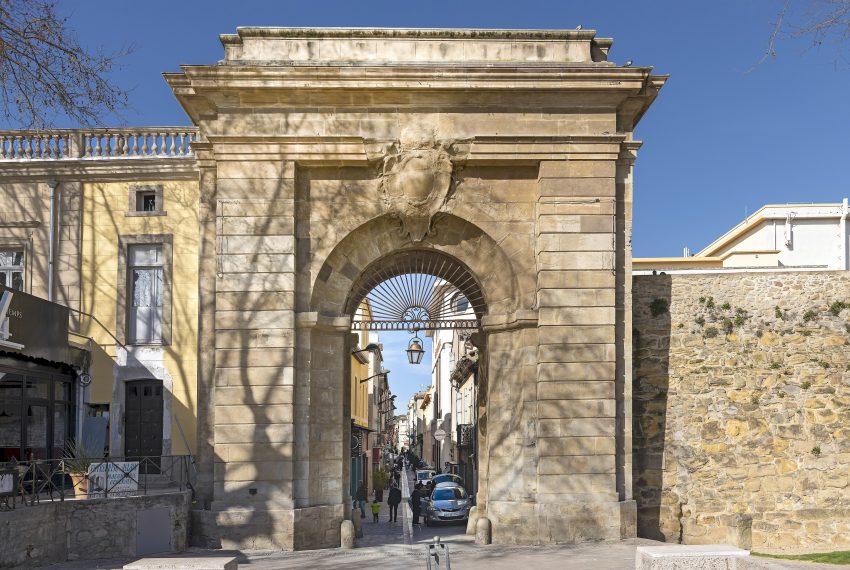
Porte Monumentale des Jacobins
CC BY-SA 4.0 / Didier Descouens
Porte Monumentale des Jacobins is a grand stone gateway in Carcassonne’s lower town (the Bastide Saint-Louis), marking the former Saint-Louis Gate built in 1355–1359 and rebuilt in 1779. It’s the last surviving gate of the four that once controlled entry to the bastide, so passing under it feels like crossing a real threshold in the city’s layout. During the 1779 works, sculptor Sieur Parant removed elaborate royal and civic emblems, including a huge King’s arms escutcheon—about ten feet high and nine feet wide—hung with the orders of Saint‑Louis and Saint‑Michel and framed by laurel branches. Today, its clean symmetry faces Place Général de Gaulle, then funnels you into tighter cobbled streets beyond.
Location: Porte des Jacobins, 11000 Carcassonne, France | Hours: 24 Hours. | Price: Free. | Website | Distance: 0.6km

18. Ancien Hôpital Général
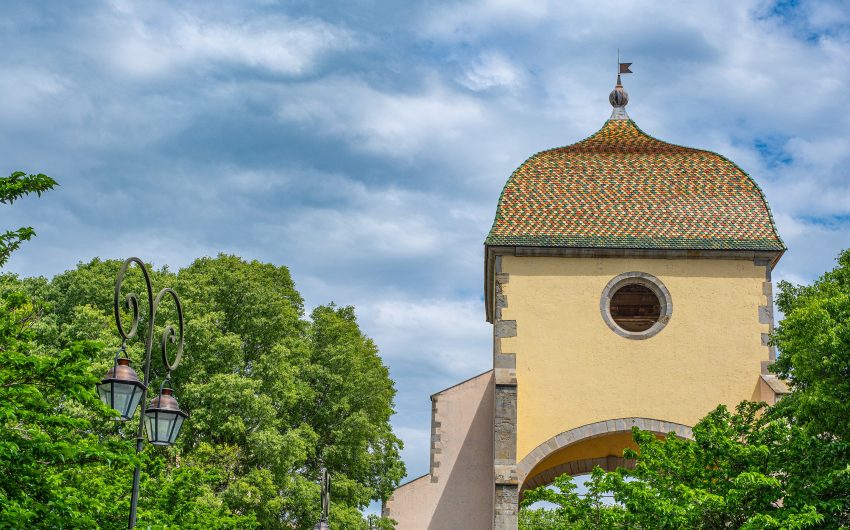
Ancien Hôpital Général
CC BY-SA 2.0 / Winniepix
Ancien Hôpital Général is Carcassonne’s former general hospital, founded in 1648 and later shaped by Louis XIV’s 1686 push for organized hospitals across France. What you notice today is the 18th-century makeover: a formal façade with a monumental gate, the distinctive dome, and a statue of St. Vincent de Paul that hints at the institution’s charitable mission. After the Revolution it shifted into a hospice, and the site has continued evolving, now functioning as a residential center near the Old Bridge rather than a curated museum. It’s an everyday heritage stop where surviving stonework and the street layout still suggest how care, religion, and civic life once overlapped.
Location: 1060 Chem. de la Madeleine, 11000 Carcassonne, France | Hours: Check official website. | Price: Free. | Website | Distance: 0.7km

19. Jesuit Chapel
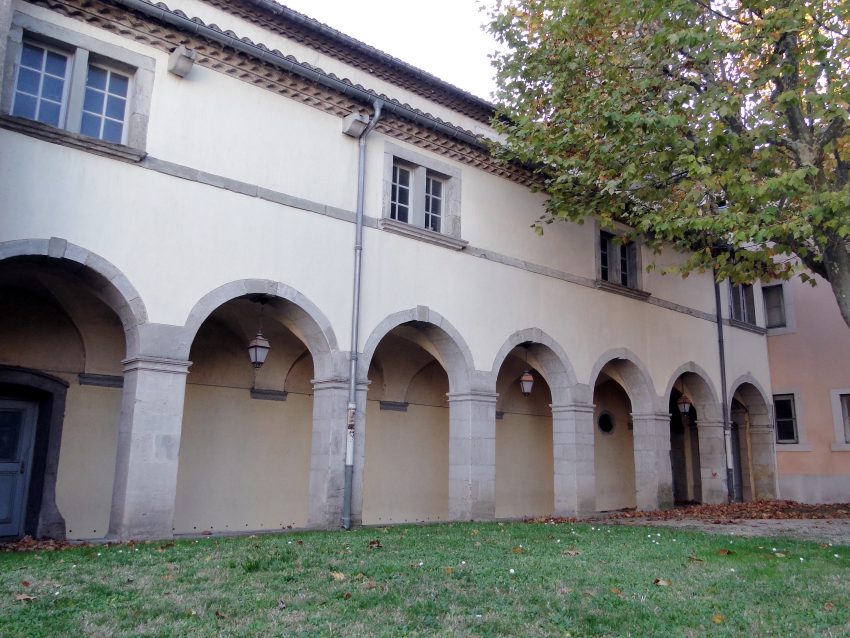
Jesuit Chapel
Jesuit Chapel
CC BY-SA 4.0 / GilPe
The Jesuit Chapel in Carcassonne’s Bastide Saint-Louis is a restored 17th-century chapel built for the Jesuit College, with construction beginning in the 1640s and consecration in 1667. Step inside to notice the Baroque interior: a curved, coffered ceiling patterned with geometric motifs, plus galleries and balustrades that give the room an almost theatrical, auditorium feel. In the choir, restored decoration and a painted altarpiece hint at its former splendor. Look outside for the octagonal bell tower and the grand portal added in 1720. After decades of neglect, a major restoration around 2000 revived the building, and today it’s best experienced during concerts, when the intimate scale and acoustics come alive.
Location: 34 Rue des Études, 11000 Carcassonne, France | Hours: Check official website. | Price: Free; donations appreciated. | Website | Distance: 0.7km

20. Carcassonne Cathedral
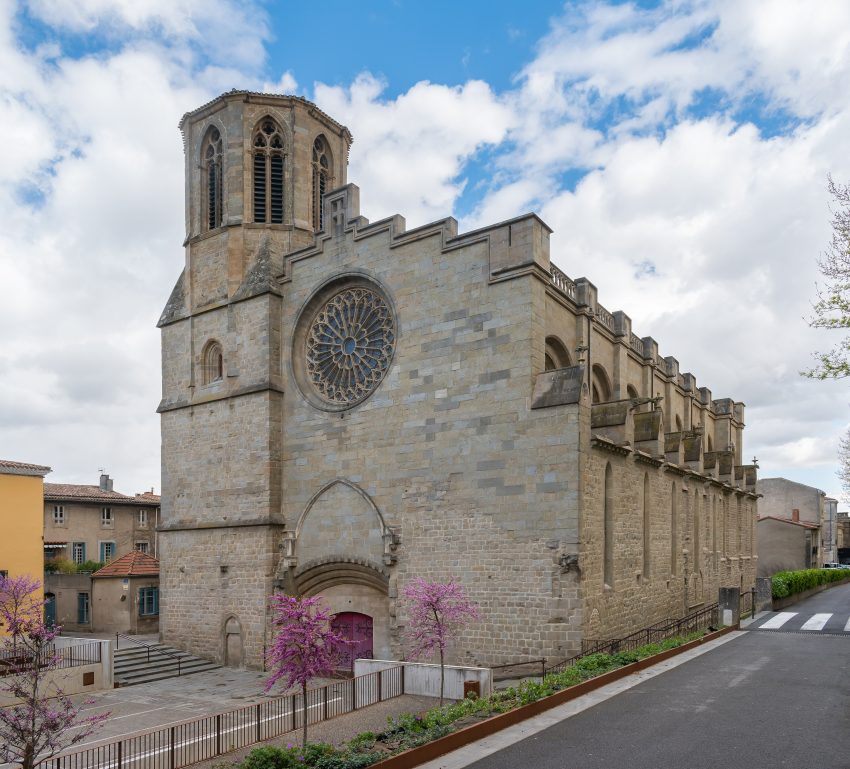
Carcassonne Cathedral
CC BY-SA 4.0 / Tournasol7
Carcassonne Cathedral (Cathédrale Saint-Michel) is a 13th-century Gothic cathedral in Carcassonne’s Lower Town, created for the Bastide community and later promoted to cathedral status in 1803. After severe damage during the Hundred Years’ War—linked to the Black Prince’s campaign—it was rebuilt with a fortress-like character, which still reads in its heavy stonework and watchful gargoyles. Inside, the space feels unexpectedly vast: an eight-bay nave with side chapels, alternating round and square columns, and a very high vault. Light is the lasting memory, as arched choir windows and small round panes near the top wash the interior in a soft, colored glow. Visitors often remark on the stained glass and the calm, heated interior.
Location: 52 Rue Voltaire, 11000 Carcassonne, France | Hours: (Summer) May 1 – September 30; Tuesday – Saturday: 10:00–12:00 & 14:00–18:00; Sunday: 10:00–12:00; Closed on Monday. (Winter) January 2 – April 30 & October 1 – December 31; Tuesday – Saturday: 10:00–12:00 & 15:00–17:00; Sunday: 10:00–12:00; Closed on Monday. | Price: Free; donations appreciated. | Distance: 0.7km

21. Chapelle Notre Dame de la Santé
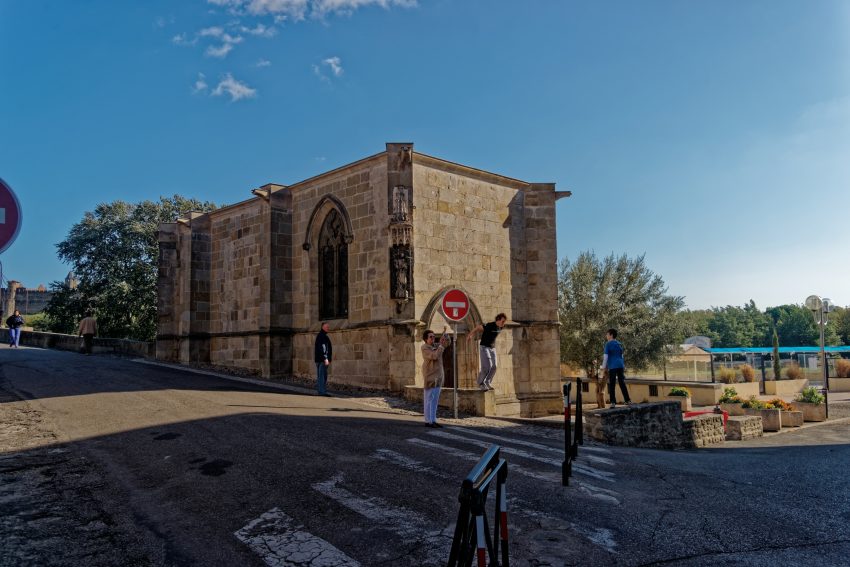
Chapelle Notre Dame de la Santé
CC BY-SA 4.0 / Txllxt TxllxT
Chapelle Notre Dame de la Santé is a small Catholic chapel at the entrance to Carcassonne’s Pont Vieux, easy to miss until you step through its doorway and the noise of the bridge drops away. Built around 1500 on the site of an earlier pilgrims’ chapel, it was later enlarged with funds that also created a plague hospital, a reminder of the city’s everyday struggles beyond the ramparts. Look for the sculpted façade details—gargoyles along the balustrade and an ogival portal—and then lift your eyes inside to the vaulted ceiling with delicate lierne patterns. The light in the polygonal apse, filtered through lancet windows, makes the interior feel unexpectedly refined for such a compact space.
Location: 2 Rue du Pont Vieux, 11000 Carcassonne, France | Hours: Check official website. | Price: Free; donations appreciated. | Distance: 0.7km

22. Le Pont Vieux
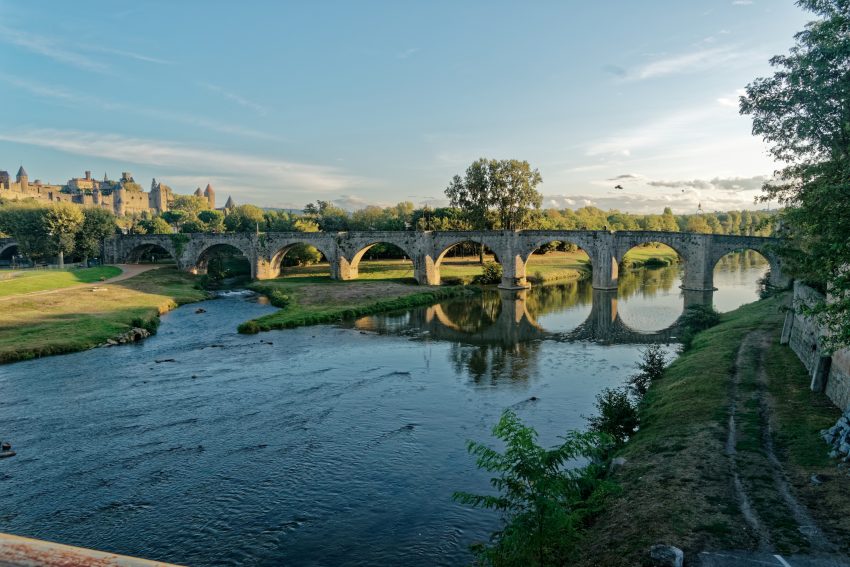
Le Pont Vieux
Le Pont Vieux
CC BY-SA 4.0 / Txllxt TxllxT
Le Pont Vieux is Carcassonne’s medieval stone bridge over the River Aude, linking the lower town (the Bastide) to the climb toward the fortified Cité. Completed in 1320 to replace an older wooden crossing, it stretches about 739 feet on twelve uneven arches, a patchwork feel that reflects how sections were built as money arrived. Midway, a stone arch with pointed cutwaters once marked a boundary between rival factions, and the spot even served as neutral ground for peace agreements. Today it’s pedestrian-only, and what visitors remember is the slow reveal: pause in the center for wide views of ramparts rising above the river’s curve, then continue toward Rue Trivalle for that “arrival” moment.
Location: Rue du Pont Vieux, 11000 Carcassonne, France | Hours: 24 Hours. | Price: Free. | Distance: 0.8km

23. Jardin Maria et Pierre-Sire
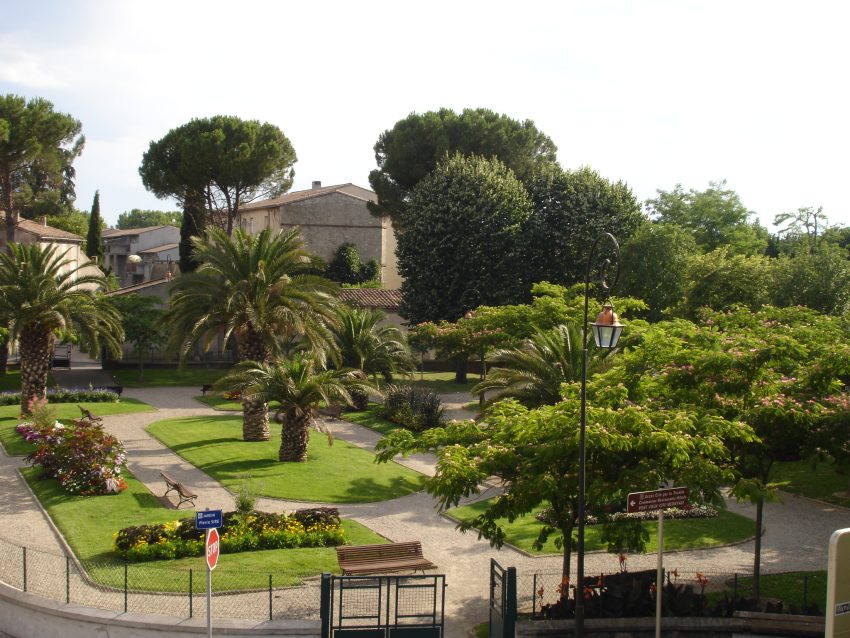
Jardin Maria et Pierre-Sire
CC BY-SA 3.0 / Pinpin
Jardin Maria et Pierre-Sire is a small riverside garden in Carcassonne’s Trivalle area, tucked beneath the 14th-century Pont-Vieux on the Aude. It was created after the site’s earlier uses—textile drying for the Farge factory, then a German military zone in WWII—and was landscaped to a 1947 plan before opening in 1950. A stele and portrait medallions commemorate Pierre Sire (poet and teacher, 1890–1945) and Maria Sire (director of the École de la Cité, 1895–1960), with Maria’s added in 1985. Visitors notice shaded lawns, benches, and a small playground, plus water-level views up toward the medieval skyline. Reviews mention it’s well kept, though a few travelers note it can feel uneasy at times.
Location: 11000 Carcassonne, France | Hours: 24 Hours. | Price: Free. | Distance: 0.9km

24. Eglise Saint-Gimer
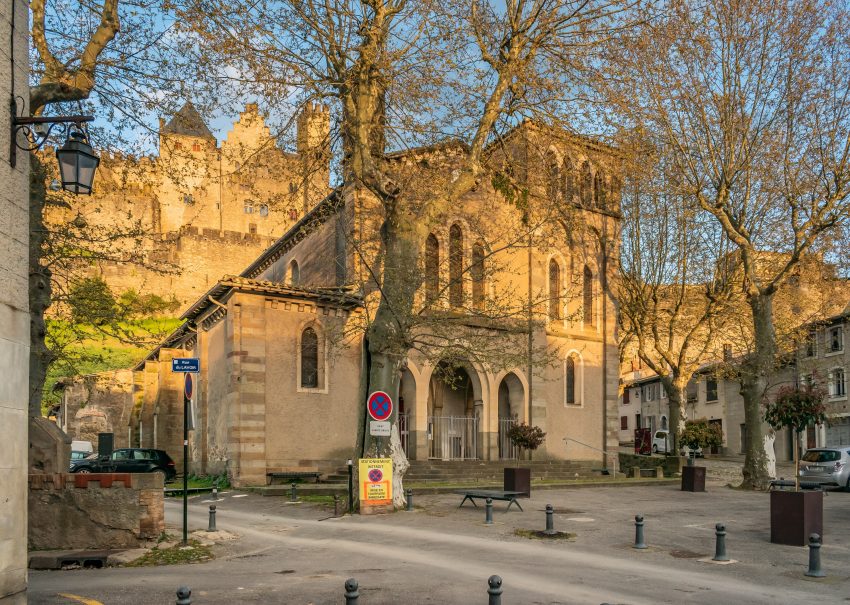
Eglise Saint-Gimer
Eglise Saint-Gimer
CC BY-SA 4.0 / Krzysztof Golik
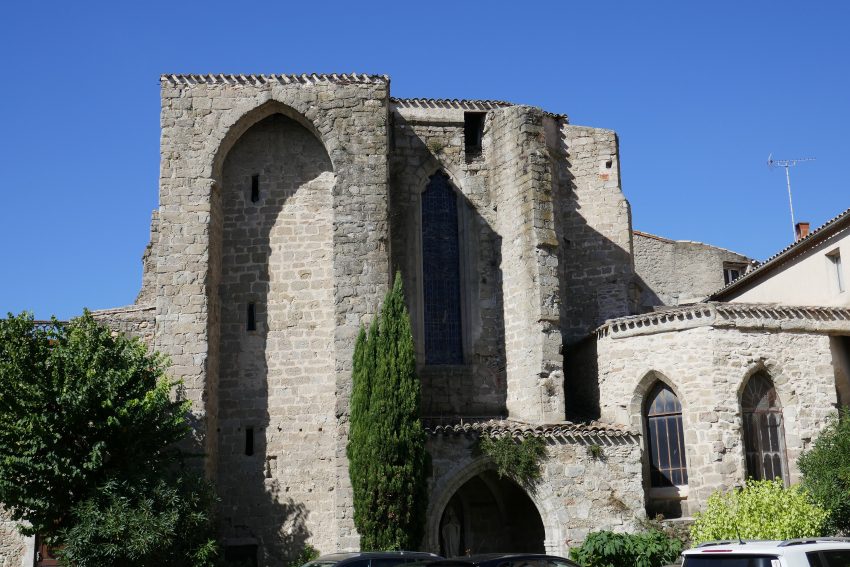
Eglise Saint-Gimer is a small neo-Gothic parish church in Carcassonne, set right under the western walls of the medieval Cité in the Barbacane area. Designed in the mid-19th century by Eugène Viollet-le-Duc, it blends Northern Gothic ideas with southern forms, and its restrained scale makes the fortress above feel even more imposing. Inside, the plan is clear and simple: a nave with two aisles leading to a polygonal apse, with vestries tucked behind and a porch at the entrance. The dedication recalls Saint Gimer, bishop of Carcassonne (902–931), remembered in local legend for “miracle” bread given to the poor. Visitors often remember the quiet lanes and the dramatic view up to the ramparts.
Location: Pl. Saint-Gimer, 11000 Carcassonne, France | Hours: Daily: 11:00–13:00 & 14:00–18:00. | Price: Free; donations appreciated. | Distance: 1.2km

25. Château et Remparts
Château et Remparts
Château et Remparts
CC BY-SA 4.0 / Krzysztof Golik
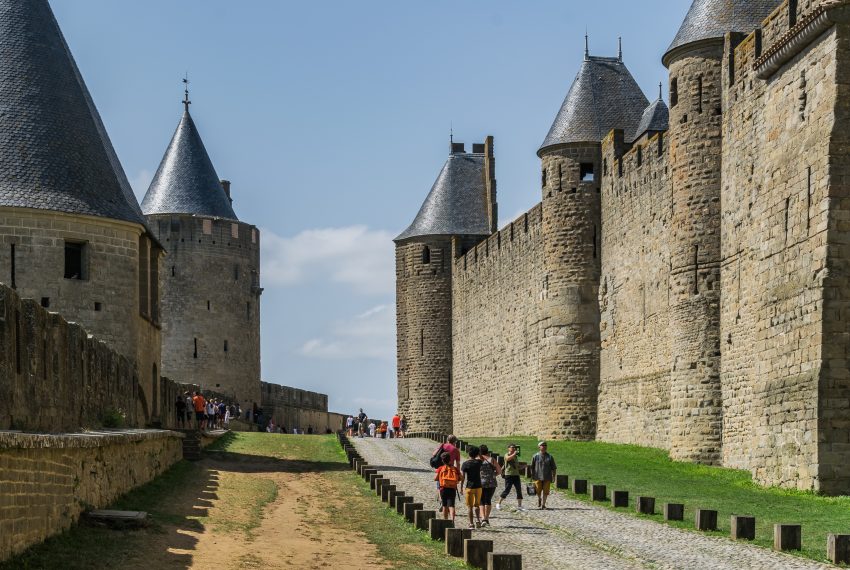
Château et Remparts is the paid-entry core of Carcassonne’s medieval Cité, where you step onto a fortress engineered for siege warfare. Two concentric rings of stone walls wrap the hilltop, punctuated by 53 towers and barbicans that once stalled attackers and their engines. The castle is fronted by a dry moat and reached by a drawbridge leading toward the central keep, and the tower roofs reveal different eras—Roman-style forms with sloped terra-cotta tiles alongside Gothic spires capped in blue slate. One tower, the Inquisition Tower, is remembered for its use as a prison and torture site in the 13th century. From the rampart walk, the double walls and the Aude countryside spread out in sharp, memorable angles.
Location: 1 Rue Viollet le Duc, 11000 Carcassonne, France | Hours: (Summer) April 1 – September 30: 10:00–18:30. (Winter) October 1 – March 31: 09:30–17:00. | Price: Adults: €19 (June 2 – September 30) or €13 (October 1 – March 31); Under 18: free; Ages 18–25 (EU nationals and regular non-EU residents in France): free. | Website | Distance: 1.3km

26. La Grand Puit
La Grand Puit
La Grand Puit
CC BY-SA 3.0 / Tournasol7
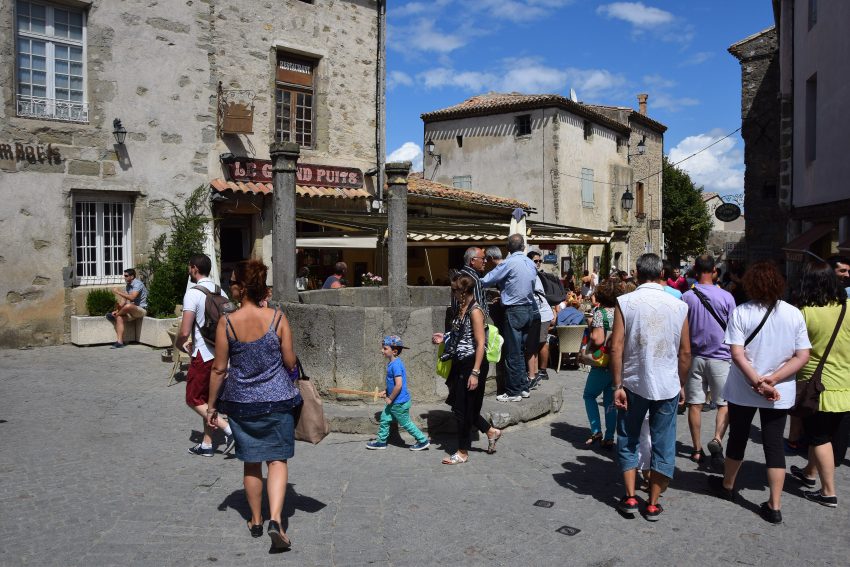
La Grand Puit is the “big well” inside Carcassonne’s fortified Cité, a piece of siege infrastructure that made life behind the walls possible. Its stone rim dates to the 14th century, while the columns and metalwork show later Renaissance additions, so you can read centuries of repairs in one small spot. Like many siege wells, it was built deep and protected within strong defenses to prevent poisoning or sabotage—an expensive undertaking that could rival the cost of a castle. One of Carcassonne’s oldest wells is said to reach about 131 feet, with a mouth roughly 13 feet across, and local lore still whispers of Visigoths hiding King Solomon’s treasure here.
Location: Pl. du Grand Puits, 11000 Carcassonne, France | Hours: 24 Hours. | Price: Free. | Distance: 1.3km

27. Musee de L'Inquisition
Musee de L’Inquisition
CC BY-SA 2.0 /
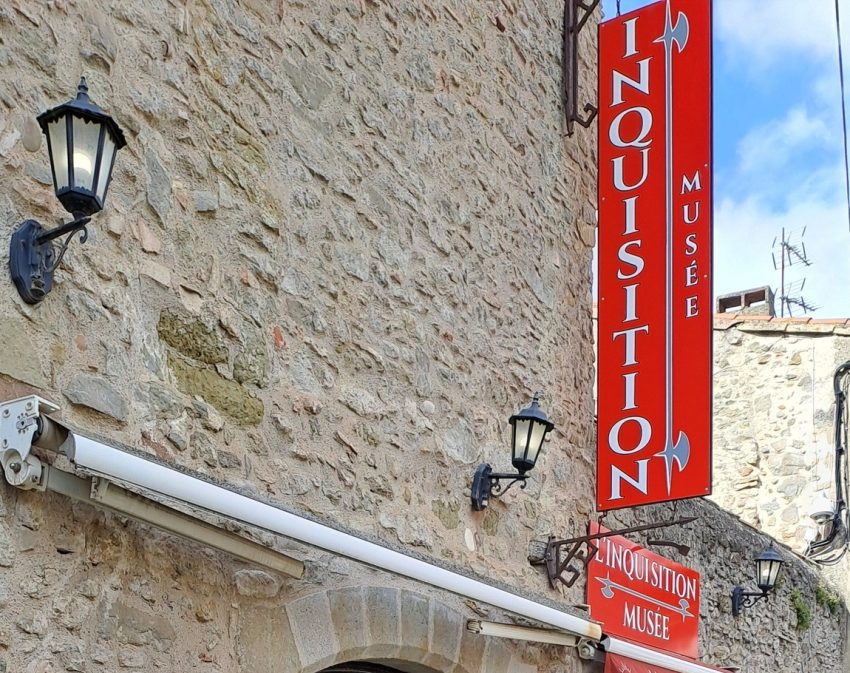
Musée de L’Inquisition in Carcassonne, often dubbed the “torture museum,” is a small, mood-heavy collection on Saint-Jean Street inside a 17th-century building that confronts the machinery of medieval justice. It traces the local Inquisition’s rise from 1234 under Dominican authority backed by Pope Gregory IX, touching on figures such as Brother Ferrier and the failed 1303 revolt led by Bernard Délicieux. Rooms are staged with mannequins and multilingual panels, moving from trial scenes to depictions of execution by burning, alongside instruments spanning the 12th century through the Napoleonic era. It even flags some notorious pieces, like the Iron Maiden, as later inventions, which sharpens the unease. Visitors often describe it as macabre and occasionally low-budget, but memorable.
Location: 7 Rue Saint-Jean, Pl. du Grand Puits 9 rue du, 11000 Carcassonne, France | Hours: (Winter) January 2 – June 30; September 1 – December 31; Daily: 10:00–17:00. (Summer) July 1 – August 31; Daily: 10:00–19:00. | Price: Adults: €12; Students: €9.50; Children: €8.50. | Website | Distance: 1.3km

28. Porte de l'Aude
Porte de l’Aude
Porte de l’Aude
CC BY-SA 3.0 / Tanya Dedyukhina
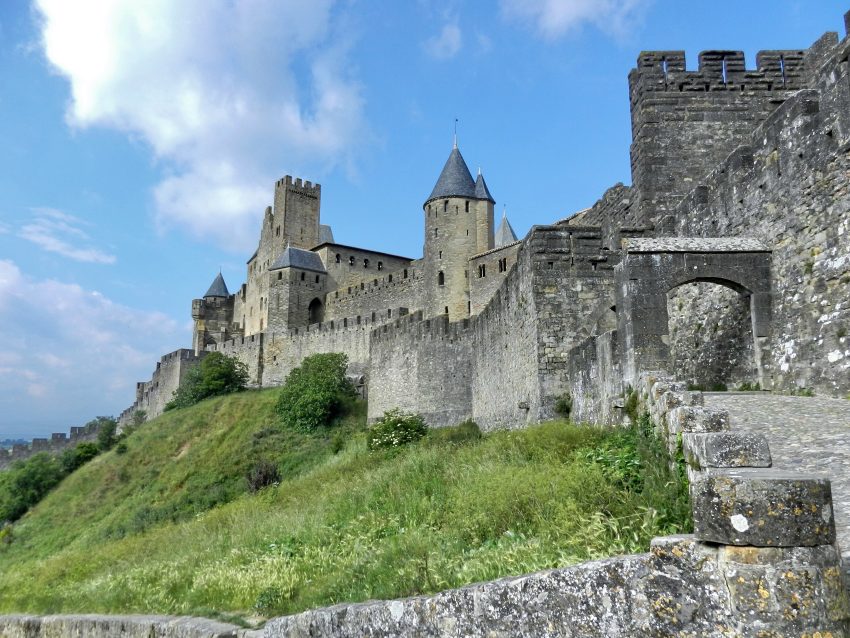
Porte de l’Aude is the western gate into the fortified Cite9 de Carcassonne, reached by a steep, traffic-free climb above the River Aude from the Pont Vieux. Once known as the Gate of Toulouse, it cut through the Visigothic wall in the 12th century; the outer semicircular arch still reads as Romanesque in its stone and proportions. The ramp rises between two towers and forces sharp turns, a deliberate “armed trap” where approaching attackers were exposed and controlled from above. Partly dismantled in 1816 to make way for Saint-Gimer church, its remaining crenellations still frame wide river-and-rampart views. Travelers often linger for the quieter approach and the cinematic feel—several period films have used it as a set.
Location: 30 Côte de la Cité, 11000 Carcassonne, France | Hours: 24 Hours. | Price: Free. | Website | Distance: 1.3km

29. Cité de Carcassonne
Cité de Carcassonne
Cité de Carcassonne
CC BY-SA 4.0 / Txllxt TxllxT
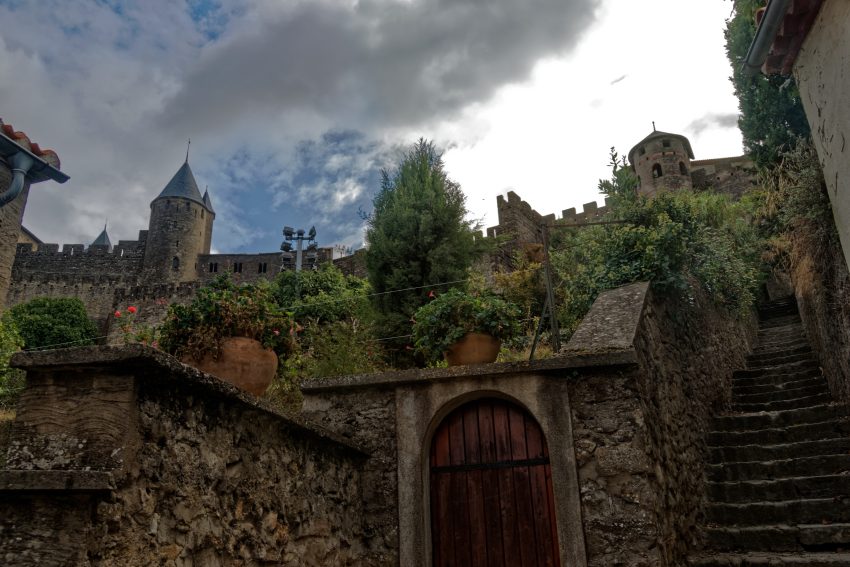
The Cité de Carcassonne is the walled medieval upper town that still dominates Carcassonne, built on a fortified site used since a Celtic oppidum and later reshaped by Romans, Visigoths, and Crusader-era rulers. What you remember most is the defensive choreography: a double circuit of walls, tight gate approaches, and tower-lined ramparts that make the whole place feel like a working fortress rather than a single building. In the 19th century, when Paris nearly demolished the fortifications, Eugène Viollet-le-Duc’s restoration saved them—adding pointed tower roofs and blue tiles more typical of northern France. Inside, stone lanes thread past cafés and small shops, and the Jean Deschamps Theatre adds an unexpected cultural note within the battlements.
Location: 1 Rue Viollet le Duc, 11000 Carcassonne, France | Hours: 24 Hours. | Price: Free (district access). Château Comtal & ramparts: €19 (June 2 – September 30) or €13 (October 1 – March 31); under 18: free. | Website | Distance: 1.3km

30. Porte Narbonnaise
Porte Narbonnaise
Porte Narbonnaise
CC BY-SA 4.0 / Txllxt TxllxT
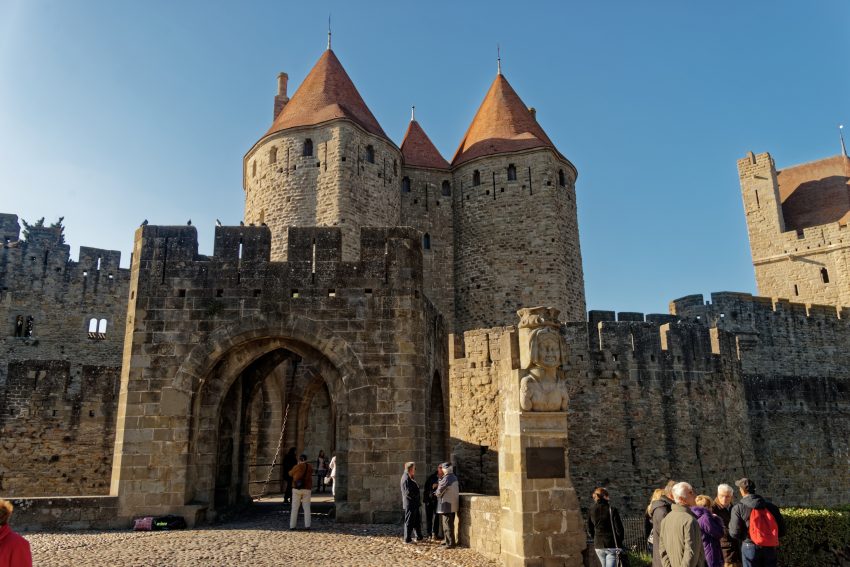
Porte Narbonnaise is the principal entrance into the fortified Cité de Carcassonne, built around 1280 under Philippe III and designed to control every step of arrival. You approach it over a bridge spanning a dry moat toward two massive spur towers, then pass beneath an archway once guarded by a chain, heavy portcullises, and overhead machicolations. Inside the towers, defensive loopholes for crossbows hint at siege-ready planning, while practical spaces like a deep cistern in the north tower and food storage in the south reveal how the gate functioned day to day. Look up to spot the Virgin’s statue set in a niche above the entrance, watching over those who enter.
Location: Prte Narbonnaise, 11000 Carcassonne, France | Hours: 24 Hours. | Price: Free. | Website | Distance: 1.4km

31. Basilique Saint-Nazaire
Basilique Saint-Nazaire
CC BY-SA 4.0 / MathieuMD
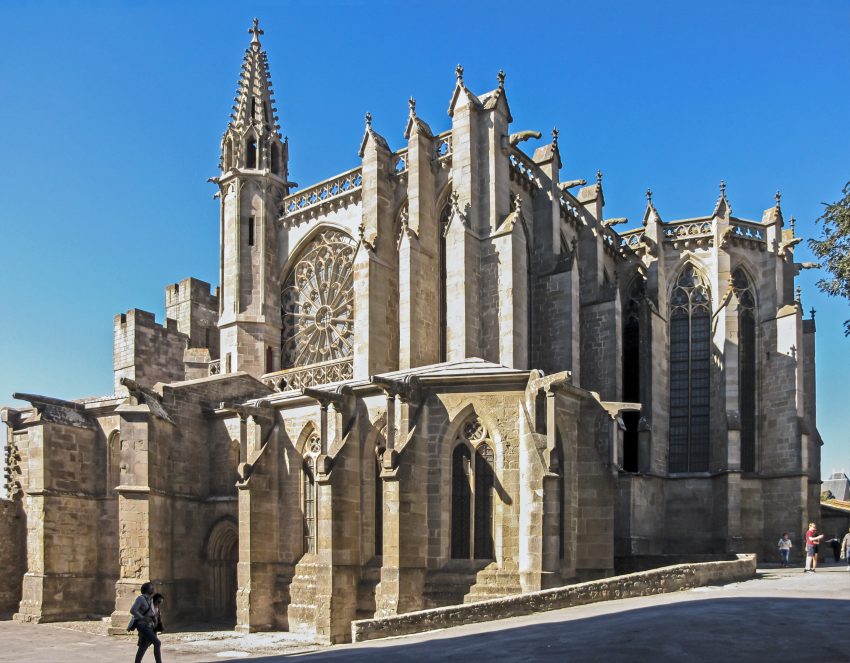
Basilique Saint-Nazaire, inside Carcassonne’s fortified Cité, is a former cathedral and one of the most evocative places to step out of the street noise into cool stone and colored light. Built and rebuilt from the 11th to 14th centuries, it reads like a timeline: an older Romanesque tripartite nave and a north entrance framed by receding arches, then a Gothic transept and choir that lift the space upward. The plan is a Latin cross, and the west front has a stern, fortress-like look typical of regional churches. Don’t miss the choir’s central stained-glass window from around 1280—among France’s earliest—depicting the life of Jesus in 16 scenes.
Location: La Cité, Pl. Saint-Nazaire, 11000 Carcassonne, France | Hours: Daily: 09:00–17:00. Sunday: 09:00–10:45 & 12:15–17:00. Saturday: 09:00–17:00. (Notes) No public visits during services. | Price: Free; donations appreciated. | Distance: 1.4km

32. Jean Deschamps Theatre
Jean Deschamps Theatre
CC BY-SA 4.0 / Duch
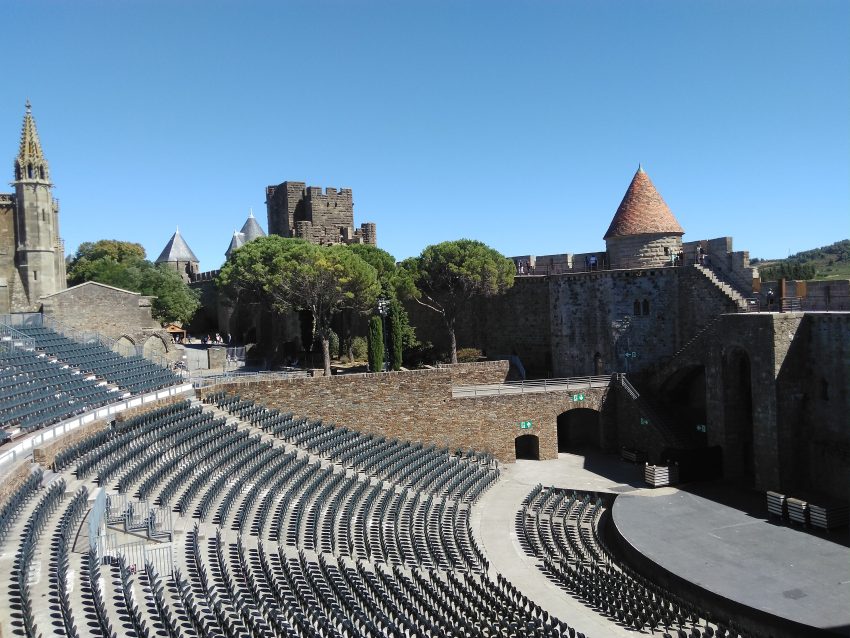
Inside Carcassonne’s medieval Cité, the Jean Deschamps Theatre is a 5,000-seat open-air amphitheatre carved into a hillside on the former cloister site of Saint-Nazaire, partly ruined during the 1209 siege to strengthen the walls. Proposed in 1908 by Dr Jean Sempre as a civic “arena” that could draw crowds, it later took on a cultural life of its own and was renamed in 1957 for actor Jean Deschamps of the Comédie-Française. The stone setting makes modern performances feel startlingly close, with chairs and benches arranged for clear sightlines and a strong sense of intimacy. Summer festival nights bring big-name concerts into the citadel, and visitors often remember the acoustics, the night sky, and the long pre-show queues.
Location: 1 Pl. Saint-Nazaire, 11000 Carcassonne, France | Hours: Check event schedule; on show nights, ticket office typically opens 2 hours before showtime. | Price: Prices vary by show. | Website | Distance: 1.4km

33. Jean-Pierre Cros-Mayrevieille Monument
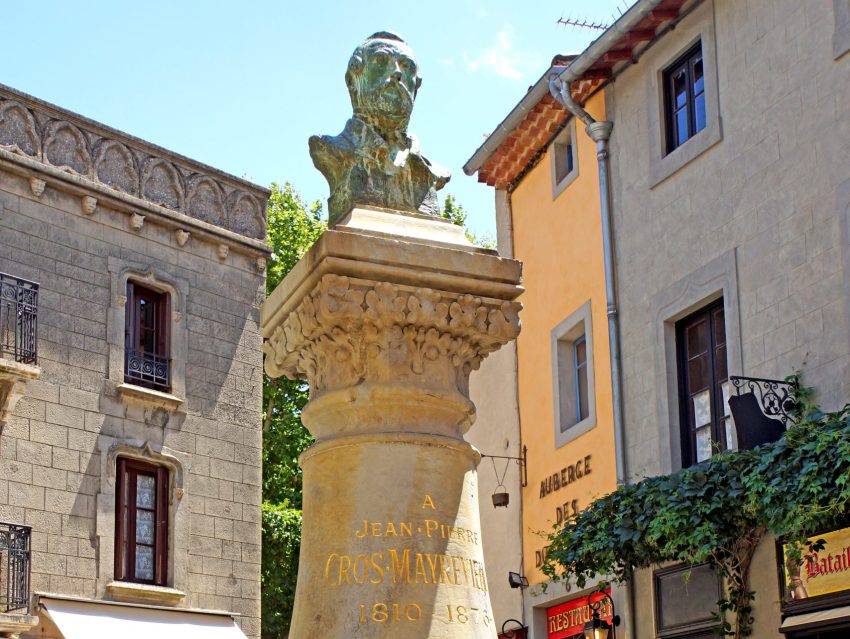
Jean-Pierre Cros-Mayrevieille Monument
CC BY-SA 2.0 / Dennis G. Jarvis
Inside the walled Cite9 of Carcassonne, the Jean-Pierre Cros-Mayrevieille Monument is a 1911 memorial: an imposing bronze bust set atop a tall bronze column. It matters because Cros-Mayrevieille, a local mayor and inspector of historic monuments, helped stop an 1849 government plan to demolish Carcassonnee28099s crumbling fortifications, rallying support with allies like writer Prosper Me9rime9e and paving the way for Viollet-le-Duce28099s restoration work. What visitors remember is the base, where a finely modeled miniature of the city walls wraps the pedestal like a sculpted skyline. It sits in a small open spot, easy to pass until the relief details catch the light.
Location: Le Grand-Puits, 11000 Carcassonne, France | Hours: 24 Hours. | Price: Free. | Distance: 1.4km

34. Dame Carcas
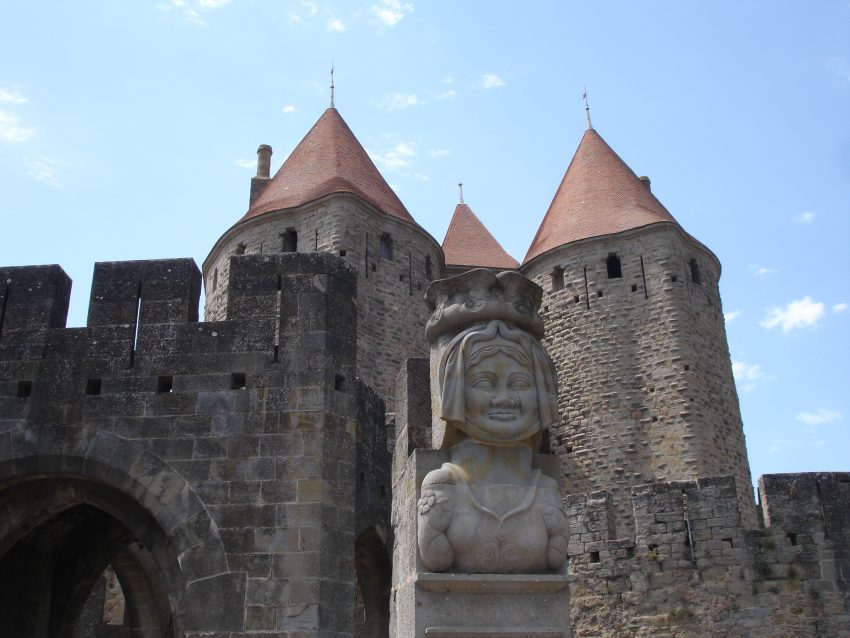
Cité de Carcassonne, Dame Carcas
CC BY-SA 3.0 / Pinpin
Dame Carcas is a stone bust at the main entrance to Carcassonne’s medieval Cité, positioned by the Porte Narbonnaise just before you pass into the walled town. It matters because it anchors the city’s best-known legend: a clever defender who fooled besiegers into thinking supplies were plentiful, giving rise to the “Carcas sonne” name tale. Visitors tend to remember the statue as a quick, atmospheric photo stop, framed by the gateway and drawbridge approach, especially in quieter early hours. Reviews note the fairytale feel of stepping through the fortified entrance, even when the area is busy with crowds and shops. The figure works less like a standalone sight and more like the Cité’s storytelling welcome.
Location: Buste de Dame Carcas, Carcassonne, France | Hours: Open 24 hours. (Outdoor public monument at the entrance to the Cité.) | Price: Free. | Website | Distance: 1.5km

35. Musée de l'Ecole
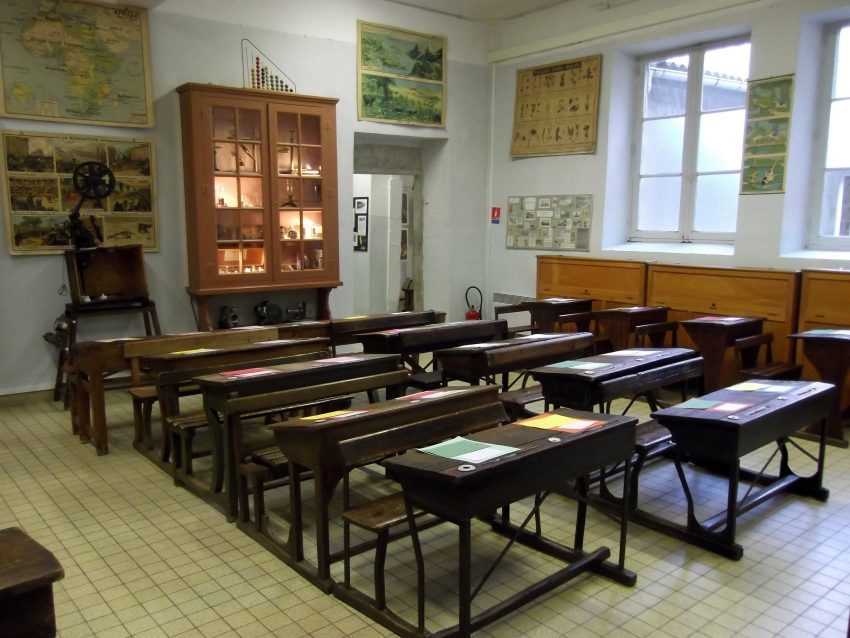
Musée de l’Ecole
Musée de l’Ecole
CC BY-SA 4.0 / APB11
Inside Carcassonne’s Cité Médiévale, the Musée de l’Ecole recreates a French primary school from the Third and Fourth Republic era, using original furniture and teaching tools gathered by collector Francis Loubes and installed in the former community school. Five rooms on Rue Plo display classroom life from roughly 1880–1960, from desks and posters to subject materials for civics, geography, and hygiene. What visitors remember is the hands-on side: trying quill pens or the “sergent major” dip pen with purple ink, and stepping into staged classrooms with mannequins in period clothes. One mannequin even wears the “Âne” label—an old-school mark of shame—making the discipline of the time feel uncomfortably real.
Location: 3 Rue du Plo, 11000 Carcassonne, France | Hours: (Summer) April 1 – September 30; Daily: 09:45–12:30 & 13:30–18:15. (Winter) October 1 – March 31; Tuesday – Saturday: 09:45–12:30 & 13:30–18:15. Closed on Monday, Sunday. | Price: Adults: €4; Reduced: €3. | Website | Distance: 1.5km

36. Le Parc Australien
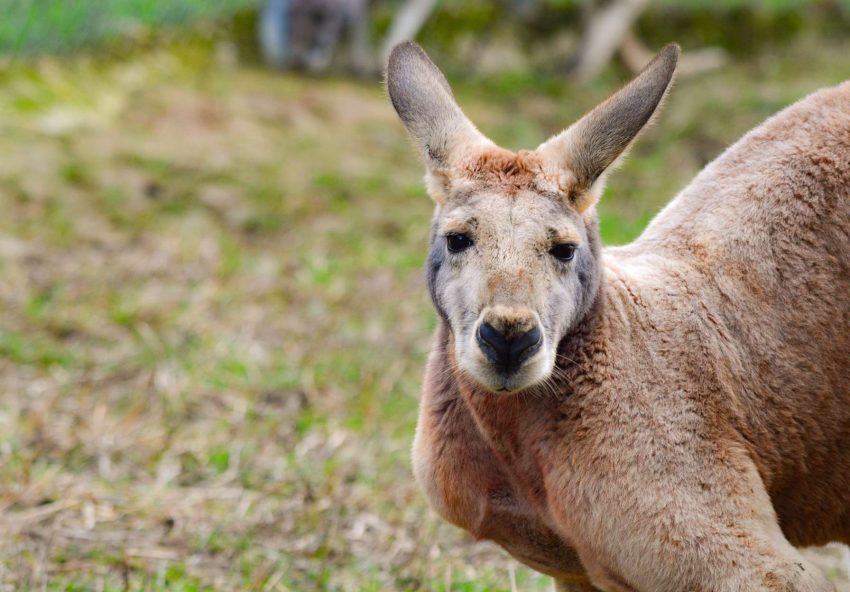
Le Parc Australien
Le Parc Australien
CC BY-SA 4.0 / PalomaFanny
Le Parc Australien, just outside Carcassonne, is an Australia-themed wildlife and activity park built for close-up encounters rather than a big zoo circuit. You’ll see kangaroos, wallabies, emus, kookaburras, and flocks of parakeets in walk-through areas where supervised interaction can include feeding. The experience is shaped by scheduled, staff-led sessions that add context about the animals and keep the visit moving, even for younger kids. Beyond the enclosures, there are hands-on workshops tied to Aboriginal culture—such as didgeridoo playing and boomerang making—and a gold-mining–style digging challenge. A newer zip line adds a quick burst of adrenaline with views over the surrounding countryside.
Location: Direction Montlegun/Lac de la Cavayère, Chem. des Bartavelles, 11000 Carcassonne, France | Hours: Check official website. | Price: Adults (12+): €12.50; Children (3–11): €9.50; Under 3: free. | Website | Distance: 4.5km

Best Day Trips from Carcassonne

A day trip from Carcassonne offers the perfect opportunity to escape the urban rhythm and discover the surrounding region's charm. Whether you're drawn to scenic countryside, historic villages, or cultural landmarks, the area around Carcassonne provides a variety of easy-to-reach destinations ideal for a one-day itinerary. If you are looking to rent a car in France I recommend having a look at Discover Cars, first, as they compare prices and review multiple car rental agencies for you.

1. Narbonne
Nancy France
Nancy France
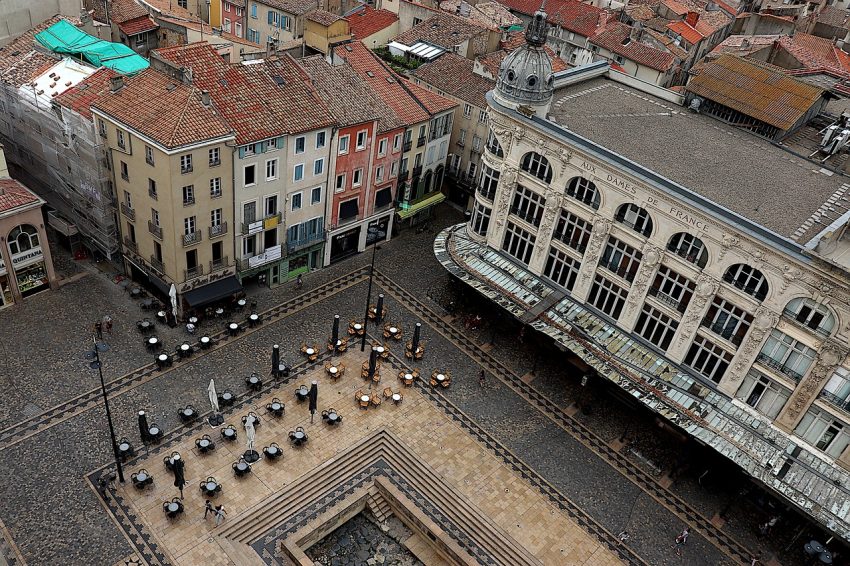
Narbonne, located in the Occitanie region of southern France, is a laid-back city with a sunny Mediterranean feel and a strong connection to the nearby coast. It blends a relaxed pace with cultural richness, making it a great stop for travelers interested in architecture, food, and local charm. The city’s canal, lively markets, and palm-lined squares give it an inviting…
Visiting Narbonne
Powered by GetYourGuide

2. Béziers

beziers france
beziers france
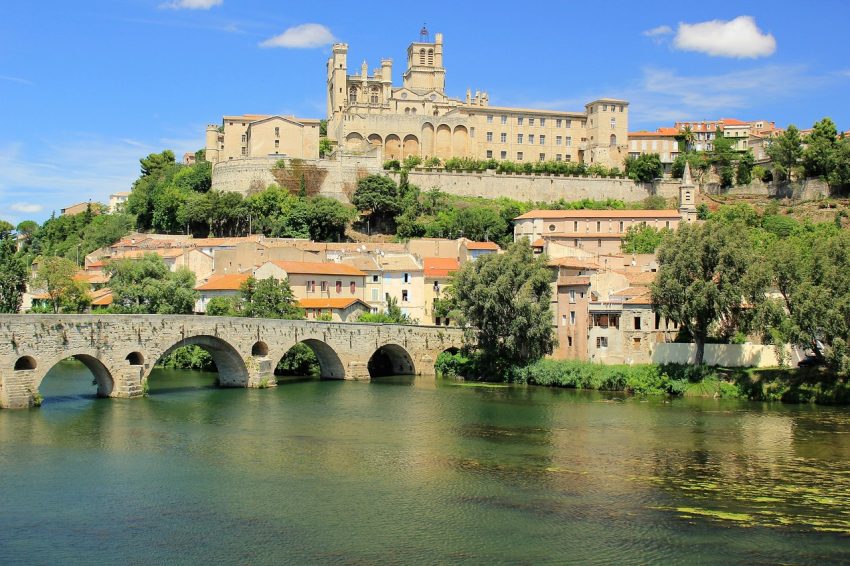
Béziers is a charming and authentic city located in the Occitanie region of southern France, offering travelers a delightful blend of cultural heritage, bustling markets, and Mediterranean warmth. Visiting Béziers provides the perfect opportunity to stroll leisurely through its picturesque old town, exploring narrow streets filled with local boutiques, cafés, and restaurants serving traditional Languedoc cuisine. The vibrant atmosphere around…
Visiting Béziers
Powered by GetYourGuide

3. Albi

albi
albi
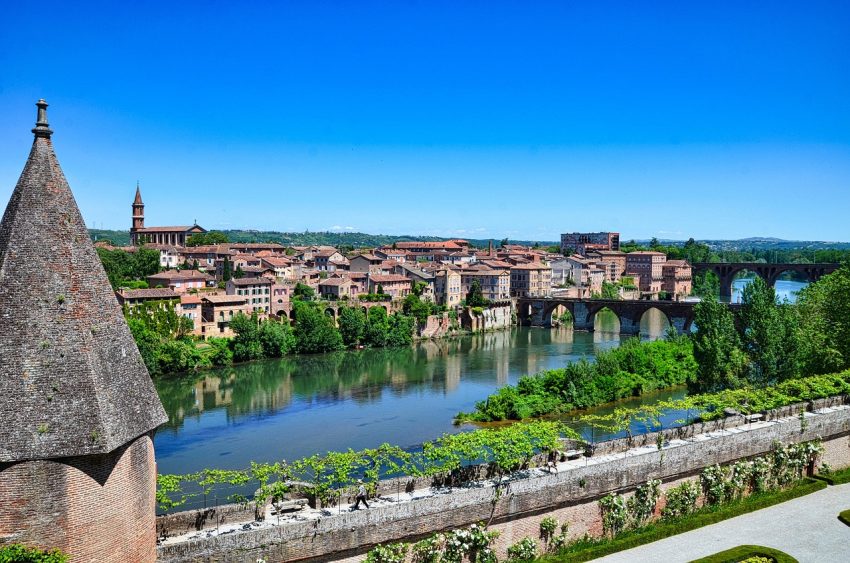
Visiting Albi feels like stepping into a sun-warmed painting, with its distinctive red-brick architecture and gentle Tarn River winding through town. The moment you arrive, the color of the buildings strikes you—terracotta hues glowing in the southern light. Wandering through the cobbled streets, I spent a slow morning exploring the Sainte-Cécile Cathedral. Even from the outside, it’s breathtaking—immense, fortress-like, and…
Visiting Albi
Powered by GetYourGuide

4. Toulouse

Toulouse France
Toulouse France
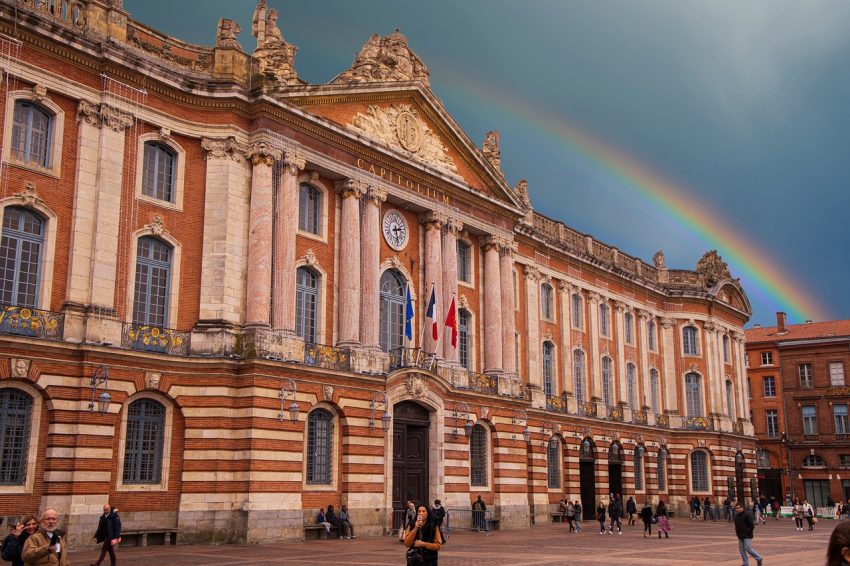
Toulouse, known as the "Pink City" due to its terracotta buildings, offers visitors a captivating blend of vibrant culture, beautiful architecture, and relaxed southern French charm. The city is perfect for exploring on foot, with its charming squares, scenic canals, and tree-lined streets. With an excellent selection of cafés, restaurants, and shops, Toulouse provides a welcoming atmosphere to relax and…
Visiting Toulouse
Powered by GetYourGuide

5. Collioure

Collioure France
Collioure France
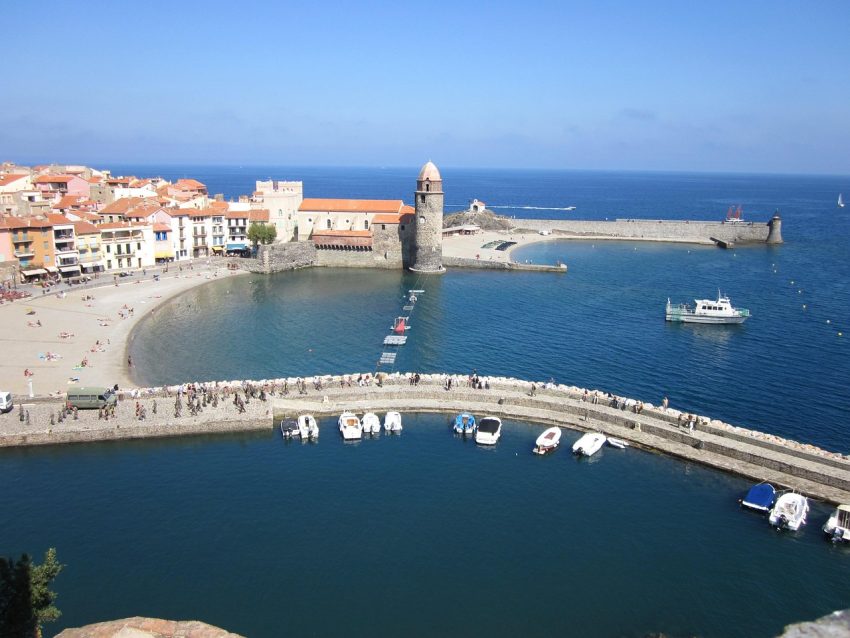
Collioure, located in the Occitanie region of southern France, is a charming coastal town known for its vibrant colors and picturesque scenery. The town is perfect for those looking to unwind by the sea, with its beautiful beaches, stunning Mediterranean views, and a rich artistic atmosphere. Visitors can stroll through the narrow streets lined with colorful houses, visit the bustling…
Visiting Collioure
Powered by GetYourGuide

6. Saint-Girons

Pont vieux et eglise de Saint Girons au coucher du soleil
CC BY-SA 4.0 / HasnaouiOmar
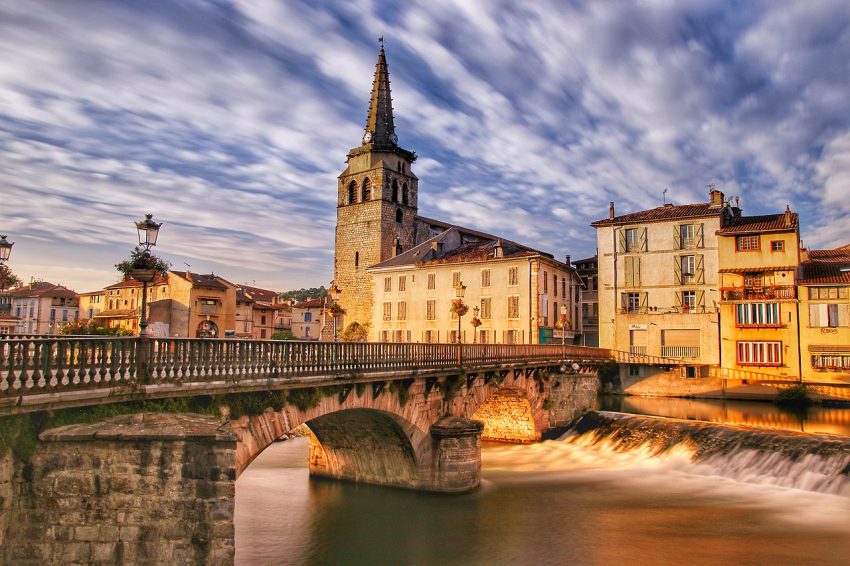
Saint-Girons is a quiet Ariege town situated west of Foix and south of Cazeres in a region known as the Couserans. The town is nestled at the foot of the mountains in an attractive region of wood covered hills where the plains of Gascony meet the mountains s and close to the ruins of the ancient city of Saint Lizier.…
Visiting Saint-Girons

7. Sete

Sete France
Sete France
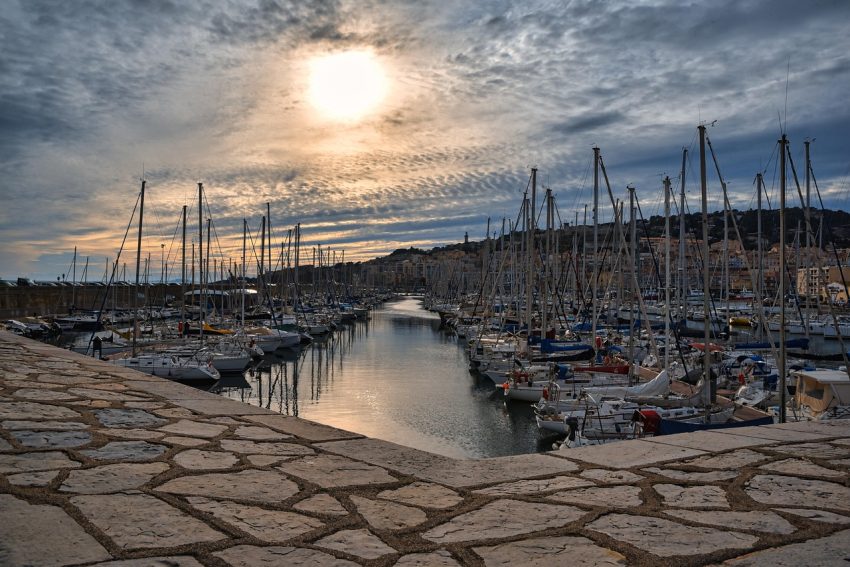
Sète is a charming coastal town in southern France, known for its picturesque canals, bustling fishing port, and vibrant markets. Visitors often enjoy wandering through its lively streets, sampling fresh seafood at waterfront restaurants, and exploring the local art scene in small galleries and boutiques. The town offers a laid-back atmosphere, perfect for leisurely strolls along the marina or relaxing…
Visiting Sete
Powered by GetYourGuide

8. Montauban

Montauban France
Montauban France
Montauban is a charming town in the Occitanie and Languedoc region, offering a peaceful escape with its beautiful streets, historic buildings, and scenic riverfront. Visitors can stroll around the Place Nationale, a lively square lined with elegant arcades and cafes, perfect for enjoying local pastries or a coffee. The town is compact, making it easy to explore on foot, and…
Visiting Montauban

9. Montpellier

Montpellier France
Montpellier France
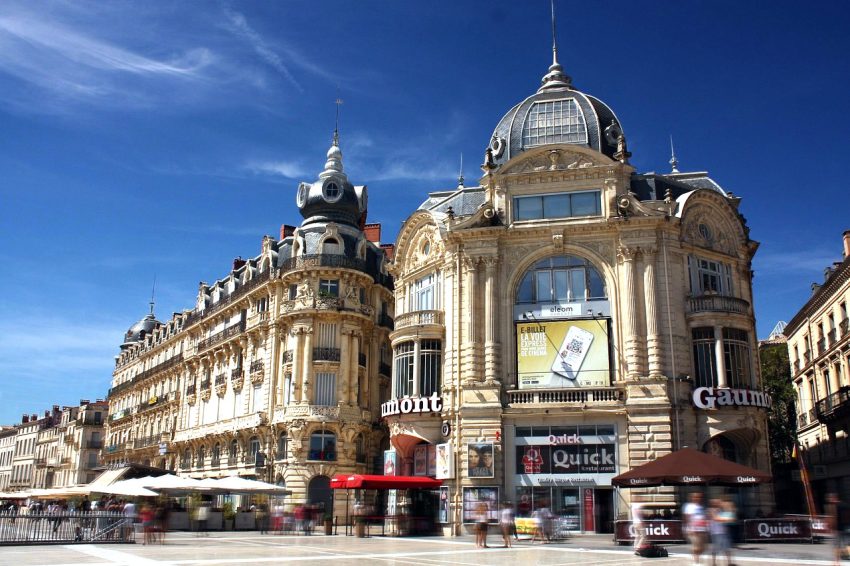
Montpellier, located in the Occitanie region of southern France, is a vibrant and youthful city with a unique blend of old-world charm and modern energy. Its sunny Mediterranean climate, bustling town squares, and lively street culture make it a perfect destination for both relaxation and exploration. The city feels alive with students, art, and music, giving it an effortlessly cool…
Visiting Montpellier
Powered by GetYourGuide

10. Girona

Girona   Catedral de Girona
Girona Catedral de Girona
CC BY-SA 3.0 / MontanNit
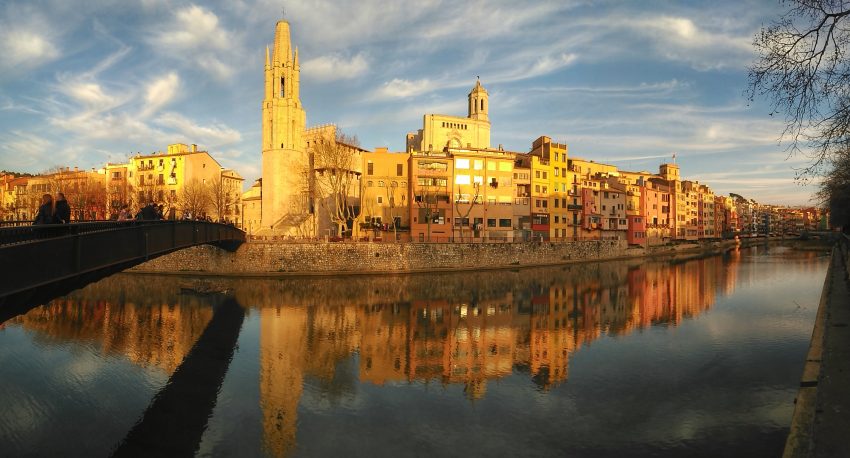
Known as the 'City of the Four Rivers', Girona's historic quarter is a captivating blend of medieval architecture and Roman, Arab, and Hebrew influences. Within the walled enclosure of the Força Vella, you can find the masterpieces of Girona's historical development. The city's prime location between the Pyrenees mountain range and the Costa Brava allows for numerous excursions to nearby…
Visiting Girona
Powered by GetYourGuide

Where to Stay in Carcassonne

In the winding lanes of the Cité Médiévale itself, historic townhouses and intimate boltholes place you steps from the drawbridge and ramparts. Hôtel de la Cité & Spa MGallery occupies a former noble residence inside the walls, with vaulted stone-cellar spa facilities and a rooftop terrace overlooking the towers. Nearby, La Barbacane blends period décor and four-poster beds with Michelin-starred dining just a short stroll from the Château Comtal, while Hôtel du Château offers cozy rooms in a converted medieval granary with exposed beams and views of the Narbonnaise Gate.

Just outside the cité’s walls in the Bastide Saint-Louis quarter, a mix of graceful hôtels particuliers and riverside inns await beside the Canal du Midi. Hôtel du Pont Vieux perches beside the canal lock, its pastel-hued rooms opening onto a shaded terrace where you can watch barges drift by. A few blocks inland, Hôtel Montmorency offers bright, modern rooms in a 19th-century mansion set amid plane trees, with a café-bar perfect for morning coffee before exploring local cafés and markets.

Venture into the rolling vineyards and oak groves surrounding Carcassonne for countryside retreats in restored manors and château estates. Château de Pennautier welcomes guests into its 17th-century wings with elegant salons, manicured parterres and guided wine-tastings in the historic cellars. Further afield, Domaine d’Auriac offers guest rooms in stone cottages set among olive trees, an outdoor pool, and walking trails through vineyards where you can pause for a picnic of local cassoulet and Malbec.

Using the our Hotel and Accomodation map, you can compare hotels and short-term rental accommodations in Carcassonne. Simply insert your travel dates and group size, and you’ll see the best deals for your stay.

Carcassonne Accommodation Map

Best Time to Visit Carcassonne

Carcassonne in Spring (March to May)

Spring is an ideal time to visit Carcassonne, as the weather is mild and the city starts to come alive with blooming flowers and lush greenery. Temperatures are comfortable, typically ranging from 10°C to 20°C, making it perfect for outdoor sightseeing, especially exploring the medieval citadel. The crowds are also smaller compared to the peak summer months, allowing for a more relaxed experience.

Carcassonne in Summer (June to August)

Summer in Carcassonne can get quite hot, with temperatures often reaching up to 30°C or higher, particularly in July and August. This is the high season, and while the city is lively with events, festivals, and a bustling atmosphere, it can also be crowded, especially around popular tourist spots like the Château Comtal and the city walls. If you don’t mind the crowds and heat, summer offers the best chance to enjoy Carcassonne’s vibrant cultural calendar, including the Carcassonne Festival.

Carcassonne in Autumn (September to November)

Autumn is another great time to visit Carcassonne, as the weather remains pleasant with cooler temperatures ranging from 15°C to 25°C. The summer crowds have thinned, providing a quieter experience while still enjoying the beautiful fall colors that transform the surrounding landscape. Autumn also brings harvest time in the nearby vineyards, making it an excellent season for wine enthusiasts to explore the local wine culture.

Carcassonne in Winter (December to February)

Winter is the off-season in Carcassonne, with cooler temperatures, usually ranging between 5°C and 10°C. While some attractions may have shorter hours or be closed for maintenance, the city’s medieval charm shines even more in the quiet winter months. If you’re looking for a peaceful, low-key visit with fewer tourists, this is the best time to explore Carcassonne, and the Christmas markets offer a cozy, festive atmosphere.

Annual Weather Overview

  • January 9°C
  • February 12°C
  • March 14°C
  • April 18°C
  • May 23°C
  • June 28°C
  • July 29°C
  • August 29°C
  • September 27°C
  • October 22°C
  • November 14°C
  • December 11°C

How to get to Carcassonne

Getting to Carcassonne by Air

The closest airport to Carcassonne is the Carcassonne Airport (Aéroport de Carcassonne), which is located just a few kilometers from the city center. This small regional airport serves both domestic and international flights, with several low-cost airlines offering direct connections to major European cities. From the airport, visitors can take a taxi or shuttle bus to reach the city center in about 15 minutes.

Getting to Carcassonne by Train

Carcassonne is well connected to the rest of France via the SNCF train network. The Carcassonne train station is situated just outside the city's medieval walls, making it convenient for visitors to get into the heart of the city quickly. High-speed TGV trains from major cities like Paris, Toulouse, and Marseille regularly connect to Carcassonne, with journey times from Paris taking around 5 hours. You can use SNCF Connect to check schedules, compare routes, and purchase tickets for National (SNCF ) and regional trains (TER). For a more streamlined experience, we recommend using Omio, which allows you to easily compare prices, schedules, and book tickets for both National and Regional travel across all of Europe, all in one place.

Getting to Carcassonne by Car

Driving to Carcassonne is also an excellent option, especially for those who want to explore the surrounding countryside. The city is easily accessible via the A61 motorway, which connects Carcassonne to Toulouse and Narbonne. The drive from Toulouse takes around 1 hour, while from Narbonne, it's only about 30 minutes. Once in Carcassonne, there are plenty of parking options near the medieval citadel, although it's advisable to park outside the city walls to avoid the congestion of the narrow streets within. If you are looking to rent a car in France I recommend having a look at Discover Cars, first, as they compare prices and review multiple car rental agencies for you.
More from this area