Best Palaces to Explore in Seville, Spain (2026)
This website uses affiliate links which earn a small commission at no additional cost to you.
Few cities in Europe rival Seville for its fusion of royal grandeur, Moorish artistry, and Andalusian charm. Across its sunlit streets lie centuries-old palaces - each a living monument to the city's layered history. From royal courts and Renaissance mansions to hidden noble residences, Seville's palatial architecture tells the story of a city that has always been both European and exotic, regal and romantic.
Many of these palaces still feel alive: courtyards filled with orange blossom, fountains murmuring beneath horseshoe arches, and tiled walls glowing in the Andalusian light. The Real Alcázar may be Seville’s crown jewel, but beyond its walls lie other treasures - aristocratic houses, merchant mansions, and Renaissance gems that reveal the private side of the city’s nobility.
Whether you’re a lover of architecture, a history enthusiast, or simply drawn to beauty and storytelling, Seville’s palaces promise a journey through art, power, and passion. Here are the most spectacular ones to explore.
Table of Contents
- The Story of Seville through its Palaces
- The Real Alcázar of Seville
- The rise of Renaissance Seville
- Seville’s golden age of learning and art
- The grace of noble life
- Baroque and Bourbon splendor
- Enlightenment refinement
- The living memory of Seville
- Real Alcázar
- Casa Pilatos
- Casa Palacio de la Condesa de Lebrija
- Casa de las Dueñas
- Casa de los Pinelo
- Palacio de los Marqueses de la Algaba
- Casa Salinas
- San Telmo Palace
- Palacio de Villapanés
- Best Places to Stay to Visit Seville’s Historic Palaces
The Story of Seville through its Palaces
The history of Seville can be read in the walls of its palaces. Each one tells part of a larger story that stretches back over a thousand years, from the days of the caliphs to the modern age. Together they show how the city evolved from a Moorish fortress into a royal capital, a center of trade, and a cradle of art and culture.
The Real Alcázar of Seville
The Real Alcázar of Seville marks the beginning of this story. It was first built in 913, when the Umayyad caliph Abd al-Rahman III established a fortified palace beside the Roman walls. The rulers of Al-Andalus expanded it into a luxurious residence, and when the Christians took Seville in the thirteenth century they kept and adapted what they found. King Alfonso X added a Gothic palace, and a century later King Peter I built the Mudejar Palace, a masterpiece of carved plaster, cedar wood, and colored tiles. The Alcázar remains the city's most important palace, still used by the Spanish royal family and still surrounded by gardens that have grown and changed for a thousand years.
The rise of Renaissance Seville
As Seville became a Christian city, a new generation of noble houses rose within its walls. Families enriched by trade with the Mediterranean and the Americas built homes that blended Renaissance order with Andalusian warmth. The Casa de los Pinelo, near the Cathedral, shows this harmony in its balanced arches, marble columns, and tiled courtyards. The Palacio de los Marqueses de la Algaba, on the edge of the old Moorish quarter, kept alive the fading Mudejar tradition with its brick façade and horseshoe arches. The Casa de Pilatos, begun at the end of the fifteenth century by the Enríquez de Ribera family, joined Italian influence to Seville's native style, creating a palace of marble courtyards, Roman statues, and patterned azulejos that has come to define the city's Renaissance spirit.
Seville’s golden age of learning and art
The wealth that flowed through Seville in the sixteenth and seventeenth centuries filled the city with art and learning. The Casa Palacio de la Condesa de Lebrija, though restored in modern times, reflects the curiosity of that age. Its rooms are lined with Roman mosaics brought from the ruins of Italica and decorated with antiques collected by the Countess of Lebrija, a woman of taste and scholarship. Her house captures Seville's love of history and its role as a meeting place between ancient culture and the discoveries of a new world.
The grace of noble life
The Casa de las Dueñas represents the enduring power of Seville’s nobility. Built between the fifteenth and sixteenth centuries and owned by the Dukes of Alba, it combines Gothic and Renaissance forms with Mudejar courtyards shaded by orange trees. In later years it became a home of art and poetry, remembered as the birthplace of the poet Antonio Machado. Its quiet patios and tiled galleries express the domestic grace that lies behind Seville’s grandeur.
Baroque and Bourbon splendor
By the seventeenth century, Seville’s fortunes had changed, but its taste for splendor had not. The Palacio de San Telmo, built as a school for navigators in 1682, shows the exuberant Baroque style of a city that had once ruled the seas. Its red and ochre façade, filled with columns and cherubs, remains one of Seville’s most striking sights. Not far away, the Casa Salinas preserves a smaller, more intimate side of the same tradition: a sixteenth-century family house where Renaissance geometry meets the Moorish love of light and water.
Enlightenment refinement
The eighteenth century brought a new refinement. The Palacio de Villapanés, built for Admiral Manuel López Pintado, reflects the elegance of the Enlightenment. Behind its plain exterior lies a world of marble staircases, frescoed ceilings, and peaceful courtyards. Today it serves as a hotel, proof that Seville’s palaces continue to live and adapt rather than stand as empty monuments.
The living memory of Seville
Seen together, these buildings form a continuous thread through Seville’s history. The Alcázar recalls its Islamic beginnings; the Renaissance houses speak of wealth and discovery; the Baroque and Neoclassical palaces show the confidence of later centuries. Each has changed with the city, absorbing new ideas while keeping the harmony of Andalusian design. To walk among them is to follow the whole course of Seville’s past, from fortress to royal residence, from trading port to modern capital, in a city where history is still written in stone, tile, and garden shade.
1. Real Alcázar
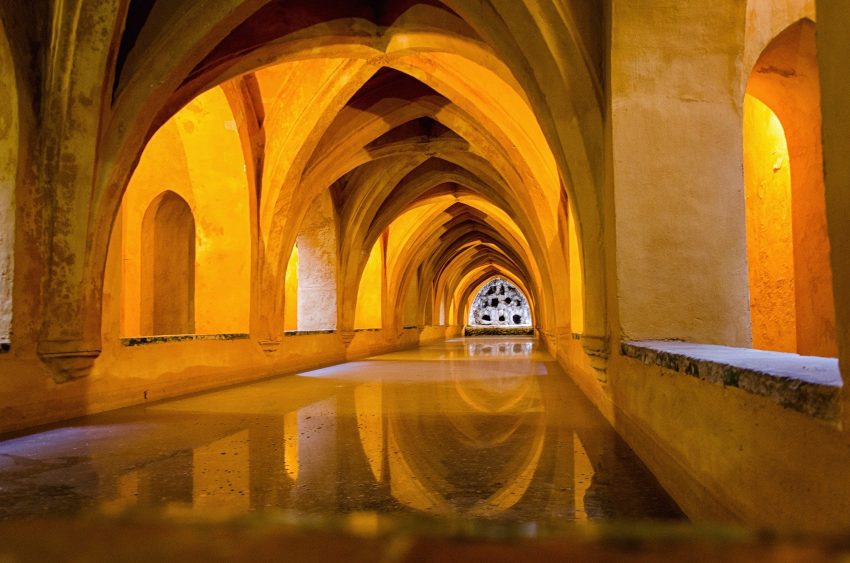
The Real Alcázar of Seville is the crown jewel of the city — a living masterpiece that has witnessed more than a millennium of Spanish history. Originally built in the 10th century as a Moorish fortress, it was later transformed by Christian kings into a breathtaking fusion of Islamic, Gothic, Renaissance, and Baroque architecture. The result is a dazzling labyrinth of courtyards, fountains, and intricately carved archways that feel almost dreamlike.
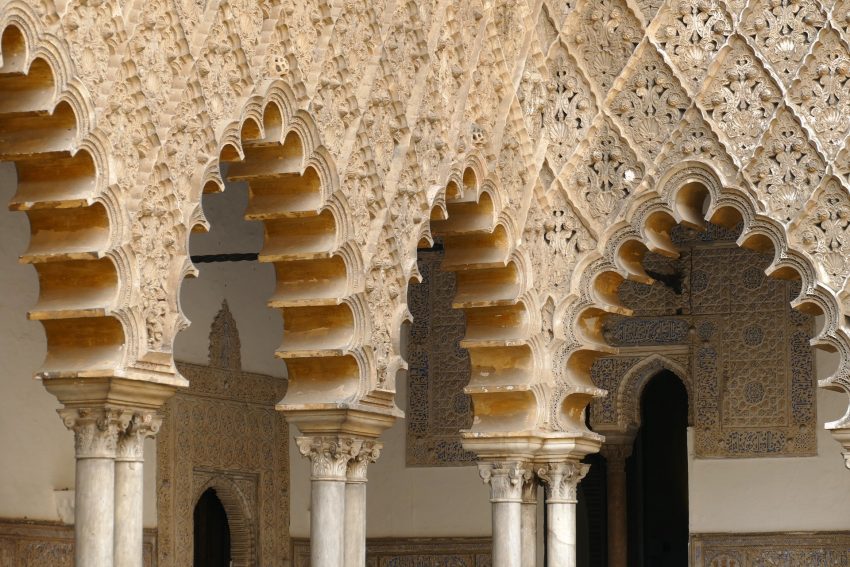
The palace’s Mudéjar Palace, built under King Peter I in the 14th century, remains its most iconic feature. Highlights include the Patio de las Doncellas, with its delicate arches and reflecting pool, and the Hall of Ambassadors, crowned by a golden dome symbolizing the universe. Every inch is a testament to the coexistence and blending of cultures that defined Andalusia.
Outside, the Alcázar Gardens offer a tranquil world of palm trees, tiled fountains, and orange blossoms. Their beauty has captivated artists, filmmakers, and travelers alike — so much so that the palace served as a filming location for Game of Thrones’ Water Gardens of Dorne. It’s not only Seville’s most famous attraction but also a timeless emblem of Spain’s royal legacy.
Location: Patio de Banderas, s/n 41004 Sevilla Spain | Hours: (Summer) Monday – Sunday: 09:30–19:00. (Winter) Monday – Sunday: 09:30–17:00. Closed on 1 January, 6 January, Good Friday, 25 December. | Price: €15.50 (general); €8.00 (reduced); optional Upper Royal Quarters add-on €5.50. | Website

2. Casa Pilatos
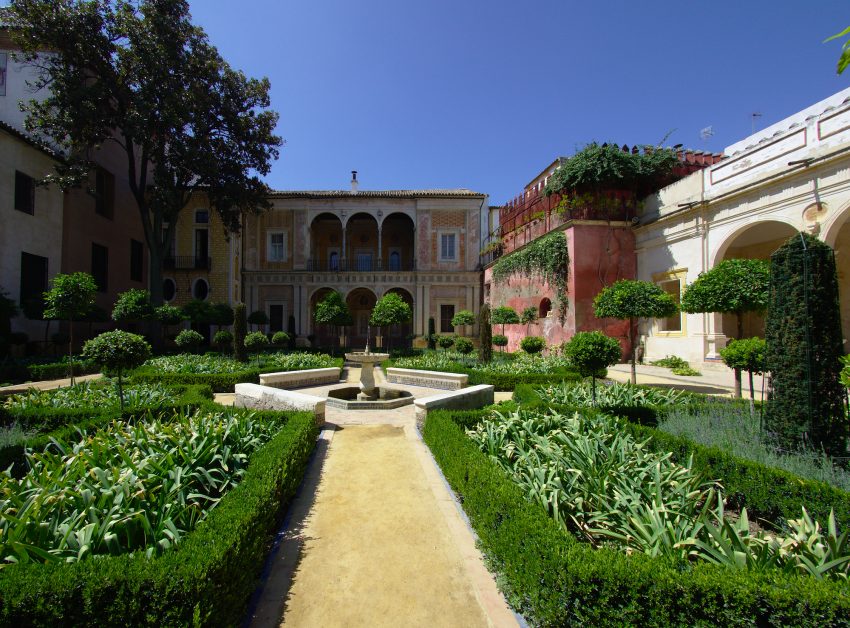
A lesser-known but equally captivating palace, the Casa de Pilatos is a stunning example of Andalusian nobility and Renaissance elegance. Built in the late 15th century by the Enríquez de Ribera family, it’s still privately owned and perfectly preserved. The house combines Italian Renaissance symmetry with Sevillian Mudéjar artistry, giving visitors a harmonious mix of cultures in one exquisite setting.
The mansion’s central courtyard, adorned with marble columns and blue-and-white azulejos, is one of Seville’s most photographed spots. Around it, visitors discover a museum-like collection of sculptures, Roman antiquities, and frescoes. Each room seems frozen in time, showcasing centuries of aristocratic life, from gilded ceilings to painted tiles that tell stories of ancient mythology and faith.
Stepping into the gardens, you’re transported into another era. Ornamental fountains trickle beside citrus trees, while balconies and stairways lead to private chambers decorated with 16th-century tapestries and paintings. Casa de Pilatos feels both intimate and grand — a palace where the Renaissance met the warmth of southern Spain.
Location: Plaza de Pilatos,1, 41003 Sevilla, Spain | Hours: Daily: 09:00–18:00. 25 December: 09:00–14:00; 1 January: 10:00–18:00; 6 January: 09:00–14:00. | Price: €12 (ground floor); €18 (ground floor + upper floor guided visit). | Website
3. Casa Palacio de la Condesa de Lebrija
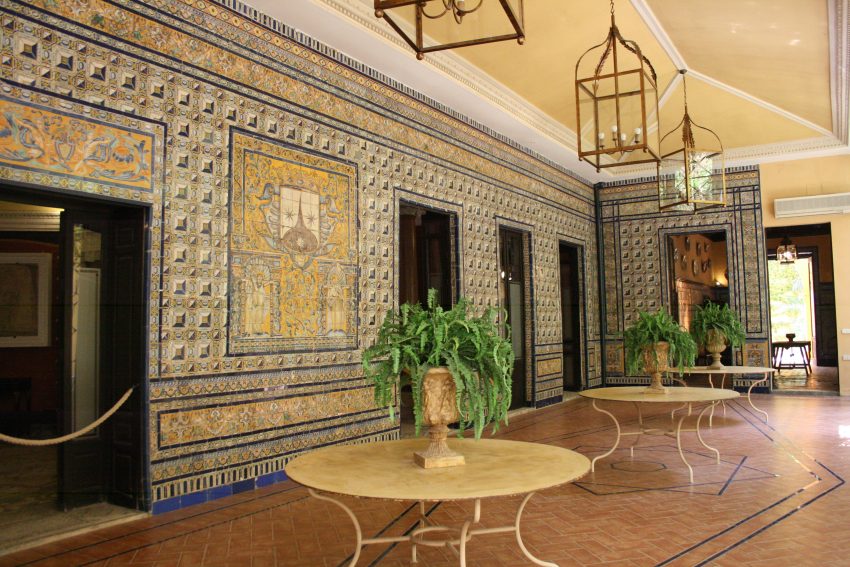
Hidden along Seville’s Calle Cuna, the Casa Palacio de la Condesa de Lebrija is a treasure trove of Roman mosaics and historic art. Once a noble residence, it was restored in the early 20th century by Regla Manjón Mergelina, the Countess of Lebrija, a passionate collector and scholar. Her vision transformed the house into a living museum — an elegant Sevillian home filled with the finest artifacts from across Spain and the Mediterranean.
The ground floor showcases the Countess’s unrivaled collection of Roman mosaics, many rescued from nearby Italica, the ancient Roman city. Walls and floors glitter with marble, ceramics, and archaeological fragments, giving each room an almost museum-like grandeur. Yet the house retains its warmth, with patios full of natural light and touches of traditional Andalusian style.
Upstairs, the private apartments reveal the Countess’s refined taste — antique furniture, Flemish paintings, porcelain, and libraries filled with rare manuscripts. Every room reflects a different era, blending comfort with scholarship. Visiting the Casa de Lebrija feels like stepping into the mind of a collector who turned her love of history into an art form.
Location: Palacio de Lebrija, Calle Cuna, 8, 41004 Sevilla, Spain | Hours: (Winter) September – June: Daily: 10:00–18:00. (Summer) July – August: Daily: 10:00–15:00. | Price: €15; Children (6–12): €6; Groups (15+): €10. | Website
4. Casa de las Dueñas
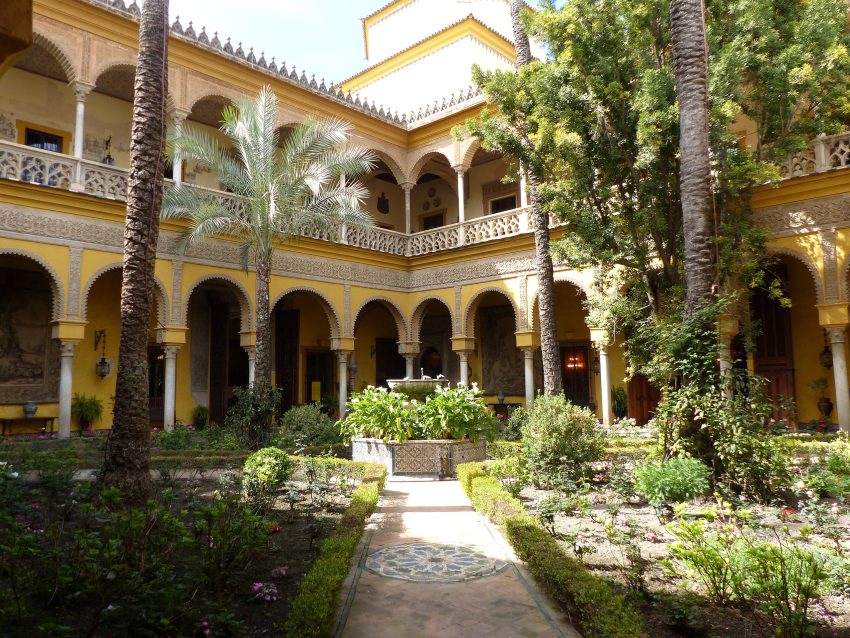
The Casa de las Dueñas is one of Seville’s most romantic palaces — and one that tells the story of Andalusian aristocracy through centuries of art and charm. Built between the 15th and 16th centuries, it served as the city residence of the Dukes of Alba, one of Spain’s most powerful families. Its blend of Gothic, Renaissance, and Mudéjar styles gives it an unmistakably Sevillian soul.
Visitors enter through a serene courtyard framed by orange trees and horseshoe arches. Inside, a series of patios, chapels, and galleries reveal a collection of art and furnishings accumulated over generations. Portraits of Spanish nobility line the walls, alongside ceramics from Triana and antique tiles that shimmer with Andalusian color.
Casa de las Dueñas is also famous as the birthplace of the poet Antonio Machado, whose verses were inspired by the house’s poetic atmosphere. Today, the palace is open to the public, offering a rare glimpse into noble life — intimate, elegant, and deeply tied to Seville’s artistic heritage.
Location: Palacio de las Dueñas en sevilla, Calle Dueñas, 5, Seville, Spain | Hours: (Summer) April – September: Daily: 10:00–19:00. (Winter) October – March: Daily: 10:00–18:00. Closed on 01 January, 06 January, 25 December, 30 December & 31 December. On 05 January & 24 December: 10:00–15:00. | Price: €14 (general); €10 (reduced); €0 (children under 6). | Website
5. Casa de los Pinelo
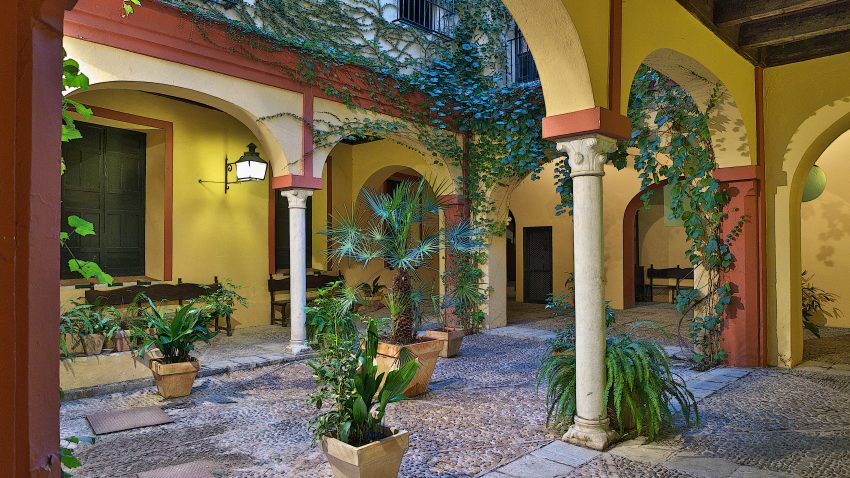
The Casa de los Pinelo is one of Seville’s most refined Renaissance mansions, located just steps from the Cathedral. Built in the early 16th century by the Pinelo family — wealthy merchants of Genoese origin — the house is a perfect example of how trade and art flourished together in Seville’s Golden Age.
Architecturally, it stands out for its symmetry, marble columns, and intricate woodwork, reflecting Italian Renaissance ideals filtered through Sevillian craftsmanship. Inside, delicate Mudéjar ceilings, tiled courtyards, and decorative fountains reveal the elegance of a merchant family that embraced both wealth and culture.
Today, the Casa de los Pinelo serves as the headquarters of the Royal Academies of Fine Arts and Literature, keeping its artistic legacy alive. Visitors often come for exhibitions or guided tours that unveil its hidden patios and libraries. It remains a quiet oasis of scholarship and beauty in the heart of Seville.
Location: Casa de los Pinelo, Calle Abades, Seville, Spain | Hours: Tuesday & Thursday: 11:00–13:00. Closed on Saturday & Sunday. | Price: €7 (standard); €6 (seniors). | Website
6. Palacio de los Marqueses de la Algaba
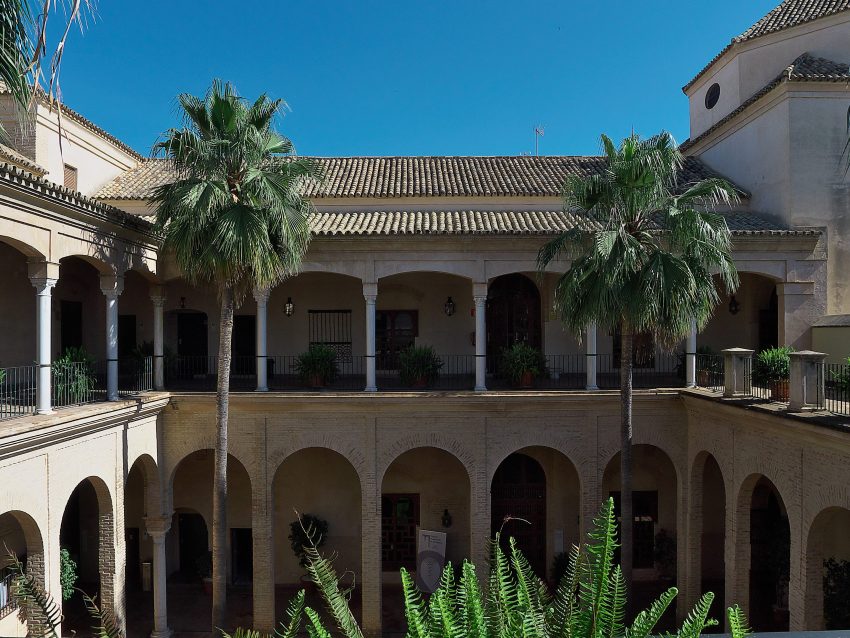
Just outside the walls of Seville’s historic center lies the Palacio de los Marqueses de la Algaba, an impressive 15th-century palace that beautifully preserves the late Mudéjar style. Once the residence of noble families during Seville’s golden trading years, it has since been restored and converted into the Center for Mudéjar Art, celebrating one of Andalusia’s defining artistic traditions.
The palace’s façade is striking — a blend of brick, horseshoe arches, and geometric ornamentation that showcases Islamic craftsmanship at its peak. Inside, arched galleries frame tranquil courtyards where temporary exhibitions and cultural events bring history to life. The main courtyard, with its carved capitals and azulejo panels, is a masterpiece in its own right.
Visiting the Palacio de los Marqueses de la Algaba offers more than architectural beauty; it’s an educational experience. The museum explores how Mudéjar art evolved under Christian rule, bridging two worlds through design. It’s one of Seville’s most underrated gems — perfect for travelers seeking history away from the crowds.
Location: Palacio Marqueses de la Algaba Plaza Calderón de la Barca, s/n 41003 Sevilla Spain View o | Hours: (Winter) 1 October – 30 April: Monday – Friday: 10:00–14:00 & 17:00–20:00; Saturday: 10:00–14:00. (Summer) 1 May – 30 September: Monday – Friday: 10:00–14:00 & 18:00–21:00; Saturday: 10:00–14:00. Closed on Sundays & public holidays. | Price: Free | Website
7. Casa Salinas
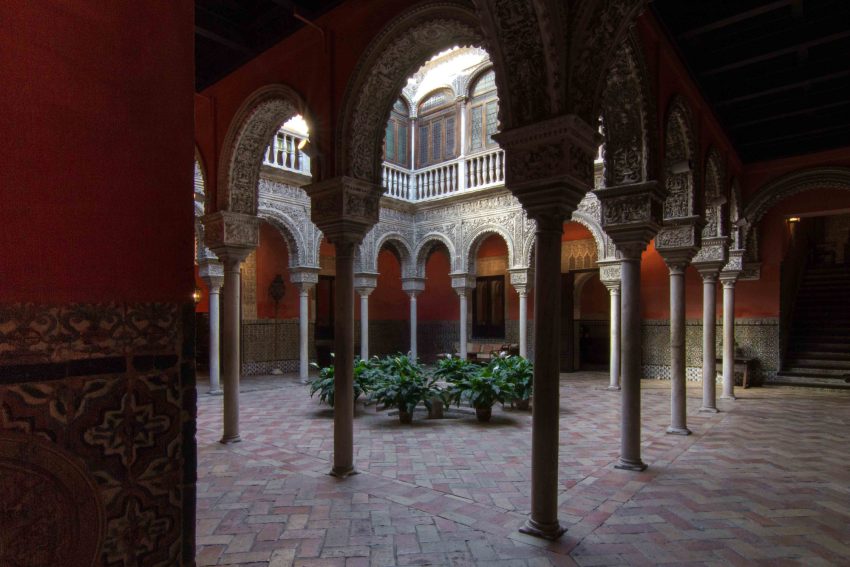
The Casa Salinas is a private 16th-century mansion that has only recently opened to visitors, offering a glimpse into Seville’s noble domestic life. Hidden behind an unassuming façade on Calle Mateos Gago, it’s one of the city’s best-preserved examples of Renaissance-Mudéjar architecture. Its beauty lies in its balance: an elegant home where everyday life and art coexisted harmoniously.
The palace centers around a graceful marble-columned patio, surrounded by rooms adorned with colorful azulejos, carved ceilings, and antique furniture. Each corner seems carefully designed to catch the light and emphasize Seville’s indoor-outdoor lifestyle. Even the small family chapel and private study retain their period charm.
Still owned by the Salinas family, the house is maintained with extraordinary care, preserving its authenticity. Guided tours reveal stories of family heritage, craftsmanship, and tradition passed down for generations. Casa Salinas is a true hidden treasure — quieter than the Alcázar, but just as enchanting in its intimacy.
Location: Palacio de los marqueses de Salinas, Calle Mateos Gago, 39 41004 Sevilla Spain | Hours: (Winter) Daily: 10:00–19:00; 1 October – 14 June. (Summer) Daily: 10:00–14:00; 15 June – 30 September. Closed during private events. | Price: €12 general; €10 groups (10+); €10 Seville city residents; €6 children under 11; free under 6; €6 visitors with disabilities. | Website
8. San Telmo Palace

The Palacio de San Telmo is one of Seville’s most monumental and historically significant buildings. Originally built in the late 17th century as a school for navigators, it trained officers for Spain’s colonial fleets during the height of its maritime empire. Later, it became the residence of the Dukes of Montpensier, relatives of the French royal family, who transformed it into a grand aristocratic palace.
The palace’s Baroque façade, designed by Leonardo de Figueroa, is among the most ornate in Spain. Its sculpted red and ochre exterior, rich with columns, cherubs, and royal coats of arms, dominates the Avenida de Roma. Inside, lavish halls and grand staircases reflect the wealth and power of its owners, as well as Seville’s status as Spain’s gateway to the Americas.
Today, San Telmo serves as the seat of the Andalusian presidency, but parts of it open occasionally for cultural visits and events. Even viewed from outside, it’s a breathtaking sight — a reminder of Seville’s golden age when ships, silver, and royal ambition shaped the world.
Location: San Telmo Palace, Calle Palos de la Frontera, 41004 Sevilla, Spain | Hours: Thursday: 10:00, 12:00, 16:00 & 18:00. Saturday: 11:00, 13:00, 16:00 & 18:00. Closed on Monday, Tuesday, Wednesday, Friday & Sunday. | Price: Free | Website
9. Palacio de Villapanés
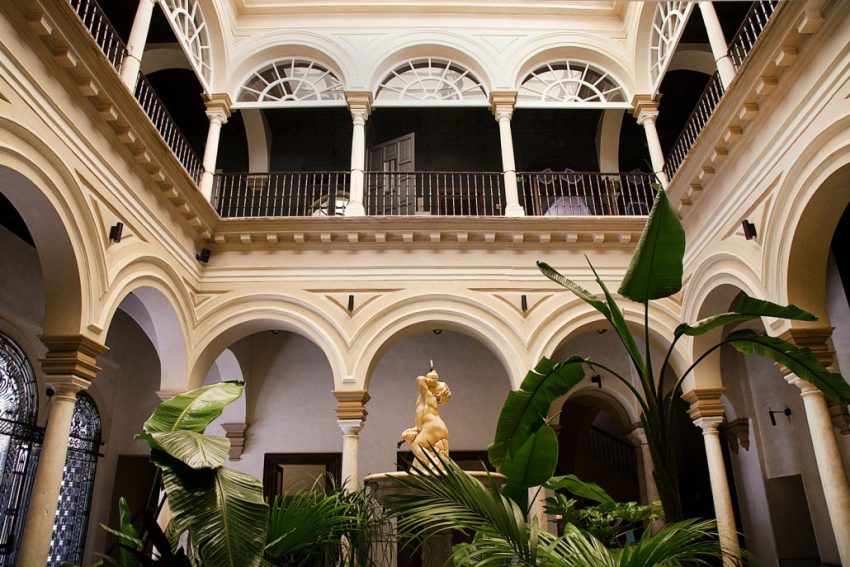
Now transformed into a luxury five-star hotel, the Palacio de Villapanés is a masterclass in Baroque elegance. Built in the 18th century for Admiral Manuel López Pintado, the first Marquis of Villapanés, it blends aristocratic grandeur with refined Sevillian artistry. Its graceful courtyards, wrought-iron balconies, and marble staircases capture the splendor of noble life in the Age of Enlightenment.
The interior showcases original coffered ceilings, frescoes, and furniture from the era, seamlessly paired with modern comforts. Guests can sip coffee beneath chandeliers that once illuminated aristocratic gatherings or stroll through the peaceful patios surrounded by orange trees. Every space preserves the balance between opulence and intimacy.
Even if you’re not staying there, the hotel’s restaurant and courtyard bar welcome visitors, allowing you to experience a taste of 18th-century Seville in contemporary luxury. The Palacio de Villapanés perfectly bridges past and present — living proof that Seville’s palaces are not relics, but enduring expressions of its soul.
Location: Hotel Palacio de Villapanes Calle Santiago, 31 41003 Sevilla Spain | Hours: Bar and restaurant open until midnight. | Price: Free to enter public areas (services such as dining, spa, and accommodation are paid). | Website
Best Places to Stay to Visit Seville’s Historic Palaces
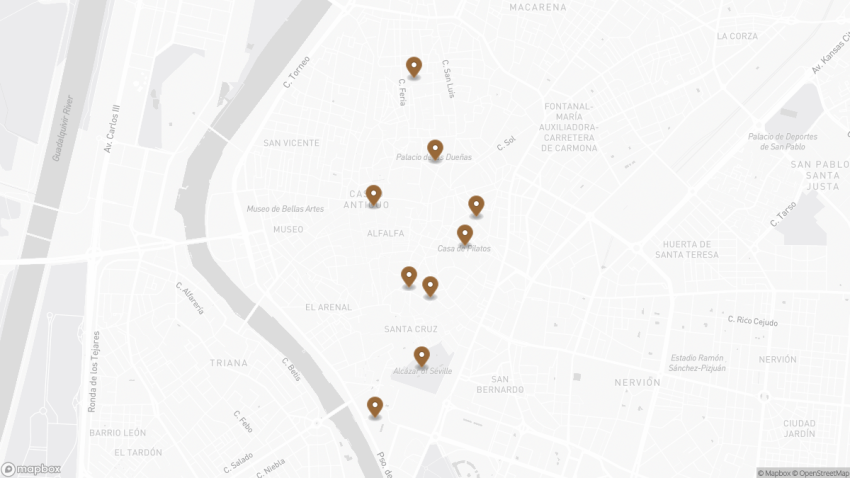
If your goal is to be close to Seville's great palaces, you'll want to stay in or near neighborhoods like Santa Cruz, the Old Town / Cathedral area, Arenal / El Centro, or even Alameda de Hércules - each offers a different flavor of Seville life and easy access to the city's heritage treasures. In Santa Cruz, you'll be immersed in winding narrow alleys, fragrant citrus courts, and immediate walking access to the Real Alcázar, Casa de Pilatos, and Casa de los Pinelo. Staying there puts you within moments of the Puerta de León, the Alcázar gardens, and the Moorish-Christian heart of Seville. A hotel like Corral del Rey gives you boutique luxury steps from many palaces, while Hotel Casa 1800 Sevilla is tucked into a 17th-century mansion just off the Cathedral, making palace visits feel effortlessly close.
If you prefer to be centrally located in El Centro / Arenal, you’ll enjoy short strolls to the Alcázar, Casa de la Condesa de Lebrija, and Palacio de los Marqueses de la Algaba. This district also gives you better access to tapas, riverfront walks, and the Plaza de Toros. Hotel Amadeus & La Musica is well placed in this zone; its musical motif, courtyard, and proximity to Casa de los Pinelo make it a charming choice. On the same lines, Hotel Palacio de Villapanés is housed in one of Seville’s elegant palaces, blending heritage ambiance with the advantage of central access to both palaces and nightlife.
For travelers who like a bit more local authenticity, Alameda de Hércules offers a bohemian, relaxed base while still being within walking or short tram distance of the Alcázar, Casa de las Dueñas, and Casa Salinas. Here you might find smaller boutique guesthouses or apartments that let you mingle with locals each evening after your palace visits.
Wherever you stay, the key is to balance charm and walkability. If you’re lodged near Santa Cruz or the Cathedral, you’ll probably walk to at least half your palace list. El Centro / Arenal gives you a little more room to wander beyond just the palace route. And if you venture slightly farther - for example, into La Alameda - the tradeoff is tranquility at night with only a few extra minutes to the monuments by foot or public transit.

Moira & Andy
Hey! We're Moira & Andy. From hiking the Camino to trips around Europe in Bert our campervan — we've been traveling together since retirement in 2020!
This website uses affiliate links which earn a small commission at no additional cost to you.
Walking Tour Map