Self-Guided Walking Tour of Montpellier (2026)
This website uses affiliate links which earn a small commission at no additional cost to you.
Montpellier is one of the most rewarding cities in southern France to explore on foot, with a compact historic centre, lively squares, and grand architecture that reveals its long and layered past. A self-guided walking tour of Montpellier lets you move at your own pace while discovering medieval lanes, handsome boulevards, and local cafés tucked between major landmarks. It is an easy and flexible way to experience the city's atmosphere while focusing on the places that interest you most.
As you walk through the heart of the city, you will pass through elegant public spaces, historic churches, and districts shaped by centuries of trade, learning, and urban growth. The route can be adapted to suit a short visit or a full day of sightseeing, making it ideal for first-time visitors as well as return travellers. If you are planning your itinerary and looking for the best things to see in xxx, this walk gives you a practical and enjoyable way to connect the main highlights.
One of the best parts of a self-guided walk is the freedom to pause whenever you like, whether for photos, a coffee stop, or a longer visit inside a museum or monument. Montpellier rewards slow exploration, and many of its most memorable details are found between the headline sights, from hidden courtyards to attractive side streets. With a little time and comfortable shoes, this self-guided walking tour of Montpellier can become one of the highlights of your trip.
How to Get to Montpellier
By Air: Montpellier is served by Montpellier-Méditerranée Airport, which is located a short distance from the city centre and offers a convenient gateway for domestic and European arrivals. After landing, you can continue into the city by airport shuttle bus, local public transport connections, taxi, or private transfer, depending on your budget and arrival time. Flying is often the fastest option if you are coming from another part of France or from abroad, especially for shorter trips where you want to maximise your time in the city. For the best deals and a seamless booking experience, check out these flights to Montpellier on Booking.com.
By Train: Travelling to Montpellier by train is one of the easiest and most comfortable options, with frequent services linking the city to major French destinations including Paris, Lyon, Marseille, Toulouse, and Nîmes. High-speed TGV services make Montpellier a practical stop on a wider France itinerary, while regional trains are useful for shorter journeys within Occitanie and along the Mediterranean coast. Depending on your route, you may arrive at Montpellier Saint-Roch station in the centre or Montpellier Sud de France station, with onward connections available by tram, bus, taxi, or car hire. You can use SNCF Connect to check schedules, compare routes, and purchase tickets for National (SNCF ) and regional trains (TER). For a more streamlined experience, we recommend using Omio, which allows you to easily compare prices, schedules, and book tickets for both National and Regional travel across all of Europe, all in one place.
By Car: Montpellier is well connected by major motorways, making it straightforward to reach by road from other parts of southern France and neighbouring countries, and driving can be a good choice if you plan to explore the wider region before or after your stay. Keep in mind that parking in the historic centre can be limited, so it is usually best to use public car parks on the edge of the old town and continue on foot or by tram. Long-distance coaches and intercity buses are also available from many French and European cities, offering a cheaper alternative to rail or flights, although journey times are usually longer. If you are looking to rent a car in France I recommend having a look at Discover Cars, first, as they compare prices and review multiple car rental agencies for you.
A Short History of Montpellier
Medieval Origins of Montpellier (10th-12th Centuries)
Montpellier emerged in the early medieval period as a growing settlement under the control of the Guilhem lords, who helped shape it into an important commercial and administrative centre. Unlike many older cities that developed around a Roman core, Montpellier rose to prominence comparatively quickly, benefiting from trade, markets, and its position within wider regional networks. Its early growth laid the foundations for the dense street pattern and urban fabric that can still be felt in parts of the historic centre today, including old routes such as Rue de l'Aiguillerie.
By the 12th century, Montpellier had become a thriving place of merchants, craftsmen, and scholars, known for its openness to Mediterranean influences. Trade in textiles, spices, and other goods helped enrich the town, while religious institutions and urban elites contributed to the construction of churches, houses, and civic spaces. This period established Montpellier's identity as a lively and ambitious city, where commerce and intellectual life developed side by side.
The medieval street network that survives in parts of the old quarter reflects this era of expansion. Narrow lanes, irregular plots, and connected squares reveal a town that grew organically as prosperity increased. Walking through areas around Rue de l'Aiguillerie and nearby historic streets still gives a sense of how medieval Montpellier functioned as a place of exchange, movement, and daily urban life.
Montpellier as a Centre of Learning and Power (13th-15th Centuries)
Montpellier’s importance increased further in the later Middle Ages through its reputation for learning, especially medicine and law. The city became associated with scholarly activity and attracted students and teachers, strengthening its status far beyond its immediate region. This intellectual prestige had a lasting impact on its development, encouraging investment in religious and civic institutions and helping create a more sophisticated urban culture.
During this period, ecclesiastical authority and royal power also left a visible mark on the city. Montpellier Cathedral, with its imposing character and fortress-like appearance, reflects the tensions and ambitions of the late medieval era, when religious buildings often served both symbolic and practical roles. Its architecture stands as a reminder that Montpellier was not only a place of study and trade, but also one shaped by power, conflict, and institutional influence.
Elite residential and administrative areas also developed in ways that can still be read in the cityscape. Places such as Place de la Canourgue preserve the atmosphere of a historic quarter associated with higher-status residences and civic importance. These spaces help illustrate how medieval Montpellier evolved from a mercantile town into a more complex urban centre with distinct social and political layers.
Renaissance and Early Modern Montpellier (16th-17th Centuries)
The 16th century brought both cultural vitality and major upheaval, as Montpellier was affected by the religious conflicts that shook France. The city became a significant Protestant stronghold for a time, and this shaped its political life, fortifications, and identity during the Wars of Religion. Periods of tension, negotiation, and royal intervention left deep marks on local institutions and urban development.
Even amid conflict, Montpellier continued to grow as a place of administration, education, and commerce. Streets and squares were adapted over time to suit changing civic needs, while houses and public buildings were rebuilt or altered in response to new political realities. The city's long history of layered construction is one reason why walking through the centre reveals such a rich mix of medieval forms and later architectural styles.
By the 17th century, royal authority became more firmly established, and Montpellier entered a phase of urban transformation that prepared the way for grander planning in later centuries. The foundations of ceremonial spaces and more formal routes began to emerge, signalling a shift from medieval irregularity toward the more ordered and monumental style associated with the classical period.
Classical and Monumental Montpellier (17th-18th Centuries)
The 17th and 18th centuries saw Montpellier develop many of the grand public spaces and monumental features that define its historic character today. Royal urban planning and civic ambition led to the creation of elegant promenades, gateways, and squares designed not only for movement but also for display. This was a period when the city increasingly projected prestige through architecture and urban design.
Porte du Peyrou and the Promenade du Peyrou are among the clearest expressions of this era. Designed as a ceremonial entrance and formal promenade, they reflect the classical taste for symmetry, perspective, and monumentality. These spaces transformed the experience of the city, creating a more theatrical urban environment where public life, power, and landscape design came together.
The Montpellier Aqueduct, built to bring water into the city, also belongs to this broader phase of improvement and monumental infrastructure. Beyond its practical function, it stands as a statement of technical ambition and civic planning. Together, the aqueduct and the Peyrou ensemble show how early modern Montpellier combined engineering, symbolism, and urban planning to shape a more formal cityscape.
19th-Century Expansion and Civic Montpellier (19th Century)
During the 19th century, Montpellier continued to expand and modernise, with new boulevards, public spaces, and institutions reshaping the city's social and cultural life. Older quarters remained important, but the city also embraced broader avenues and landscaped areas that reflected changing ideas about hygiene, leisure, and civic pride. Urban improvements made Montpellier more accessible and more visually coherent as a modern provincial capital.
Charles-de-Gaulle Esplanade became one of the major public spaces associated with this period of civic life and promenade culture. It offered residents and visitors a place to stroll, gather, and participate in the rhythms of urban society, linking older and newer parts of the city. Such spaces were central to 19th-century city planning, which increasingly valued public greenery and formal open areas.
Place de la Comédie also grew into a key focal point of Montpellier’s public identity, becoming a lively meeting place and symbol of urban life. As transport, commerce, and entertainment expanded, the square developed into a major civic stage where everyday activity and ceremonial life intersected. Its continued prominence reflects the success of 19th-century urban reorganisation in creating durable public centres.
Modern Cultural Montpellier (20th Century to Today)
In the 20th century and beyond, Montpellier continued to evolve while preserving the character of its historic core. Expansion, modern infrastructure, and new neighbourhoods changed the scale of the city, but the older centre remained central to its identity. Historic streets, squares, and monuments were increasingly valued not only as functional urban spaces but also as cultural heritage.
Cultural institutions have played an important role in this modern identity, with the Fabre Museum standing out as one of the city’s major artistic landmarks. The museum reflects Montpellier’s longstanding connection to learning and culture, linking the city’s historical prestige with its contemporary role as a centre for art and public life. Its presence also reinforces the importance of the surrounding historic district as a place where architecture, civic memory, and culture meet.
Today, spaces such as Place Jean Jaurès, Rue Foch, Place de la Comédie, and the Peyrou area show how Montpellier’s history remains visible in daily life. Medieval lanes, classical monuments, 19th-century promenades, and modern cultural venues all coexist within a walkable urban landscape. This layering is what makes the city’s history especially rewarding to explore on foot, as each district reveals a different chapter in Montpellier’s development.
Where to Stay in Montpellier
To make the most of visiting Montpellier and this walking tour, then you should consider staying overnight in the centre. The best base for most travellers is around Place de la Comédie and the Écusson (old town), where you can walk straight out to the main squares, historic streets, and key sights without needing transport. This area is ideal if you want atmosphere and convenience, with strong options ranging from classic hotels to modern city stays such as Grand Hôtel du Midi and Pullman La Pléiade Montpellier Centre.
If you want to be close to the station while still remaining within easy walking distance of the old town and Place de la Comédie, the Saint-Roch / station area is a very practical choice. This is especially useful for travellers arriving by train, planning day trips, or leaving early, and it still works well for the walking tour because the historic centre is only a short walk away. Good options here include Best Western Plus Comédie Saint Roch and Oceania Le Métropole Montpellier.
For a slightly calmer stay with easy access to the centre, look at the Polygone / Antigone side of central Montpellier, which gives you larger hotels, shopping, and straightforward tram links while still being walkable to the main tour route. This area suits visitors who want modern facilities, parking access, or apartment-style accommodation for longer stays. Strong choices include Mercure Montpellier Centre Comédie ibis Styles Montpellier Centre Comédie and Aparthotel Adagio Montpellier Centre Comédie.
Your Self-Guided Walking Tour of Montpellier
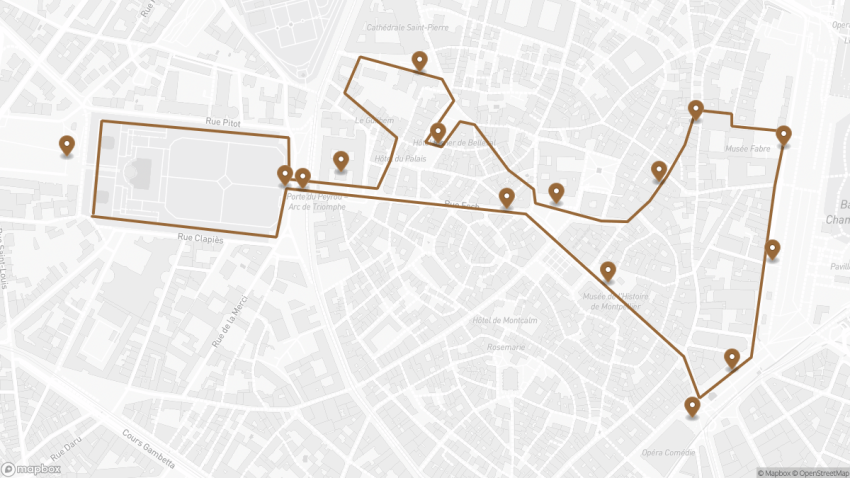
Discover Montpellier on foot with our walking tour map, which guides you from one stop to the next as you explore the city at your own pace. Because this is a self-guided walking tour, you are free to skip places that do not interest you, spend longer at the sights you enjoy most, and stop for coffee whenever you like.
1. Montpellier Aqueduct
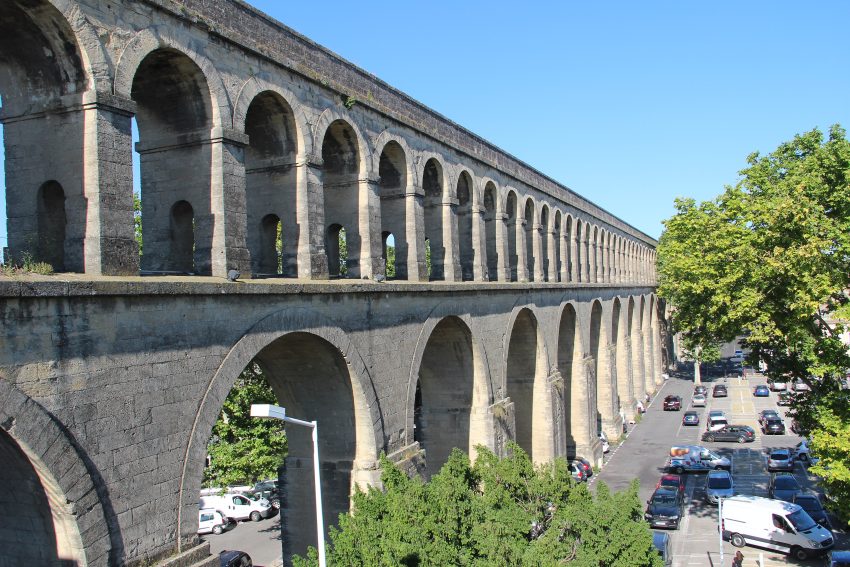
Montpellier’s aqueduct, often called the Saint-Clément or Arceaux Aqueduct, is an 18th-century engineering work built to bring water from the Saint-Clément spring into the city. The system supplied the Peyrou water tower and helped feed Montpellier’s fountains, addressing a crucial urban need as the city expanded. Its construction over a long distance (about 14 km from source to city) shows the scale of the project.
The most visible section near Montpellier is the impressive double row of arcades, stretching for several hundred meters and giving the surrounding district (Les Arceaux) its name. Historically, this aqueduct represents the practical side of the same period that produced the royal monuments at Peyrou: alongside ceremonial architecture, the city invested in infrastructure that sustained daily life. It is a strong reminder that urban grandeur depended on water management as much as on façades and statues.
When visiting, the arcades themselves are the main attraction—best appreciated by walking along them and observing their rhythm and scale. It is also worth viewing the aqueduct in relation to the Peyrou water tower and promenade, since the full story is about how water entered and served the city. The contrast between monumental engineering and the neighborhood atmosphere around Les Arceaux makes this one of Montpellier’s most distinctive historic sights.
Location: Aqueduc des Arceaux, 155 Rue Hilaire Ricard 85, 34000 Montpellier, France | Hours: 24 Hours. | Price: Free. | Website

2. Promenade du Peyrou
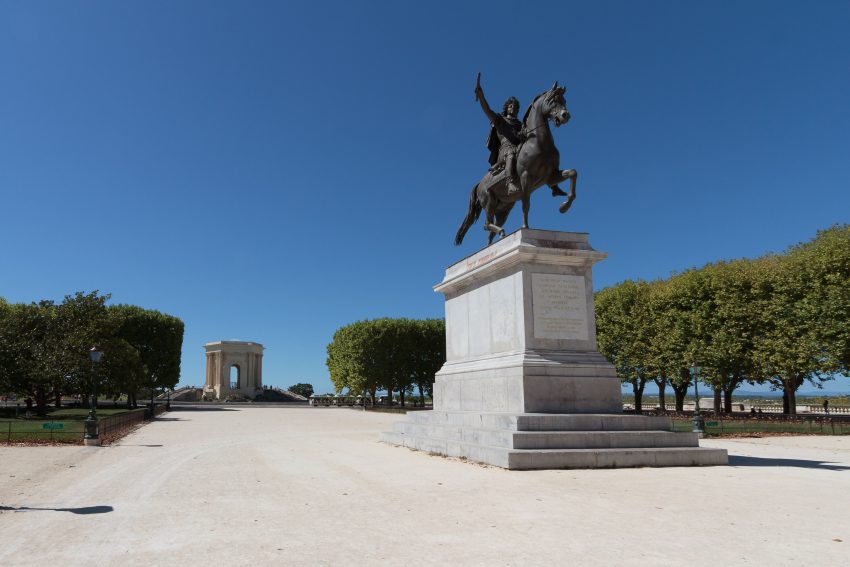
The Promenade du Peyrou, also known as the Place Royale du Peyrou, was laid out from the late 17th century and became one of Montpellier’s grandest formal public spaces. Its terraces and broad open areas were designed as a royal square centered on an equestrian statue of Louis XIV, linking urban display, monarchy, and civic pride. The site later evolved into one of the city’s favorite public gathering places while retaining its monumental layout.
Historically, the Peyrou is significant because it combines multiple layers of city-making in one ensemble: the triumphal arch entrance, the royal esplanade, the equestrian statue, and the water infrastructure beyond. The grounds and terraces date to the late 1600s, while 18th-century additions connected the site to Montpellier’s water system. This makes the Peyrou not just a park, but a statement of power, planning, and public works.
What to see here includes the broad gravel esplanade, the statue of Louis XIV, the elevated views, and the visual axis toward the aqueduct and water tower. The space is especially rewarding for understanding Montpellier’s monumental urban planning and for appreciating how locals still use a historic royal promenade as an everyday public place.
Location: Promenade du Peyrou, Rue la Blottière, 34000 Montpellier, France | Hours: 24 Hours. | Price: Free.
3. Porte du Peyrou
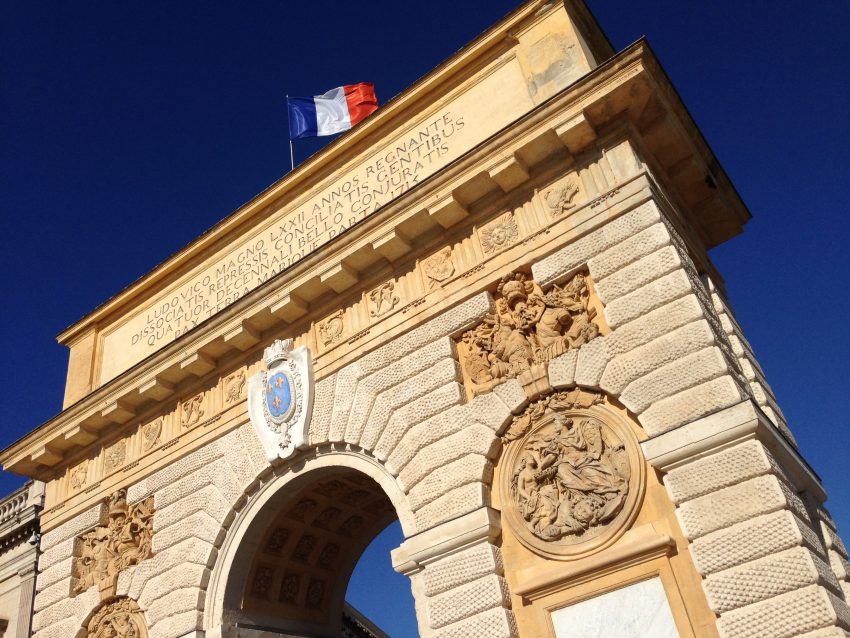
Porte du Peyrou, Montpellier’s triumphal arch, was built in the late 17th century (commonly dated to 1692) on the site of one of the old city gates. It replaced a section of the medieval fortifications and formed part of a royal urban project honoring Louis XIV. Designed by François d’Orbay, a pupil of Mansart, it reflects the classical monumental style associated with royal French architecture of the period.
The arch is historically important because it marks the transition from fortified medieval town to ceremonial city. Rather than a purely defensive gate, it was conceived as a symbolic entrance, celebrating royal authority through reliefs, medallions, and heraldic decoration. In urban planning terms, it anchors the approach to the Peyrou and helps define one of Montpellier’s most coherent monumental ensembles.
When visiting, look closely at the sculpted details, especially the reliefs and medallions, and note the ochre-yellow tones of the upper structure. Stand back as well to appreciate how the monument frames the axis between the Peyrou and the city. The best experience comes from seeing it both as a standalone monument and as part of the broader Peyrou composition.
Location: Rue Foch, 34000 Montpellier, France | Hours: 24 Hours. | Price: Free (street-level). Terrace visits: from €6 (guided tour; dates/times vary). | Website
4. Palace of Justice
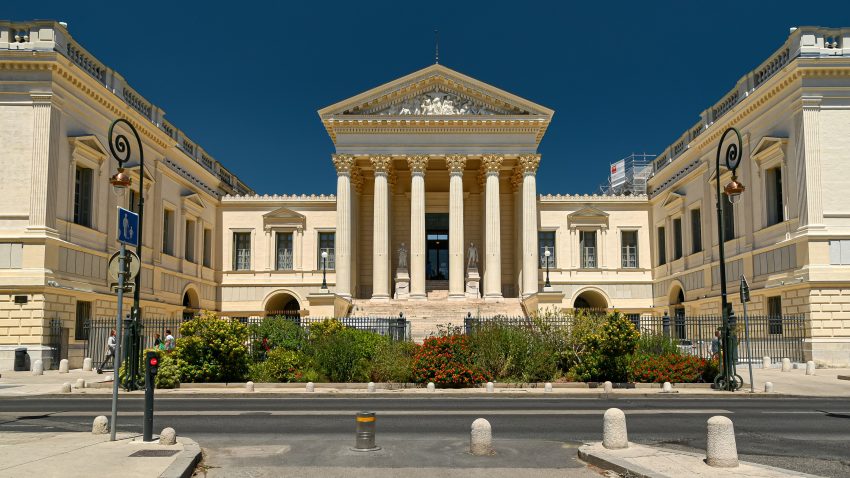
Montpellier’s historic Palace of Justice on Rue Foch is a 19th-century courthouse completed in 1853, but the site itself has a much older judicial history. Before the current neoclassical building, this area was associated with the former palace/fortress of the Guilhem lords of Montpellier, and justice was administered here in earlier forms for centuries. The present structure reflects the 19th-century decision to rebuild on a grander scale after older buildings on the site had become inadequate.
Architecturally, the building is known for its formal neoclassical style, especially the imposing façade with Corinthian columns, high steps, and sculpted pediment. It was designed to project authority and civic order, which is why it has the appearance of a temple-like public monument rather than a purely functional office building. Today the historic building continues to house major courts (including the Court of Appeal and assize functions), while other judicial services were moved to the newer justice complex.
When visiting, the main thing to see is the exterior composition on Rue Foch and how it fits into the monumental axis toward the Peyrou and the triumphal arch nearby. Stand back to take in the symmetry of the façade and columns, then look at the stonework and sculptural details above the entrance. Even if you only view it from outside, it is an important stop for understanding Montpellier’s layered history, where medieval power, later royal planning, and 19th-century civic architecture overlap in one location.
Location: Nouveau Palais de Justice, Pl. Pierre Flote où Flotte, 34040 Montpellier, France | Hours: Monday – Friday: 08:30–12:00 & 13:30–17:00. Saturday: Closed. Sunday: Closed. | Price: Free. | Website
5. Montpellier Cathedral
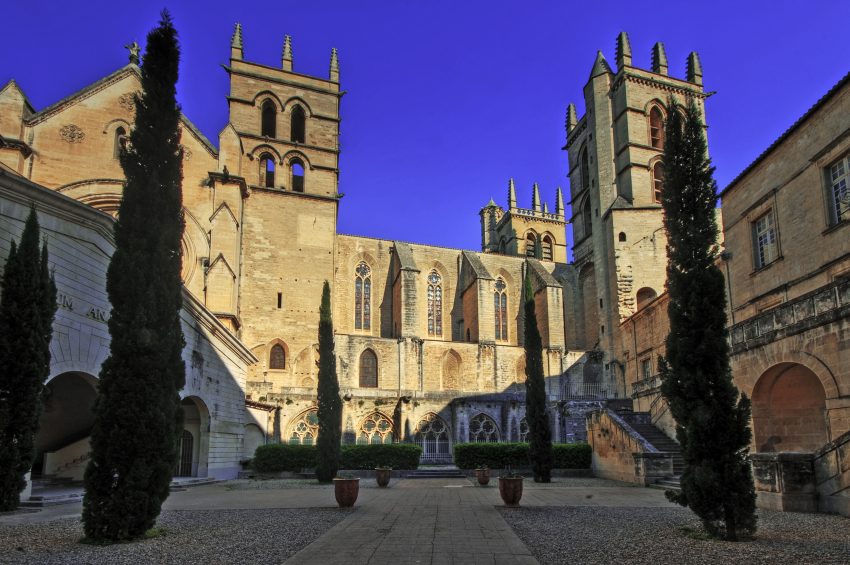
Montpellier Cathedral (Cathédrale Saint-Pierre) began as the chapel of the Benedictine monastery/college of Saint-Benoît in the 14th century, founded under Pope Urban V’s influence. It became a cathedral in 1536 when the episcopal seat was transferred from Maguelone to Montpellier, marking a major shift in the city’s religious importance. Its history also includes damage during the Wars of Religion and later rebuilding, which left visible layers in the structure.
The cathedral is especially famous for its dramatic Gothic porch, supported by two massive cylindrical piers that give the entrance a fortress-like appearance. This unusual, defensive character reflects the turbulent periods the building endured and the architectural ambitions of late medieval Montpellier. It is one of the city’s most distinctive monuments and a key symbol of its ecclesiastical and university heritage.
When visiting, focus first on the monumental porch and towers, then explore the surrounding setting, which is closely tied to the historic medical faculty and former monastic spaces. Inside, look for the Gothic volume and later restorations that reveal the cathedral’s long and interrupted history. The exterior views from nearby squares and lanes are also rewarding, especially where the building rises suddenly above the old town rooftops.
Location: Rue Saint-Pierre, 34000 Montpellier, France | Hours: Monday – Friday: 10:30–12:00 & 14:30–18:30. Saturday: 14:30–18:30. Sunday: Closed. | Price: Free; donations appreciated. | Website
6. Place de la Canourgue
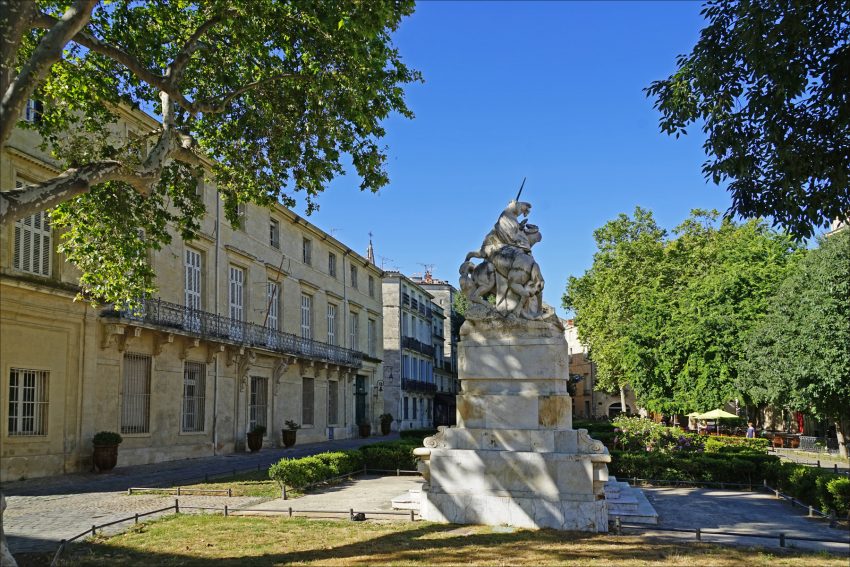
Place de la Canourgue is often described as Montpellier’s oldest square, and it preserves a quieter, more intimate side of the historic center. Unlike the grander civic spaces, Canourgue has a residential and aristocratic feel, shaped by elegant mansions and greenery. Its long continuity as an urban square makes it an important witness to the city’s pre-modern development.
Historically, the square’s character comes from the hôtels particuliers (town mansions) that line it, many dating to the 17th century. This architecture reflects the social prestige of the area and the way elite residences were woven into the city center. The square’s calmer atmosphere today still hints at that older status, even with cafés and modern life around it.
What to see here includes the Unicorn Fountain (Fontaine des Licornes), the mature trees, and the façades around the square. It is also a good place for views toward Saint-Pierre Cathedral and the rooftops of Montpellier. The appeal is subtle rather than monumental, so the best visit is an unhurried one, taking in the proportions, stonework, and shade.
Location: Pl. de la Canourgue, 34000 Montpellier, France | Hours: 24 Hours. | Price: Free.
7. Prefecture of Hérault
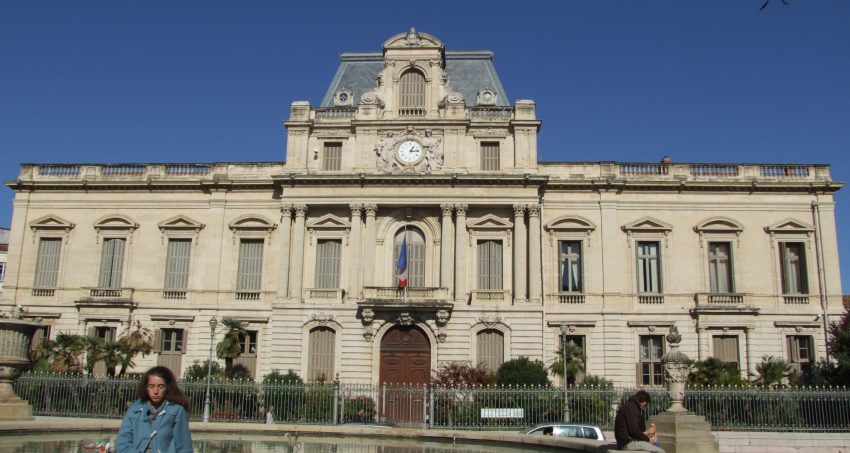
The Prefecture of Hérault (Hôtel de préfecture de l’Hérault) is housed in the former Hôtel de Ganges, an aristocratic townhouse in Montpellier’s historic center. The original mansion was built in 1696, and the site itself has an even deeper administrative and judicial history, with earlier institutions occupying the area before the current residence was created. Over time, the building became a key seat of regional administration, including the intendant’s offices in the 18th century.
The complex reflects multiple historical layers rather than a single construction campaign. In addition to the 17th-century hôtel particulier (the former Hôtel de Ganges), a later 19th-century administrative wing was added and inaugurated in 1870, giving the prefecture part of its current institutional scale. The older façades and courtyard elevations are also protected as historic monuments, which underlines the architectural importance of the original mansion within the state complex.
When visiting, the main thing to see is the exterior ensemble around Place Chabaneau / Place des Martyrs-de-la-Résistance, where you can appreciate the contrast between the aristocratic mansion and later official additions. Look for the classical façade proportions, courtyard-facing architecture (where visible), and the way the prefecture sits within the dense historic urban fabric near Rue Foch and the Peyrou axis. Even from outside, it is a strong example of how noble residences in Montpellier were adapted into major state buildings.
Location: 34 Pl. Martyrs de la Résistance, 34000 Montpellier, France | Hours: Monday – Friday: 08:30–16:30. Closed on Saturday, Sunday. | Price: Free. | Website
8. Rue de l'Aiguillerie
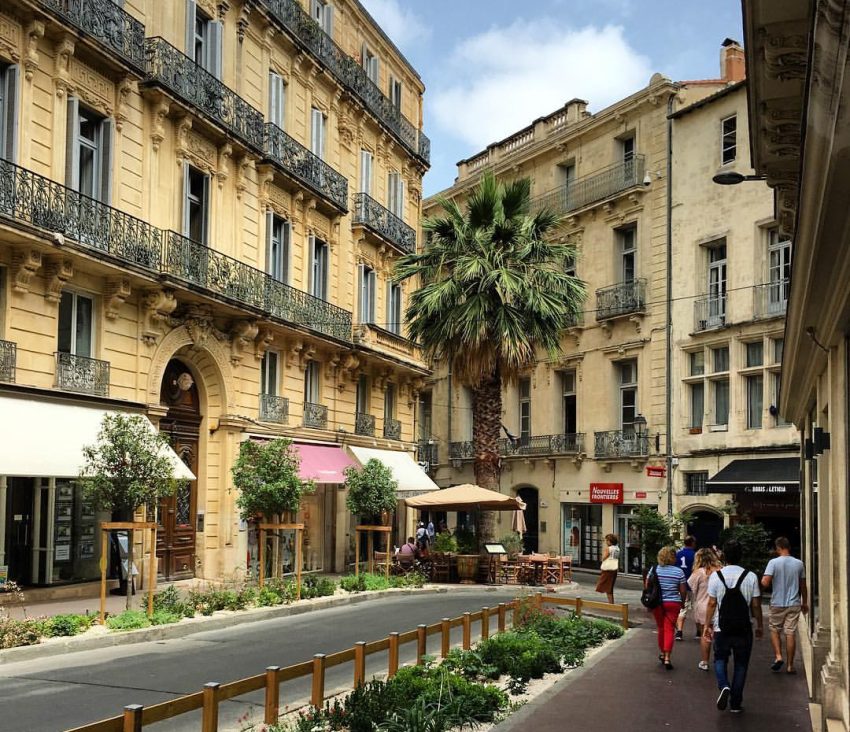
Rue de l’Aiguillerie is one of the historic streets of Montpellier’s old center, and its name points to the city’s medieval and early modern craft life. Streets in the Écusson were often associated with trades, guilds, or commercial functions, and this lane preserves that sense of a working urban fabric shaped by artisans and small merchants. Even where individual shopfronts have changed, the street still conveys the texture of old Montpellier.
Historically, roads like Rue de l’Aiguillerie mattered because they connected residential, religious, and market zones inside the tightly packed medieval town. The narrow alignment and close façades reflect a period before modern boulevards, when movement was on foot and urban space was intensely layered. The street’s survival helps illustrate how Montpellier grew by adapting older routes rather than replacing them entirely.
What to see here is the street character itself: old stone façades, small details above eye level, and the sequence of shops and cafés that animate the route today. Walk slowly and look for architectural traces such as carved doorways, shutters, and irregular building lines. It is a good place to appreciate the lived-in, historical grain of the city rather than a single monument.
Location: Rue de l'Aiguillerie, 34000 Montpellier, France | Hours: 24 Hours. | Price: Free.
9. Notre Dame des Tables Basilica
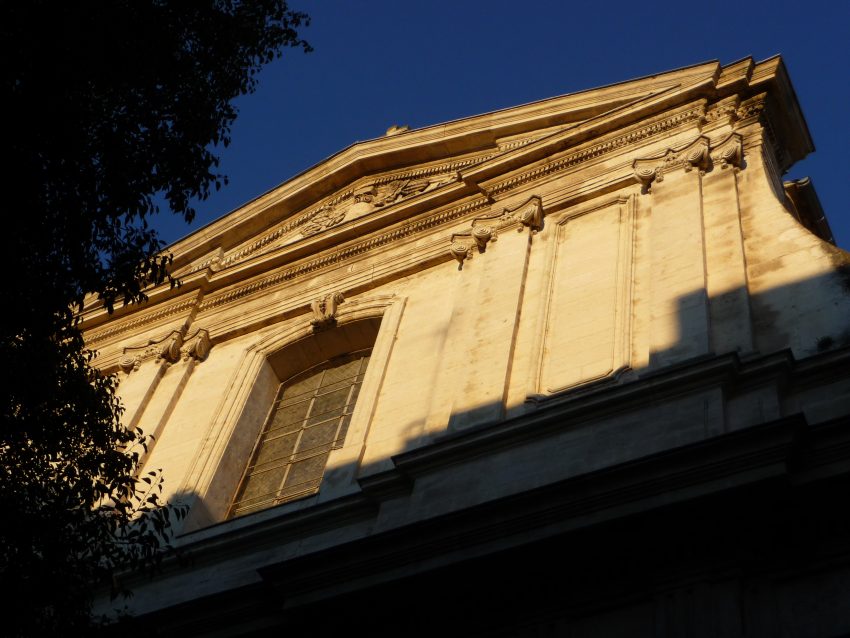
Notre-Dame des Tables is one of Montpellier’s most historically important churches because it preserves the title and cult of an older medieval sanctuary that was closely tied to the city’s origins. The original Notre-Dame des Tables stood near today’s Place Jean Jaurès (the medieval heart of Montpellier), and its name came from the “tables” of money changers and merchants who gathered around it in the Middle Ages. That earlier church was repeatedly damaged and rebuilt during the Wars of Religion, then ultimately disappeared, but its religious importance was later transferred to the current church.
The present basilica is the former chapel of the Jesuit college, built in the 18th century (construction began in 1707), and it took on the name Notre-Dame des Tables in the early 19th century after the old sanctuary was gone. This makes the building especially significant in Montpellier: it is both a Baroque church in its own right and the successor to one of the city’s oldest Marian sites. It was later elevated to the rank of minor basilica by Pope Pius XII in 1939, confirming its importance within the diocese and the city’s religious history.
When visiting, pay attention first to the Baroque character of the church and its setting in the dense historic center near Rue de l’Aiguillerie and the Fabre Museum area. Inside, the appeal is in the decorative ensemble and the sense of continuity with the older Notre-Dame des Tables tradition, even though the medieval church no longer survives in its original form. If accessible, the surviving remains associated with the former sanctuary (including the crypt tradition linked to the old church) add another layer to understanding how deeply this site is tied to Montpellier’s past.
Location: 43 Rue de l'Aiguillerie, 34000 Montpellier, France | Hours: Daily: 09:00–20:00. | Price: Free; donations appreciated.
10. Fabre Museum
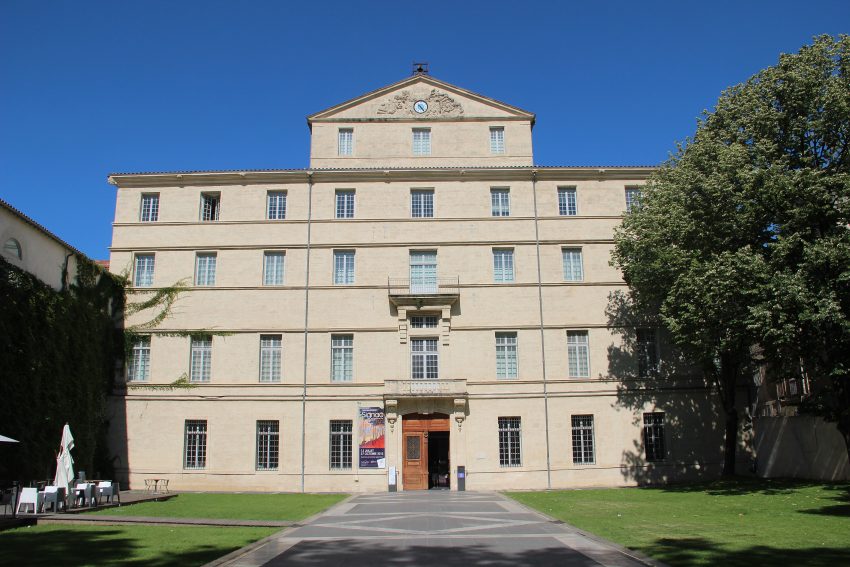
The Fabre Museum is one of Montpellier’s most important cultural institutions, with roots in the early 19th century. Its history is tied to painter and collector François-Xavier Fabre, whose donation helped transform an earlier municipal collection into a major museum, formally established in the 1820s. The museum later expanded significantly and underwent a major renovation in the 2000s, reinforcing its status as a leading fine arts museum in southern France.
What makes the museum historically significant is the breadth of its collections and the role it has played in Montpellier’s civic identity. It preserves works spanning from the Renaissance to modern periods, and its holdings reflect both local patronage and wider European artistic currents. In this sense, the museum is not only a gallery but also a record of how Montpellier positioned itself as a city of culture and learning.
When you visit, focus on both the collection and the building itself. The galleries move through major artistic periods, and the museum’s layout helps tell that story in a coherent way. Take time to notice the contrasts between older architectural spaces and renovated sections, as they mirror the institution’s long evolution from a civic collection into a major regional museum.
Location: 39 Bd Bonne Nouvelle, 34000 Montpellier, France | Hours: Daily: 11:00–18:00. | Price: Adults: €8; Reduced: €6. | Website
11. Charles-de-Gaulle Esplanade
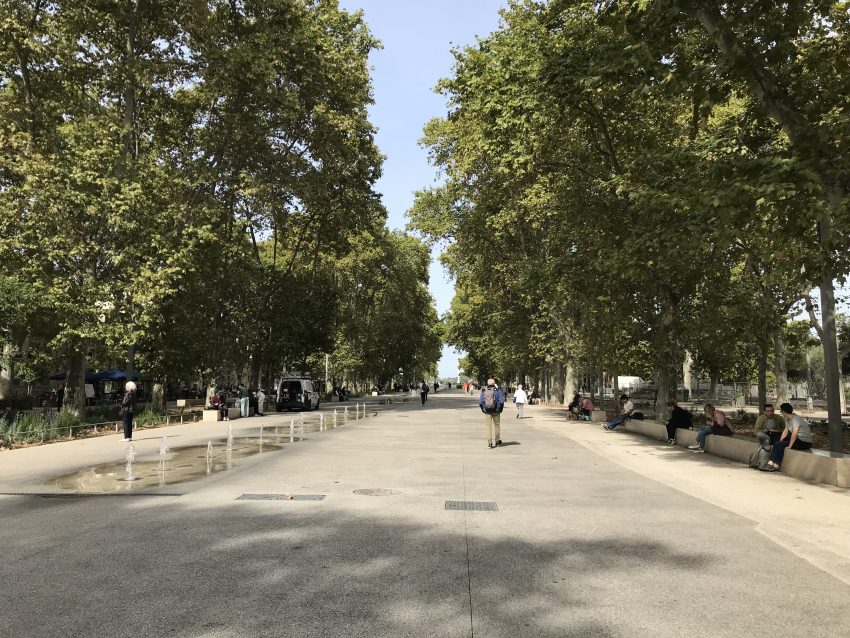
The Esplanade Charles-de-Gaulle developed as part of Montpellier’s expansion outside the medieval core, creating a broad public promenade that linked civic life, leisure, and urban elegance. Like many French esplanades, it reflects the shift from fortified town to open city, where promenading, meeting, and public events became central to urban culture. Today it remains one of Montpellier’s key open-air gathering spaces between the historic center and newer institutions.
Historically, spaces like this were designed not only for circulation but also for display: tree-lined walks, fountains, and shaded benches encouraged social life in a Mediterranean climate. The Esplanade’s long avenues and mature plane trees preserve that 18th- and 19th-century promenade character, even as modern festivals and events animate it. It functions as a transitional space, softening the edge between monumental squares and the denser old town.
What to see here is less about a single monument and more about the ensemble. Look for the shaded alleys, fountains, and the rhythm of local life—families, students, and people lingering on benches. It is also worth paying attention to how the Esplanade frames approaches toward central Montpellier, giving you a sense of the city’s scale and urban planning beyond the medieval lanes.
Location: 8 Av. du Pont Juvénal, 34000 Montpellier, France | Hours: 24 Hours. | Price: Free. | Website
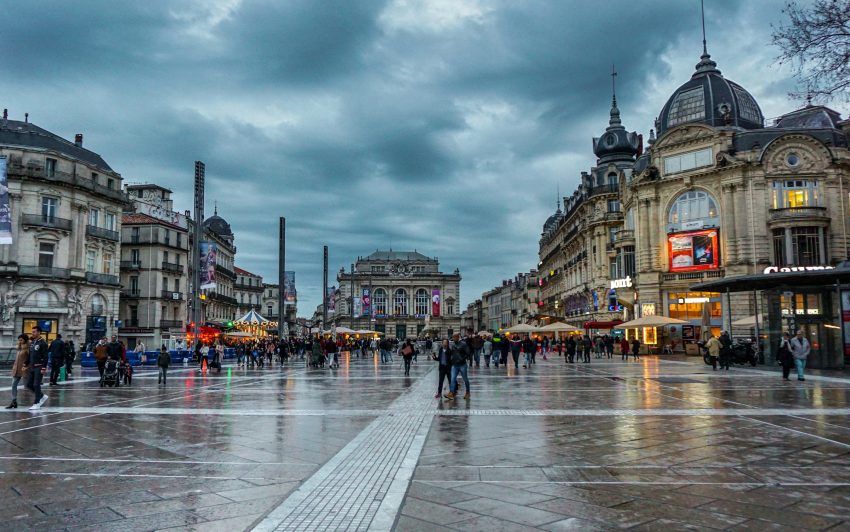
12. Place de la Comédie
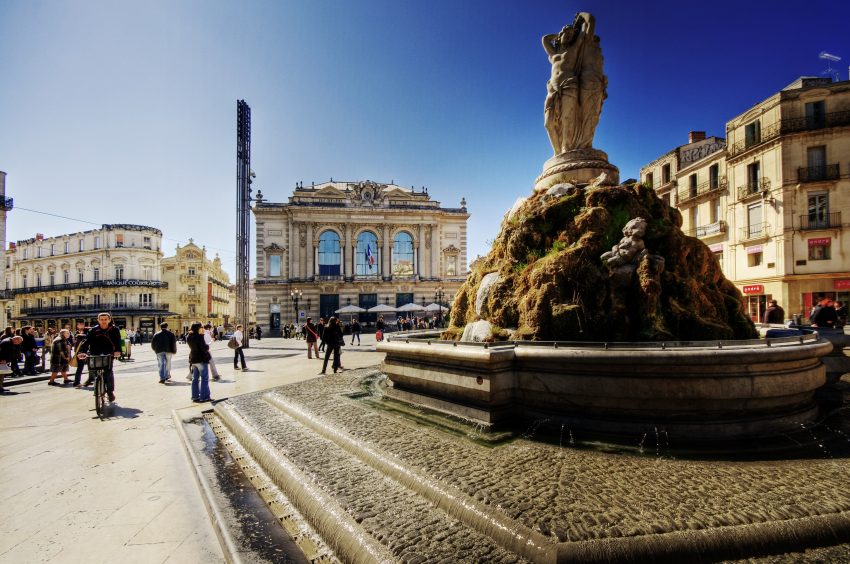
Place de la Comédie has long been the ceremonial and social heart of Montpellier, and its current form reflects the city’s rapid growth in the 18th and 19th centuries. The square developed on the edge of the old fortifications and became a showcase of bourgeois Montpellier, with broad façades and grand urban planning. It takes its name from the Opéra Comédie, whose current Italian-style building dates from 1888 and remains one of the square’s defining landmarks.
What gives the square its identity is the combination of major monuments and everyday life. The Opéra Comédie anchors one end, while the fountain topped by the Three Graces statue forms the best-known focal point in the middle. The square’s oval shape also explains its local nickname, “l’Œuf” (“the egg”), which you may still hear in local references.
When visiting, spend time looking beyond the obvious postcard view. Notice the architectural rhythm of the surrounding buildings, the constant movement of locals crossing the square, and the way tram lines and pedestrian spaces knit together the modern and historic city. It is one of the best places to absorb Montpellier’s atmosphere before heading into the older streets nearby.
Location: Pl. de la Comédie, 34000 Montpellier, France | Hours: 24 Hours. | Price: Free. | Website
13. Opéra Comédie
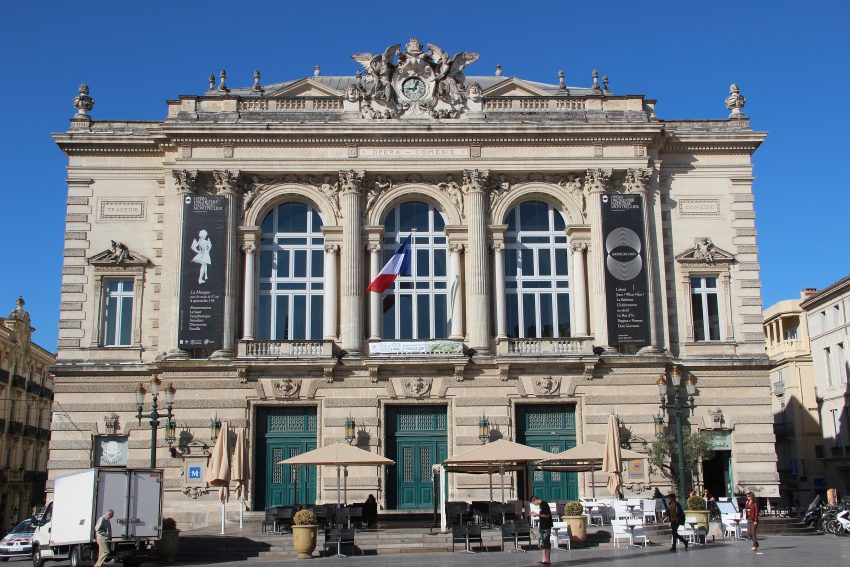
The Opéra Comédie is one of Montpellier’s most important cultural landmarks, and its history is closely tied to the development of Place de la Comédie itself. A first municipal theatre stood here in the 18th century, but the site suffered major fires over time, including the destructive fire of 1881 that led to a complete rebuilding. The current building was constructed from 1884 to 1888 and inaugurated on 1 October 1888, giving Montpellier the grand opera house that still defines the square today.
Architecturally, the building is a classic Italian-style theatre and was designed by Joseph Cassien-Bernard, a student of Charles Garnier (architect of the Paris Opéra). Its façade on Place de la Comédie became a symbol of the city, and the rebuilding also helped shape the later urban alignment and monumental appearance of the square. The Opéra Comédie is known for its richly decorated interior, with gilding, drapery, and the horseshoe-plan auditorium typical of major 19th-century opera houses.
When visiting, the first thing to see is the exterior façade from the square, especially in relation to the Three Graces fountain and the surrounding architecture of Place de la Comédie. If you go inside (for a performance or guided access), pay attention to the red velvet seating, ornamented balconies, and the overall theatrical grandeur of the main hall. Even from outside, it is a key place for understanding Montpellier’s cultural history and how the city’s main square became its modern civic and artistic center.
Location: 11 Bd Victor Hugo, 34000 Montpellier, France | Hours: Tuesday – Saturday: 10:00–13:00 & 14:00–18:00. | Price: Prices vary by show. | Website
14. Place Jean Jaurès
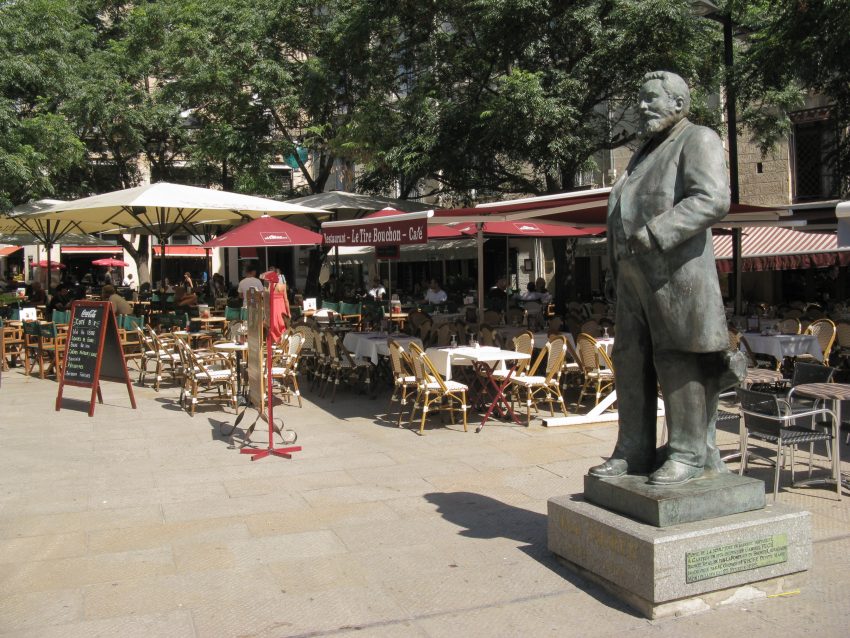
Place Jean Jaurès is a central square whose present role as a lively meeting point reflects Montpellier’s long tradition of public squares as places for commerce, social exchange, and city life. While it is less monumental than Place de la Comédie, it has become one of the most active urban spaces in the center, especially as cafés and restaurants have expanded around it. Its modern energy sits on top of the deeper historical pattern of square-based urban life in the old city.
Like many French central squares, Place Jean Jaurès has evolved through changing uses rather than a single defining construction campaign. It has absorbed shifts in traffic, hospitality, and nightlife over time, becoming a social hub for both residents and visitors. That adaptability is part of its historical interest: it shows how older urban spaces remain relevant by changing function while keeping their central position.
When visiting, the main attraction is the atmosphere and the surrounding streets feeding into the square. Take time to observe the café terraces, the flow of people at different times of day, and the way the square connects to nearby historic lanes. It is an excellent place to experience Montpellier’s contemporary urban life in a setting shaped by centuries of city development.
Location: Pl. Jean Jaurès, 34000 Montpellier, France | Hours: 24 Hours. | Price: Free.
15. Rue Foch
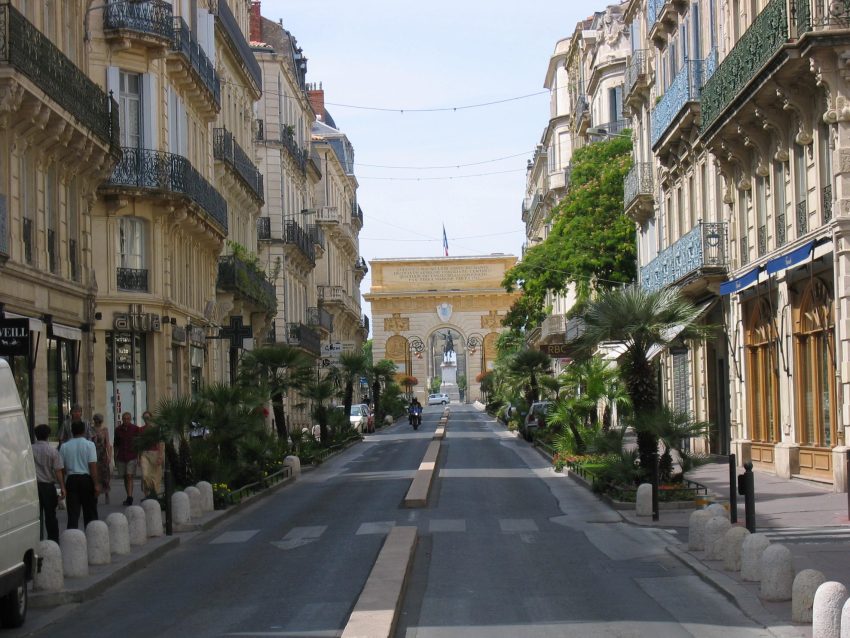
Rue Foch is a broad, elegant avenue that contrasts strongly with the tighter medieval lanes of Montpellier, reflecting a later phase of urban planning and modernization. It forms an axial route between the historic center and the Peyrou area, and its scale signals a more formal, planned approach to city design. This avenue helps illustrate how Montpellier expanded and reorganized circulation beyond the medieval street pattern.
Its historical importance is closely tied to the nearby triumphal arch (Porte du Peyrou), since Rue Foch extends from that monumental gateway toward the heart of the city. The avenue’s 19th-century elegance and alignment reinforce the ceremonial effect of approaching the older center through a grand entrance sequence. In urban terms, it is one of the clearest examples of Montpellier’s layered cityscape, where different eras meet in a short distance.
What to see on Rue Foch includes the avenue itself—its proportions, façades, and perspective lines—as well as the visual connection to the arch at one end. Look at the shift in architecture as you move toward the older streets, and pay attention to how the avenue frames movement into the historic core. It is as much an urban design feature as a destination in its own right.
Location: Rue Foch, 34000 Montpellier, France | Hours: 24 Hours. | Price: Free.

Moira & Andy
Hey! We're Moira & Andy. From hiking the Camino to trips around Europe in Bert our campervan — we've been traveling together since retirement in 2020!
This website uses affiliate links which earn a small commission at no additional cost to you.
Walking Tour Summary
Distance: 3.5 km
Sites: 15
Walking Tour Map