Valle de los Caídos
Basilica near Madrid
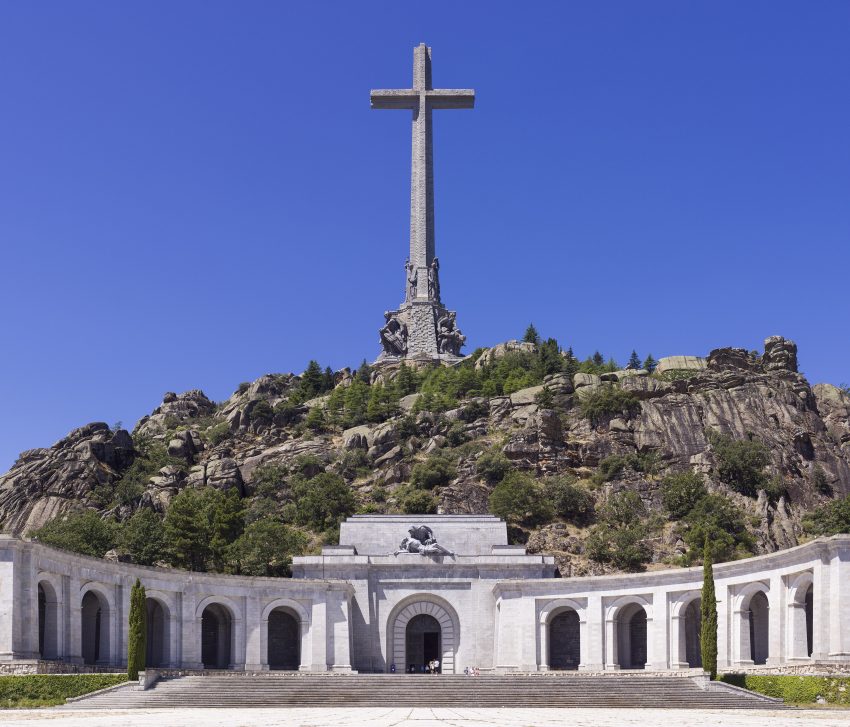
The Valle de los Caídos is one of the most striking-and most debated-sites you can visit around Madrid: an enormous underground basilica carved into the mountainside, crowned by a colossal stone cross visible from far across the pine-covered slopes. Officially, you may also see it referred to as the Valle de Cuelgamuros, and that shift in naming hints at the wider effort to reframe how the site is understood today.
If you're building a day trip out beyond central Madrid, this works well as a dramatic “anchor stop” paired with San Lorenzo de El Escorial's historic centre and viewpoints. It's not a place you breeze through like a quick photo stop; it's a place that asks for time, context, and a bit of emotional bandwidth-especially once you step inside the cavernous interior.
Table of Contents
- History and Significance of the Valle de los Caídos
- Things to See and Do in the Valle de los Caídos
- How to Get to the Valle de los Caídos
- Practical Tips on Visiting the Valle de los Caídos
- Where to Stay Close to the Valle de los Caídos
- Is the Valle de los Caídos Worth Visiting?
- For Different Travelers
- FAQs for Visiting Valle de los Caídos
- Nearby Attractions to the Valle de los Caídos
History and Significance of the Valle de los Caídos
The complex was commissioned during the Franco era and inaugurated in 1959, designed as a monumental memorial connected to the legacy of the Spanish Civil War. Its scale is deliberate: the architecture, the vast esplanade, and the basilica’s deep, echoing spaces are meant to overwhelm in a way that feels closer to an imperial statement than a typical place of worship.
What makes the Valle de los Caídos especially significant-and difficult-is that it became a symbol that many Spaniards associate with dictatorship and imposed memory, even as it also contains the remains of tens of thousands of war dead from both sides. In recent years, public debate and state policy have increasingly focused on context, commemoration, and how (or whether) a site like this can be visited responsibly without flattening its history into spectacle.
For travelers, the key is to treat it as more than a dramatic landmark. A little background reading before you go changes everything: the basilica is impressive on its own terms, but the experience lands differently once you understand why it was built, who it was built for, and why its meaning is still contested.
Things to See and Do in the Valle de los Caídos
Start with the approach itself: the long road through forested hills builds anticipation, and the first clear view of the cross sets the tone for the visit. From the main esplanade, take a moment to look back over the landscape-on clear days, the mountain air and wide views are part of what makes this feel so removed from the city, even though it's a realistic day trip from Madrid.
Inside, the basilica is the core experience. The temperature drops, the scale expands, and the sound changes-your footsteps echo as you move through a space that feels closer to an underground cathedral than a standard church. Even if you’re not religious, the sheer engineering and the mood of the interior are unforgettable.
If access conditions allow, you can also spend time around the exterior viewpoints and paths for a broader sense of the setting. Practical note: the funicular has been closed for an extended period, so don’t plan your visit around riding up-focus instead on what you can comfortably reach on foot and what’s open on the day.
How to Get to the Valle de los Caídos
The nearest major airport is Madrid-Barajas (Adolfo Suárez Madrid-Barajas Airport), and it's the most practical arrival point if you're coming from outside Spain. For the best deals and a seamless booking experience, check out these flights to Madrid on Booking.com.
By train, the simplest plan is to take a Cercanías service from Madrid to El Escorial station, then continue onward by taxi or local connections toward the monument. Train schedules and bookings can be found on Omio.. This works well if you’re also visiting San Lorenzo de El Escorial in the same outing, because the town is an easy base for stitching the day together.
From San Lorenzo de El Escorial, there are local bus options that connect toward the site (service patterns can be limited), so check the day's timetable before you commit to a public-transport-only plan. If you're aiming for a smooth, time-efficient visit-especially outside peak season-pairing train plus taxi can be the least stressful compromise.
Driving is the most straightforward option: take the A-6 out of Madrid and connect to the M-600 toward the monument, which gives you the most flexibility for combining viewpoints and nearby stops. If you are looking to rent a car in Spain I recommend having a look at Discover Cars, first, as they compare prices and review multiple car rental agencies for you.
Practical Tips on Visiting the Valle de los Caídos
- Entrance fee: Standard €9; reduced €4; free admission for eligible visitors (including under-5s and some concession groups, with specific conditions).
- Opening hours: (Summer) April – September: Tuesday – Sunday: 10:00–19:00. (Winter) October – March: Tuesday – Sunday: 10:00–18:00. Closed on Monday.
- Official website: https://tickets.patrimonionacional.es/en/tickets/valle-cuelgamuros
- Best time to visit: Go early for quieter interiors and a more reflective atmosphere, or late afternoon for softer light on the mountains and cross. Weekends can feel noticeably busier, especially in good weather.
- How long to spend: Plan for 60-90 minutes on-site if you're focused on the basilica and viewpoints, or 2-3 hours if you're moving slowly, reading displays, and absorbing the setting. Pair it with San Lorenzo de El Escorial if you want a full day.
- Accessibility: Expect significant limitations-step-free access is not reliably available, and the terrain and distances can be challenging even before you reach the interior. If mobility is a concern, treat this as a “research first, decide second” stop.
- Facilities: Keep expectations modest: there’s typically a basic café/refreshment option and restrooms near the main visitor area, but it’s not a modern museum complex with lots of amenities. Bring water, and consider snacks if you’re relying on public transport timings.
Where to Stay Close to the Valle de los Caídos
For a culture-heavy itinerary, base yourself in central San Lorenzo de El Escorial so you can walk to the monastery, restaurants, and evening strolls; if your priority is a quiet nature-and-drive day with minimal logistics, staying nearer the valley area can make for a calmer start and finish.
If you want classic comfort right in town, Exe Victoria Palace is well placed for combining the town’s main sights with an easy onward trip to the monument. For a simpler, good-value option close to the historic core, Hotel Florida makes a practical base for an early departure and an easy return for dinner.
For the most unusual stay, consider sleeping on-site at Hospedería Santa Cruz, which leans more toward retreat-house atmosphere than typical hotel polish-best for travelers who value location and quiet over nightlife or variety.
Is the Valle de los Caídos Worth Visiting?
Yes-if you're the kind of traveler who wants to understand a country beyond its postcard highlights, the Valle de los Caídos is worth visiting for its scale, setting, and the way it opens a door into Spain's ongoing conversation about memory and history. It's visually extraordinary, and the experience is genuinely unlike anything else near Madrid.
Honest pivot: if you're short on time, traveling with people who prefer lighter sightseeing, or you know that politically charged sites will sour the day, it's reasonable to skip it and focus on San Lorenzo de El Escorial instead. You'll still get a rich cultural day without stepping into a space that can feel heavy, confrontational, or emotionally draining.
What Other Travellers Say...

Reviews consistently praise the site as a striking, awe-inspiring monument with impressive architecture, an immense basilica carved into the mountain, and beautiful surrounding mountain scenery that feels peaceful and reverent. Visitors recommend taking a guided tour to better understand the history, and some note it can be a powerful place to attend mass. Downsides mentioned include occasional area closures requiring special permission, signs of maintenance issues such as water leaks, and limited amenities like the absence of a cafeteria and a small souvenir shop.


For Different Travelers
Families with Kids
Treat this as a “short and structured” visit: go in with a clear plan (one exterior viewpoint, the main interior, then out), because the scale can feel intense for younger kids. If you want to include it, pair it with something lighter afterward-parks and viewpoints in San Lorenzo de El Escorial work well as a reset.
Couples & Romantic Getaways
The setting is beautiful, but the mood isn't romantic in a classic sense-it's more solemn and atmospheric. If you go as a couple, aim for a quiet time of day and follow it with a relaxed lunch in San Lorenzo de El Escorial to rebalance the experience.
Budget Travelers
It's doable on a budget if you combine train travel with a carefully timed local connection, but the logistics can be the tricky part rather than the cost. If you're watching every euro and want zero stress, consider making San Lorenzo de El Escorial your main day trip and adding the valley only if transport lines up cleanly.
History Buffs
This is essential context travel: read a short primer beforehand, then focus on the architecture, the intended symbolism, and how interpretation has changed over time. You’ll get the most out of it by treating it as a case study in how monuments are built, used, and re-understood-rather than simply a “must-see” landmark.
FAQs for Visiting Valle de los Caídos
Getting There
Tickets & Entry
Visiting Experience
Tours, Context & Itineraries
Photography
Accessibility & Facilities
Food & Breaks Nearby
Safety & Timing
Nearby Attractions to the Valle de los Caídos
- Royal Monastery of San Lorenzo de El Escorial: A monumental royal complex with palaces, basilica spaces, and one of Spain's most significant historical interiors.
- Casita del Príncipe: A refined royal retreat set in peaceful gardens, ideal for a lighter, elegant contrast to the valley visit.
- La Silla de Felipe II: A famous viewpoint with sweeping mountain-and-monastery panoramas, especially good near sunset.
- El Real Coliseo de Carlos III: A charming historic theatre that adds an unexpected cultural note to a day trip in town.
- Puerto de Guadarrama: A nearby mountain pass area for short walks and big views if you want to lean into nature after the monument.
The Valle de los Caídos appears in our Complete Guide to Visiting Madrid!

Moira & Andy
Hey! We're Moira & Andy. From hiking the Camino to trips around Europe in Bert our campervan — we've been traveling together since retirement in 2020!
This website uses affiliate links which may earn a commission at no additional cost to you!
Planning Your Visit
(Summer) April - September: Tuesday - Sunday: 10:00-19:00.
(Winter) October - March: Tuesday - Sunday: 10:00-18:00.
Closed on Monday.
Standard €9; reduced €4; free admission for eligible visitors (including under-5s and some concession groups, with specific conditions).
Nearby Attractions
- El Escorial (5.9) km
Monastery - Palacio Real la Granja (31.0) km
Palace - Plaza del Azoguejo (34.1) km
Square - Casa de los Picos (34.1) km
Historic Building - Aqueduct of Segovia (34.1) km
Aqueduct - Plaza de Medina del Campo (34.2) km
Square - Torreón de Lozoya (34.2) km
Tower - Convento de Clarisas del Corpus Christi (34.3) km
Convent - Jewish Quarter (34.3) km
Area - Museo de Segovia (34.3) km
Museum