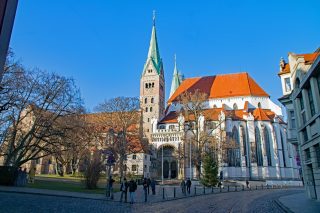
St. Georg Church, Dinkelsbühl
Cathedral in Dinkelsbühl

St. Georg in Dinkelsbühl stands as one of the top attractions in Dinkelsbühl, a soaring Gothic structure that immediately commands attention as you wander the town's beautifully preserved medieval streets. Its sandstone exterior and towering 66-metre steeple make it visible from almost every corner of the old town, and climbing to the top offers a memorable view that helps visitors appreciate the layout of this walled Bavarian gem. This spot is also a great place to visit on a walking tour of Dinkelsbühl, especially for travellers interested in architecture and history.
Inside, St. Georg feels like a time capsule. The intricate stone vaulting, tall stained glass windows, and centuries-old altars create an atmosphere that blends reverence with craftsmanship. The 17th-century organ remains in use for concerts and special services, giving visitors the chance to hear music echo through the nave just as it has for centuries. Its role as both a community church and a cultural venue gives it a depth that goes beyond architecture alone.
History and Significance of St. Georg
Construction of St. Georg began in the 15th century and continued into the early 16th century, placing it firmly within the golden era of late Gothic architecture in southern Germany. Built from local sandstone, the church reflects both regional craftsmanship and the wealth that passed through this important trading town on the Romantic Road. Despite the centuries, the church has remained remarkably intact, allowing visitors to appreciate its original architectural lines with very little alteration.
The church’s interior reflects the artistic traditions of the time, with soaring ribbed vaults and detailed woodcarvings that were created by the area’s finest artisans. Stained glass windows illuminate the nave with coloured light, adding to the atmosphere that has impressed visitors since medieval times. The church also maintains a strong connection to local identity, hosting religious festivals and community rituals that have taken place here for generations.
Another layer of significance lies in the church’s musical heritage. The 17th-century organ has been carefully maintained and restored, preserving its historic voice. It is still used for concerts, giving the town a vibrant cultural life that resonates within the same walls that have heard centuries of worship and celebration.
Things to See and Do in St. Georg
A visit to St. Georg begins outside, where the Gothic façade and slender tower rise dramatically above Dinkelsbühl's townscape. The steeple climb is one of the must-see places in Dinkelsbühl, offering sweeping views over the medieval walls, colourful half-timbered houses, and the surrounding countryside. It's a rewarding experience in all seasons, whether the fields are filled with summer green or winter snow.
Inside the church, visitors can admire the ribbed vaulting, ornate altars, and impressive stone columns that draw the eye upward. The stained glass windows are among the highlights, telling centuries-old stories through vibrant colours that shift with the changing daylight. The carved wooden pulpit and choir stalls showcase local craftsmanship, with details that reward close inspection.
If your visit aligns with one of the organ recitals, it’s worth staying to listen. The 17th-century instrument fills the space with rich sound, adding depth to the experience. The church still hosts regular services, weddings, and concerts, giving travellers a chance to experience it as a living part of the community rather than just a historic landmark.
How to Get to St. Georg
The nearest major airports are Nuremberg Airport and Stuttgart Airport. These offer regular flights from across Europe and beyond. For the best deals and a seamless booking experience, check out these flights to Dinkelsbühl on Booking.com.
Dinkelsbühl does not have its own train station. Travellers typically arrive via train to nearby towns such as Dombühl or Ansbach, with frequent connections from major cities like Nuremberg. From the station, buses link directly to Dinkelsbühl's historic centre. Train schedules and bookings can be found on Omio.
Travelling by car is straightforward, with well-signed routes leading to Dinkelsbühl from the Romantic Road, Nuremberg, or Stuttgart. Parking areas are available just outside the medieval walls, making it easy to explore the town on foot. If you are looking to rent a car in Germany I recommend having a look at Discover Cars, first, as they compare prices and review multiple car rental agencies for you.
Practical Tips on Visiting St. Georg
- Best time to visit St. Georg: Spring to early autumn offers pleasant weather and clearer tower views.
- Entrance fee in Euros: Entry is typically free, though a small fee may apply for climbing the tower.
- Opening hours: Generally open daily; hours may vary seasonally and during services.
- Official website: Check the Dinkelsbühl tourism site for current details.
- How long to spend: Around 45 minutes inside, plus extra time if climbing the tower.
- Accessibility: The nave is accessible, but the tower climb requires navigating steep stairs.
- Facilities: Limited facilities inside; public restrooms can be found nearby in the old town.
- Photography tip: Morning light through the stained glass creates especially atmospheric shots.
- Guided tours: Available through the local tourist office, often including the old town.
- Nearby food options: Cafés and restaurants surround the church square, ideal for a break before or after your visit.
Where to Stay close to St. Georg
Staying within Dinkelsbühl’s medieval centre means you’ll be just steps from St. Georg, giving you the chance to enjoy early morning or evening strolls when the streets are quiet. Options include Hezelhof Hotel, a beautifully restored boutique stay with historic character. Another comfortable choice is Hotel Deutsches Haus, known for its timbered façade and traditional Bavarian charm. For a cosy and friendly atmosphere, travellers often choose Goldene Rose, which places you right in the old town’s winding lanes.
Is St. Georg Worth Visiting?
St. Georg is absolutely worth visiting, not only for its Gothic architecture but also for the atmosphere it brings to Dinkelsbühl. The combination of historic detail, panoramic tower views, and ongoing cultural life makes it a rewarding stop for anyone exploring Bavaria. Its position in one of Germany's best-preserved medieval towns adds even more appeal, making it a memorable highlight on any Romantic Road itinerary.
What Other Travellers Say...

Cathedral of Saint George on Marktplatz 1 sits prominently in the center of Dinkelsbühl’s old town; visitors praise its impressive late Gothic presence with some Romanesque elements, a towering sanctuary and free‑standing tower portal, and rich interior details including varied ribbed vaulting, multiple historic altars (Sebastian, Trinity, cross and Joseph), a ciborium altar with a Pietà, ornate stone baptismal font, pulpit and sacrament house, and a notable high altar shrine tablet—making it the town’s historical and religious centerpiece and a must‑see for those exploring the medieval streets, with cafés and restaurants nearby.


FAQs for Visiting St. Georg
Nearby Attractions to St. Georg
- Dinkelsbühl Town Walls: Walk the preserved fortifications encircling the old town.
- Rothenburger Tor: A striking medieval gate with classic Bavarian character.
- House of History Dinkelsbühl: A museum exploring local heritage and traditions.
- Segringer Tor: One of the town's iconic towers marking the old entranceway.
- Weinmarkt Square: A colourful hub filled with cafés, timbered buildings, and lively atmosphere.
The St. Georg Church appears in our Complete Guide to Visiting Dinkelsbühl!

Moira & Andy
Hey! We're Moira & Andy. From hiking the Camino to trips around Europe in Bert our campervan — we've been traveling together since retirement in 2020!
This website uses affiliate links which may earn a commission at no additional cost to you!
Nearby Attractions
- Weinmarkt (0.1) km
Historic Building - House of History (0.1) km
Historic Building and Museum - Wörnitz Gate (0.1) km
City Gate and City Walls - Hospital of the Holy Spirit (0.2) km
Church and Historic Building - New Town Hall (0.2) km
Historic Building - Rothenburg Gate (0.3) km
Historic Building and Tower - Bäuerlin Tower (0.3) km
City Walls and Tower - Armoury of the Kinderzeche (0.3) km
Historic Building - Faulturm (Debtors' Tower) (0.4) km
Tower - Three Kings Chapel (0.4) km
Church