San Sebastián Airport
Airport near Saint-Jean-de-Luz
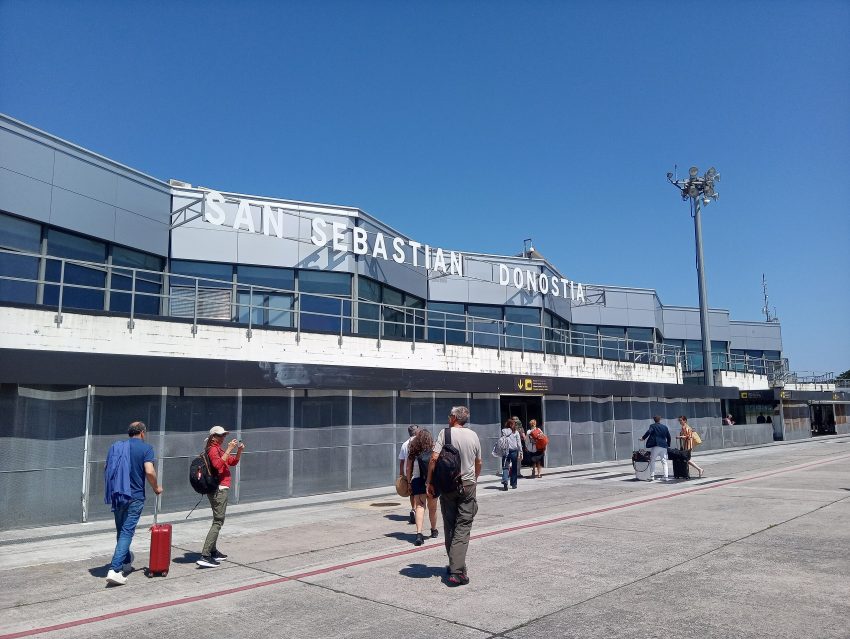
San Sebastián Airport is the main gateway to San Sebastián and the eastern Basque Country. Located about 20 km from San Sebastián, this compact and efficient airport is the starting point for travellers exploring Donostia, Hondarribia, Irún, the Bidasoa coast, and nearby French Basque towns. Whether you're arriving for the first time or departing after a memorable trip, this guide explains everything you need to know about navigating the airport with ease.
Table of Contents
- Why This Airport Matters
- History and Significance
- Airport Layout and Quick Facts
- Where to Stay Close to San Sebastián Airport
- Getting To and From San Sebastián Airport
- Arriving at San Sebastián Airport
- Money Exchange & Currency Tips for Spain
- SIM Cards & Connectivity
- Departing from San Sebastián Airport
- Airport Services and Facilities
- Lounges at San Sebastián Airport
- Renting a Car at San Sebastián Airport
- Flights and Airlines Operating at EAS
- Practical Tips for Using San Sebastián Airport
- Can You Sleep Overnight at the Airport?
- FAQs about San Sebastián Airport
- Final Thoughts
Why This Airport Matters
San Sebastián Airport matters because it is the closest air link to Donostia, allowing you to land near the city rather than committing to a longer transfer from larger regional airports. For short breaks, food-focused weekends, or a quick surf trip, the time savings are real: you can often be checking into your hotel or ordering pintxos within the hour.
It also plays an important role for the wider Bidasoa/Txingudi area on the Spain-France border. If you plan to split your stay between coastal villages, inland cider houses, and day trips into the French Basque Country, this airport keeps logistics simple and puts you close to the A-8/N-638 road network that stitches the region together.
History and Significance
San Sebastián’s air link has long been shaped by the geography of the estuary and the tight footprint available near Hondarribia. That constraint is part of why the airport feels small and practical: it is designed around efficient turnarounds and straightforward passenger flow rather than large-scale retail or multiple terminals.
In local terms, the airport’s significance is less about scale and more about access. It supports tourism in a high-demand destination, provides a convenient business route for the province, and gives residents a faster domestic connection without needing to travel farther west to fly.
Airport Layout and Quick Facts
San Sebastián Airport is a single-terminal facility with a simple layout: arrivals and departures are in the same building, signage is easy to follow, and walking distances are short. Check-in, security, and the departure lounge are arranged to move you from curb to gate quickly, which is ideal if you prefer a low-friction airport experience.
Because the airport is compact, services are curated rather than extensive. Expect the essentials done well: basic food and drink, straightforward ground transport options, and the practical amenities you need for a smooth departure, but not the broad shopping or lounge ecosystem you would see at a major hub.
Where to Stay Close to San Sebastián Airport
For the closest and most characterful stays, base yourself in Hondarribia, where you get a genuine old-town atmosphere and very quick airport access. The standout is the historic Parador de Hondarribia, which is ideal if you want a memorable night in a landmark setting; for a more contemporary boutique feel with a calm residential location, Hotel Jaizkibel is a strong option.
If you prioritise parking, easy road access, or value-led overnights, Irún is a practical base a few minutes inland. Hotel Río Bidasoa suits travellers who want a comfortable, relaxed stay close to both the airport and the border, while ibis Irun is a reliable, simple choice for early flights. For drivers who want an easy in-and-out location with a resort-like calm, Hotel Urdanibia Park is well placed for the airport and the main routes.
Getting To and From San Sebastián Airport
By Bus
Public buses are the easiest budget option into San Sebastián, with services typically running between the airport area and central Donostia stops. In practice, you will see route names referenced locally (often E21 year-round and an additional summer service), and the bus is usually the best choice if you are staying in central neighbourhoods and want to avoid parking or taxi costs.
Buy tickets using the accepted payment method on board or through the local transport system where available, and keep a little time in hand during peak summer weekends when buses can be busy. If your flight arrives late in the evening, confirm the last departure plan before you commit to the bus.
By Taxi
Taxis are the most straightforward door-to-door option and work particularly well for late arrivals, families, and travellers with multiple bags. The taxi rank is at the terminal, and the ride to San Sebastián is typically quick, with travel time influenced mainly by traffic and the exact drop-off location.
Fares vary by time of day and local tariff, so treat any “typical price” as a guide rather than a guarantee. If you are crossing into France (even briefly), mention it upfront so the driver can confirm the route and any applicable conditions.
By Train
There is no train station at the airport terminal. The usual approach is to travel by taxi or bus to a nearby rail hub, then continue by regional or long-distance services depending on your itinerary.
For travellers heading beyond San Sebastián-such as to Bilbao, Vitoria-Gasteiz, Pamplona, or onward into France-using a station connection can be efficient, but it adds a transfer step. If you want the simplest plan, go direct by taxi or pre-booked transfer.
By Car
Driving is convenient if you plan to explore multiple towns, rural inland areas, or the French Basque coast on your own schedule. The airport is well positioned for regional roads, making it easy to reach Hondarribia, Irún, and San Sebastián without complicated city driving.
If your accommodation is in central San Sebastián, check the parking situation in advance, as some central areas are limited or regulated. For a smoother arrival, aim for a hotel with parking or use a central public car park and then walk.
By Transfers and Shuttles
Private transfers are ideal if you want a fixed plan, meet-and-greet service, or a direct ride for groups. They are especially useful during busy summer periods, for early-morning departures, or if you are travelling to a less central address where public transport would require multiple changes.
For day trips and multi-stop itineraries, a pre-arranged shuttle or private car can also double as a time-saving touring option, particularly if you plan to combine San Sebastián with Hondarribia, local wineries/cider houses, or a quick hop across the border.
Arriving at San Sebastián Airport
Arrivals at San Sebastián are typically uncomplicated: you exit the aircraft, follow clear signage into a compact arrivals area, and you are quickly at the curb for buses, taxis, or pick-ups. The small scale is an advantage here-less walking, fewer decision points, and a faster transition from flight mode to holiday mode.
Because facilities are limited, it is worth thinking one step ahead if you need anything specific immediately after landing (a full grocery run, specialist pharmacy items, or a complex car hire change). For most travellers, the best plan is to get into San Sebastián or Hondarribia first and handle extras there.
Money Exchange & Currency Tips for Spain
Spain uses the euro, and for most visitors the simplest approach is to rely on card payments for day-to-day spending and withdraw a small amount of cash for smaller purchases. In the Basque Country, card acceptance is strong in hotels, restaurants, and shops, but having some cash can still be useful for markets, small bars, and occasional tips.
At a small airport, currency exchange options can be limited or absent, so plan as if you will not find a full-service exchange desk on arrival. If you need euros immediately, an ATM is usually the most practical choice.
If you are travelling onward into France, you can keep using euros without needing to exchange currency. The main difference is not the currency, but the payment habits and banking fees-check your card’s foreign transaction policy and consider a travel-friendly card to minimise costs.
SIM Cards & Connectivity
Spain has strong mobile coverage, including across the Donostia coastline and the border region, and most visitors will find 4G/5G adequate for maps, messaging, and streaming. The main carriers you will encounter include Movistar, Orange, Vodafone, and Yoigo, with many MVNO options offering competitive tourist-friendly bundles.
At a compact airport, you should not assume there will be a dedicated telecom shop in the terminal. The most reliable options are to buy a SIM or eSIM before you travel, pick one up in San Sebastián city (phone shops and electronics stores), or use an eSIM provider if your phone supports it and you want to be connected immediately upon landing.
Airport Wi-Fi is useful for quick tasks like confirming transport, messaging your accommodation, or activating an eSIM. If you plan to work remotely or rely heavily on data, prioritise a plan with generous data and straightforward top-ups, and keep roaming settings in mind if your itinerary crosses into France.
Departing from San Sebastián Airport
Departures are generally efficient: check-in desks are easy to find, security queues are usually manageable, and the walk to the gate area is short. The main variable is timing relative to flight schedules-when multiple departures bunch together, the terminal can feel busy despite its small size.
Because the terminal is not designed for long dwell times, aim to arrive with enough buffer to check in, clear security, and settle, but do not expect extensive airside entertainment. If you prefer a relaxed start, eat in San Sebastián or Hondarribia first and treat the airport as a functional final step.
Airport Services and Facilities
Food and Drink
Expect a limited but useful selection suitable for a coffee, a snack, or a simple pre-flight bite. For a broader choice, plan to eat before you arrive at the airport.
Shops
Retail is typically minimal and focused on travel essentials rather than shopping as a destination. If you need specific items, you will have more options in the city.
ATMs and Currency
An ATM is the most practical way to access euros if you arrive without cash. Plan as if you will not have a full-service exchange counter.
Wi-Fi and Charging
Wi-Fi is designed for basic traveller needs such as messaging, boarding passes, and navigation. Charging points may be limited, so bring a power bank if you rely on your phone throughout the day.
SIM Cards
Do not assume you can buy a tourist SIM in-terminal. If connectivity is important on arrival, set up an eSIM in advance or plan a quick stop in San Sebastián.
Family and Accessibility Facilities
The compact layout is helpful for families and travellers with reduced mobility, with shorter walking distances and simpler wayfinding. If you need assistance, arrange it in advance where possible.
Medical and Assistance Points
For minor needs, the airport can help direct you to appropriate services, but specialist support is better handled in San Sebastián or Irún given the airport's limited on-site footprint.
Lounges at San Sebastián Airport
San Sebastián Airport is not a lounge-heavy airport, and you should plan your trip assuming there is no traditional full-service lounge experience on site. Premium passengers typically rely on standard terminal seating and the speed advantages of a smaller airport rather than a separate lounge space.
If lounge access is important to you, the most practical alternative is to minimise time at the airport and spend your pre-flight time in San Sebastián, where you have far better options for a comfortable meal or café stop.
Renting a Car at San Sebastián Airport
Car hire is a strong option if you want to explore beyond central San Sebastián-especially Hondarribia, inland Gipuzkoa villages, coastal viewpoints, and cross-border trips into the French Basque Country. With a car, you can travel on your own timetable and reach places that are time-consuming by public transport.
Given the airport's compact scale, it is smart to book ahead, confirm opening hours for your provider, and check any cross-border driving rules if France is in your plans. Also confirm your parking plan in San Sebastián, where central parking can be more constrained than visitors expect.
Flights and Airlines Operating at EAS
San Sebastián Airport focuses on a small set of high-value routes, mixing domestic links with limited international service. Domestic flying is typically oriented around major Spanish hubs and popular city-break or leisure destinations, with capacity and frequency shifting by season.
Common patterns include steady demand on business-friendly routes and an uptick in leisure routes during peak travel months. Airlines serving the airport can include a mix of full-service and low-cost operators, with seasonal schedules influencing which destinations appear at different times of year.
For the best deals and a seamless booking experience, check out these flights to San Sebastián on Booking.com.Practical Tips for Using San Sebastián Airport
- Treat it as a small, efficient airport: arrive prepared, and you will move through quickly.
- If you need a specific service (SIM purchase, extensive dining, specialised shopping), plan to do it in San Sebastián rather than at the airport.
- For early flights, consider staying in Hondarribia or Irún to reduce morning stress.
- If you are travelling onward into France, confirm your ground transport plan in advance, as public options can be less direct.
- Keep a small amount of cash for buses and small purchases, even though cards are widely accepted in the region.
- In peak summer, allow extra time for buses and for road traffic into central San Sebastián.
- If you are collecting a hire car, confirm the return route and parking plan, especially if your hotel is in a restricted-access area.
Can You Sleep Overnight at the Airport?
Overnight stays at San Sebastián Airport are not a practical plan for most travellers. The airport is designed around daytime operations, and the terminal does not operate as a 24-hour facility, so you should expect it to close overnight rather than functioning as an all-night public space.
Even if you arrive late, seating is limited and comfort can be poor due to lighting, cleaning activity, and the general lack of quiet corners in a small terminal. If you have an early flight, a nearby hotel in Hondarribia or Irún is a far safer and more comfortable alternative than trying to rest in the terminal.
FAQs about San Sebastián Airport
What is the airport code for San Sebastián Airport?
The airport code is EAS.
Is San Sebastián Airport actually in San Sebastián?
The airport is branded for San Sebastián, but it is located in Hondarribia, very close to the city and the border area.
How far is the airport from San Sebastián city centre?
It is roughly 20 km from central San Sebastián, with journey time depending on traffic and your exact destination.
What is the easiest way to get to the city from the airport?
A direct taxi is the simplest door-to-door option, while public buses are the best value if you are staying centrally.
Is there a train station at the airport?
No. To use the train, you will need to connect via San Sebastián or Irún stations by taxi or bus first.
How early should I arrive before my flight?
As a general rule, plan for at least 90 minutes for routine departures, and add extra time in peak summer periods or if you need to check bags.
Are there international flights from San Sebastián Airport?
Yes, but they are limited compared with larger airports; schedules can be seasonal and may change across the year.
Can I buy a SIM card at the airport?
You should not rely on being able to buy a tourist SIM in the terminal; an eSIM or a city purchase is usually more dependable.
Is the airport suitable for travellers with reduced mobility?
Yes, the compact layout helps, and assistance can be arranged, which is best done in advance through your airline.
Is it better to fly into San Sebastián Airport or a larger regional airport?
If your priority is reaching Donostia quickly, San Sebastián Airport is usually best; larger airports can offer more routes but require longer transfers.
Final Thoughts
San Sebastián Airport is at its best when you value speed and simplicity: it gets you close to Donostia with minimal fuss, supports easy links to Hondarribia and Irún, and makes Basque coast trips feel straightforward from the moment you land. Plan for a compact terminal with essential services rather than a full hub experience, and you will find it a highly convenient starting point for exploring one of Spain's most rewarding regions.
What Other Travellers Say...

San Sebastian Airport, on Gabarrari Kalea in Hondarribia, is a small regional airport with a handful of adjacent gates and daily connections to Madrid and Barcelona; visitors report quick, simple check‑in and security processes when flights run on time, easy handling of pre‑paid baggage when proof is shown, limited facilities with boarding often by stairs, and occasional frequent cancellations or diversions that can disrupt travel.


The San Sebastián Airport appears in our Complete Guide to Visiting San Sebastián!

Moira & Andy
Hey! We're Moira & Andy. From hiking the Camino to trips around Europe in Bert our campervan — we've been traveling together since retirement in 2020!
This website uses affiliate links which may earn a commission at no additional cost to you!
Nearby Attractions
- Playa Zurriola (15.5) km
Beach - Kursaal (15.8) km
Notable Building - Victoria Eugenia Theater (15.8) km
Theatre - Mercado de la Bretxa (15.9) km
Market - Plaza de Gipuzkoa (15.9) km
Gardens and Square - Iglesia de San Vicente (16.0) km
Church - San Telmo Museum (16.0) km
Museum - Parte Vieja (Old Town) (16.1) km
Area - Plaza de la Constitución (16.1) km
Square - Parque de Alderdi Eder (16.2) km
Gardens