Cathedral of San Martino, Lucca
Cathedral in Lucca

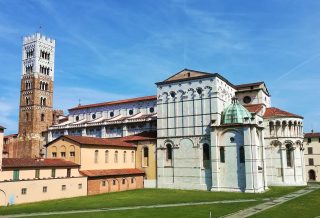
Lucca's Cathedral of San Martino feels like a quiet masterpiece that reveals more the longer you look. A few steps from Piazza San Martino and the curve of Via Fillungo, its asymmetrical Romanesque façade, cloaked in pale polychrome marble, instantly recalls Pisa yet has a character all its own. Behind the arcaded portico, carved with scenes of Saint Regolo's martyrdom, the cycle of the months, and the life of Saint Martin, you step into a building that has anchored Lucca's story since at least the 6th century, when Bishop San Frediano is believed to have commissioned the first cathedral here. Rebuilt between 1060 and 1070 and consecrated in 1070 by Anselmo da Baggio (later Pope Alexander II), it remains a place where history, faith, and art quietly collide.
Today, visiting San Martino is as much about atmosphere as it is about ticking off highlights. Under the portico where medieval moneychangers once dealt with weary pilgrims on the Via Francigena, an inscription still warns against fraud, and a mysterious carved labyrinth curls across one of the pillars, echoing the famous design at Chartres and hinting at deeper layers of symbolism and pilgrimage. Step inside and you're immersed in a cool, three-aisled Gothic interior lit by filtered light, with altarpieces by Domenico Ghirlandaio, a Last Supper by Tintoretto, the revered Holy Face crucifix, and the heartbreaking beauty of Ilaria del Carretto's tomb. It is a great place to visit on a walking tour of Lucca, and very quickly you realise why this cathedral is one of the must-see places in Lucca.
Table of Contents
- History and Significance of Cathedral of San Martino
- Things to See and Do in Cathedral of San Martino
- How to Get to Cathedral of San Martino
- Practical Tips on Visiting Cathedral of San Martino
- Where to Stay close to Cathedral of San Martino
- Is Cathedral of San Martino Worth Visiting?
- FAQs for Visiting Cathedral of San Martino
- Nearby Attractions to Cathedral of San Martino
History and Significance of Cathedral of San Martino
According to tradition, the origins of the Cathedral of San Martino go back to Bishop San Frediano, who died in 588 and is said to have commissioned the first episcopal church on this site. By the 11th century, Lucca's wealth and influence demanded something grander. Between 1060 and 1070 the cathedral was completely rebuilt, and in 1070 it was solemnly consecrated by Anselmo da Baggio, the future Pope Alexander II, with the formidable Countess Matilda of Canossa in attendance. That moment set the seal on San Martino's role as a spiritual and political focal point for the city.
Work continued over the centuries, pushing the building through several stylistic phases. The Romanesque façade, a masterpiece by Guidetto da Como, wraps the western front with three great arcades and tiers of columns in polychrome marble, drawing clear inspiration from Pisa while remaining distinctly Lucchese in its detailing and proportions. Inside, later Gothic interventions reshaped the vaults and arcades, creating the tall, slightly austere space that greets visitors today. The construction history culminated in 1637 with the Shrine Chapel, designed to honour the cathedral's most revered relic: the Holy Face.
San Martino is not just the city's religious heart but also a key stop on the historic Via Francigena, the pilgrimage route linking northern Europe with Rome. For centuries, pilgrims arrived here seeking the Holy Face and spiritual comfort after the long road over the Apennines and Alps. The carved labyrinth on a portico pillar-its meaning still debated-adds another layer of medieval symbolism, perhaps evoking the idea of life as a complex path toward salvation. That combination of architecture, relics, and pilgrimage gives the cathedral a depth you can feel as soon as you step through its doors.
Things to See and Do in Cathedral of San Martino
Start with the façade. The great portico facing the square, with its three arches, is richly decorated with bas-reliefs that reward a slow look: stories of Saint Martin, the martyrdom of Saint Regolo, and the months of the year unfold like a stone calendar. Above, the arcades and inlays by Guidetto da Como form a lacework of marble that changes character with the light throughout the day. In the lunette above the left entrance, seek out Nicola Pisano's powerful Deposition from 1260, a compact masterpiece that bridges Roman classical influence and early Gothic emotion.
Under the portico, imagine the bustle of medieval moneychangers dealing with pilgrims travelling along the Via Francigena. You can still see the Latin inscription warning them not to cheat their customers, a wonderfully human detail carved into a sacred space. Nearby, on one of the pillars, the intriguing labyrinth curls across the stone-small, almost easy to miss, but loaded with symbolism and mystery, whether you see it as an allegory of the spiritual journey or a nod to wider medieval traditions.
Inside, the cool, high Gothic interior invites you to wander slowly. Look for Ghirlandaio’s Madonna Enthroned with Child and Saints, which brings Florentine refinement into this Tuscan setting, and Jacopo Tintoretto’s Last Supper, with its characteristic drama and movement. The Holy Face (Volto Santo), a wooden crucifix believed by tradition to have been carved by Nicodemus from the true likeness of Christ, sits in an exquisite 15th-century tempietto by Matteo Civitali-both an object of devotion and a remarkable piece of Renaissance sculpture. Finally, don’t miss Jacopo della Quercia’s famed monument to Ilaria del Carretto (1406-1408): the young noblewoman lies serenely in marble, a small dog at her feet symbolising fidelity, in what is often considered one of the most moving funerary sculptures in Italy.
How to Get to Cathedral of San Martino
The Cathedral of San Martino is located in the historic centre of Lucca, on Piazza San Martino, a short walk from the city walls and main shopping streets. Once you're inside the walls, simply follow signs for “Duomo” or head toward the cathedral's tower, which rises above the surrounding rooftops.
If you are flying into Tuscany, the most convenient airports are Pisa International Airport and Florence Airport; from either, you can reach Lucca by train, bus, or hire car. For the best deals and a seamless booking experience, check out these flights to Lucca on Booking.com. From Lucca’s station, it’s an easy stroll through Porta San Pietro and across the old town to the cathedral square.
Lucca is well connected by regional trains, with frequent services from Pisa, Florence, and other Tuscan towns arriving at Lucca's station just outside the southern stretch of the walls.Use Omnio to easily compare schedules, book train tickets, and find the best prices all in one place for a hassle-free journey across Italy. From there, it usually takes about 10-15 minutes on foot to reach San Martino, following clear pedestrian routes into the centre.
If you're driving, major roads and the A11 motorway connect Lucca with Pisa, Florence, and the rest of Tuscany.If you are looking to rent a car in Italy I recommend having a look at Discover Cars, first, as they compare prices and review multiple car rental agencies for you. Cars are restricted inside the historic centre, so it’s best to park in one of the car parks outside or just inside the walls and then walk in; the cathedral is well signposted and easy to find from most parking areas.
Practical Tips on Visiting Cathedral of San Martino
- Suggested tips: Dress modestly (shoulders covered, shorts not too short) out of respect for the sacred space, and bring a couple of euro coins for any small chapels or combined tickets.
- Best time to visit: Early morning or late afternoon are ideal, when the square is quieter and the façade’s marble details catch softer light.
- Entrance fee: Cathedral + Bell Tower + Museum + Church of Saints John and Reparata with Baptistery and archaeological area: €10.00
- Opening hours: Cathedral: Monday – Friday: 9:30 am – 5:00 pm; Saturday: 9:30 am – 6:00 pm; Sunday: 12:00 pm – 5:00 pm Bell Tower: Monday – Friday: 10:00 - 17:00; Saturday: 10:00 - 18:00; Sunday: 10:00 - 17:00 Cathedral Museum: Monday – Friday: 10:00 - 17:00; Saturday: 10:00 - 18:00; Sunday: 10:00 - 17:00 Church of Saints John and Reparata with Baptistery and archaeological area: Monday – Friday: 10:00 – 17:00; Saturday: 10:00 – 18:00; Sunday: 10:00 – 17:00
- Official website: https://www.museocattedralelucca.it/
- How long to spend: Plan 45-90 minutes to explore the façade, interior artworks, Holy Face, and Ilaria del Carretto’s tomb without rushing.
- Accessibility: The main entrance has steps, but alternative access may be available; once inside, the floor is mostly level, though some chapels and museum areas can have uneven stone.
- Facilities: Nearby cafés and bars around the square and along Via del Duomo provide drinks, snacks, and restrooms; there is often a small bookshop or ticket office associated with the cathedral.
- Photography tip: Capture the asymmetry of the façade from the far side of the square, then focus on details like capitals, bas-reliefs, and the soft light on Ilaria’s tomb inside; be discreet and respect any restrictions during services.
- Guided tours: Local guides offer city walks that include the cathedral, giving more context to the Holy Face legend, the Via Francigena, and the artworks inside.
- Nearby food options: After your visit, head toward Piazza Napoleone, Via Fillungo, or the streets near Piazza San Michele for trattorie, wine bars, and gelaterie offering a relaxed Lucchese lunch or aperitivo.
Where to Stay close to Cathedral of San Martino
Staying near the cathedral puts you right in the atmospheric heart of Lucca's walled centre. Just a short stroll from Piazza San Martino, Albergo San Martino offers a cosy, welcoming base on a quiet street, perfect if you want to slip out early to enjoy the duomo and nearby squares before the day-trippers arrive. For a slightly more upscale feel with easy access to both the cathedral and the city walls, Hotel Ilaria combines comfortable rooms with a convenient location close to Lucca’s main sights. Travellers who love historic ambience might opt for Palazzo Alexander, a charming hotel in a restored palace, placing you within a pleasant walk of San Martino, San Michele in Foro, and the tree-topped Guinigi Tower.
Is Cathedral of San Martino Worth Visiting?
Cathedral of San Martino is absolutely worth visiting, even in a city as rich in churches as Lucca. The blend of Romanesque and Gothic architecture, the sculptural treasures by Nicola Pisano and Jacopo della Quercia, the Holy Face and its centuries of legend, and the subtle details like the labyrinth and moneychangers' inscription make it far more than “just another duomo.” It's a place where you can feel the weight of Lucca's past while still enjoying the calm, human scale that makes the city so appealing. This spot is one of the best places to see in Cathedral of San Martino's corner of Lucca if you want to understand why this small Tuscan city has fascinated pilgrims, artists, and travellers for centuries.
What Other Travellers Say...

Duomo di San Martino, on Piazza Antelminelli in Lucca, is an 11th‑century cathedral noted for its Pisan‑Luccan Romanesque façade, square bell tower and carved medieval details; inside, visitors find Renaissance‑era interiors, notable artworks including the Volto Santo (sometimes inaccessible during refurbishments), and a treasury museum, while excavations at the foundations reveal multiple earlier layers beneath the church. Many guests praise the peaceful, marble‑detailed interior and recommend guided visits to fully appreciate the history; outside, a labyrinth etched on a pier near the tower and varied columns on the façade are curiosities that invite closer inspection.


FAQs for Visiting Cathedral of San Martino
Nearby Attractions to Cathedral of San Martino
- San Michele in Foro - Stunning church on the site of the Roman forum, with a richly decorated façade and a lively surrounding square.
- Piazza dell'Anfiteatro - Oval-shaped piazza built on the footprint of the Roman amphitheatre, now ringed with cafés and shops.
- Guinigi Tower - Iconic medieval tower crowned with a rooftop garden of holm oaks, offering panoramic views over Lucca's rooftops.
- Basilica di San Frediano - Romanesque basilica with a striking golden mosaic façade, linked to the early history of Lucca's bishops.
- Lucca City Walls - Renaissance-era defensive walls encircling the historic centre, now a tree-lined promenade perfect for walking or cycling laps around the city.
The Cathedral of San Martino appears in our Complete Guide to Visiting Lucca!

Moira & Andy
Hey! We're Moira & Andy. From hiking the Camino to trips around Europe in Bert our campervan — we've been traveling together since retirement in 2020!
This website uses affiliate links which may earn a commission at no additional cost to you!
Planning Your Visit
Cathedral: Monday - Friday: 9:30 am - 5:00 pm; Saturday: 9:30 am - 6:00 pm; Sunday: 12:00 pm - 5:00 pm
Bell Tower: Monday - Friday: 10:00 – 17:00; Saturday: 10:00 – 18:00; Sunday: 10:00 – 17:00
Cathedral Museum: Monday - Friday: 10:00 – 17:00; Saturday: 10:00 – 18:00; Sunday: 10:00 – 17:00
Church of Saints John and Reparata with Baptistery and archaeological area: Monday - Friday: 10:00 - 17:00; Saturday: 10:00 - 18:00; Sunday: 10:00 - 17:00
Cathedral + Bell Tower + Museum + Church of Saints John and Reparata with Baptistery and archaeological area: €10.00
Nearby Attractions
- Church of St Maria della Rosa (0.1) km
Church - Church and Baptistery of Santi Giovanni e Reparata (0.1) km
Church and Museum - Teatro del Giglio (0.2) km
Theatre - Piazza Napoleone (0.3) km
Square - Torre delle Ore (0.3) km
Tower - Palazzo Ducale in Lucca (0.3) km
Historic Building and Museum - Guinigi Tower (0.4) km
Tower - San Michele in Foro (0.4) km
Basilica - Botanical Garden (0.4) km
Gardens - Risorgimento Museum in Lucca (0.4) km
Museum