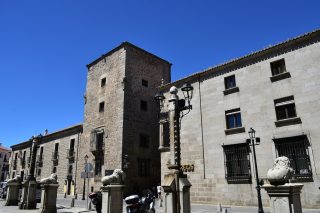
Puerta del Carmen, Ávila
City Gate, City Walls and Convent in Ávila

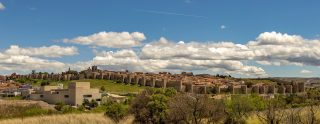
Puerta del Carmen is one of those places in Ávila that instantly feels like “the postcard shot”: a dramatic stretch of ramparts, the northern skyline opening up beyond the stones, and a steady rhythm of towers that makes the walls look almost cinematic. It sits on the quieter northern side of the walled city, which means you can get a calmer, more spacious experience here than at the busier gates-especially if you time it for early morning light or golden hour.
What makes this gate especially memorable is how many stories are layered into one small area: the distinctive brick belfry (often topped with stork nests), the palace-and-gardens feel just inside the walls, and the sense that you're standing at a working edge of the old town rather than a purely “museum” viewpoint. If you're planning a walking tour of Ávila, this spot is one of the top sights in Ávila to include because it naturally links wall views, historic architecture, and an easy route back into the heart of the city.
Table of Contents
- History and Significance of the Puerta del Carmen
- Things to See and Do in the Puerta del Carmen
- How to Get to the Puerta del Carmen
- Practical Tips on Visiting the Puerta del Carmen
- Where to Stay Close to the Puerta del Carmen
- Is the Puerta del Carmen Worth Visiting?
- For Different Travelers
- FAQs for Visiting Puerta del Carmen
- Nearby Attractions to the Puerta del Carmen
History and Significance of the Puerta del Carmen
Puerta del Carmen is a defensive gate with a very deliberate design: instead of a straight, head-on approach, entry from outside forces a turn, which historically reduced the risk of a frontal assault. This “skewed” entry concept is widely associated with military architecture traditions in the medieval Iberian world, and at Ávila it stands out as a smart piece of practical engineering disguised as a simple gateway.
The name “Carmen” comes from what once stood here: a Carmelite convent later linked to the Provincial Prison, with today’s Provincial Historical Archive built on that footprint. The surviving brick belfry is the visual anchor of the whole scene-an element that’s become one of Ávila’s most recognizable small details, especially when storks are nesting.
Archaeological work at the gate has also revealed a rare construction quirk: one of the flanking towers appears to have been conceived hollow and later filled in, a feature that is unusual among Ávila’s wall gates. In practical terms today, this area is also tied to wall-walk circulation, and the gate zone has been used for access and small interpretive spaces when operating conditions allow.
Things to See and Do in the Puerta del Carmen
Start outside the walls and take in the classic northern perspective: the repeating towers, the open space around the base of the walls, and the feeling of the fortification “riding” the landscape. This is one of the best angles for appreciating how long and cohesive the enceinte is, without modern buildings crowding the view.
Then focus on the gate itself. Look for the subtle geometry that creates the angled approach, and compare the square-plan towers here with the more typical rounded towers you’ll notice at other entrances. It’s a small architectural detail that becomes surprisingly satisfying once you start spotting patterns around the circuit.
Inside the gate, slow down and scan for the brick belfry and the texture shift between stonework and later additions. This is also a good place to build a mini-route: pair Puerta del Carmen with a short wall-side stroll toward viewpoints, or loop back through the old town toward Plaza del Mercado Chico for a café break.
How to Get to the Puerta del Carmen
Most visitors arrive via Madrid-Barajas (Adolfo Suárez Madrid-Barajas Airport) and continue to Ávila by public transport or car. For the best deals and a seamless booking experience, check out these flights to Ávila on Booking.com.
Ávila’s train station connects well for day trips and overnights, and it’s straightforward to continue into the old town on foot or by taxi depending on luggage and timing. Train schedules and bookings can be found on Omio.
Long-distance and regional buses also serve Ávila, typically arriving at the city bus station before you continue onward to the walled centre.
If you’re driving, it’s usually easiest to aim for parking near the walls and walk the last stretch rather than trying to thread deep into the narrow historic lanes. If you are looking to rent a car in Spain I recommend having a look at Discover Cars, first, as they compare prices and review multiple car rental agencies for you.
Practical Tips on Visiting the Puerta del Carmen
- Entrance fee: Free to see the gate; wall-walk ticket (when access is operating): €8 general / €5 reduced.
- Opening hours: (Summer) 01 April–30 June; 01 September–31 October: Daily: 10:00–20:00. 01 July–31 August: Monday, Tuesday, Friday, Saturday & Sunday: 10:00–22:00. Wednesday & Thursday: 10:00–20:00. (Winter) 01 November–31 March: Daily: 10:00–18:00. Closed on Mondays (except 10 November, 08 December & 30 March). Special schedule: 24 December & 31 December: 10:00–15:00. Closed on 25 December; 01 January; 06 January.
- Official website: https://muralladeavila.com/en/
- Best time to visit: Late afternoon is ideal for softer light on the walls, while early morning is best if you want photos with fewer people and a calmer atmosphere.
- How long to spend: Plan 20-40 minutes for photos and a short wall-side stroll, or longer if you’re linking it to a ramparts walk and a wider loop.
- Accessibility: The viewpoints outside are generally easy to reach, but the wall-walk involves steps and uneven historic surfaces, so check access conditions if mobility is limited.
- Facilities: There are no “on-the-spot” visitor facilities at the gate itself, so treat it as a scenic stop and plan cafés and restrooms in the central old town.
Where to Stay Close to the Puerta del Carmen
For a culture-heavy itinerary, base yourself inside the walled city near the cathedral and main monuments; if your trip prioritizes easy parking and simpler road access, stay on the edge of the historic centre by the walls.
If you want the closest classic option, the Parador sits right in the historic quarter and feels like an extension of the walls themselves, which makes it ideal for early and late walks when the city is quieter: Parador de Ávila. For a stay that puts you right by the cathedral and makes evenings effortless, consider Hotel Palacio Valderrábanos. If you want a characterful base still firmly inside the old town, Hotel Palacio de los Velada is another strong pick for walkability and atmosphere.
Is the Puerta del Carmen Worth Visiting?
Yes-especially if you want a less crowded wall viewpoint that still delivers “wow” scenery. It’s a high-impact stop for photography and context, and it fits naturally into a broader loop of the walls and the old town without feeling like a detour.
What Other Travellers Say...

Subida Muralla - Acceso Puerta del Carmen, Pl. Concepción Arenal 1, Ávila: this northwest entrance to Ávila's medieval walls is a convenient starting point with a nearby large free parking area for cars, buses and campervans; general admission is €8 (children free) and includes an audio guide, and tickets can be bought with cash or card. The entry is marked by a discreet wooden cylinder and sits by the Puerta del Carmen, whose façade still shows remnants of an old church; nearby there are visitable caves and basic public restrooms. The wall walk is long and can take about an hour, with elevated sections, stairs and many towers and battlements offering spectacular panoramic views of the walled city and surrounding Castilian-Leonese landscape; the route is well maintained and clean, though the entrance can be easy to miss without clear signage and the climb can be challenging in hot weather.


For Different Travelers
Families with Kids
This works well as a short, high-reward stop: kids usually enjoy “spot the towers” and the scale of the walls, and you can keep it flexible without committing to a long museum visit. If you’re doing the ramparts, plan a snack break afterward in the old town so the day doesn’t become all walking and stairs.
Couples & Romantic Getaways
Come near sunset for softer light and a more cinematic feel, then wander back through the old town for dinner-Puerta del Carmen sets the mood without needing a fixed timetable. It's also a great place to slow down and appreciate the city's quieter side away from the main squares.
Budget Travelers
It's excellent value because simply seeing the gate and the wall views costs nothing, and it still feels like a “headline” Ávila experience. If you decide to pay for the wall walk, treat it as your one splurge activity and build the rest of the day around free churches, viewpoints, and strolling.
FAQs for Visiting Puerta del Carmen
Getting There
Tickets & Entry
Visiting Experience
Tours, Context & Itineraries
Photography
Accessibility & Facilities
Nearby Attractions to the Puerta del Carmen
- Ávila Cathedral: A fortress-like Gothic cathedral that feels built into the defensive character of the city.
- Plaza del Mercado Chico: The intimate main square inside the walls, perfect for a café pause and people-watching.
- Basilica of San Vicente: One of Ávila's most impressive Romanesque churches, rich in sculpture and atmosphere.
- Convento de Santa Teresa: A major pilgrimage-linked site connected to Ávila's most famous figure.
- Mirador de los Cuatro Postes: The classic panoramic viewpoint for the full “walls on the skyline” photograph.
The Puerta del Carmen appears in our Complete Guide to Visiting Ávila!

Moira & Andy
Hey! We're Moira & Andy. From hiking the Camino to trips around Europe in Bert our campervan — we've been traveling together since retirement in 2020!
This website uses affiliate links which may earn a commission at no additional cost to you!
Planning Your Visit
(Summer) 01 April-30 June; 01 September-31 October: Daily: 10:00-20:00. 01 July-31 August: Monday, Tuesday, Friday, Saturday & Sunday: 10:00-22:00. Wednesday & Thursday: 10:00-20:00.
(Winter) 01 November-31 March: Daily: 10:00-18:00.
Closed on Mondays (except 10 November, 08 December & 30 March).
Special schedule: 24 December & 31 December: 10:00-15:00. Closed on 25 December; 01 January; 06 January.
Free to see the gate; wall-walk ticket (when access is operating): €8 general / €5 reduced.
Nearby Attractions
- Parador de Ávila (0.1) km
Palace - Palace of Polentinos (Ávila) (0.2) km
Historic Building and Palace - Marshal Gate (0.3) km
City Gate, City Walls and Historic Site - Palacio de Bracamonte (0.3) km
Palace - Plaza Mercado Chico (0.3) km
Square - Iglesia de San Juan Bautista (0.3) km
Church - El Convento de Santa Teresa (0.4) km
Convent - Palacio de los Águila (0.4) km
Palace - Torreón de los Guzmanes (0.4) km
Palace - Palacio de Los Superunda (0.4) km
Palace