Prasat Suor Prat, Siem Reap

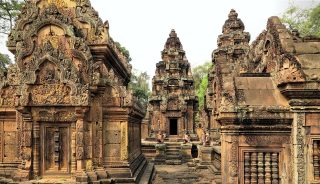
Tower in Siem Reap
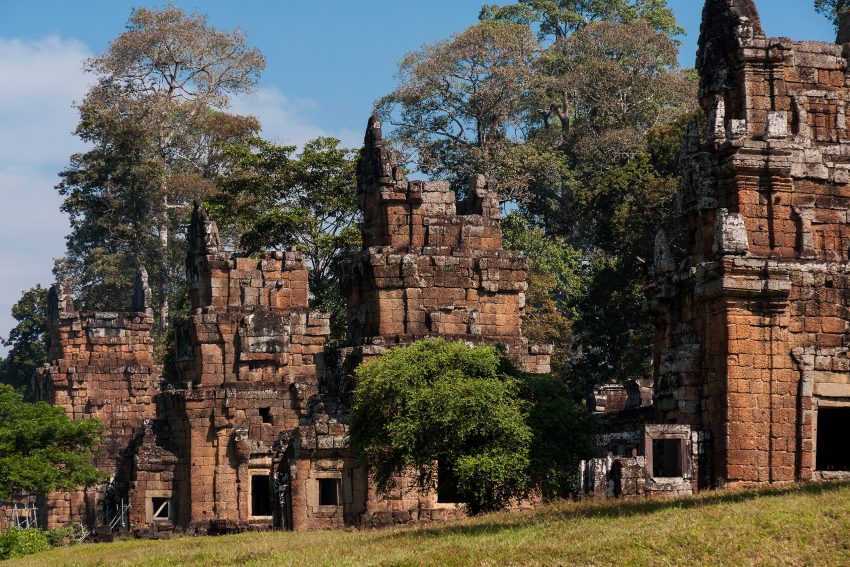
Angkor SiemReap Cambodia Suor Prat Towers
CC BY-SA 3.0 / CEphoto, Uwe Aranas

Prasat Suor Prat is a striking row of twelve laterite-and-sandstone towers set on the eastern side of Angkor Thom's royal square, within the Angkor Archaeological Park near Siem Reap, Cambodia. The towers run north to south in two matching lines, flanking Victory Avenue-the road that leads east toward the Victory Gate-and they sit prominently opposite the Terrace of the Elephants and the Terrace of the Leper King.

What makes this stop interesting is how visible the towers are, and how many questions they still raise. Locals have long linked them with “tightrope dancers,” imagining wires strung between towers for royal festival performances, while a 13th-century account by Zhou Daguan describes them as places used to settle disputes. For visitors, it’s best for a short, observant visit: appreciating the blocky laterite construction, the sandstone frames, and the symmetry of the setting within Angkor Thom’s ceremonial heart.

History and Significance of the Prasat Suor Prat

Angkor Thom’s ceremonial landscape

Prasat Suor Prat stands in a carefully planned area often described as the Royal Plaza, directly facing major state terraces and close to the Royal Palace complex. Its position along Victory Avenue suggests it played a role in public, ceremonial, or administrative life rather than serving as an isolated shrine. The towers' prominence makes their unknown purpose especially intriguing.

Legends and written accounts

The modern name is tied to a popular local belief that the towers once supported wires for acrobatic performances during royal festivals. While this story is widely repeated, there is no clear structural evidence to confirm it. A different explanation appears in the writings of Zhou Daguan, a Chinese visitor to Angkor in the 13th century, who noted the towers’ use in settling disputes among the Angkorian people.

Construction, dating, and conservation

No inscriptions or foundation steles have been found to firmly date the towers, so estimates vary, generally placing them around the 12th to 13th centuries; some traditions attribute construction to the reign of King Indravarman II. Architecturally, the towers are largely laterite, with sandstone used for key elements such as door and window frames. Parts appear unfinished, and restoration work was carried out in the early 2000s on towers at risk of collapse, helping stabilize the site for visitors today.

Things to See and Do in the Prasat Suor Prat

I treat Prasat Suor Prat as an “eyes-up” stop: I walk the length of the two rows and take in the symmetry across Victory Avenue, then step back to see how the towers frame the wider royal square. Up close, I look for the contrast between rough laterite blocks and the more refined sandstone frames, and I pay attention to the squared, stacked look that creates height through diminishing false levels.

If you have a few extra minutes, I like comparing the towers’ alignment-six on each side of the avenue, with the nearest ones slightly offset-to get a sense of how the space was staged for processions. This is also a good place to pause and mentally test the competing stories: the tightrope-dancer legend versus the more practical “dispute settling” use recorded by Zhou Daguan.

How to Get to the Prasat Suor Prat

The nearest airport is Siem Reap-Angkor International Airport, with onward road transfers into Siem Reap and the Angkor Archaeological Park. For the best deals and a seamless booking experience, check out these flights to Siem Reap on Booking.com.

Siem Reap does not have a central passenger rail station for convenient arrivals, so most travelers come by road rather than train. Train schedules and bookings can be found on Omio.

By car or tuk-tuk, you can reach Angkor Thom via the park roads and stop near Victory Avenue for a short visit, combining it easily with nearby terraces and gates.

Is the Prasat Suor Prat Worth Visiting?

Prasat Suor Prat is worth a short stop if you're already exploring Angkor Thom, especially if you enjoy puzzling, lesser-explained structures and strong architectural silhouettes. It's best for travelers who like scanning details-materials, symmetry, and setting-rather than expecting interiors or extensive carvings. It's less essential if you're rushing through a one-day Angkor itinerary and prioritizing the biggest temples, and you can treat it as optional if you're mainly seeking highly decorated sanctuaries rather than enigmatic monuments.

What Other Travellers Say...

Reviews Summary

Suor Proat Temple sits along the eastern side of Angkor Thom's Royal Square and comprises a row of twelve nearly identical laterite and sandstone towers facing the Terrace of the Elephants; visitors praise its imposing, photogenic ruins, unusual window balusters, two-level interiors and weathered bas-reliefs, and note the rustic charm of wooden supports, a surrounding lake and easy access that makes it a peaceful detour from busier sites and a pleasant spot for sunset photos.

Chetra Yoeurn
a week ago
"Situated to the east of Elephant Terrace, Sour Proat is an incredible historical site that is both unique and impressive. It was constructed in thelate 12th century. As one travels along the road, particularly at sunset time, the scenery remains pleasant and uplifting...."
Moeun Sokchea
a month ago
"Sour Prat temple is located at the begi ing of the road leading to the Victory Gate, in front of the Royal Palace. The temple was built in the late12th century by King Jayavarman VII and features a row of 12 square laterite and sandstone towers, six on one either side of the road leading to the Victory Gate. The two towers closest to the road are set back slightly from the others. The towers have an unusual feature of windows with balusters on three sides. Entrance porches open toward the west onto the parade ground. The interior of each tower has two levels and on the upper one there is a cylindrical vault with two frontons. The frames, bays and lintels were made of sandstone. According to a Cambodian legend, the towers served as anchoring places for ropes which stretched from one to another for acrobats performing at festivals, while the king observed the performances from one of the terraces. This activity is reflected in the name of the towers. Zhou Daguan wrote about the entirely different purpose of the towers in describing a method of settling disputes between men. Some think that they may have served as alter for each province on the occasion of taking the oath of loyalty to the king. Twelve nearly identical laterite and sandstone towers that stand opposite and parallel to the Terrace of the Elephants. The artistic and architectural style of the towers is somewhat unique, defying easy classification and dating. Construction may have begun under Jayavarman VII, but the towers do not display the classic Bayon-style characteristics. It has been argued that they may be post-Bayon or perhaps much earlier, as early the 11th century. The original function of the towers is a matter of debate but in the 13th century classic, "Customs of Cambodia," Chinese emissary to Angkor, Zhou Daguan, gives a romantic but dubious first hand account of their function. He wrote that the towers were used to settle legal disputes and matters of criminal justice. The belligerent parties were kept in the towers for a few days. The one to emerge in ill health was declared the loser, guilty by divine decree. The best photographed in the late afternoon...."
Micheal Linke
5 months ago
"One of the ruins that lies between much more heavily visited sites, but receives almost none of the traffic. It is a handsome ruin, parts held up byweathered wooden supports which give it a rustic charm. Easily accessible, but no handicapped accessibility provided. The bas-reliefs in the stone are heavily weathered, but some details can still be observed. It is well worth a visit if you want to escape the crowds which never seem to stray away from the larger temple sites...."
Elena Titkova
3 months ago
"Curious to visit if you walk in the area. We took some nice pictures with flowers inside one of them. Was fu y to come here through the water :)Prasat Suor Prat is a 12th century group of 12 towers built by King Jayavarman. The name translates as “The towers of the tight-rope dancers” in English. It’s believed that the towers were used to support a high wire which was stretched between them...."
Guimo-D Brando
12 months ago
"Highly recommended when you want to escape from the crowd and immerse yourself in the wild and profound nature, especially in the back area of the 12towers. There is also a lake that you walk around. Some say it was used as a reservoir to collect rain water, but again, I didn't have any guide with me, just some local story which you are entirely free to believe, or you can also make your own research about these. I myself like to think and imagine every possibility because I'm here first and foremost to dream and to get lost in some place my soul seemed to recognize deeply in the heart...."

Practical Tips on Visiting the Prasat Suor Prat

  • Best time to visit: Go early or later in the day for softer light on the laterite and fewer people moving through the Royal Plaza area.
  • How long to spend: 10-25 minutes is usually enough to walk both rows, look at details, and take photos from a few angles.
  • Accessibility: Expect uneven ground typical of Angkor sites; the area is mostly outdoors, and close-up viewing may involve rough surfaces.
  • Facilities: Facilities vary around Angkor Thom; plan as if options are limited right at the towers and use nearby park stops when needed.

Where to Stay Close to the Prasat Suor Prat

Base yourself in central Siem Reap around the Old Market/Pub Street and the riverfront so you can reach Angkor Thom early while still having easy access to restaurants and practical services in town.

These hotels in central Siem Reap make convenient bases for visiting Prasat Suor Prat inside Angkor Thom. Raffles Grand Hotel d'Angkor works well for good choice if you want a quieter, leafy setting near the Royal Gardens with straightforward road access for early departures to Angkor. Park Hyatt Siem Reap works well for best for walkability to dining and shops in town while keeping transfers to Angkor Archaeological Park simple by tuk-tuk or car. FCC Angkor by Avani works well for works well if you want a central riverfront location with easy pickup/drop-off for temple touring and a calmer feel than the busiest market streets.

FAQs for Visiting the Prasat Suor Prat

Getting There

It’s inside Angkor Thom (Angkor Archaeological Park), on the eastern side of the royal square along Victory Avenue, near the road to the Victory Gate.
Most people don’t walk from central Siem Reap due to distance; the simplest approach is to enter the Angkor park, reach Angkor Thom, then walk within the royal square area to the towers along Victory Avenue.
Siem Reap isn’t typically reached by a convenient passenger train service, so you’ll generally travel by road and then continue to Angkor Thom by car or tuk-tuk.
Drivers commonly stop along the Angkor Thom roads near Victory Avenue for short visits; it’s worth it if you’re combining multiple nearby sights, but it’s not a destination that needs a dedicated drive on its own.

Tickets & Entry

Prasat Suor Prat is within the Angkor Archaeological Park, so park entry rules generally apply for visiting the area.
Access is typically part of broader Angkor park entry, which covers multiple sites in the Angkor complex rather than this monument alone.
Most visitors arrange Angkor park entry as part of their overall plan for temple visits; this specific stop usually doesn’t require separate advance booking.
As an outdoor monument within the Angkor park, it’s generally visited year-round, though practical visiting hours follow the park’s operating patterns and daylight conditions.
Stay on permitted paths and avoid climbing on fragile laterite or leaning on unstable sections; treat it like a conservation site where surfaces can be delicate and uneven.

Visiting Experience

Plan on about 10-15 minutes to view both rows, take a couple of photos, and appreciate the setting along Victory Avenue.
It can fit nicely if you’re already in Angkor Thom, but it’s not a priority over the larger headline temples if your schedule is tight.
Combine it with the nearby Terrace of the Elephants and the Terrace of the Leper King, then continue along Victory Avenue toward the Victory Gate area.
It’s mainly an outdoor, visual stop, so it’s more enjoyable in fair weather; in rain, the ground can be slick and the experience becomes more about quick viewing than lingering.

Tours, Context & Itineraries

It’s often passed during Angkor Thom routes because it sits in the central ceremonial area, though not every tour stops for long.
A guide helps if you want the context of competing theories about its purpose, but it also works well as a quick independent stop focused on architecture and layout.
Start at the royal square area, view both rows of towers, continue to the Terrace of the Elephants and the Terrace of the Leper King, then walk partway along Victory Avenue toward the Victory Gate before returning.

Photography

Yes-its strength is in repetition and symmetry, with strong lines that read well in wide shots along Victory Avenue.
Early morning or late afternoon tends to give softer light and more texture on laterite surfaces.
It’s primarily photographed from outside; follow any on-site rules and avoid entering or climbing into areas that are blocked off for safety or conservation.
Stand back along Victory Avenue to capture the paired rows and their symmetry, then move closer for detail shots of the sandstone frames against laterite.

Accessibility & Facilities

Access is outdoors on uneven surfaces, so it can be challenging; viewing from the road and flatter edges of the plaza is usually the easiest option.
Facilities aren’t guaranteed right at the towers; it’s best to use amenities at other major Angkor stops along your route.
The area is open and spread out, and you can usually pause along the edges of the plaza, though formal seating may be limited.
It can work as a short, outdoor stop, but strollers may be awkward on uneven ground, and close supervision is needed around rough stone and drop-offs.

Food & Breaks Nearby

Most people plan food breaks back in Siem Reap or at established stops elsewhere in the Angkor park rather than right beside the towers.
This is within the archaeological zone, so pair it with food plans in Siem Reap after your temple route rather than expecting markets immediately adjacent.

Safety & Timing

It’s within the Angkor park area and is typically visited during daytime touring; for evening plans, most travelers head back to Siem Reap.
Early morning and late afternoon usually feel calmer and give better light on the towers’ textures, making the symmetry easier to appreciate.

The Prasat Suor Prat appears in our Complete Guide to Visiting Siem Reap!

Moira & Andy
Moira & Andy

Hey! We're Moira & Andy. From hiking the Camino to trips around Europe in Bert our campervan — we've been traveling together since retirement in 2020!

Read our full story here

This website uses affiliate links which may earn a commission at no additional cost to you!

Planning Your Visit

Siem Reap: 9 km

Nearby Attractions