Porte Saint Vincent, Vannes
City Gate in Vannes
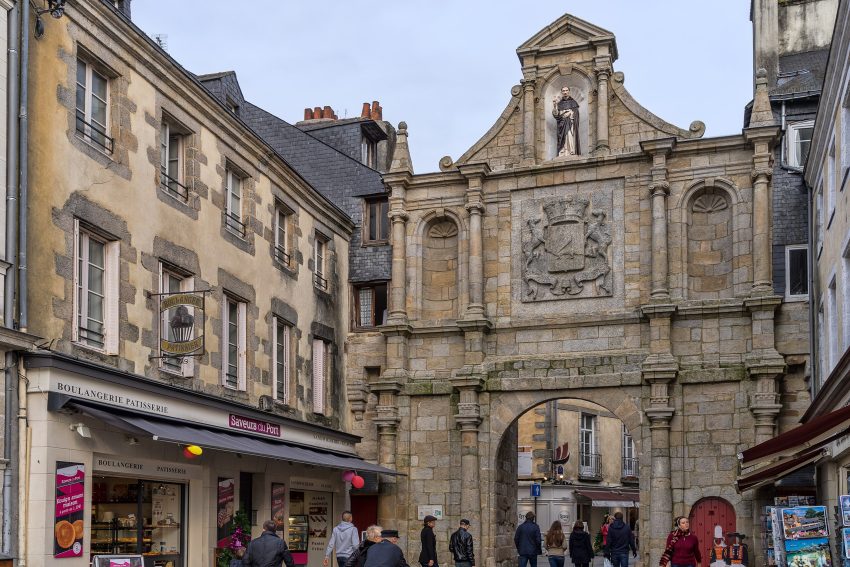
Porte Saint-Vincent is the ceremonial threshold between two sides of Vannes: the lively port with its terraces and boats, and the intimate lanes of the walled old town beyond. Facing Place Gambetta, this Baroque gate feels less like a leftover fragment and more like a deliberate statement, with its stacked levels, carved niches, and the sense that you're meant to pass through slowly and look up as you do.
It's one of the top sights in Vannes because it's both a landmark and a moment in your day: you walk under it again and again without it ever feeling ordinary. If you're doing a walking tour of Vannes, this is the natural hinge point that turns a waterfront stroll into an old-town wander, and it's where the city's story shifts from maritime bustle to medieval atmosphere.
Table of Contents
- History and Significance of the Porte Saint-Vincent
- Things to See and Do in the Porte Saint-Vincent
- How to Get to the Porte Saint-Vincent
- Practical Tips on Visiting the Porte Saint-Vincent
- Where to Stay Close to the Porte Saint-Vincent
- Is the Porte Saint-Vincent Worth Visiting?
- For Different Travelers
- FAQs for Visiting the Porte Saint-Vincent
- Nearby Attractions to the Porte Saint-Vincent
History and Significance of the Porte Saint-Vincent
Porte Saint-Vincent was built at the turn of the late 16th and early 17th centuries to improve access between the port and the fortified city. In practical terms, it replaced an older gateway and gave Vannes a more direct, more dignified entrance from the waterfront at a time when trade and movement through the harbour mattered deeply to the town's fortunes.
Architecturally, it's notable for its Baroque confidence: a granite façade arranged in bays and levels, with classical columns and carefully framed openings that read like civic theatre. The design makes the gate feel like a piece of urban architecture rather than a purely defensive feature, signalling that Vannes was thinking about prestige as much as protection.
The name honours Saint Vincent Ferrier, the Dominican preacher who died in Vannes in 1419, and the statue you see today continues a long tradition of welcoming visitors beneath a blessing hand. There's a local legend that adds an extra shiver of storytelling to the stone: if the saint's raised hand ever lowers, the city will be swallowed by water, a reminder that coastal Brittany has always lived with the sea as both neighbour and threat.
Things to See and Do in the Porte Saint-Vincent
Walk through the central arch from the port side and pause just inside the walls, where the view naturally frames the old town ahead. This is where you feel how Vannes was designed to be entered: you move from open water and wide space into tighter streets that immediately slow your pace.
Look up at the façade details from both sides, because the gate reads differently depending on your angle. From Place Gambetta, it feels like an urban monument, meant to be admired head-on; from inside the walls, it feels more like a transition point, a threshold that quietly marks the shift into the historic centre.
Use Porte Saint-Vincent as your connector for a simple, satisfying loop: port promenade, gate, medieval streets, ramparts gardens, then back down toward the water. Even if you’re not “museum-minded,” the gate gives your day structure, and it’s one of those landmarks that makes navigation effortless because you can always re-orient yourself by returning to it.
How to Get to the Porte Saint-Vincent
Porte Saint-Vincent stands at Place Gambetta, directly between the marina/port area and the entrance to Vannes’ old town, so it’s best approached on foot once you’re central.
The most convenient airports for Vannes are Nantes Atlantique (NTE), Rennes Bretagne (RNS), and Lorient South Brittany (LRT). For the best deals and a seamless booking experience, check out these flights to Vannes on Booking.com.
Vannes has strong rail connections for Brittany, and from Vannes station it's an easy walk or short taxi ride into the historic centre and the port area. You can use SNCF Connect to check schedules, compare routes, and purchase tickets for National (SNCF ) and regional trains (TER). For a more streamlined experience, we recommend using Omio, which allows you to easily compare prices, schedules, and book tickets for both National and Regional travel across all of Europe, all in one place.
Local buses are useful if you're staying near Conleau, the outskirts, or the far side of the port, but central Vannes is compact and more enjoyable on foot.
If you’re driving, park in a central car park and finish on foot through the port or the old town lanes, which keeps the visit simple and stress-free. If you are looking to rent a car in France I recommend having a look at Discover Cars, first, as they compare prices and review multiple car rental agencies for you.
Practical Tips on Visiting the Porte Saint-Vincent
- Entrance fee: Free
- Opening hours: 24 Hours
- Official website: https://www.mairie-vannes.fr/porte-saint-vincent
- Best time to visit: Early morning for a quieter, more atmospheric pass through the gate, or early evening when the port lights up and the old town feels livelier.
- How long to spend: Plan 10-15 minutes for photos and a slow look, or use it as a natural pause point on a 1-2 hour old town and ramparts loop.
- Accessibility: The area is generally easy to reach, but expect cobbles and uneven surfaces as soon as you step into the historic centre.
- Facilities: You’ll find the best café and restroom options immediately around the port and Place Gambetta, making this an easy stop to pair with a break.
Where to Stay Close to the Porte Saint-Vincent
For a culture-heavy itinerary, base yourself in or beside the old town so you can walk everywhere and enjoy the evenings; if your trip focuses on waterfront dining and Gulf excursions, staying by the port is the most convenient choice.
A smart, well-located base near the historic core is Kyriad Prestige Vannes Centre - Palais des Arts, which keeps you close enough to walk to the gate while still being practical for arrivals and day trips. For a classic, central option that works well if you want both old-town access and a straightforward route from the station, Urban Style Hôtel de France is a reliable pick. If you prefer a smaller, personal-feeling stay with an easy stroll into the medieval streets, Hôtel Anne de Bretagne suits a slower, more atmospheric Vannes break.
Is the Porte Saint-Vincent Worth Visiting?
Yes, because it’s more than a photo stop: it’s the point where Vannes’ character changes under your feet. Passing through it makes the city feel coherent, linking the maritime energy of the port with the enclosed, storybook feel of the old town.
It's also one of the easiest “high impact” sights in Vannes, since it costs nothing, takes very little time, and naturally fits into almost every route you'll take in the centre.
What Other Travellers Say...

Porte Saint Vincent in Vannes is a stone city gate dating from 1620, later reworked in a Baroque style with columns and niches; visitors say it's a pleasant spot to pass through the city walls, wander, grab coffee or a meal nearby, and enjoy a lively yet not overcrowded atmosphere by the port, with families noting a nearby playground and several praising the local restaurants and fresh seafood.


For Different Travelers
Families with Kids
Treat the gate as a mini story stop: ask kids to spot the statue, the niches, and the different openings, then make it a “mission” to find the prettiest street on the other side. It works best as a quick highlight on the way to the ramparts gardens, where there’s more space to roam.
If you’re visiting at a busy time, use the gate as a clear meeting point and navigation anchor. It helps keep everyone oriented, especially if you’re bouncing between the port, markets, and old-town lanes.
Couples & Romantic Getaways
Porte Saint-Vincent is an effortless romantic marker: walk through from the marina into the old town, then drift into quieter streets where the city feels softer and more intimate. It’s especially atmospheric around dusk, when the port lights glow and the old town feels like it’s settling into evening.
Plan a slow loop that ends back at the waterfront for a drink, so the day has a natural rhythm. The gate becomes your “chapter break,” separating daytime wandering from a calmer, evening mood.
Budget Travelers
This is an ideal budget sight: free, central, and naturally paired with other no-cost highlights like the ramparts gardens and old-town squares. Use it to build a full, satisfying walking day without paying entry fees.
If you’re short on time, make this your starting point for a self-guided route. It gives you an instant sense of place and a clear direction into the historic centre.
FAQs for Visiting the Porte Saint-Vincent
Getting There
Visiting Experience
Tours, Context & Itineraries
Photography
Safety & Timing
Nearby Attractions to the Porte Saint-Vincent
- Cathédrale Saint-Pierre de Vannes: A central cathedral visit that anchors the historic centre and adds architectural depth to your route.
- Port de Vannes: A lively marina promenade with terraces and an easy link to Gulf excursions.
- Jardin des Remparts: The ramparts gardens are a scenic, relaxed walk that shows off Vannes’ fortifications at their prettiest.
- Lavoirs de la Garenne: A photogenic riverside washhouse spot that adds everyday-history texture to your old-town loop.
- Place Henri IV: A postcard-perfect square of half-timbered houses and cafés in the heart of the old town.
The Porte Saint Vincent appears in our Complete Guide to Visiting Vannes!

Moira & Andy
Hey! We're Moira & Andy. From hiking the Camino to trips around Europe in Bert our campervan — we've been traveling together since retirement in 2020!
This website uses affiliate links which may earn a commission at no additional cost to you!
Planning Your Visit
24 Hours
Free
Nearby Attractions
- Port of Vannes (0.1) km
Port - Château de l’Hermine (0.1) km
Historic Building - Place des Lices (0.2) km
Historic Site and Market - Lavoirs de la Garenne (0.2) km
Historic Building - Vannes et sa Femme (0.2) km
Historic Building - Musée d'histoire et d'archéologie de Vannes (0.2) km
Museum - Remparts de Vannes (0.3) km
City Walls - Musée des beaux-arts de Vannes (0.3) km
Museum - Cathédrale Saint-Pierre de Vannes (0.3) km
Cathedral - Hôtel de Ville (0.5) km
Historic Building