Palacio de Las Dueñas, Seville
Gallery, Historic Building and Palace in Seville
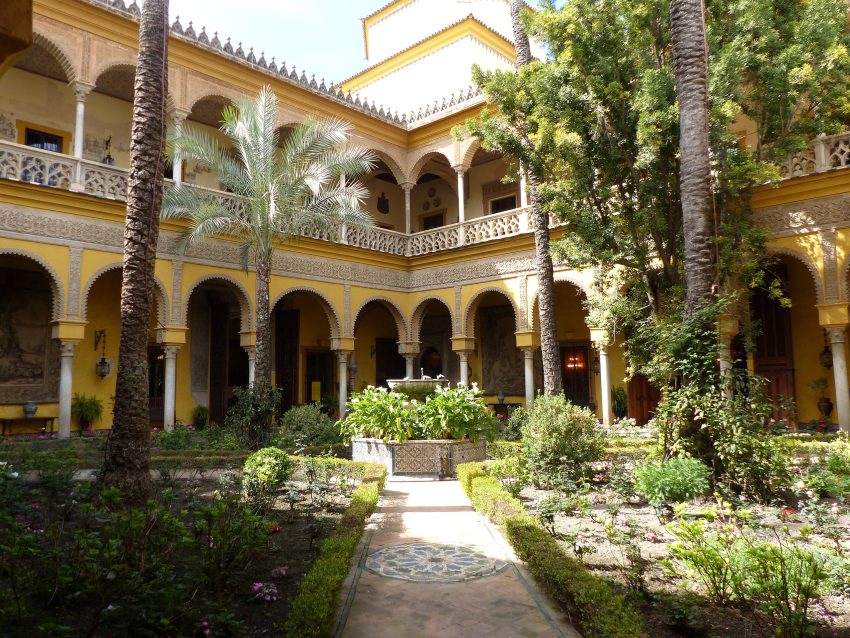
Palacio de las Dueñas is a 15th-century Sevillian palace that feels less like a museum and more like stepping into a private world-flower-filled patios, tiled passages, and family rooms arranged with the lived-in elegance of a grand house. Set just north of Seville's busiest historic-core lanes, it's one of the top attractions in Seville for travelers who want atmosphere over crowds, and who enjoy places where architecture, gardens, and personal history all share the spotlight.
Owned by the House of Alba and opened to the public in 2016, the palace balances grandeur with intimacy: you'll move between courtyards and galleries, then into salons lined with portraits, furniture, and small details that tell you how this place was actually used. It's also an easy addition to a walking tour of Seville, especially if you like pairing a “big monument” day with something quieter and more personal.
Table of Contents
- History and Significance of the Palacio de las Dueñas
- Things to See and Do in the Palacio de las Dueñas
- How to Get to the Palacio de las Dueñas
- Practical Tips on Visiting the Palacio de las Dueñas
- Where to Stay Close to the Palacio de las Dueñas
- Is the Palacio de las Dueñas Worth Visiting?
- For Different Travelers
- FAQs for Visiting Palacio de las Dueñas
- Nearby Attractions to the Palacio de las Dueñas
History and Significance of the Palacio de las Dueñas
Las Dueñas emerged in late-medieval Seville, when the city's wealth and influence helped shape a distinctive style of noble architecture-part Gothic-Mudéjar, part Renaissance, and unmistakably Andalusian in its love of patios, shade, and ceramic detail. The palace name is linked to the nearby Monastery of Santa María de las Dueñas, a reminder of how tightly Seville's noble, religious, and civic worlds once intertwined.
The property’s story reads like a slice of Spanish aristocratic history. After passing through prominent families, it became part of the House of Alba through marriage in the early 17th century, and it has remained one of the family’s most cherished residences. More recently, it was closely associated with Cayetana Fitz-James Stuart, the Duchess of Alba, who considered it her favorite home-an attachment you can still sense in the personal objects and photographs displayed inside.
Beyond aristocratic lineage, Las Dueñas holds a special place in Seville's cultural memory as the birthplace of poet Antonio Machado. The palace doesn't just present “beautiful rooms”; it anchors you in the city's emotional geography-light, fountains, orange trees, and the quiet domestic spaces that shaped a Seville childhood later turned into verse.
Things to See and Do in the Palacio de las Dueñas
Begin with the approach: the entrance sets the tone, and the first garden space is a gentle transition from the street into the palace's calmer rhythm. Look for the layers of style as you move-brickwork, arches, carved details, and the kind of tilework Seville does better than anywhere, all working together rather than competing.
The central courtyard is the heart of the visit, and it’s worth slowing down here before you rush into the rooms. The two-level arcades and decorative plasterwork create that classic Mudéjar “lace in stone” feeling, while the surrounding rooms hint at how a late-medieval palace organized public and private life. If you enjoy architectural details, this is where you’ll notice how light is managed-bright enough to feel alive, controlled enough to feel cool.
Inside, the ground-floor rooms deliver the personality of the house: salons with portraits and antiques, a chapel-like sense of continuity, and spaces that nod to Seville’s social traditions, including areas associated with music and flamenco culture. Keep an eye out for small, human-scale details-family photographs, gifts, and memorabilia-that turn an aristocratic collection into something more immediate and memorable.
Save time for the gardens and secondary courtyards. They're not just decorative; they're the “Seville” part of the palace-orange trees, greenery, and the soundscape of fountains and footsteps. In warm weather especially, they're where the visit feels most effortless, and where you'll likely end up taking your favorite photos.
How to Get to the Palacio de las Dueñas
The nearest airport is Seville Airport (SVQ), with straightforward connections into the city by taxi or airport bus depending on where you're staying. For the best deals and a seamless booking experience, check out these flights to Seville on Booking.com. If you're arriving from elsewhere in Andalusia, day trips via rail or coach are common, and Seville is well connected for quick city breaks.
If you arrive by train at Sevilla Santa Justa, the simplest route is a short taxi ride or a city bus into the historic centre followed by an easy walk to the palace. Train schedules and bookings can be found on Omio. Once you’re in the centre, walking is usually the fastest and most pleasant option, and it helps you stitch Las Dueñas into nearby sights without doubling back.
City buses are useful if you’re visiting in peak heat or staying farther out; aim for stops around the central shopping and Encarnación areas and walk the final few minutes. If you’re driving, plan to park in a public garage outside the tightest streets of the centre and finish on foot, because the lanes around the palace are not designed for stress-free parking. If you are looking to rent a car in Spain I recommend having a look at Discover Cars, first, as they compare prices and review multiple car rental agencies for you.
Practical Tips on Visiting the Palacio de las Dueñas
- Entrance fee: €14 (general); €10 (reduced); €0 (children under 6).
- Opening hours: (Summer) April – September: Daily: 10:00–19:00. (Winter) October – March: Daily: 10:00–18:00. Closed on 01 January, 06 January, 25 December, 30 December & 31 December. On 05 January & 24 December: 10:00–15:00.
- Official website: http://www.lasduenas.es/
- Best time to visit: Late morning is ideal for bright patios without peak-day crowds, while spring brings the gardens and flowers into their best form.
- How long to spend: Allow 60-90 minutes for a satisfying visit, or closer to 2 hours if you like lingering in courtyards and reading the room-by-room context.
- Accessibility: Expect a historic-building layout with some uneven surfaces and thresholds; it’s manageable for many visitors, but easiest if you plan a slower pace and check access notes in advance.
- Facilities: Bring water in warm months, pace yourself with courtyard breaks, and consider an audio guide if you want the family history and room details to land more clearly.
Where to Stay Close to the Palacio de las Dueñas
For a culture-heavy itinerary, base yourself in Seville's Historic Centre so you can walk to the main sights; for evenings focused on bars and a more local nightlife scene, the Alameda de Hércules area is a strong base near Las Dueñas.
If you want a refined, central stay with easy access to both monuments and restaurants, Hotel Casa 1800 Sevilla is a reliable choice for walk-everywhere days. For a higher-end historic feel closer to the palace, Hotel Palacio de Villapanés delivers classic Seville elegance with a calmer atmosphere. If you prefer a polished, boutique-style base still within easy walking distance, Hospes Las Casas del Rey de Baeza balances character with comfort and puts you well placed for exploring on foot.
Is the Palacio de las Dueñas Worth Visiting?
Yes-especially if you like places that feel personal rather than monumental. Las Dueñas is at its best when you want Seville’s beauty in a quieter key: courtyards, gardens, and lived-in rooms that make the city’s aristocratic past feel tangible without requiring a full-day commitment.
What Other Travellers Say...

Palacio de Dueñas, at C. Santa Teresa de Jesús 12 in Medina del Campo, is a well conserved Renaissance palace now functioning as an educational institute that also hosts guided visits and historical reenactments; visitors praise its detailed tours and richly decorated interior courtyard but advise checking opening days and times since weekend access may be limited, and some have reported poor reception from staff at the entrance.


For Different Travelers
Families with Kids
This visit works best as a “patios and gardens” adventure with short bursts indoors. Let kids lead the pace courtyard-to-courtyard, and turn details into simple games-spot the tiles, count arches, find the fountain sounds, and choose a favorite patio.
If you’re visiting with a stroller, plan for a slower route and be prepared for occasional thresholds typical of historic buildings. A good strategy is to do a highlights loop, then reward everyone with a nearby snack stop rather than trying to absorb every room.
Couples & Romantic Getaways
Las Dueñas is one of Seville’s most romantic-feeling interiors because the mood is unhurried: filtered light, flowers, quiet corners, and that gentle transition from street life into private calm. It’s ideal when you want something beautiful that doesn’t feel like a “ticketed rush” experience.
Pair it with a long lunch nearby or a sunset wander toward the city’s livelier evening streets. The palace also photographs beautifully, so it’s a strong stop if you like taking travel portraits in architectural settings.
Budget Travelers
It's a strong-value stop if you prioritize atmosphere and want a palace experience without the biggest crowds. Keep costs down by planning a compact visit, then exploring the surrounding neighbourhoods on foot, which is where Seville often feels most rewarding.
If you’re watching spending, treat Las Dueñas as your “one paid interior” for a day and balance it with free wandering-plazas, churches that allow casual entry, and viewpoints around the centre. It fits well into an affordable itinerary because it doesn’t force extra transport costs.
History Buffs
Approach Las Dueñas as a case study in Sevillian noble life: how Mudéjar craft carried into later styles, how Renaissance ideas reshaped domestic architecture, and how aristocratic houses functioned as cultural anchors. The mix of architecture and personal collections gives you both the structure and the human story.
Antonio Machado’s link adds another layer, connecting place to memory and identity rather than just dates and ownership. If you enjoy reading cities through their homes, this palace is unusually rich in clues.
FAQs for Visiting Palacio de las Dueñas
Getting There
Tickets & Entry
Visiting Experience
Tours, Context & Itineraries
Photography
Accessibility & Facilities
Food & Breaks Nearby
Safety & Timing
Nearby Attractions to the Palacio de las Dueñas
- Metropol Parasol (Las Setas): A striking modern landmark with panoramic views and a lively plaza scene that contrasts nicely with the palace.
- Casa de Pilatos: Another essential Sevillian noble house combining Mudéjar and Renaissance elements, ideal if you're comparing historic interiors.
- Basilica de la Macarena: A major devotional site with deep local significance and a very different, more everyday-Seville atmosphere.
- Alameda de Hércules: A long, social boulevard packed with bars and cafés, perfect for an evening wind-down after sightseeing.
- Seville Cathedral & Giralda: The city's headline monument pairing monumental Gothic scale with one of Spain's most iconic towers.
The Palacio de Las Dueñas appears in our Complete Guide to Visiting Seville!

Moira & Andy
Hey! We're Moira & Andy. From hiking the Camino to trips around Europe in Bert our campervan — we've been traveling together since retirement in 2020!
This website uses affiliate links which may earn a commission at no additional cost to you!
Planning Your Visit
(Summer) April - September: Daily: 10:00-19:00.
(Winter) October - March: Daily: 10:00-18:00.
Closed on 01 January, 06 January, 25 December, 30 December & 31 December.
On 05 January & 24 December: 10:00-15:00.
€14 (general); €10 (reduced); €0 (children under 6).
Nearby Attractions
- Museo Arqueologico Antiquarium (0.3) km
Museum - Metropol Parasol (0.3) km
Area, Monument and Notable Building - Iglesia de San Luis de los Franceses (0.4) km
Church, Historic Building and Museum - Palacio de Villapanés (0.4) km
Palace - Palacio de Lebrija (0.5) km
Historic Building and Museum - Palacio de los Marqueses de la Algaba (0.5) km
Palace - Casa de Pilatos (0.6) km
Historic Building and Palace - Calle Sierpes (0.6) km
Area, Shop and Street - Alameda de Hércules (0.6) km
Park - Museo del Baile Flamenco (0.7) km
Museum