Natural History Museum of Nantes
Museum in Nantes
Closed until 2029.
Tucked along Rue Voltaire, the Muséum d'Histoire Naturelle de Nantes is one of the best places to visit in Nantes if you are curious about the natural world and how scientists have tried to understand it over the centuries. Founded in 1810 by pharmacist and naturalist François-René Dubuisson and moved to its purpose-built home in 1875, the museum is packed with collections that span zoology, geology, botany, ethnology, and more. Its historic galleries, high ceilings, and rows of display cases create that classic “old-school museum” atmosphere, while modern displays and temporary exhibitions keep everything feeling fresh and relevant.
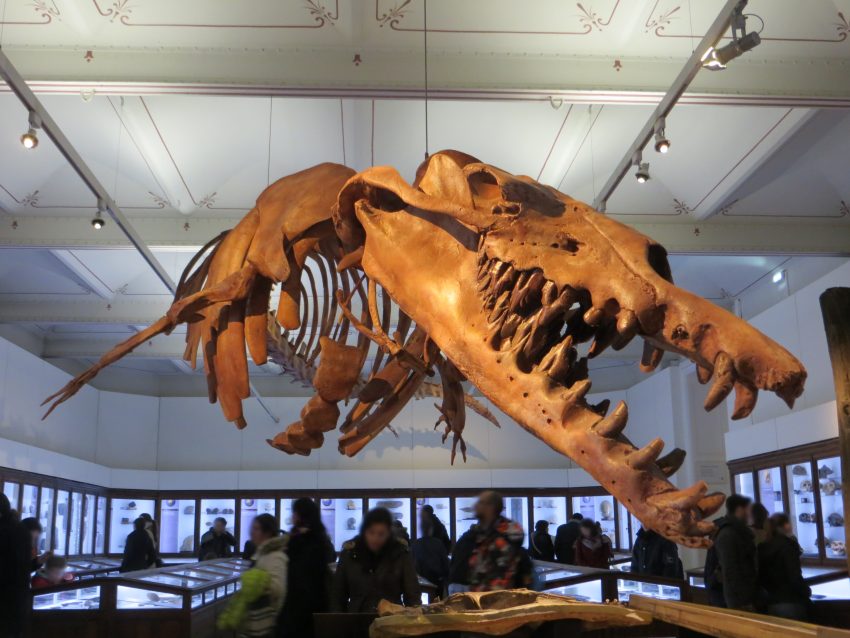
Inside this city-centre institution you will find everything from glittering minerals and fossils to an 18-metre-long fin whale skeleton, an impressive vivarium with live reptiles and amphibians, and a herbarium of around 300,000 plant specimens. The Muséum d'Histoire Naturelle de Nantes is a great place to visit on a walking tour of Nantes, especially if you are exploring the western side of the centre and want a break that is both educational and a little bit awe-inspiring.
Table of Contents
- History and Significance of the Muséum d’Histoire Naturelle de Nantes
- Things to See and Do in the Muséum d’Histoire Naturelle de Nantes
- How to Get to the Muséum d’Histoire Naturelle de Nantes
- Practical Tips on Visiting the Muséum d’Histoire Naturelle de Nantes
- Where to Stay close to the Muséum d’Histoire Naturelle de Nantes
- Is the Muséum d’Histoire Naturelle de Nantes Worth Visiting?
- FAQs for Visiting Muséum d’Histoire Naturelle de Nantes
- Nearby Attractions to the Muséum d’Histoire Naturelle de Nantes
History and Significance of the Muséum d’Histoire Naturelle de Nantes
The story of the Muséum d'Histoire Naturelle de Nantes begins in 1810, when François-René Dubuisson, a pharmacist and naturalist, founded the institution to bring together scientific specimens for study and public education. Initially housed in the School for Surgery of Saint Leonard, the museum reflected the early 19th-century fascination with cataloguing the natural world, from shells and minerals to stuffed animals and anatomical models.
As the collections grew, so did the need for a dedicated building. In 1875, the museum moved to its current site on Rue Voltaire, into premises specifically designed to display natural history collections. The architecture-with spacious galleries and high windows-was intended to provide both the light and the scale needed for large specimens and long rows of display cases. Over time, the museum expanded its scope, adding new disciplines and collections that mirrored advances in scientific knowledge and exploration.
Today, the Muséum d'Histoire Naturelle de Nantes is recognised as one of the oldest natural history museums in France and remains a vital resource for both researchers and the general public. Its collections, some of which date back two centuries, sit alongside more recent acquisitions and contemporary exhibitions, creating a bridge between the early days of scientific collecting and modern approaches to ecology, conservation, and global biodiversity.
Things to See and Do in the Muséum d’Histoire Naturelle de Nantes
A natural starting point is the Zoology Gallery, where specimens are arranged according to a phylogenetic classification of vertebrates. Over a thousand examples-from birds and mammals to reptiles and fish-line the cases, helping you trace evolutionary relationships while marvelling at form and adaptation. The undisputed star is the 18-metre-long fin whale skeleton, acquired in 1991, which hangs overhead and instantly puts human scale into perspective.
Next, head to the Earth and Universe Sciences Gallery to explore the museum’s minerals, rocks, fossils, and meteorites. Here you can wander past glittering crystals, ancient stones, and fossils that tell the story of geological time and the forces that shaped our planet. Displays often highlight local geology alongside global specimens, making it easier to connect what you see under glass with the landscapes you travel through above ground.
Do not miss the museum’s botanical and ethnology collections. The herbarium, with around 300,000 sheets, is primarily a research resource, but interpretive displays give visitors a sense of its scale and importance. The ethnology section, with more than 400 objects from various cultures, adds a human dimension to the natural story, showing how communities around the world have interacted with their environments. Finally, the vivarium-established in 1955-is a perennial favourite, home to around twenty live species including snakes, lizards, and amphibians that captivate visitors of all ages.
How to Get to the Muséum d’Histoire Naturelle de Nantes
The Muséum d'Histoire Naturelle de Nantes is located on Rue Voltaire, west of the main historic centre and within walking distance of many central districts. Most visitors arriving from abroad use Nantes Atlantique Airport, southwest of the city, which is linked to the centre by shuttle buses and other public transport options in around 20-30 minutes. For the best deals and a seamless booking experience, check out these flights to Nantes on Booking.com.
If you are travelling by train, Nantes' main railway station offers TGV and regional connections from cities such as Paris, Rennes, and Bordeaux, and from there you can reach the museum by tram, bus, or a pleasant walk through the city centre toward the western quarters. You can use SNCF Connect to check schedules, compare routes, and purchase tickets for National (SNCF ) and regional trains (TER). For a more streamlined experience, we recommend using Omio, which allows you to easily compare prices, schedules, and book tickets for both National and Regional travel across all of Europe, all in one place.
For those arriving by car, follow signs for Nantes centre and look for car parks near the historic core or along major central routes; from your parking spot, it is usually only a short walk to Rue Voltaire and the museum entrance. If you are looking to rent a car in France I recommend having a look at Discover Cars, first, as they compare prices and review multiple car rental agencies for you. Once you arrive, the neighbourhood’s mix of residential streets and cultural venues makes it a good area to explore on foot before or after your museum visit.
Practical Tips on Visiting the Muséum d’Histoire Naturelle de Nantes
- Suggested tips: Start with the zoology and Earth sciences galleries, then finish in the vivarium for a lively change of pace and a hit of colour and movement.
- Best time to visit: Weekday mornings and early afternoons tend to be quieter, especially outside school holidays; weekends can be busier with families.
- Opening hours: Reopening 2029
- Official website: https://museum.nantesmetropole.fr/home.html
- How long to spend: Allow 1.5-2 hours to see the main galleries without rushing; enthusiasts of natural history may easily stay longer.
- Accessibility: Many areas are accessible via lifts and ramps, though older sections of the building may include stairs or narrower passages; ask at reception for the most accessible route.
- Facilities: The museum provides a reception desk, toilets, and often a small shop or information area; cafés and other services can be found in the surrounding streets.
- Photography tip: Use the dramatic scale of the fin whale skeleton and long gallery vistas to compose striking shots; always respect any restrictions on flash or photographing certain exhibits.
- Guided tours: Look out for guided visits, talks, or themed tours and activities that focus on specific collections, from geology to the vivarium's residents.
- Nearby food options: After your visit, you will find cafés, bakeries, and restaurants within a short walk, making it easy to combine the museum with lunch or an afternoon coffee.
Where to Stay close to the Muséum d’Histoire Naturelle de Nantes
Staying near the Muséum d'Histoire Naturelle de Nantes puts you within easy reach of the western side of the city centre, while still being close to the château, cathedral, and riverfront. A reliable and central option is L'Hôtel - Face au Château, which offers comfortable rooms opposite the Château des Ducs de Bretagne and gives you straightforward tram or walking access to Rue Voltaire. For a more contemporary feel, Hôtel La Pérouse Nantes pairs modern design with a central location close to shopping streets and public transport, making it easy to reach the museum as well as other cultural spots. If you prefer a quieter base with a neighbourhood atmosphere, Hôtel Chateaubriand offers a cosy, good-value stay within walking distance of the historic core and just a short journey from the museum.
Is the Muséum d’Histoire Naturelle de Nantes Worth Visiting?
The Muséum d'Histoire Naturelle de Nantes is definitely worth visiting, especially if you enjoy museums where curiosity leads you from one unexpected discovery to the next. Its mix of classic display cases, dramatic centrepieces like the fin whale skeleton, live animals in the vivarium, and wide-ranging collections across geology, zoology, botany, and ethnology makes it appealing to both adults and children. It also offers a refreshing change of pace from art museums and historic buildings, rounding out your picture of Nantes as a city that values science and education as much as history and culture.
What Other Travellers Say...

Natural History Museum at 12 Rue Voltaire is an elegant neoclassical museum offering compact, well-arranged displays of taxidermy, bird exhibits on a raised level in the main hall, minerals, fossils and a geological section, with a notable collection of meteorite rocks; visitors find it a pleasant one- to two-hour visit suitable for families and animal lovers, praising its attractive rustic entrance and youth-friendly displays while noting some issues with lighting and exhibit placement behind window wood that can obscure cases.


FAQs for Visiting Muséum d’Histoire Naturelle de Nantes
Nearby Attractions to the Muséum d’Histoire Naturelle de Nantes
- Musée Dobrée: A nearby museum showcasing Thomas Dobrée's eclectic collection of art and artefacts from across centuries and continents.
- Château des Ducs de Bretagne and Nantes History Museum: A former ducal fortress housing the city's history museum, with ramparts and immersive exhibitions.
- Mémorial de l'Abolition de l'Esclavage: A powerful riverside memorial on the Quai de la Fosse that confronts Nantes' role in the Atlantic slave trade.
- Les Machines de l'Île: A creative world of giant mechanical creatures and interactive art installations on the Île de Nantes.
- Quartier Bouffay: The lively medieval quarter filled with narrow streets, half-timbered houses, and plenty of bars and restaurants for post-museum dining.
The Natural History Museum of Nantes appears in our Complete Guide to Visiting Nantes!

Moira & Andy
Hey! We're Moira & Andy. From hiking the Camino to trips around Europe in Bert our campervan — we've been traveling together since retirement in 2020!
This website uses affiliate links which may earn a commission at no additional cost to you!
Planning Your Visit
Reopening 2029
Nearby Attractions
- Musée Thomas Dobrée (0.1) km
Museum - Place Graslin (0.2) km
Square - Mémorial de l'Abolition de l'Esclavage (0.4) km
Monument - Passage Pommeraye (0.4) km
Historic Building - Place Royale (0.5) km
Historic Building - Les Machines de l'Île (0.7) km
Attraction - Eglise Sainte-Croix (0.9) km
Church - Jungle Intérieure (0.9) km
Gardens - Nantes History Museum (1.2) km
Museum - Cathédrale Saint-Pierre-et-Saint-Paul de Nantes (1.2) km
Cathedral