Museum of Navarre, Pamplona
Museum in Pamplona
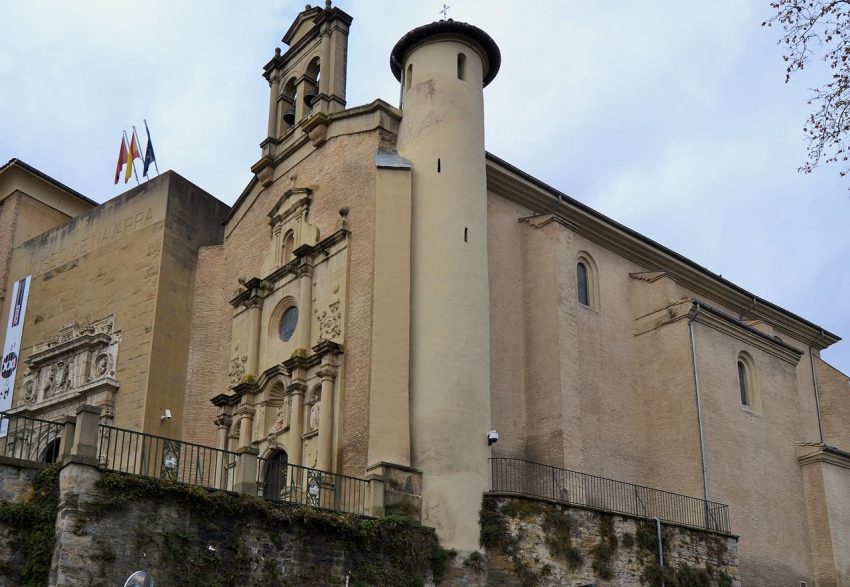
Set in a former pilgrims' hospital dating back to 1556, the Museum of Navarra is where Pamplona's long and complex history is told through art, archaeology and unique objects. Spread over four floors, it guides you from prehistory in the basement all the way up to 20th century works on the top floor, making it one of the best places to visit in Pamplona if you want to understand the region as more than just the city of San Fermín. The building itself still hints at its old function, with thick walls, courtyard spaces and a calm, cloistered feel that suits long, thoughtful visits.
Navarre's story here is told through a remarkable blend of Roman and medieval art, crowned by a 1st century mosaic of the Triumph of Bacchus, Romanesque capitals from the cathedral cloister, glittering medieval jewels and an 11th century ivory chest. Add in paintings such as Goya's portrait of the Marquis of San Adrián and carefully chosen examples of 20th century art, and you get a surprisingly complete overview of how style, power and faith have been expressed in this corner of Spain. The museum is a great place to visit on a walking tour of Pamplona, especially if you pair it with the nearby cathedral and old town streets.
Table of Contents
- History and Significance of the Museum of Navarra
- Things to See and Do in the Museum of Navarra
- How to Get to the Museum of Navarra
- Practical Tips on Visiting the Museum of Navarra
- Where to Stay close to the Museum of Navarra
- Is the Museum of Navarra Worth Visiting?
- FAQs for Visiting Museum of Navarra
- Nearby Attractions to the Museum of Navarra
History and Significance of the Museum of Navarra
The Museum of Navarra occupies the old pilgrims' hospital of Pamplona, founded in 1556 to care for travellers and the sick on one of the key routes of the Camino de Santiago. This origin gives the building a special resonance: for centuries it was a place of passage and refuge, and now it shelters the artistic memory of the wider region. Its robust stone architecture, courtyards and corridors have adapted well to life as a museum, with each level dedicated to a different stretch of time.
The collection is organised chronologically over four floors. In the basement, exhibits on prehistory introduce you to the earliest human presence in Navarre, with tools and objects that set the scene for everything that follows. As you move up, Roman-era pieces take centre stage, including the outstanding 1st century mosaic of the Triumph of Bacchus, which once decorated a Roman house and now dominates its gallery with vivid storytelling in stone and tesserae.
Medieval and early modern Navarre make up the core of the museum's identity. Romanesque capitals from the cathedral's cloister, an 11th century ivory chest and medieval jewellery all speak to the blend of faith, trade and craftsmanship that characterised the region. Higher up, the 20th century floor shows how Navarre's artistic output connects with wider Spanish and European movements, while the presence of Goya's portrait of the Marquis of San Adrián underlines how local elites participated in the cultural currents of their time. Together, building and collection turn the Museum of Navarra into a compact yet rich gateway to the region's past.
Things to See and Do in the Museum of Navarra
Start in the basement, where displays on prehistory and early history anchor you in deep time. Here you will find objects that may be modest in scale but are crucial for understanding how people lived in Navarre long before cities, cathedrals and palaces. Moving up into the Roman section, the highlight is the Triumph of Bacchus mosaic: spend time studying its figures, borders and colour shifts, and imagine it in situ on the floor of a Roman house where it once impressed guests and owners alike.
As you progress through the medieval floors, pay attention to the Romanesque capitals from Pamplona Cathedral's cloister. Their carved scenes and motifs offer a close-up look at the kind of details that are often hard to see in situ high above eye level. Nearby, the 11th century ivory chest and medieval jewels bring a more intimate, precious scale to the story, showing how devotion and status were expressed through finely worked objects. Other religious artefacts, altarpieces and sculptures link these pieces into a coherent narrative of faith and artistic development.
On the upper floors, the focus shifts towards painting and the evolution of style. Goya’s portrait of the Marquis of San Adrián is a key stop: its psychological depth and refined brushwork stand out even among strong neighbouring works. As you move into the 20th century, you will see how Navarre’s art interacts with broader movements, from realism to more modern tendencies, rounding out the journey from prehistory to the present. Throughout, the museum’s size is manageable enough that you can see the main highlights in a single visit, yet rich enough to reward slower, more detailed exploration if you have the time.
How to Get to the Museum of Navarra
Most visitors reach Pamplona via Pamplona Airport or larger regional airports such as Bilbao, then transfer to the city by bus, car or organised transport. For the best deals and a seamless booking experience, check out these flights to Pamplona on Booking.com. Once in Pamplona, the museum sits within the urban fabric of the city, a short walk from the Casco Viejo and Plaza del Castillo.
If you are arriving by train, Pamplona's main station connects with Madrid, Barcelona and other major Spanish cities.Train schedules and bookings can be found on Omio. From the station, you can take a local bus or taxi into the centre, then walk through the old town streets to the Museum of Navarra, which is well signposted and easy to combine with nearby sights like the cathedral.
Travelling by car, Pamplona is linked by main roads to the rest of northern Spain.If you are looking to rent a car in Spain I recommend having a look at Discover Cars, first, as they compare prices and review multiple car rental agencies for you. It is usually easiest to park in a central car park at the edge of the old town and then continue on foot; from there, the Museum of Navarra is an easy stroll, and you can fold your visit into a wider loop of the historic centre and parks.
Practical Tips on Visiting the Museum of Navarra
- Suggested tips: Plan your visit around the museum’s siesta closure; go in the late morning or return after 5 pm so you have enough time to work through all four floors without rushing.
- Best time to visit: Late morning on weekdays tends to be quieter; late afternoon after 5 pm can also be pleasant, especially in hot weather when the museum’s interiors feel cool and calm.
- Entrance fee: Adults: €2; Free admission: Saturday afternoons and Sundays.
- Opening hours: Tuesday to Saturday: 9:30 a.m. to 2:00 p.m. & 5:00 p.m. to 7:00 p.m. ; Sundays and public holidays: 11:00 a.m. to 2:00 p.m.
- Official website: https://www.navarra.es/home_en/Temas/Turismo+ocio+y+cultura/_Museos/Museo+de+Navarra/
- How long to spend: Allow 1.5-2 hours to follow the full chronological route from prehistory to the 20th century and to linger over key pieces like the Roman mosaic and Goya portrait.
- Accessibility: The adapted museum building generally offers lift access between floors, but some areas may still reflect the constraints of the historic structure; check at reception for the most accessible routes.
- Facilities: Expect a ticket desk, cloakroom space, toilets and possibly a small shop or book area; cafés and bars are close by in the surrounding streets.
- Photography tip: If photography is permitted, focus on details-the patterns of the Triumph of Bacchus mosaic, carved capital faces and the textures of the ivory chest-and be mindful of low light in some galleries.
- Guided tours: Look out for guided visits or audio guides if available; they add context to individual works and help you connect pieces across different floors.
- Nearby food options: Plan a coffee or pintxos break before or after your visit in the old town; the siesta closure makes lunchtime a natural point to step out and enjoy local bars and cafés.
Where to Stay close to the Museum of Navarra
Staying in or near Pamplona's historic centre makes it easy to visit the Museum of Navarra and explore nearby sights on foot. A classic and elegant option overlooking Plaza del Castillo is Gran Hotel La Perla, which places you within a comfortable stroll of the museum, cathedral and main squares. For a characterful base even closer to the old town walls and cathedral, Pamplona Catedral Hotel offers a peaceful setting with quick access to the museum and surrounding historic streets. If you prefer a modern hotel near parks and still within walking distance of the centre, Hotel Tres Reyes Pamplona works well, balancing green space, easy parking and a short walk to cultural stops like the Museum of Navarra.
Is the Museum of Navarra Worth Visiting?
The Museum of Navarra is definitely worth visiting, particularly if you are interested in understanding Pamplona and the wider region beyond the famous bull runs. Few museums manage to tell such a clear story from prehistory through Roman times and the medieval kingdom right up to the 20th century in such a compact, focused way. Anchored by standout pieces like the Triumph of Bacchus mosaic, Romanesque capitals, the ivory chest and Goya's portrait of the Marquis of San Adrián, a visit here gives you a solid cultural framework for everything else you see in Navarre.
What Other Travellers Say...

Museum of Navarre, housed in a former hospital on C. de Santo Domingo in Pamplona, presents regional history and art across multiple floors, with displays ranging from mosaics, portraits and ancient maps to prehistoric artifacts, Roman pieces like the Togado de Pompelo, column heads from the cathedral, coins and contemporary works; visitors describe a well laid out, spacious and clean venue with lockers, documentary screens and an attached Renaissance chapel, recommending about 1.5–2 hours to explore and noting free entry at certain weekend times and a modest weekday entrance fee.


FAQs for Visiting Museum of Navarra
Nearby Attractions to the Museum of Navarra
- Pamplona Cathedral: A Gothic cathedral with a Neoclassical façade, royal tombs and cloister, just a short walk away in the old town.
- Plaza del Castillo: Pamplona's main square and “living room,” lined with cafés and arcades, ideal for a drink after your museum visit.
- Ciudadela de Pamplona: A 16th century star-shaped fortress turned public park, perfect for a relaxing stroll through ramparts and lawns.
- Taconera Park: One of Pamplona's oldest parks, with landscaped gardens, shaded paths and small animal enclosures.
- Calle Estafeta: A famous street on the Running of the Bulls route, now packed with pintxos bars and shops, offering a lively contrast to the calm museum galleries.
The Museum of Navarre appears in our Complete Guide to Visiting Pamplona!

Moira & Andy
Hey! We're Moira & Andy. From hiking the Camino to trips around Europe in Bert our campervan — we've been traveling together since retirement in 2020!
This website uses affiliate links which may earn a commission at no additional cost to you!
Planning Your Visit
Tuesday to Saturday: 9:30 a.m. to 2:00 p.m. & 5:00 p.m. to 7:00 p.m. ;
Sundays and public holidays: 11:00 a.m. to 2:00 p.m.
Adults: €2; Free admission: Saturday afternoons and Sundays.
Nearby Attractions
- Museo Universidad de Navarra (0) km
Museum - Royal and General Archive of Navarra (0.1) km
Archive and Palace - Iglesia de San Saturnino (San Cernin) (0.2) km
Church - San Fermín de Aldapa (0.2) km
Church - Ayuntamiento de Pamplona (0.2) km
Town Hall - Albergue de Jesús y María (0.3) km
Church and Hostel - Catedral de Pamplona (0.4) km
Cathedral - Portal de Francia (0.4) km
City Gate - Parroquia San Lorenzo (0.4) km
Church - Calle Estafeta (0.4) km
Street