Museo Arqueologico Antiquarium, Seville
Museum in Seville
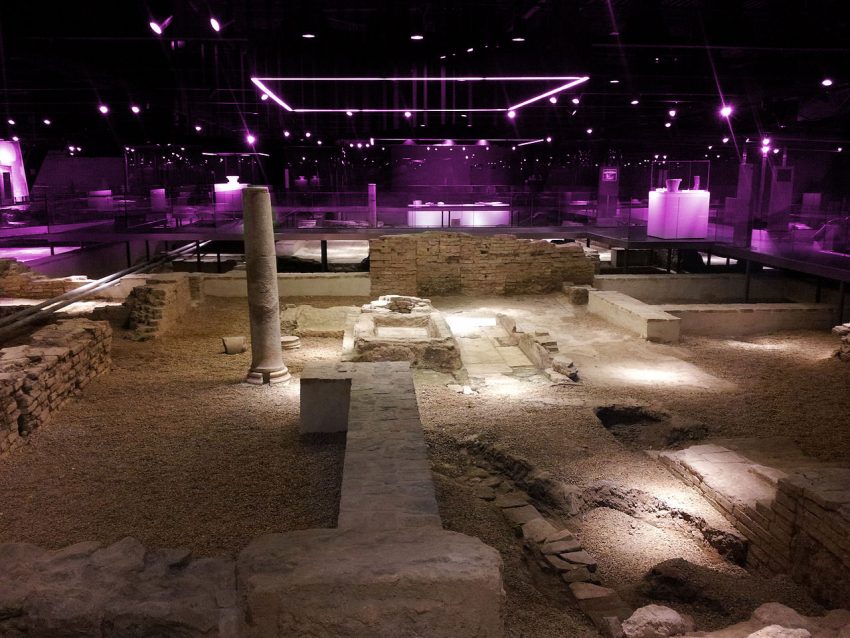
Tucked into the foundations beneath Las Setas at Plaza de la Encarnación, the Antiquarium de Sevilla is where Seville’s modern icon meets its ancient past. You enter from the square and head down into a vast, dimly lit archaeological hall, then follow glass-floored walkways that let you look directly onto Roman-era remains spread across the site.
It's an easy, high-impact visit because you don't need specialist knowledge to enjoy it: mosaics, columns, and old domestic layouts are instantly readable, and the museum's screens help you picture what was found during excavation. If you're building a day around the old quarter, this spot is one of the things to see in Seville, and it fits neatly into a walking tour of Seville because you can combine it with rooftop views, shopping streets, and tapas nearby without any transit.
Table of Contents
- History and Significance of the Antiquarium de Sevilla
- Things to See and Do in the Antiquarium de Sevilla
- How to Get to the Antiquarium de Sevilla
- Practical Tips on Visiting the Antiquarium de Sevilla
- Where to Stay Close to the Antiquarium de Sevilla
- Is the Antiquarium de Sevilla Worth Visiting?
- For Different Travelers
- FAQs for Visiting Antiquarium de Sevilla
- Nearby Attractions to the Antiquarium de Sevilla
History and Significance of the Antiquarium de Sevilla
The Antiquarium exists because major excavations were carried out during the redevelopment of Plaza de la Encarnación, revealing substantial layers of Seville’s past beneath a modern urban square. Rather than removing the remains, the city preserved a large section in place, creating a museum that lets you experience the archaeology at the scale it was found.
What makes the site meaningful is the mix of cultures and eras it concentrates into one space. You’ll see evidence of everyday life and industry over many centuries, with Roman structures and mosaics forming the visual centerpiece, and later layers reflecting how the city evolved through late antiquity and the medieval period.
It's also a rare chance to understand Seville as a lived city, not just a postcard of cathedrals and palaces. The Antiquarium adds context to everything you see above ground, showing how the historic center is literally built on top of earlier neighborhoods.
Things to See and Do in the Antiquarium de Sevilla
Follow the main glass walkways slowly, because the best details reveal themselves when you stop and look down: the footprints of houses, the lines of courtyards, wells, and the geometry of rooms. The sense of scale is part of the appeal, and it’s worth looping back to compare what you noticed the first time with what stands out on a second pass.
Look out for the fish-salting tanks and vats, which are a memorable reminder that this was not only a residential area but also a working landscape tied to food production and trade. It’s one of the clearest “daily life” elements on the site, and it helps anchor the ruins in practical reality.
The mosaics are the stars, and several themes are worth hunting down as you move through the museum. The Casa de las Columnas is a highlight for its pillared patio feel and strong mosaic presence, while the reconstructed “kissing birds” motif has become the museum’s signature image. If you enjoy mythological imagery, keep an eye out for the Medusa mosaic and Bacchus-themed floors, which show how decorative art carried stories into private domestic space.
How to Get to the Antiquarium de Sevilla
The Antiquarium de Sevilla is located under Plaza de la Encarnación, accessed from the Las Setas complex in Seville’s old town, so the simplest approach is on foot from central landmarks like Plaza del Salvador or the Cathedral area.
Seville Airport (SVQ) is the closest airport, and the easiest route is the airport bus or a taxi into the historic center, then a short walk to Plaza de la Encarnación. For the best deals and a seamless booking experience, check out these flights to Seville on Booking.com.
If you’re arriving by train, Sevilla Santa Justa is the main station; from there, a taxi is quickest, or you can take city buses toward the center and finish on foot. Train schedules and bookings can be found on Omio.
Local buses stop within a few minutes’ walk of the square, which is useful if you’re staying outside the historic core and want to avoid a long walk in summer heat.
If you’re driving, park in a public garage outside the tightest historic streets and walk in, since access and street parking in the old quarter are limited. If you are looking to rent a car in Spain I recommend having a look at Discover Cars, first, as they compare prices and review multiple car rental agencies for you.
Practical Tips on Visiting the Antiquarium de Sevilla
- Entrance fee: €2. Free for under-16s, Seville residents/born in Seville with ID, and people with disabilities (plus one companion).
- Opening hours: Tuesday – Saturday: 10:00–20:00. Sunday & Public Holidays: 10:00–14:00. Closed on Monday, 25 December, 1 January & 6 January.
- Official website: https://icas.sevilla.org/espacios/antiquarium/informacion-general
- Best time to visit: Late morning on a weekday is ideal for a quieter, more reflective visit, especially if you want to linger over mosaics without feeling rushed.
- How long to spend: 45-75 minutes is enough for a relaxed circuit, with extra time if you like reading the interpretive panels and watching the audiovisual displays.
- Accessibility: The route is generally manageable, but the experience depends on ramps, lift access, and the specific path in use, so check on the day if mobility is a concern.
- Facilities: Treat it as a focused museum visit; plan café breaks in the surrounding Encarnación and Alfalfa streets before or after.
Where to Stay Close to the Antiquarium de Sevilla
For a culture-heavy itinerary, base yourself in Santa Cruz or the Cathedral area to stay closest to Seville’s headline monuments; for a trip focused on food, nightlife, and a central “walk everywhere” feel, staying around Encarnación/Alfalfa near Las Setas is the most practical choice.
For a stay that puts you almost on the plaza, Intelier Casa de Indias is hard to beat for location and convenience. If you want a boutique option with character while staying close to the Antiquarium and the old-town lanes, Hotel Posada del Lucero is a strong base for both daytime sightseeing and evening tapas. For a quieter-feeling stay that still keeps you walkable to Encarnación, Hotel Casa 1800 Sevilla works well if you prefer a more classic historic-center atmosphere.
Is the Antiquarium de Sevilla Worth Visiting?
Yes, especially if you want something genuinely different from Seville’s major churches and palaces. The combination of glass walkways, well-presented ruins, and standout mosaics delivers a lot of value in a short visit.
It’s also worth it as a “context stop” that makes the rest of the old town feel richer. Seeing how much history sits beneath an everyday square changes how you look at Seville’s streets afterward.
What Other Travellers Say...

Antiquarium sits beneath Plaza de la Encarnación in Sevilla and showcases well-preserved Roman house ruins with colorful mosaics, pottery, statues and other artifacts; visitors note it's compact (about a 30-minute visit), air-conditioned and located next to the Setas de Sevilla, often free with a Real Alcázar ticket or available for a small entry fee, though facilities like toilets may be unavailable and the displays have been described as somewhat neglected despite occasional small exhibitions.



For Different Travelers
Families with Kids
This is a good family museum because it’s visual and concrete: kids can spot mosaics, columns, and room layouts without needing to read long labels. The glass floors create a mild sense of adventure, and the visit length is naturally manageable.
To keep it smooth, frame it as a short underground exploration rather than a long museum session, then reward everyone with a break in the plaza above. The contrast between the cool interior and the lively square outside also helps reset energy levels.
Couples & Romantic Getaways
For couples, the Antiquarium is an unexpectedly atmospheric stop that feels calm and slightly hidden, even though it’s right in the center. The lighting, the scale of the space, and the slow pacing make it a nice counterbalance to busier monument visits.
It pairs especially well with Las Setas as a two-level experience: ancient Seville below, panoramic modern Seville above. Done back-to-back, it makes a compact, memorable date-style mini-route.
Budget Travelers
At a low ticket price, the Antiquarium is one of the best-value paid sights in the center, particularly if you want a cultural visit that doesn’t eat up half your day. You can also build a strong low-cost itinerary around it by combining the plaza, nearby churches, and old-town wandering.
If you’re prioritizing free experiences, consider the Antiquarium your one paid “deep dive” for this area, then keep the rest of the route to public squares, viewpoints, and street life.
History Buffs
This is a must if you care about the city’s long timeline, because it’s one of the clearest places to see Seville’s earlier layers preserved in situ. The domestic scale of the remains is particularly rewarding, since it moves the story beyond rulers and monuments into real urban living.
To get more from the visit, focus on how the site is organized: courtyards, wells, working areas, and decorative floors all tell you how a neighborhood functioned. It’s also worth pausing at the interpretive screens to connect the ruins to the excavation story and broader historical context.
FAQs for Visiting Antiquarium de Sevilla
Getting There
Tickets & Entry
Visiting Experience
Photography
Accessibility & Facilities
Food & Breaks Nearby
Nearby Attractions to the Antiquarium de Sevilla
- Setas de Sevilla (Metropol Parasol) Rooftop Walkway: A panoramic viewpoint directly above the ruins, perfect for skyline photos and sunset light.
- Iglesia del Salvador: A richly decorated baroque church close by that makes an easy cultural add-on in the same neighborhood.
- Palacio de las Dueñas: A beautiful historic house with courtyards and gardens, ideal if you want a calmer, more intimate monument.
- Seville Cathedral and the Giralda: The city's signature landmark complex, walkable from Encarnación through the historic lanes.
- Casa de Pilatos: A standout blend of Renaissance and Mudéjar style that adds architectural variety beyond the main monument axis.
The Museo Arqueologico Antiquarium appears in our Complete Guide to Visiting Seville!

Moira & Andy
Hey! We're Moira & Andy. From hiking the Camino to trips around Europe in Bert our campervan — we've been traveling together since retirement in 2020!
This website uses affiliate links which may earn a commission at no additional cost to you!
Planning Your Visit
Tuesday - Saturday: 10:00-20:00.
Sunday & Public Holidays: 10:00-14:00.
Closed on Monday, 25 December, 1 January & 6 January.
€2. Free for under-16s, Seville residents/born in Seville with ID, and people with disabilities (plus one companion).
Nearby Attractions
- Metropol Parasol (0.0) km
Area, Monument and Notable Building - Palacio de Lebrija (0.2) km
Historic Building and Museum - Calle Sierpes (0.3) km
Area, Shop and Street - Palacio de Las Dueñas (0.3) km
Gallery, Historic Building and Palace - Museo del Baile Flamenco (0.5) km
Museum - Palacio de Villapanés (0.5) km
Palace - Casa de Pilatos (0.5) km
Historic Building and Palace - Casa de los Pinelo (0.6) km
Palace - Alameda de Hércules (0.7) km
Park - Iglesia de San Luis de los Franceses (0.7) km
Church, Historic Building and Museum