Musée Sainte-Croix, Poitiers
Museum in Poitiers
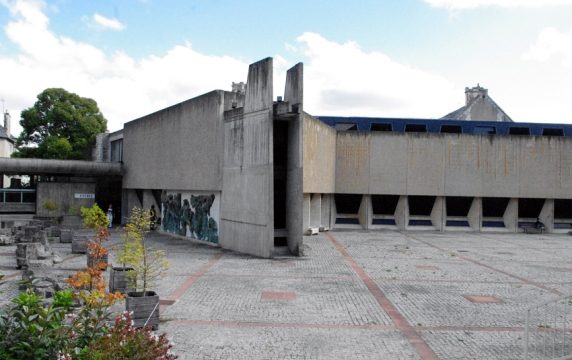
Rising above the historic streets on the site of the former Abbaye Sainte-Croix, the Musee Sainte-Croix is the largest museum in Poitiers and one of the top attractions in Poitiers for anyone who loves archaeology and art under one roof. Opened in 1974 and designed by architect Jean Monge, its bold concrete and glass lines are a striking contrast to the Romanesque churches and medieval lanes that surround it, giving you an immediate sense that this is a place where the city chose to reinvent itself in the 20th century.
Step inside and you move from Magdalenian tools and Roman walls to Merovingian sarcophagi, Renaissance paintings, and modern masterpieces in just a few rooms. The collections are thoughtfully arranged so you can follow a loose timeline or dip in and out of the themes that interest you most, from early medieval stucco from nearby Vouneuil-sous-Biard to powerful sculptures by Auguste Rodin and Camille Claudel. It is often visited on walking-tours of Poitiers, and works perfectly as the cultural anchor to a day of exploring the old town.
Table of Contents
- History and Significance of the Musee Sainte-Croix
- Things to See and Do in the Musee Sainte-Croix
- How to Get to the Musee Sainte-Croix
- Practical Tips on Visiting the Musee Sainte-Croix
- Where to Stay close to the Musee Sainte-Croix
- Is the Musee Sainte-Croix Worth Visiting?
- FAQs for Visiting the Musee Sainte-Croix
- Nearby Attractions to the Musee Sainte-Croix
History and Significance of the Musee Sainte-Croix
The Musee Sainte-Croix was built in 1974 to gather Poitiers’ scattered collections into a single modern institution, replacing the former Rupert-de-Chievres Museum and taking over the historic site of the Abbaye Sainte-Croix. The abbey community itself was moved to Saint-Benoît, freeing this central plot for a new museum that could express the cultural ambitions of the late 20th century. The choice of a brutalist design, heavy on raw concrete and glazing, was deliberate: the city wanted a contemporary landmark that contrasted with but did not imitate its medieval core.
From the start, the museum was conceived as both an archaeological and fine arts centre, reflecting Poitiers’ importance as ancient Limonum and as a long-standing regional capital. Its archaeological holdings, stretching from prehistory through the Roman and Merovingian periods, anchor the building in the deep history of western France. The fine arts collections, meanwhile, chart the evolution of European painting and sculpture from the 14th century onwards, allowing visitors to trace aesthetic shifts alongside historical change.
Over the years, the Musee Sainte-Croix has continued to grow, both physically and intellectually. Recognised as a 20th-century heritage site by the Ministry of Culture, it is now part of the story it tells, representing an era when concrete modernism was seen as a bold, optimistic statement. Plans to further develop the museum and integrate collections from the Rupert-de-Chievres Museum underline its ongoing role as the main custodian of Poitiers’ artistic and archaeological heritage.
Things to See and Do in the Musee Sainte-Croix
Start your visit in the archaeological sections, where the journey begins with prehistory. Here you will find Magdalenian artefacts, Neolithic tools, and Bronze Age objects that reveal how people lived in this area long before Poitiers became a city. Moving forward in time, the displays of Roman walls and artefacts from Limonum show you the urban fabric and daily life of a key city in Roman Gaul, making it easier to imagine the ancient streets hidden beneath today's buildings.
The early medieval galleries, with Merovingian sarcophagi and rare stucco decorations from Vouneuil-sous-Biard, are particularly evocative. These pieces capture a transitional moment between late Roman and fully medieval Europe, when new artistic forms and religious practices were emerging. The craftsmanship in the sarcophagi and stuccoes is surprisingly delicate, and the interpretive panels help you understand how these works once fitted into larger architectural and liturgical settings.
In the fine arts department, take your time with paintings from the 14th to the 20th centuries. Works by Paolo Veneziano highlight early Italian panel painting and religious imagery, while pieces by Piet Mondrian and Odilon Redon show how artists moved towards abstraction and symbolism. The sculpture collections are another highlight, especially the strong ensemble of works by Auguste Rodin and the particularly important Camille Claudel holdings, one of the three largest public collections of her work in France. Together, these spaces turn the Musee Sainte-Croix into a rewarding deep dive into European creativity.
How to Get to the Musee Sainte-Croix
To reach the Musee Sainte-Croix, you will first need to get to Poitiers, which is served by Poitiers-Biard Airport on the edge of the city and, for longer-haul routes, by the main Paris airports with straightforward onward connections. For the best deals and a seamless booking experience, check out these flights to Poitiers on Booking.com. From these gateways, you can continue to Poitiers by domestic flight, rental car, coach, or rail, depending on your preferences and schedule.
Poitiers is well connected by train, with high-speed and regional services linking it to Paris, Bordeaux, La Rochelle, and other French cities.You can use SNCF Connect to check schedules, compare routes, and purchase tickets for National (SNCF ) and regional trains (TER). For a more streamlined experience, we recommend using Omio, which allows you to easily compare prices, schedules, and book tickets for both National and Regional travel across all of Europe, all in one place. From Gare de Poitiers, it is a manageable walk uphill to the historic centre, or you can take a local bus towards the town centre and then follow signs or maps to the museum, which sits close to the heart of the old city.
If you are travelling by car, Poitiers lies close to the A10 motorway and other main roads, and there are several car parks around the historic centre where you can leave your vehicle before reaching the museum on foot.If you are looking to rent a car in France I recommend having a look at Discover Cars, first, as they compare prices and review multiple car rental agencies for you. Once parked, simply follow local signs, a city map, or your navigation app towards the Musee Sainte-Croix; its distinctive concrete architecture and central location make it easy to find.
Practical Tips on Visiting the Musee Sainte-Croix
- Suggested tips: Start with the archaeological sections before moving into the fine arts galleries so you can follow the historical timeline from prehistory to contemporary works.
- Best time to visit: Late morning or mid-afternoon on weekdays tends to be quieter, giving you more space to enjoy the collections at your own pace.
- Entrance fee: Adults: €5.00
- Opening hours: Tuesday-Friday: 10am-6pm; Saturday-Sunday: 1pm-6pm Closed: every Monday and public holidays
- Official website: https://www.musee-saintecroix.fr/
- How long to spend: Plan at least 2 hours if you want a good overview, and longer if you are particularly interested in archaeology or in the Camille Claudel and Rodin collections.
- Accessibility: The museum’s modern design generally offers lifts and accessible routes, but some transitions between levels may still require attention; check at reception for the best accessible paths.
- Facilities: Expect cloakrooms, toilets, and often a small shop or book corner; temporary exhibitions and educational spaces may also be available.
- Photography tip: Look for contrasts between the brutalist concrete architecture and the delicate artworks, and consider photographing the exterior from across the street to capture the building’s strong lines.
- Guided tours: Check for scheduled guided visits, family activities, or themed tours, which can add context to key works and highlight pieces you might otherwise miss.
- Nearby food options: The surrounding streets of the historic centre are full of cafés, bakeries, and restaurants, making it easy to combine your museum visit with a relaxed lunch or coffee break.
Where to Stay close to the Musee Sainte-Croix
Staying near the Musee Sainte-Croix means you can reach the museum on foot and still be perfectly placed for exploring the rest of Poitiers’ old town. A popular and comfortable option is Hotel de l Europe Poitiers, which offers a central base within easy walking distance of the museum and main sights. For a more distinctive setting, Mercure Poitiers Centre occupies a converted chapel and delivers a memorable backdrop to your stay, while still leaving you a short stroll away from the museum. Travellers who like a contemporary feel with good access to both the station and the historic centre might appreciate ibis Styles Poitiers Centre, a practical choice if you plan to use the Musee Sainte-Croix as your cultural starting point.
Is the Musee Sainte-Croix Worth Visiting?
If you enjoy museums that combine strong architecture with deep, varied collections, the Musee Sainte-Croix is absolutely worth visiting. It offers a rare chance to trace Poitiers' story from prehistoric tools and Roman remains to modern art and sculpture, all within a single, clearly organised building. Whether you are drawn by archaeology, fascinated by Camille Claudel and Rodin, or simply curious about how a 1970s brutalist structure can become a heritage site in its own right, this museum delivers a rich and satisfying experience that adds real depth to any trip to Poitiers.
What Other Travellers Say...

Musée Sainte-Croix on Rue St Simplicien is a concrete, partly below-street-level museum that showcases prehistoric and Roman artefacts alongside medieval works, fine art and notable sculptures; visitors praise its high-quality sculpture collection and displays of local paintings, describe the layout as a pleasant maze, note friendly helpful staff, and report that admission can be free on some days, though exhibit labels are mainly in French so many use translation apps or wish for multilingual guides.


FAQs for Visiting the Musee Sainte-Croix
Nearby Attractions to the Musee Sainte-Croix
- Notre-Dame-la-Grande: A stunning Romanesque church famous for its richly carved façade and atmospheric evening illuminations.
- Poitiers Cathedral Saint-Pierre: A majestic Gothic cathedral with impressive stained glass and a calm interior, just a short walk from the museum.
- Baptistery of Saint-Jean: One of the oldest Christian buildings in France, offering a fascinating glimpse into early medieval religious architecture.
- Parc de Blossac: A spacious landscaped park with formal gardens and viewpoints over the valley, perfect for a relaxing stroll before or after your museum visit.
- City Walls of Poitiers: Surviving sections of the ancient and medieval fortifications, ideal for a history-themed walk linking the museum to other parts of the old town.
The Musée Sainte-Croix appears in our Complete Guide to Visiting Poitiers!

Moira & Andy
Hey! We're Moira & Andy. From hiking the Camino to trips around Europe in Bert our campervan — we've been traveling together since retirement in 2020!
This website uses affiliate links which may earn a commission at no additional cost to you!
Planning Your Visit
Tuesday-Friday: 10am-6pm; Saturday-Sunday: 1pm-6pm
Closed: every Monday and public holidays
Adults: €5.00
Nearby Attractions
- Baptistère Saint-Jean (0.0) km
Baptistery - Cathédrale Saint-Pierre de Poitiers (0.2) km
Cathedral - Church of Notre-Dame-la-Grande (0.5) km
Church - Palace of the Counts of Poitou (0.6) km
Palace - Place du Maréchal Leclerc (0.6) km
Square - Amphithéâtre de Poitiers (0.7) km
Amphitheatre and Roman Site - Place de la Liberté (0.8) km
Square - Poitiers Prefecture (1.0) km
Historic Building - City Walls of Poitiers (1.3) km
City Walls - Parc de Blossac (1.3) km
Park