Musée Jules Verne, Nantes
Museum in Nantes
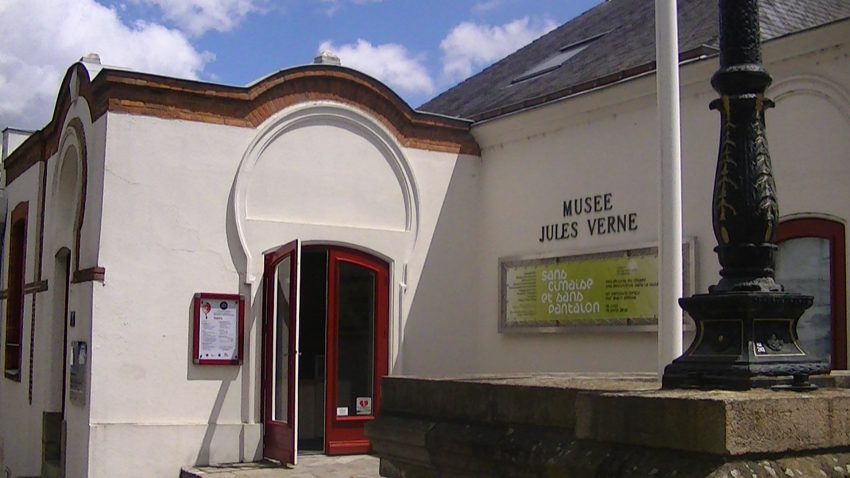
Perched high on Sainte-Anne hill with sweeping views over the Loire, the Musée Jules Verne is one of the best places to visit in Nantes if you have even a passing love of stories, science fiction, or grand voyages. Opened in 1978 to mark the 150th anniversary of Verne's birth, the museum occupies a 19th-century house that closely resembles his family's country home, making it easy to picture the young Jules staring out at the river and dreaming of submarines, airships, and journeys to the centre of the earth.
Inside, you step into a compact but evocative world of first editions, manuscripts, personal objects, and models of the fantastical machines that populate his novels. Thoughtful displays trace Verne's childhood in Nantes, his fascination with the sea and travel, and the global impact of his books and adaptations. The combination of river views, atmospheric rooms, and lovingly curated exhibits makes the museum a highlight of any walking tour of Nantes for literature and adventure fans.
Table of Contents
- History and Significance of the Musée Jules Verne
- Things to See and Do in the Musée Jules Verne
- How to Get to the Musée Jules Verne
- Practical Tips on Visiting the Musée Jules Verne
- Where to Stay close to the Musée Jules Verne
- Is the Musée Jules Verne Worth Visiting?
- FAQs for Visiting Musée Jules Verne
- Nearby Attractions to the Musée Jules Verne
History and Significance of the Musée Jules Verne
The Musée Jules Verne was established in 1978 by the city of Nantes, which wanted to pay lasting tribute to its most famous literary son. Although the building itself was not Verne's home, it was chosen for its strong resemblance to the family's former house and its commanding position above the Loire, echoing the maritime vistas that fed his imagination. From its earliest days, the museum set out to explore both Verne the man and Verne the myth-maker.
Over the years, the collection has grown to include a rich selection of first-edition books, handwritten pages, letters, personal belongings, and original illustrations. Together, they offer a multi-layered portrait of an author who was as interested in technology, geography, and scientific speculation as he was in plot twists and cliffhangers. The museum's rooms are arranged to show how Verne's life in Nantes, Paris, and beyond shaped the unusual blend of realism and fantasy that made his novels so influential.
Beyond its appeal to casual visitors, the Musée Jules Verne also functions as a centre for Vernian studies. Researchers and enthusiasts use its holdings to delve into everything from publishing history and translation to the influence of Verne's work on cinema, comics, and contemporary science fiction. In this way, the museum is not just a nostalgic shrine but a living institution that keeps revisiting and reinterpreting his legacy.
Things to See and Do in the Musée Jules Verne
Inside the house, the exhibits are arranged thematically so you can move from Verne's early life and family background to his mature works and their worldwide reception. Start with the displays on his childhood in Nantes and his fascination with ships, ports, and theatre, which laid the groundwork for the rich cast of characters and far-flung settings in his books. Old photographs and documents help ground the legend in real people and places.
As you move deeper into the museum, you will encounter first editions and manuscripts that show how familiar titles took shape, often accompanied by period illustrations. Models and replicas of machines such as submarines, balloons, and other fantastical vehicles bring key scenes from novels like Around the World in Eighty Days and Twenty Thousand Leagues Under the Sea to life. Interactive displays and audiovisual elements help younger visitors engage with the stories, even if they have not yet read the books.
One of the pleasures of the Musée Jules Verne is its scale: it is large enough to feel substantial but small enough to be explored comfortably in an hour or two. Between rooms, you can pause by windows to admire views over the Loire and the industrial and harbour landscapes that inspired Verne's love of voyages and exploration. Before you leave, browse the small shop for French or translated editions, themed souvenirs, and books about the author's life and legacy.
How to Get to the Musée Jules Verne
The Musée Jules Verne is located on Sainte-Anne hill on the western side of central Nantes, overlooking the Loire and reachable by public transport, car, or a scenic walk from the city centre. Most visitors arriving from abroad use Nantes Atlantique Airport, which lies just southwest of the city; shuttle buses and other public transport connect the airport to central Nantes in around 20-30 minutes, from where you can continue toward the Sainte-Anne district. For the best deals and a seamless booking experience, check out these flights to Nantes on Booking.com.
If you arrive by train, Nantes station is the main hub in the region, with TGV and regional services from cities such as Paris, Rennes, and Bordeaux. From the station, you can take a tram or bus toward the western bank of the Loire and the Sainte-Anne area, or walk via the city centre and riverfront if you do not mind a longer, uphill route. You can use SNCF Connect to check schedules, compare routes, and purchase tickets for National (SNCF ) and regional trains (TER). For a more streamlined experience, we recommend using Omio, which allows you to easily compare prices, schedules, and book tickets for both National and Regional travel across all of Europe, all in one place. Once in the neighbourhood, local signs and maps will help you find the hilltop location.
For those travelling by car, follow signs for Nantes centre and then toward the Sainte-Anne district, where you can find street parking or nearby car parks; from there, it is a short walk up to the museum. If you are looking to rent a car in France I recommend having a look at Discover Cars, first, as they compare prices and review multiple car rental agencies for you. Because of the hill and some narrow streets, it is often easiest to park slightly below the museum and enjoy the climb with views over the river and city.
Practical Tips on Visiting the Musée Jules Verne
- Suggested tips: Pair your museum visit with a stroll along the Loire or a ride on public transport back into the centre to see how the riverscape that inspired Verne looks today.
- Best time to visit: Late morning or mid-afternoon works well, giving you good light for the views and avoiding the very busiest times of day.
- Entrance fee: Adults: €4.00. Museum Pass: €15 (Jules Verne Museum, the Natural History Museum, the Museum of Fine Arts, the History Museum (Château des Ducs de Bretagne), and the Chronograph.
- Opening hours: Daily: 2pm-6pm; Saturday: 10am-12pm / 2pm-6pm; Tuesday: Closed
- Official website: https://julesverne.nantesmetropole.fr/
- How long to spend: Allow 60-90 minutes to see the exhibits without rushing; fans of Verne or literary history may want two hours or more.
- Accessibility: The hilltop location and historic building mean there may be stairs and uneven floors; visitors with reduced mobility should check accessibility details in advance.
- Facilities: Expect a reception area, toilets, and a small shop; cafés and additional services can be found in the surrounding Sainte-Anne district or back in the city centre.
- Photography tip: Capture the building from outside with the river in the background if possible, and inside focus on close-ups of models, manuscripts, and illustrations rather than trying to photograph every display.
- Guided tours: Look out for guided-tours or themed events, which can deepen your understanding of lesser-known works and Verne's connections to Nantes.
- Nearby food options: After your visit, explore local cafés and restaurants on and around Sainte-Anne hill or head back toward the centre and Bouffay for more dining choices.
Where to Stay close to the Musée Jules Verne
If you want easy access to the Musée Jules Verne while still being close to central sights, look for accommodation in or near the historic core and along the Loire. A stylish central choice is L'Hôtel - Face au Château, placing you between the château and the cathedral with straightforward tram and bus links toward Sainte-Anne hill. For a more contemporary base, Hôtel La Pérouse Nantes offers modern design and a central location that makes it easy to combine museum visits with shopping and dining. If you prefer a quieter, neighbourhood feel, Hôtel Chateaubriand provides a cosy, good-value option with pleasant walks toward the river and simple connections to the Musée Jules Verne and other attractions.
Is the Musée Jules Verne Worth Visiting?
The Musée Jules Verne is absolutely worth visiting, especially if you have ever been intrigued by submarines, balloon journeys, or trips around the world in 80 days. It offers a compact but rich look at how a Nantes-born writer turned local landscapes, maritime activity, and scientific curiosity into some of the most imaginative stories of the 19th century. Even if you are new to Verne's work, the combination of river views, interactive displays, and beautifully presented objects makes the museum one of the must-see places in Nantes for anyone interested in the links between place, history, and imagination.
What Other Travellers Say...

Jules Verne Museum at 3 Rue de l'Hermitage in Nantes is a compact, tri-level townhouse museum focused on the novelist's life and work, displaying manuscripts, books, posters, replicas of inventions and some interactive objects, plus a reading room and a distinctive bookshop; visitors note it's smaller than the Amiens museum but well maintained, good value with a low entry fee and discounts for under-25s, can be toured in about an hour, has uneven opening hours so check before you go, and offers a pleasant patio view and proximity to the Jardin Extraordinaire.


FAQs for Visiting Musée Jules Verne
Nearby Attractions to the Musée Jules Verne
- Château des Ducs de Bretagne: A former ducal fortress and history museum in central Nantes, with ramparts and immersive city-history exhibits.
- Cathédrale Saint-Pierre-et-Saint-Paul de Nantes: The city's imposing Gothic cathedral with a soaring nave and historic ducal tomb.
- Machines de l'Île: A creative, steampunk-inspired attraction on the Île de Nantes, featuring mechanical creatures like the famous Great Elephant.
- Quartier Bouffay: The medieval heart of Nantes, full of narrow lanes, half-timbered houses, and lively bars and restaurants.
- Musée d'Arts de Nantes: The city's major fine arts museum, combining a historic palais and modern Cube to showcase works from the 13th to the 21st century.
The Musée Jules Verne appears in our Complete Guide to Visiting Nantes!

Moira & Andy
Hey! We're Moira & Andy. From hiking the Camino to trips around Europe in Bert our campervan — we've been traveling together since retirement in 2020!
This website uses affiliate links which may earn a commission at no additional cost to you!
Planning Your Visit
Daily: 2pm-6pm; Saturday: 10am-12pm / 2pm-6pm; Tuesday: Closed
Adults: €4.00. Museum Pass: €15 (Jules Verne Museum, the Natural History Museum, the Museum of Fine Arts, the History Museum (Château des Ducs de Bretagne), and the Chronograph.
Nearby Attractions
- Les Machines de l'Île (1.1) km
Attraction - Mémorial de l'Abolition de l'Esclavage (1.2) km
Monument - Musée Thomas Dobrée (1.4) km
Museum - Natural History Museum of Nantes (1.5) km
Museum - Place Graslin (1.7) km
Square - Passage Pommeraye (1.9) km
Historic Building - Place Royale (2.0) km
Historic Building - Eglise Sainte-Croix (2.3) km
Church - Jungle Intérieure (2.4) km
Gardens - Nantes History Museum (2.6) km
Museum